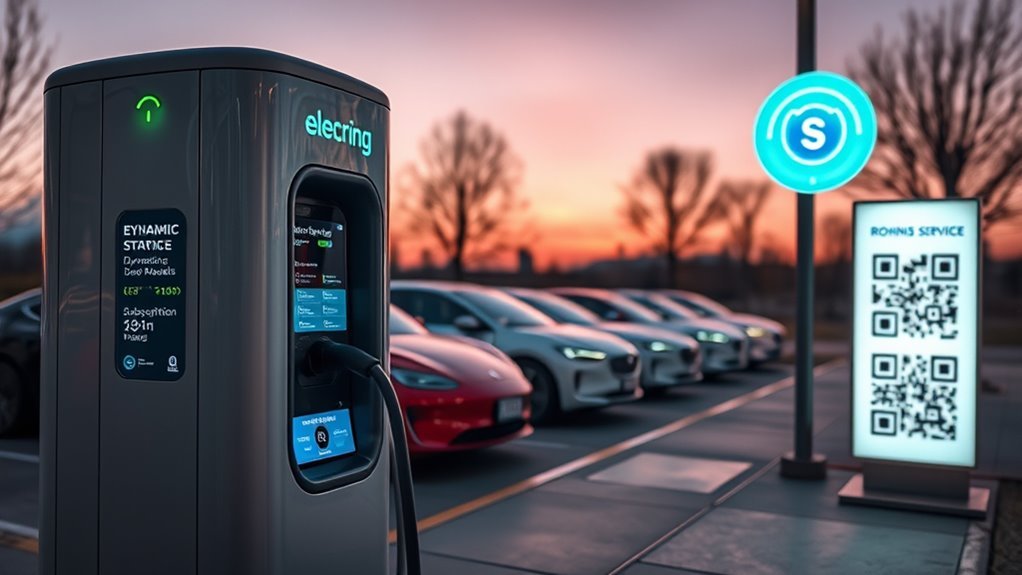
EV charging companies generate revenue through dynamic pricing, subscription services, and roaming agreements. They often implement pay-per-use fees aligned with home electricity rates or charge extra for convenience. Monthly subscription plans create predictable income and foster customer loyalty. Roaming agreements enhance user accessibility across networks. Advertising and partnerships can further drive revenue by attracting foot traffic to nearby businesses. Understanding these strategies helps you see what really drives profitability in the EV charging market.
What You Need to Know About EV Charging Pricing Models
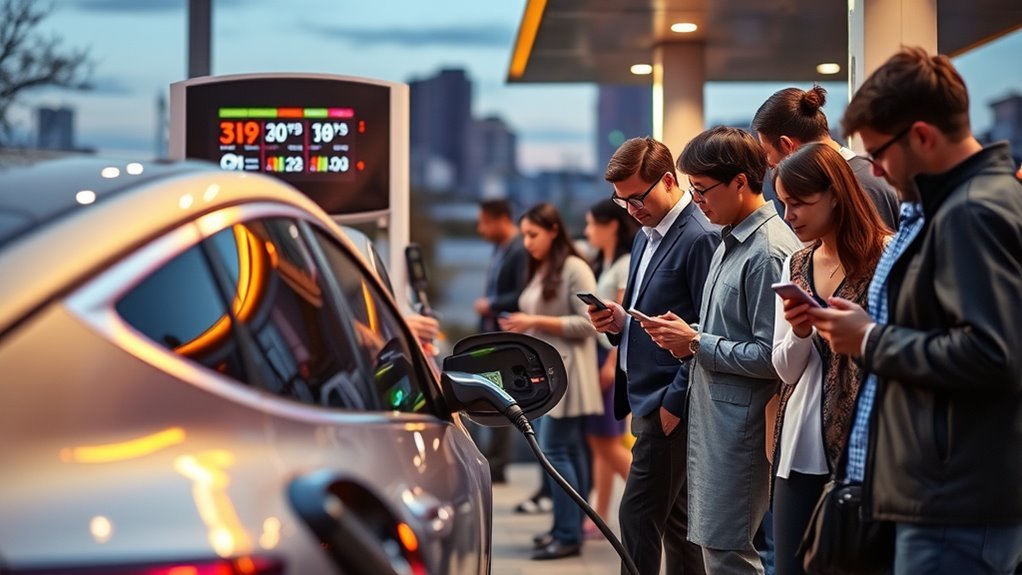
As the electric vehicle (EV) market expands, understanding EV charging pricing models becomes vital for both operators and consumers. Charging companies utilize various strategies to maximize revenue, including dynamic pricing that adapts based on demand, time of day, and location.
This model caters to consumer behavior, encouraging usage during off-peak hours when rates are lower. Pay-per-charge rates typically range from $2-$6 per hour for Level 2 chargers, while DC fast chargers cost $0.30-$0.60 per minute.
Subscription models offer predictability, allowing drivers to pay a monthly or annual fee for access to charging networks. Additionally, monetizing advertising on charging stations targets eco-conscious consumers, creating diversified income streams.
Loyalty programs and partnerships with local businesses not only enhance customer experience but also increase dwell time, resulting in higher revenue. Understanding these pricing frameworks is vital for steering through the evolving landscape of EV charging.
Pay-Per-Use Fees for EV Charging: Aligning With Home Rates
When you consider pay-per-use fees for EV charging, transparency in pricing structure becomes essential for your decision-making.
By comparing these fees to local home electricity rates, you can assess their competitiveness and value.
Additionally, flexible payment options can enhance your overall experience, making it easier to choose charging solutions that meet your needs.
Pricing Structure Transparency
Pricing structure transparency is essential for the success of EV charging companies, especially as pay-per-use fees increasingly align with home electricity rates. When you see clear pricing that reflects local electricity costs, it builds trust and enhances customer loyalty.
Many drivers prioritize reliability and convenience over mere cost savings, making transparent pricing a powerful tool for fostering long-term relationships. Charging stations can adopt dynamic pricing models, combining per-kWh and time-based fees, optimizing their revenue while remaining appealing.
This strategy not only satisfies customers but also boosts dwell time and spending at nearby businesses. By aligning pricing with familiar home rates, companies can create a fair and competitive landscape that liberates EV drivers and encourages sustainable growth in the market.
Competitive Home Rate Comparison
Understanding how pay-per-use fees for EV charging compare to home electricity rates is essential for both consumers and charging companies. Typically, these fees range from $0.10 to $0.20 per kWh, making them competitive with home rates.
However, many EV drivers are willing to pay more—up to $0.30 per kWh—due to the convenience of public charging. Charging companies often incorporate session fees, which can add $1 to $5, but they maintain competitive pricing by offering tiered models that adapt to peak hours.
This strategic alignment with home comparison not only attracts users but fosters loyalty, as EV drivers seek fair and predictable pricing. Ultimately, understanding these dynamics can empower consumers to make informed decisions.
Flexible Payment Options
The competitive landscape of EV charging is evolving, with flexible payment options becoming increasingly important for both consumers and providers.
Implementing dynamic pricing models helps charging companies align their fees with local home electricity rates, enhancing competitiveness and customer satisfaction.
- Pay-per-use fees typically range from $0.30 to $0.60 per minute for DC fast chargers.
- Hybrid pricing models can combine per-kWh and time-based fees to optimize revenue.
- Offering competitive rates fosters customer incentives, encouraging repeat usage.
Subscription Services: Ensuring Steady Revenue
While many businesses in the EV charging sector seek to stabilize their income, subscription services have emerged as a significant strategy. These models offer predictable revenue through monthly or annual fees, essential for larger charging networks.
By implementing subscription tiers, you can align with varying user needs, letting customers select plans based on their charging frequency. This flexibility not only enhances user loyalty but fosters a sense of community among eco-conscious consumers who value convenience and reliable access.
Moreover, businesses that adopt subscription services can offset operational costs effectively, as the recurring revenue stream boosts overall profitability. As users engage more frequently with your charging stations, their loyalty deepens, leading to sustained income.
In this landscape, subscription services do more than generate revenue; they create a bond with users, reinforcing their commitment to a sustainable future. Embracing this model positions your business for long-term success in the evolving EV market.
The Role of Roaming Agreements in EV Charging
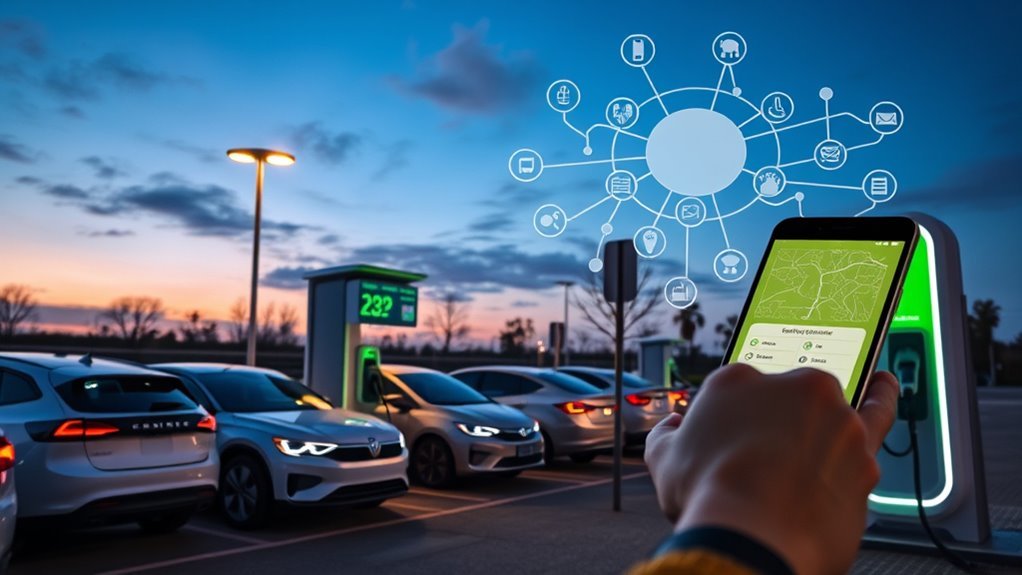
Roaming agreements greatly enhance the EV charging experience by allowing drivers to access multiple networks with ease, thereby improving station utilization and convenience.
While these partnerships offer considerable benefits, such as shared resources and revenue models, implementing them can present challenges that require careful navigation.
Understanding both the advantages and hurdles of roaming agreements is essential for shaping the future of EV charging infrastructure.
Benefits Of Roaming Agreements
As EV adoption accelerates, the role of roaming agreements becomes increasingly essential in enhancing the charging experience for drivers.
These agreements provide significant roaming benefits, allowing you to access a broader network of charging stations, thereby alleviating range anxiety. Interoperability standards guarantee seamless billing across various networks, making payments more straightforward.
- Expand your charging options with a single account.
- Experience increased convenience with access to multiple networks.
- Benefit from optimized pricing strategies through shared user data.
Challenges In Implementation
Implementing effective roaming agreements in EV charging presents several challenges that can hinder widespread adoption and user satisfaction.
One major hurdle is the complexity of agreement negotiations, often requiring extensive discussions on revenue-sharing models that can lead to delays. The lack of standardization among these agreements creates implementation hurdles, complicating pricing and billing processes, which can frustrate users.
Additionally, without a unified approach, charging networks may struggle to provide seamless access across platforms, impacting overall utilization rates. As more charging companies focus on interoperability to enhance their competitive edge, overcoming these challenges becomes vital.
Ultimately, resolving these issues can pave the way for a more integrated and user-friendly EV charging experience.
How to Boost Revenue With Ads and Partnerships

There’s a significant opportunity for EV charging companies to enhance their revenue streams through strategic advertising and partnerships. By implementing effective advertising strategies, you can attract eco-conscious consumers while providing businesses with a prominent marketing platform.
Consider these approaches:
- Targeted Ads: Utilize digital screens at charging stations to display ads tailored to your customer base, maximizing engagement.
- Local Partnerships: Collaborate with nearby businesses to drive foot traffic and encourage EV drivers to shop or dine while charging.
- Loyalty Programs: Establish loyalty initiatives in conjunction with local retailers, offering discounts or rewards that entice drivers to return.
These partnership opportunities not only boost revenue but also enhance customer experience.
Key Factors in Pricing Strategies
Effective advertising and partnerships can greatly enhance revenue streams for EV charging companies, but pricing strategies play a pivotal role in maximizing profitability.
One key factor is dynamic pricing, which allows you to adjust fees based on real-time demand and traffic patterns. By understanding demand elasticity, you can optimize pricing to capture higher revenues during peak usage times while remaining competitive during off-peak hours.
Incorporating hybrid models that blend per-kWh charges with time-based fees can also enhance revenue potential, encouraging quicker turnover of charging spots.
Additionally, subscription models provide predictable income, ensuring steady cash flow regardless of fluctuating usage.
High-traffic locations can command premium prices, reflecting increased demand.
Finally, leveraging advertising on digital screens at charging stations not only targets eco-conscious consumers but also opens another revenue stream, further enhancing your bottom line.
What Do EV Drivers Really Value in Charging?
How do EV drivers determine what’s most important when it comes to charging? Your preferences reveal a clear trend: convenience, reliability, and speed take precedence over low costs. You’re willing to invest more for dependable charging access, especially when it’s paired with appealing amenities.
- Proximity to cafes and retail stores enhances your charging experience.
- Fast charging options attract you, as you value the ability to quickly recharge.
- Loyalty programs and additional services during charging sessions boost your satisfaction.
The availability of charging amenities greatly influences your choices, with over half of you favoring destinations with these facilities.
This insight highlights a lucrative market for EV charging companies willing to prioritize driver preferences, positioning themselves strategically to meet the evolving demands of electric vehicle users.
Ultimately, creating an enriching charging experience could be the key to enhancing customer loyalty and driving profitable growth.
Maximizing Profitability Through Strategic Location
Creating an enriching charging experience is only part of the equation; maximizing profitability also hinges on the strategic location of EV charging stations. Utilizing location analytics, you can identify high-traffic areas like shopping centers and highways, where DC fast chargers can yield $20,000 to $50,000 annually.
Understanding consumer behavior is essential—charging stations near popular amenities increase dwell time, encouraging higher in-store spending and fostering customer loyalty.
Positioning your chargers where eco-conscious consumers frequent can pay off considerably; 57% of EV drivers prefer destinations with charging facilities.
By analyzing local traffic patterns, you can optimize placements to attract EV drivers seeking convenience and accessibility. This data-driven approach not only enhances utilization rates but also elevates the overall experience, turning a simple charging stop into a lucrative opportunity for your business.
Embrace this strategy, and watch your profitability soar as you cater to the evolving needs of the EV market.
Future Trends in EV Charging Revenue Generation
As the electric vehicle (EV) market evolves, innovative revenue generation strategies are emerging that could reshape the landscape of charging infrastructure.
You’ll notice several key trends driving this transformation:
- Dynamic pricing models are being refined, allowing operators to charge more during peak demand, thereby maximizing profits.
- Loyalty programs are gaining traction, providing users with incentives for frequent use while generating consistent revenue for businesses.
- Digital advertising at charging stations is emerging, leveraging screen space to engage eco-conscious consumers and create additional income streams.
These strategies not only enhance operational efficiency through advanced data analytics but also create a more user-centric experience.
As EV adoption accelerates, embracing these trends will be vital for charging companies aiming to thrive in a competitive landscape.
Frequently Asked Questions
How Do Electric Car Charging Stations Make Money?
Electric car charging stations generate revenue through strategic charging network partnerships and revenue sharing models. By leveraging these collaborations, you can maximize profitability while enhancing user access and convenience, positioning yourself favorably in a growing market.
What Is the 80 20 Rule EV Charging?
The 80/20 rule in EV charging suggests you’ll see 80% of revenue from just 20% of high-traffic locations. Understanding consumer behavior and strategically developing charging infrastructure can maximize your investment and profitability in this evolving market.
How Are EV Charging Stations Priced?
Think of EV charging stations as marketplaces, where pricing strategies dictate costs. You’ll find fees based on time or energy used, adjusted for demand, ensuring you pay fairly while enjoying the freedom of electric travel.
Who Is Paying for EV Charging Stations?
You’re paying for EV charging stations through installation costs often offset by government incentives. Businesses host these stations, investing in infrastructure that attracts customers, while you contribute through usage fees or subscription models for convenient access.
Conclusion
To sum up, the landscape of EV charging revenue is evolving rapidly, driven by diverse pricing models, strategic partnerships, and technological advancements. As companies explore subscription services and roaming agreements, they’re not just enhancing convenience for drivers but also optimizing profitability. The truth lies in understanding what EV users truly value—flexibility, accessibility, and seamless experiences. By focusing on these factors, charging companies can position themselves for sustained success in an increasingly competitive market.





Leave a Reply