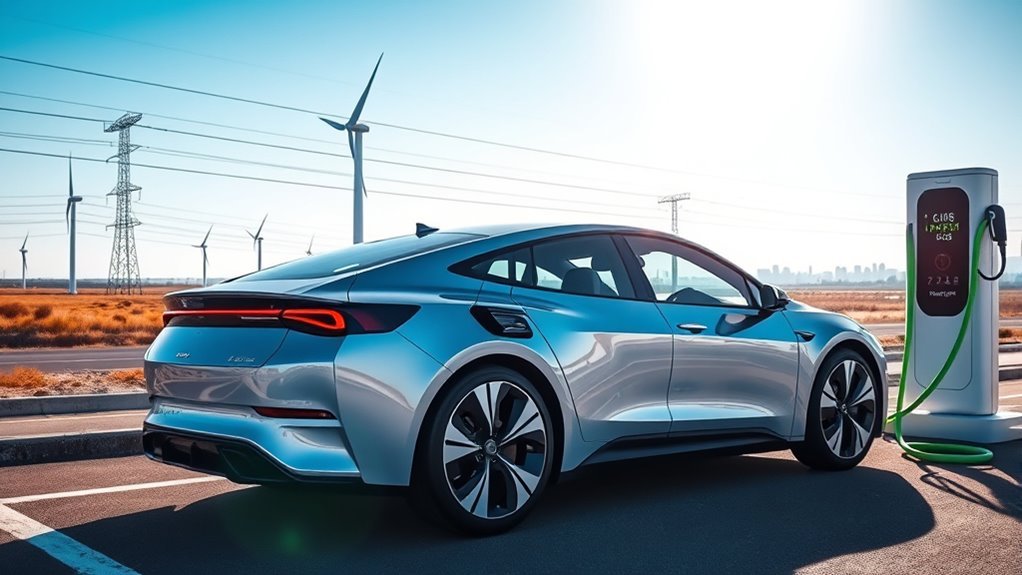
EV charging stations work by drawing electricity from the grid and converting it into usable energy for your vehicle’s battery. They offer varying charging speeds, like Level 1 and Level 2, with faster DC fast chargers available for quick top-ups. These stations may also incorporate renewable energy sources, enhancing sustainability. Understanding how this process operates is essential for maximizing your EV experience. Keep exploring to discover more about the various levels of charging and their benefits.
What Is an EV Charging Station and Its Purpose?
An EV charging station, or Electric Vehicle Supply Equipment (EVSE), plays an essential role in the shift to electric mobility by converting electrical energy from the grid into chemical energy to recharge your vehicle’s battery.
The convenience of charging at various public locations, like grocery stores and office parks, enhances the EV experience, allowing you to power up while running errands.
You’ll find different charging options available, including Level 1, Level 2, and DC fast chargers, catering to your specific needs and schedule.
Charging costs may vary, but they often provide a cost-effective alternative to traditional fuel.
With the potential to integrate renewable energy sources like solar and wind, EVSE not only supports your driving freedom but also contributes to a sustainable future.
Embracing EV benefits means enjoying greater convenience and independence on the road, empowering you to make choices that align with your values.
How to Set Up an EV Charging Station at Home
Setting up an EV charging station at home can enhance your electric vehicle experience by providing the convenience of charging overnight or whenever you need it.
To get started, you’ll need a dedicated Level 2 charger, which typically requires a 240-volt outlet and delivers 25-30 miles of range per hour. First, assess your home’s electrical capacity; you might need to upgrade your panel to handle the additional load.
Hiring a licensed electrician is essential to guarantee your installation complies with local codes and safety standards.
Consider smart charging solutions that allow you to schedule charging times, taking advantage of lower electricity rates during off-peak hours. This home charging option can notably reduce your fuel costs, with an average full charge costing around $7.20 for a 60 kWh battery.
Following these installation tips guarantees a seamless and efficient charging experience, liberating you from frequent trips to public stations.
How Electricity Powers EV Charging Stations
Electric vehicle (EV) charging stations harness electricity from the grid to power your vehicle efficiently. This electric grid consists of power lines and various generation plants, sourcing energy from both fossil fuels and renewables.
Electric vehicle charging stations efficiently draw energy from the grid, utilizing a mix of fossil fuels and renewables.
When you plug in, charging stations convert grid electricity from Alternating Current (AC) to Direct Current (DC) to recharge your vehicle’s battery effectively.
In Colorado, for instance, the average electricity rate is about $0.12 per kWh, meaning a full charge for a 60 kWh battery costs around $7.20, depending on the charging speed and provider.
Some stations even incorporate on-site solar panels, tapping into renewable energy, albeit with higher installation costs and variable output. Many utilities promote renewable energy programs, enabling businesses to utilize sustainable sources like wind and hydroelectric power, enhancing both sustainability and charging efficiency.
This synergy empowers you to drive cleaner and more liberating journeys.
The Charging Process: From Plugging In to Battery Recharge
When you plug your EV into a charging station, the charging process kicks off with the station converting the alternating current (AC) from the grid into direct current (DC), which is essential for recharging your vehicle’s battery.
This conversion maximizes charging efficiency, ensuring that your battery receives the ideal amount of energy. Depending on the charger type, you might experience different charging speeds—Level 1 adds about 4-5 miles of range per hour, while Level 2 boosts that to 25-30 miles.
If you’re in a hurry, DC fast chargers can deliver up to 200 miles of range in just 30 minutes! Throughout this process, advanced battery management systems regulate the battery’s state of charge (SOC) and temperature, safeguarding both performance and longevity.
Plus, communication systems keep you informed about charging status and facilitate payments at public stations, making the whole experience seamless and user-friendly.
Understanding Different Levels of EV Charging
Understanding the different levels of EV charging is essential for maximizing your vehicle’s performance and convenience. You have three main options: Level 1, Level 2, and Level 3.
Level 1 operates at 120 volts, providing a slow charging speed of 4-5 miles of range per hour—perfect for overnight home charging with minimal installation costs.
If you’re seeking faster charging, Level 2 stations run at 240 volts, adding 25-30 miles of range per hour and suitable for residential or public locations.
For rapid top-ups, Level 3, or DC Fast Charging, delivers high voltage DC directly to your vehicle, offering up to 200 miles of range in just 30 minutes.
This level’s installation costs can be higher, but the time savings can be invaluable for those on the go. Knowing these differences empowers you to choose the best charging solution for your lifestyle.
Essential Components of EV Charging Stations: What You Need to Know
To maximize your EV charging experience, it’s important to know what components make up charging stations. These essential elements include power converters, rectifiers, charging cables, and connectors.
Power converters and rectifiers are vital, converting alternating current (AC) from the grid into direct current (DC) needed by your vehicle’s battery.
Power converters and rectifiers play a crucial role in transforming AC from the grid into the DC required for your vehicle’s battery.
Charging cables safely transfer electricity, while connectors interface with your EV’s charging port for a secure connection.
Control systems within the station regulate electricity flow, ensuring you don’t risk overcharging, adhering to strict safety standards.
Communication systems enable interaction between the charging station, your vehicle, and you, allowing for real-time monitoring of charging status and seamless payment processing at public stations.
Understanding these components helps you appreciate the charging infrastructure that supports your electric vehicle, giving you the freedom to charge efficiently and confidently.
How Do Public EV Charging Stations Operate?
Public EV charging stations, or Electric Vehicle Supply Equipment (EVSE), play an essential role in recharging your electric vehicle by converting electrical energy from the grid into chemical energy stored in your vehicle’s battery.
These stations enhance your customer experience through efficient and accessible charging networks. Here’s how they operate:
- Payment Models: You typically pay per minute, per kilowatt-hour (kWh), or through membership fees, with many offering pay-as-you-go options.
- Charging Types: Most stations use Level 2 chargers, delivering 240 volts, providing 25-30 miles of range per hour, while DC fast chargers can add up to 200 miles in just 30 minutes.
- Efficiency Tips: It’s best to charge up to 80% capacity for maximum efficiency, as speeds slow down considerably afterward.
- Free Charging: Keep in mind that free charging options are rare due to rising operational costs and taxes in many areas.
How Renewable Energy Powers EV Charging Stations
As the demand for electric vehicles grows, harnessing renewable energy for EV charging stations becomes increasingly important for a sustainable future. By utilizing sources like solar and wind power, charging stations can generate electricity while drastically reducing reliance on fossil fuels.
Solar panels convert sunlight into electricity, which can be stored in batteries for later use, enhancing charging efficiency and ensuring eco-friendly solutions. Wind turbines also contribute by harnessing wind energy, further promoting cleaner energy options.
In regions like Colorado, utilities offer renewable energy programs specifically designed for EV charging, encouraging businesses to adopt sustainable practices.
Additionally, vehicle-to-grid (V2G) technology allows your electric vehicle to serve as a mobile energy storage unit, facilitating the integration of renewable energy into the charging infrastructure. This innovation not only enhances grid stability but also empowers you to participate actively in the shift toward a greener, more liberated future.
Future Trends in EV Charging Technology
While the electric vehicle landscape evolves rapidly, future trends in EV charging technology promise to revolutionize how you charge your vehicle. Here’s what you can expect:
- Ultra-fast charging stations delivering up to 350 kW, enabling a full charge in just 15 minutes.
- Smart charging solutions that leverage real-time data to optimize energy usage and minimize grid strain during peak times.
- Battery innovations, like solid-state batteries, enhancing efficiency and markedly reducing charging times.
- Vehicle-to-grid (V2G) technology, allowing your EV to not only draw power but also return energy to the grid, promoting grid stability.
These advancements not only make EVs more appealing but also align with global sustainability goals by integrating renewable energy sources.
As you embrace these innovations, you’ll find the charging experience increasingly seamless and liberating, ushering in a new era of electric mobility.
Frequently Asked Questions
Are EV Charging Stations Connected to the Grid?
Yes, EV charging stations are connected to the grid. This grid connectivity guarantees you have access to the necessary charging infrastructure, allowing your electric vehicle to draw power efficiently from various energy sources available in the grid.
What Is the 80 20 Rule for EV Charging?
The 80/20 rule for EV charging states you should charge to 80% for ideal charging efficiency. This approach improves battery management, saving time and preserving battery health while meeting most of your driving needs effectively.
How Do Electric Vehicle Charging From the Grid Explain?
You might think charging an EV is magic, but it’s all about the grid interaction. During the charging process, electricity flows from the grid, converting to power your vehicle’s battery, enabling your journey towards freedom.
How Much Does It Cost to Fully Charge an Electric Car at a Public Charging Station?
Charging costs at public stations can range from about $7.20 for a full charge to as high as $41.40, depending on the charger type and local electricity rates. Always check for additional fees or membership requirements.
Conclusion
As you immerse yourself in the world of EV charging, remember it’s not just about plugging in; it’s about connecting to a cleaner, smarter future. Just like the early adopters of the internet transformed communication, embracing EV technology can reshape our energy landscape. With advancements on the horizon, you’ll play an essential role in this evolution. So, whether you’re charging at home or on the go, you’re part of a movement toward sustainable mobility. Charge up and join the revolution!





Leave a Reply