
In 2026, Tesla prices span a wide range depending on the model. The Model 3 starts at $36,990, and the Model Y begins at $39,990. Moving upmarket, the Model S runs from $94,990 to $109,990, while the Model X is priced between $99,990 and $114,990. The Cybertruck now ranges from $69,990 to $99,990 following a series of rapid price adjustments.
In the commercial sector, the Tesla Semi has officially launched with a price tag of $290,000 for the Long Range version. At the top of the consumer lineup, the upcoming Roadster is expected to start around $200,000 for the base model, with the limited Founders Series at $250,000.
Want to know how resale values, new tax laws, and 0% financing affect these prices? Read on.
Key Takeaways
- The 2026 Tesla Model 3 starts at $36,990 for the Standard RWD and tops out at $54,990 for the Performance AWD trim.
- The Model Y begins at $39,990, with the Performance version reaching $57,490. Tesla currently offers aggressive 0% APR financing on select Model Y trims to offset the loss of federal tax credits.
- Model S pricing runs from $94,990 to $109,990, and the Model X ranges from $99,990 to $114,990. Both models will cease production by mid-2026 to make room for Optimus robot manufacturing.
- Cybertruck prices span $69,990 for the base AWD to $99,990 for the Cyberbeast. Pricing has been highly volatile in early 2026.
- The Tesla Semi is officially priced at $290,000 for the 500-mile Long Range version. This targets commercial fleet operators.
- The next-generation Roadster is expected to start at $200,000. Production is projected to begin in 2027 following an April 2026 reveal.
- Used Tesla prices actually increased by 4.3% in early 2026. This happened even as the broader used EV market saw prices drop.
- The federal EV tax credit ($7,500 for new, $4,000 for used) expired on September 30, 2025. However, new tax rules allow for a $10,000 personal loan interest deduction and 100% bonus depreciation for business vehicles.
How Much Does Tesla Pricing Look Like in 2026?

Tesla’s 2026 lineup covers a broad price range, so there is likely something for most budgets. The Model 3 starts at $36,990 for the Standard RWD. This makes it the most affordable way into a new Tesla.
Tesla’s 2026 pricing offers options at every level. The Model 3 starts at $36,990, while halo models stretch well into the six figures.
If luxury is your priority, the Model S ranges from $94,990 to $109,990. The larger Model X SUV will cost between $99,990 and $114,990. Both of these premium vehicles now come standard with the Luxe Package. This package includes Full Self-Driving (Supervised), premium service, and free lifetime Supercharging.
The Model Y starts at $39,990 and goes up to $57,490 for the Performance trim. The Cybertruck is priced between $69,990 and $99,990, reflecting a major restructuring of its trim levels in early 2026.
One important note for all buyers is that the federal EV tax credit is no longer available. This credit ended for vehicles purchased after September 30, 2025. This policy change directly raises the out-of-pocket cost for 2026 buyers compared to previous years. Some state and local incentives may still apply. You should check what is available in your area using the U.S. Department of Energy’s incentive database.
With prices ranging from under $40,000 to nearly $300,000 for commercial trucks, Tesla offers a path into electric driving at several distinct price points.
The Phase-Out of Model S and Model X
Buyers interested in the Model S or Model X should be aware of a massive shift in Tesla’s strategy. Tesla plans to end production of both models very soon. During Tesla’s Q4 2025 earnings call in late January 2026, CEO Elon Musk told investors that the company would basically stop production of the Model S and X in the coming months.
This decision marks Tesla’s official exit from the traditional luxury automotive segment. The company is pivoting heavily toward robotics and autonomous networks.
The production lines at the Fremont factory in California will be shut down and retooled. Tesla is clearing this floor space to build the third generation of its Optimus humanoid robot. Musk noted that the Optimus robot uses a completely different supply chain, so the old car manufacturing equipment must be removed entirely. Tesla aims to eventually produce one million Optimus robots per year from this facility.
If you have been considering either the Model S sedan or the Model X SUV, acting sooner rather than later is critical. Availability is expected to shrink rapidly as production winds down by the middle of 2026.
To help clear out the final production runs, Tesla has made the Luxe Package standard on all new Model S and Model X orders. This package bundles several high-value features into the base purchase price. It includes Full Self-Driving, a four-year premium service plan, and Premium Connectivity. Most importantly, it brings back free lifetime Supercharging. This specific perk is highly appealing to long-distance drivers and adds significant long-term value to these final vehicles.
Deep Dive: Cybertruck Pricing Volatility
The pricing strategy for the Cybertruck has been incredibly volatile throughout early 2026. Tesla has used the truck to test market demand and buyer psychology.
In mid-February 2026, Tesla introduced a new, less expensive dual-motor All-Wheel Drive (AWD) base trim. They priced it aggressively at $59,990. This price point brought the vehicle very close to the original $50,000 target promised back in 2019. The market response was immediate and massive. Demand surged so quickly that estimated delivery dates for the base AWD trim were pushed all the way to late 2027.
However, Tesla placed a warning banner on the configurator website. The company stated that the $59,990 price would only be honored until February 28. This created an intense artificial urgency for buyers. On March 1, 2026, Tesla executed a 17% price hike. The base AWD trim jumped by $10,000 to a new starting price of $69,990.
This move allowed Tesla to lock in thousands of orders while simultaneously raising the profit margin on all future sales. The new $69,990 base model includes coil springs, an adaptive damping suspension, and a powered tonneau cover. It misses out on premium features like air suspension and ventilated seats.
At the top of the lineup, Tesla made another surprising move. The tri-motor Cyberbeast variant saw its base price slashed by $15,000. It dropped from $114,990 down to $99,990. However, this price cut came with a catch. Tesla removed the Luxe Package from the Cyberbeast trim. This means new Cyberbeast buyers no longer receive free lifetime Supercharging.
The Tesla Semi: Commercial Pricing and Specs
After years of prototypes and limited test fleets, the Tesla Semi has entered formal commercial availability in 2026. This vehicle targets heavy-duty fleet operators and logistics companies.
Customer quotes reveal that the 500-mile Long Range version of the Tesla Semi is priced at $290,000. This is before any destination fees or taxes. A shorter-range version, capable of 325 miles per charge, is expected to cost approximately $260,000.
The $290,000 price tag is higher than the original estimates provided in 2017. However, it remains highly competitive within the current Class 8 electric truck market. The true value of the Tesla Semi lies in its operational efficiency. It boasts an energy consumption rate of just 1.7 kWh per mile. This makes it significantly cheaper to operate per mile than a traditional diesel truck.
Charging is handled by a specialized network. The truck is capable of taking a 1.2 Megawatt charge. Tesla has added dozens of these Megacharger locations to its public map for the first time. There are currently 64 Megacharger locations marked as coming soon, with heavy concentrations in Texas and California.
Fleet operators transitioning to the Semi bypass the escalating costs of diesel fuel. They also eliminate the expensive maintenance associated with diesel exhaust systems. Because electric powertrains have fewer moving parts, trucks spend less time in service centers and more time on the road. This helps local and regional operators achieve a positive return on investment much faster than they would with traditional diesel fleets.
The Halo Car: Next-Generation Roadster Updates
At the very top of the Tesla lineup sits the next-generation Roadster. Initially unveiled in 2017, the Roadster has faced multiple delays. It is now scheduled for a formal reveal in April 2026, with production expected to start in 2027.
Tesla projects a starting price of $200,000 for the base model. The highly exclusive, limited 1,000-unit Founders Series is priced at $250,000.
Reserving a Roadster requires a massive upfront financial commitment. Buyers must make an immediate $5,000 credit card payment. This must be followed by a $45,000 wire transfer within ten days. This locks up $50,000 of customer capital just to secure a place in line. The Founders Series requires the entire $250,000 to be paid upfront.
The vehicle promises incredible performance. Tesla claims a 1.9-second 0-60 mph acceleration time and a massive 620-mile driving range. Despite these impressive numbers, the long wait times have caused some frustration. Several high-profile reservation holders have recently canceled their orders after waiting up to eight years for the car to materialize. Still, the Roadster remains a powerful symbol of Tesla’s engineering capabilities.
What Are the Prices for Used Teslas?
If you are looking at a used Tesla, prices can vary a lot depending on the model and its condition.
A Model S can range from around $9,000 for an older, high-mileage version up to $95,000 for a newer Plaid. The Model 3 tends to be the most accessible option. Resale prices generally fall between $8,000 and $54,000.
For the Cybertruck, market trends are still shifting. Very few units are on the secondary market, but those that are listed carry a heavy premium.
Secondary Market Anomalies: Used Tesla Pricing vs. Industry Trends
One of the most surprising trends in 2026 is the behavior of the used EV market. Following the expiration of federal tax credits, the market split in two different directions.
According to a comprehensive iSeeCars used vehicle market study, the broader used EV market saw average prices drop. Prices for non-Tesla used EVs fell by 3.6% between September 2025 and January 2026. The average price dropped from $24,629 down to $23,738. Models like the Nissan LEAF and Ford Mustang Mach-E saw significant depreciation.
In stark contrast, average used Tesla prices actually increased during the exact same period. Used Tesla values rose by 4.3%, jumping from $30,040 to $31,329.
This unexpected rise can be traced back to the tax credit expiration. Before September 2025, there was a $4,000 tax credit for used EVs priced under $25,000. Dealerships artificially kept used Model 3 prices just below $25,000 so buyers could claim the credit. Once the credit vanished, that artificial price ceiling was removed. Vehicles returned to their true market value.
Additionally, consumers who are now forced to pay entirely out of pocket seem to prefer the safety of the Tesla brand. The massive Supercharger network and reliable software make used Teslas highly desirable.
The biggest price jumps were seen in the luxury models. Used Model S prices rose by 8.5%, and used Model X prices climbed by 10.3%. This surge is directly linked to the announcement that Tesla is ending production of these models. Buyers rushed to the secondary market to secure these vehicles before they disappear completely.
Model 3 Resale Value
A used Tesla Model 3 remains one of the best options for budget-conscious EV shoppers. Prices range from about $8,000 to $54,000. The used EV market has grown by 35% over the past year. There are plenty of opportunities to find a great deal. Age, mileage, and condition are the biggest price drivers.
| Mileage Range | Condition | Approx. Price |
|---|---|---|
| Low (< 30k) | Excellent | $45,000 – $54,000 |
| Medium (30k-60k) | Good | $25,000 – $44,999 |
| High (> 60k) | Fair | $8,000 – $24,999 |
With more used listings available than any other Tesla model, the Model 3 remains a popular and practical choice for buyers. Early indicators also show that the LFP batteries used in some standard range Model 3s are aging very slowly. This gives longevity-minded shoppers extra peace of mind.
Cybertruck Market Trends
The Cybertruck’s arrival has generated massive interest and intense speculation about its resale value.
Here are the key trends to watch:
- Cybertruck demand remains incredibly strong. Used prices are currently estimated between $65,000 and $85,000 depending on the trim.
- The distinctive design and stainless steel exoskeleton contribute to its heavy appeal on the secondary market.
- Limited production keeps supply low. This scarcity naturally pushes prices up.
- By comparison, an older used Model S can be found for as little as $9,000. This highlights just how much of a premium the Cybertruck commands right now.
The Cybertruck represents a unique segment of the EV market. For early adopters, it holds resale value much better than a standard passenger car.
How Does Tesla Model Pricing Compare?
When you compare Tesla model pricing, the gap between new and used vehicles stands out.
Each model sits in its own specific price bracket. These brackets are shaped by factory demand, technology features, and available trim levels. Tax incentives also heavily affect your total cost, though the rules have changed drastically for 2026.
Understanding these structural differences can help you pick the Tesla that fits your budget perfectly.
New Versus Used Prices
There is a major price difference between new and used Teslas. This difference should shape your buying decision.
Here is a quick Tesla price comparison:
- Model 3: New from $36,990. Used from $8,000 to $54,000.
- Model Y: New from $39,990 to $57,490. Used from $20,000 to $56,000.
- Model S: New from $94,990. Used from as low as $9,000 up to $95,000.
- Cybertruck: New from $69,990 to $99,990. Used from $65,000 to $85,000.
Understanding electric vehicle depreciation is key. It directly impacts how much value your purchase holds over time.
Model-Specific Price Variations
Looking at Tesla model pricing side by side shows meaningful differences. These variations will affect your purchase decision.
The Model S, priced from $94,990 to $109,990, delivers high-end performance. It carries a luxury cost to match. The Model 3, starting at $36,990, is the most budget-friendly option in the entire lineup.
The Model Y sits between $39,990 and $57,490. It strikes a perfect balance between family capability and an approachable price. The Cybertruck ranges from $69,990 to $99,990, reflecting its unconventional utility and massive towing power.
You can compare all current Tesla models and their exact specifications on Tesla’s official comparison page.
Tax Breaks and Incentives: Navigating the One Big Beautiful Bill Act
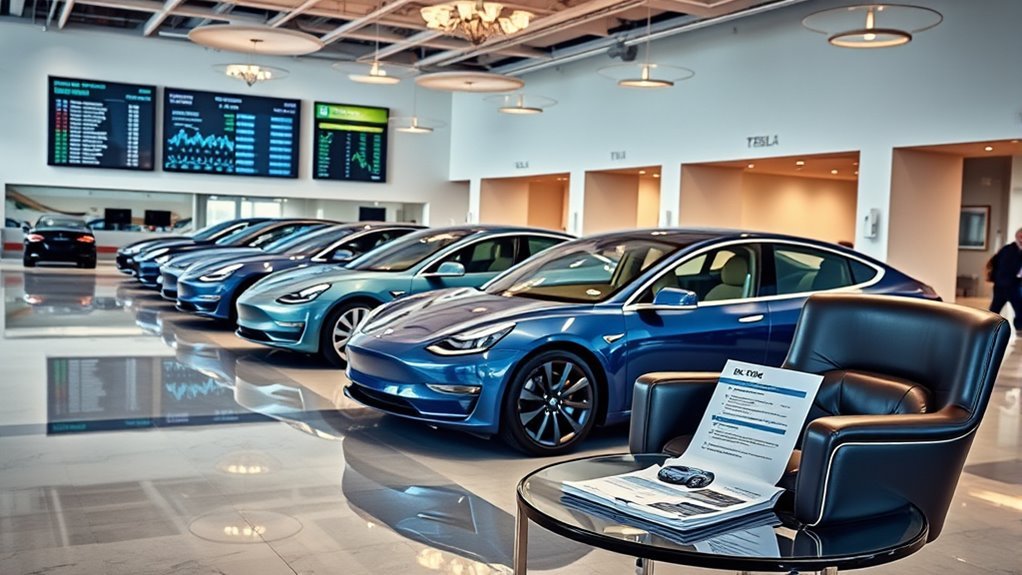
Understanding what drives Tesla prices is critical for anyone shopping in 2026. The federal incentive landscape has changed completely.
As of 2026, the federal EV tax credit for both new and used vehicles has expired. The One Big Beautiful Bill Act (OBBBA), signed in July 2025, ended these programs. The $7,500 new EV credit and the $4,000 used EV credit officially stopped for vehicles acquired after September 30, 2025. You can read the exact IRS guidelines regarding the One Big Beautiful Bill Act to see how this affects your taxes.
Federal EV tax credits are no longer available as point-of-sale discounts for 2026 purchases. However, new tax deductions and state incentives are highly active.
While direct subsidies were eliminated, the new law introduced alternative tax benefits. Starting with loans originated after December 31, 2024, individuals can deduct up to $10,000 per year in interest on qualifying new personal-use vehicle loans. This softens the blow of carrying an auto loan.
For businesses and independent contractors, the OBBBA reinstated 100% bonus depreciation. If you use a vehicle for business purposes, you can immediately write off the entire purchase price of the vehicle in the first year. This rule applies to vehicles purchased after January 19, 2025. This makes expensive vehicles like the Cybertruck and the Tesla Semi highly attractive to commercial buyers.
Some states, including California and Colorado, still offer direct cash EV incentives. These amounts vary wildly depending on your zip code. Rules around eligibility change often, so checking local resources is very important.
Knowing these specific tax details can help you make a smarter buying decision. It ensures you avoid unpleasant financial surprises at checkout.
How Does Financing Work for Tesla Purchases?
Getting the most from your financing is an important part of any Tesla purchase. Because the $7,500 federal tax credit is gone, Tesla has started offering heavily subvented interest rates to keep monthly payments low.
Here is what to consider when looking at a loan or lease in 2026:
- Aggressive Loan Rates: Tesla now offers a 0.99% APR financing option for all new Model 3 orders. Even better, they offer a 0% APR deal for 72 months on select Model Y All-Wheel Drive units. This 0% rate effectively cuts the total cost of the car by around $4,000 compared to a standard bank loan.
- Used Financing Rates: If you buy a used Tesla, interest rates are higher. Used vehicle loans through Tesla typically sit around 7.19% for up to 72 months.
- Monthly Management: You can manage all of your loan or lease payments directly through the Tesla App. This makes it incredibly easy to stay on top of your budget.
- Leasing Terms: Leasing is available in 44 states. A base Model 3 leases for around $399 per month, while a Model Y leases for about $459 per month. Keep in mind that Tesla leases do not include a purchase option at the end of the term. You must return the car.
Evaluating the Value of Tesla Ownership
When weighing the value of Tesla ownership, it helps to look far beyond the sticker price. You must consider the long-term costs and benefits.
New Tesla prices range from $36,990 for the Model 3 up to $290,000 for the commercial Semi. Without the federal EV tax credit covering part of the cost, your total ownership expenses deserve close attention.
The used market offers very accessible entry points. High-mileage Model 3s can be found starting around $8,000. Even lightly used models often come in well below their original factory sticker price.
Maintenance costs tend to be much lower than gas-powered cars. Electric motors have very few moving parts. This means there are fewer things to break down or replace. You never have to pay for an oil change, spark plugs, or transmission fluid. This saves you significant money over the lifespan of the vehicle.
Tesla vehicles have historically held solid resale values relative to other EV brands. With Model S and Model X production ending soon, the resale dynamics for those specific luxury models have already shifted upward. They are becoming rare commodities on the secondary market.
Frequently Asked Questions
How Much Is the Cheapest Tesla?
The cheapest new Tesla is the Model 3 Standard RWD. It starts at $36,990 before destination fees and taxes. It offers strong driving range and premium technology at the most accessible price point in the entire lineup.
Is There a $30,000 Tesla?
No, there is no new Tesla available at $30,000 right now. If you are looking for a more affordable electric vehicle, you should consider the used Tesla market. A used Model 3 can easily be found for under $25,000.
How Far Will a Tesla Travel on a Full Charge?
Range depends heavily on the model you choose. The Model 3 can travel up to 363 miles on a full charge. The Model S reaches up to 410 miles. The commercial Tesla Semi boasts a 500-mile range fully loaded. Real-world range will always vary with your driving conditions, highway speeds, and cold weather.
Why Is Owning a Tesla Expensive?
Tesla ownership costs add up through insurance premiums, which tend to be higher for electric vehicles due to repair costs. The initial purchase price is also a factor now that federal subsidies have ended. However, maintenance and charging costs are generally much lower than a gas car. This helps offset the higher insurance payments over time.
Conclusion
Tesla’s 2026 lineup gives buyers a truly massive range of options. You can choose the budget-friendly $36,990 Model 3, or you can step up to the incredible commercial capabilities of the $290,000 Semi.
With the federal EV tax credit now gone, understanding the market is more important than ever. Buyers must navigate new tax deductions, utilize 0% financing deals, and monitor shifting used market values. Tesla is fundamentally changing its business by ending the Model S and X to focus on robotics. This makes their current vehicles unique pieces of a rapidly changing technological landscape. Whether you are leaning toward a brand-new model or exploring the thriving used market, knowing the full picture puts you in the best position to choose the right vehicle for your needs.





Leave a Reply