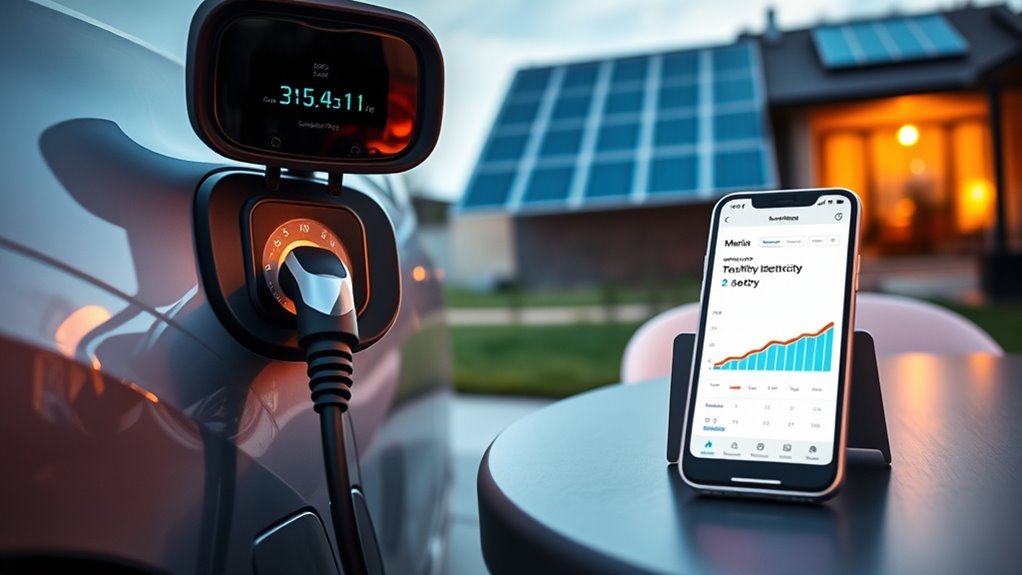
Charging your electric vehicle (EV) can raise your electric bill by $60 to $72 for 1,200 miles driven each month. If you drive about 1,000 miles, the increase might be around $48. For comparison, traditional gasoline vehicles can cost you about $192 to fuel over the same distance. Your exact costs may vary based on local electricity rates and charging habits. Explore more about strategies to manage these expenses and their impact on your finances.
Understanding the Basics of EV Charging Costs
How does charging your electric vehicle (EV) affect your monthly electric bill? When you charge at home, your bill generally increases by about $60 to $72 monthly, depending on your driving habits and local electricity rates.
Charging efficiency plays an essential role here; for instance, a typical EV consumes about 0.32 kWh per mile. If you drive 1,200 miles a month, expect around $64.80 in additional costs.
A typical electric vehicle uses about 0.32 kWh per mile, adding roughly $64.80 monthly for 1,200 miles driven.
With the average residential rate at 16.29 cents per kWh, this increase can be considerably lower compared to gasoline vehicles, which cost around 16 cents per mile.
To maximize savings, consider a home installation that allows off-peak charging, taking advantage of lower utility rates at night.
How Much Will Charging My EV Raise My Electric Bill?
Wondering about the impact of charging your electric vehicle (EV) on your monthly electric bill? The increase can vary based on several factors, including charging frequency and your driving habits. Here’s a breakdown:
- Driving 1,200 miles/month: Expect an increase of $60 to $72.
- Driving 1,000 miles/month: Your bill may rise by about $48.
- Cost per mile: Charging costs around 5.4 cents, much lower than the 16 cents per mile for gas vehicles.
- Off-peak charging: Utilizing off-peak hours can minimize the impact on your bill.
Keep in mind that states with higher electricity rates, like Hawaii, can see significant increases, potentially reaching $161.28 for 1,200 miles.
Understanding these elements helps you anticipate the mileage impact on your finances, empowering you to make informed choices as you embrace electric driving.
EV Charging Costs Compared to Gas Prices
Understanding the costs associated with charging an electric vehicle (EV) reveals a stark contrast when compared to traditional gasoline prices.
On average, charging your EV can add about $60 to $72 to your monthly electric bill for 1,200 miles driven, while filling up a gasoline vehicle could cost you around $192.
Charging an EV typically adds $60 to $72 monthly, while gasoline vehicles can cost around $192 for the same distance.
With electricity priced at approximately 17.01 cents per kWh, your EV operates at about 5.4 cents per mile, considerably cheaper than gasoline vehicles that average 16 cents per mile.
This cost comparison highlights the substantial fuel savings you can achieve with an EV.
If you consider that charging costs range from $48 to $64 monthly, it’s clear that EVs can be nearly three times less expensive to fuel than their gasoline counterparts.
This financial advantage not only reduces your expenses but also liberates you from volatile gas prices, allowing for more predictable budgeting.
Effective Strategies for Lowering Your EV Charging Expenses
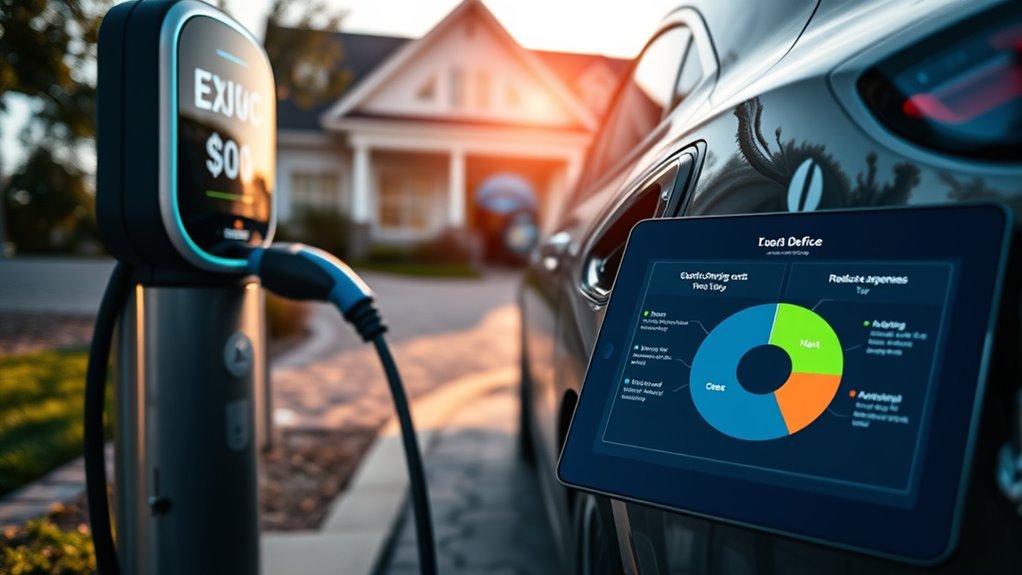
To effectively lower your EV charging expenses, it’s essential to adopt a strategic approach that maximizes efficiency and minimizes costs.
Here are four effective strategies:
- Utilize TOU Plans: Take advantage of Time-of-Use rates by charging your EV during off-peak hours when electricity is cheaper.
- Install a Level 2 Charger: Upgrade to a Level 2 charger to enhance charging speed and efficiency, ultimately reducing costs over time.
- Implement Smart Charging: Use smart charging technology to schedule your charging sessions during the most economical hours, optimizing your energy use.
- Research Local Charging Stations: Identify nearby free or low-cost charging options. This reduces reliance on pricier public networks, saving you money.
Key Factors That Affect Your EV Charging Costs
Several key factors considerably affect your EV charging costs, and understanding them can help you make informed decisions to manage your expenses effectively.
One major element is the state variations in electricity rates, which can range markedly; for example, California averages 27 cents per kWh, while Texas is around 14 cents. This difference directly impacts your monthly bill.
State electricity rates vary significantly; California averages 27 cents per kWh, while Texas is about 14 cents, influencing your monthly expenses.
Additionally, the charging speed plays an essential role—using a Level 2 charger can reduce charging time and overall energy consumption compared to a Level 1 charger.
Moreover, many utility companies offer time-of-use (TOU) rates, allowing you to save money by charging during off-peak hours when rates are lower.
For a typical battery electric vehicle (BEV) consuming about 0.32 kWh per mile, these factors can lead to varying monthly costs, making it vital to reflect on them for effective budgeting.
Frequently Asked Questions
How Much Does Your Electric Bill Increase With an EV?
Your electric bill usually increases by about $60 to $72 monthly, depending on your charging habits and energy rates. Charging during off-peak hours can help lower this cost, making EV ownership more economical overall.
What Is the 80 20 Rule for EV Charging?
The 80/20 rule for EV charging means you can meet 80% of your charging needs at home, optimizing your charging habits for energy efficiency while only using public stations for the remaining 20%. Embrace this strategy!
Does Charging an EV Use a Lot of Electricity?
Charging an EV doesn’t use a lot of electricity compared to gasoline vehicles. With efficient energy consumption, you’ll find that costs remain manageable, especially when utilizing smart charging strategies to optimize charging efficiency during off-peak hours.
How Do I Calculate EV Charging Cost?
To calculate your EV charging cost, multiply the total kWh used by your local electricity prices. Given the average charging rates, understanding your consumption can lead to significant savings and empower your sustainable journey.
Conclusion
In conclusion, understanding your EV charging costs is essential for managing your electric bill. You might be surprised to find that charging your EV can cost less than filling up a gas tank, depending on your local rates. Coincidentally, as you adopt strategies to lower your expenses—like charging during off-peak hours—you’ll likely discover additional savings. By being proactive and informed, you can enjoy the benefits of electric driving while keeping your budget in check.






Leave a Reply