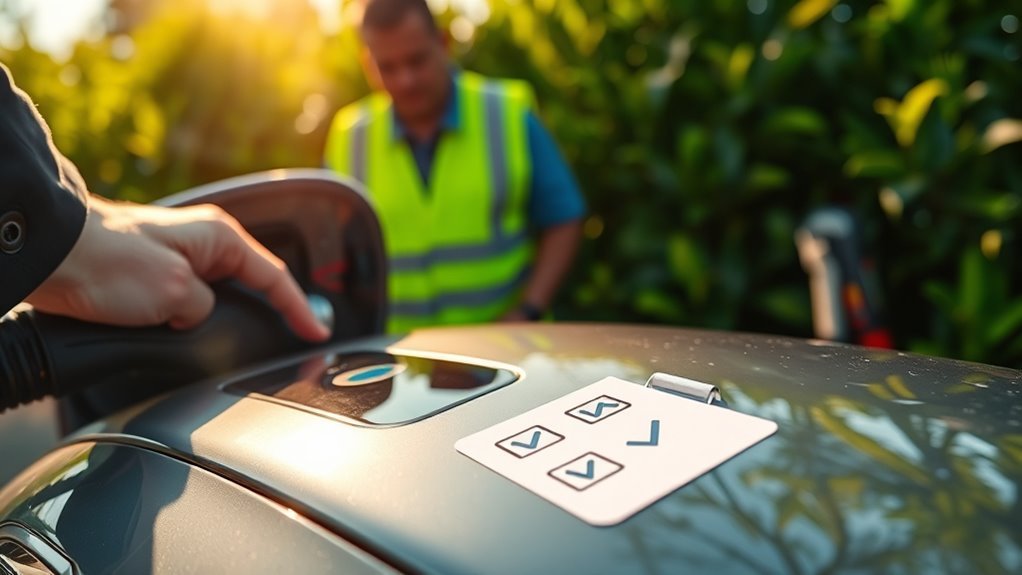
You should inspect your EV charger regularly to guarantee safety and peak performance. Perform daily visual inspections for immediate damage, monthly checks on cables and connectors, and detailed assessments every year. Every 3 to 5 years, conduct extensive electrical tests to meet safety regulations. Signs like changes in charging speed, overheating, or frequent error messages indicate deeper issues needing attention. Maintaining proper inspection intervals helps you avoid costly repairs and keeps your charger running smoothly—learn about essential procedures for maximum effectiveness.
Why Regular Inspections Are Crucial for EV Charger Maintenance
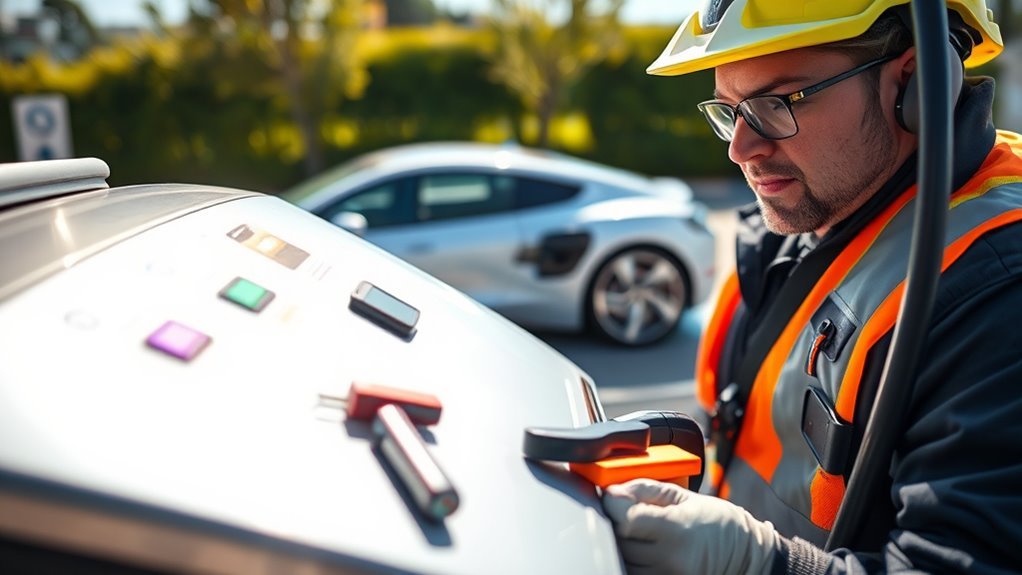
Regular inspections are crucial for EV charger maintenance because they help you catch potential issues before they escalate. By conducting routine checks, you can guarantee peak charger performance and safety.
Regular inspections ensure optimal EV charger performance and safety by identifying potential issues early on.
A visual inspection annually can reveal signs of wear and tear, while a thorough electrical test every 3 to 5 years aligns with safety regulations. This inspection frequency not only prevents minor issues from developing into costly repairs but also enhances the longevity of your charger.
During inspections, you’ll identify hazards like frayed cables or loose connections, which may pose risks of electrical shock or fires.
Maintaining detailed logs of your inspections supports proactive management, enabling timely repairs and upgrades based on your charger’s service history. Commitment to regular inspections empowers you to maintain a safe, efficient charging environment, allowing you to fully embrace the benefits of electric vehicle ownership without worry.
How Often to Inspect Your EV Charger?
You should conduct daily visual inspections of your EV charger to catch any immediate signs of damage or malfunction.
Additionally, monthly component checks are essential for evaluating the integrity of cables, connectors, and weatherproofing.
Staying proactive with these inspections helps guarantee your charger operates safely and efficiently.
Daily Visual Inspections
Daily visual inspections of your EV charger are essential for guaranteeing its safe and efficient operation. You should evaluate charger aesthetics and perform a thorough damage assessment. Look for cracks, dents, and verify the unit is clean and debris-free. Pay close attention to the charging cable and plug for any kinks or scorch marks. Confirm the charger casing is intact and securely fixed, protecting internal components. Monitor the lights or display for any unusual signals indicating a malfunction. Regularly check connections for a firm fit and cleanliness to prevent inefficient charging.
| Inspection Focus | Action Required |
|---|---|
| Charger Aesthetics | Check for visible damage |
| Charging Cable & Plug | Inspect for kinks or cracks |
| Charger Casing | Verify it’s securely fixed |
| Lights/Display | Look for warning signals |
Monthly Component Checks
Conducting monthly component checks on your EV charger is essential for maintaining its operational integrity and safety.
During these monthly assessments, inspect the charging cable and connectors for any signs of wear, damage, or corrosion, ensuring a safe and efficient operation. You must also evaluate the power supply to confirm it’s functioning correctly, which helps prevent potential electrical issues.
Don’t forget to check the control board for irregularities, as it manages the charging process. Additionally, test any smart features like mobile app integration or RFID readers to guarantee peak performance.
Finally, maintain detailed documentation of your findings; this supports safety protocols and helps track your charger’s condition over time, promoting effective preventive maintenance strategies.
What Signs Indicate Your EV Charger Needs Testing?
What signs should you look for to determine if your EV charger needs testing? Staying vigilant can enhance your safety and guarantee peak performance. Here are key indicators to watch for:
- Changes in charging speed: If you notice a significant slowdown, it might suggest inefficiencies requiring immediate testing.
- Exterior damage: Dents, cracks, or exposed wires necessitate prompt attention to avoid safety hazards.
- Frequent error messages: If your charger displays errors regularly, it signals deeper issues that need thorough testing to prevent complications.
- Overheating: If your charger becomes excessively hot during operation, it’s critical to assess potential malfunctions for user safety.
Paying attention to these charging indicators can help you adhere to essential safety protocols, guaranteeing your EV charger operates reliably and safely.
Don’t wait until problems escalate; proactive testing is crucial.
Essential Testing Procedures for EV Chargers
While guaranteeing your EV charger operates safely and efficiently, it’s essential to implement important testing procedures. Regular inspections should involve visual checks of connectors and cables to spot any signs of wear, damage, or corrosion—key aspects of your safety protocols.
Ensure the safety and efficiency of your EV charger with regular visual inspections of connectors and cables for wear and damage.
You must conduct protective earth tests to confirm there are no open circuit ground connections or voltage presence, safeguarding users from electrical hazards. Touch voltage measurements are equally important to verify that earth voltage levels remain safe during faults, preventing electric shock incidents.
Routine testing should also encompass tripping time tests for protective devices, verifying they operate rapidly and comply with safety standards.
Don’t overlook advanced testing techniques, such as insulation resistance testing and earth loop impedance testing, which are fundamental for certification and maintaining the operational integrity of your EV charging station.
Adhering to a structured testing frequency keeps your equipment reliable and your users safe.
Top Problems Found During EV Charger Inspections
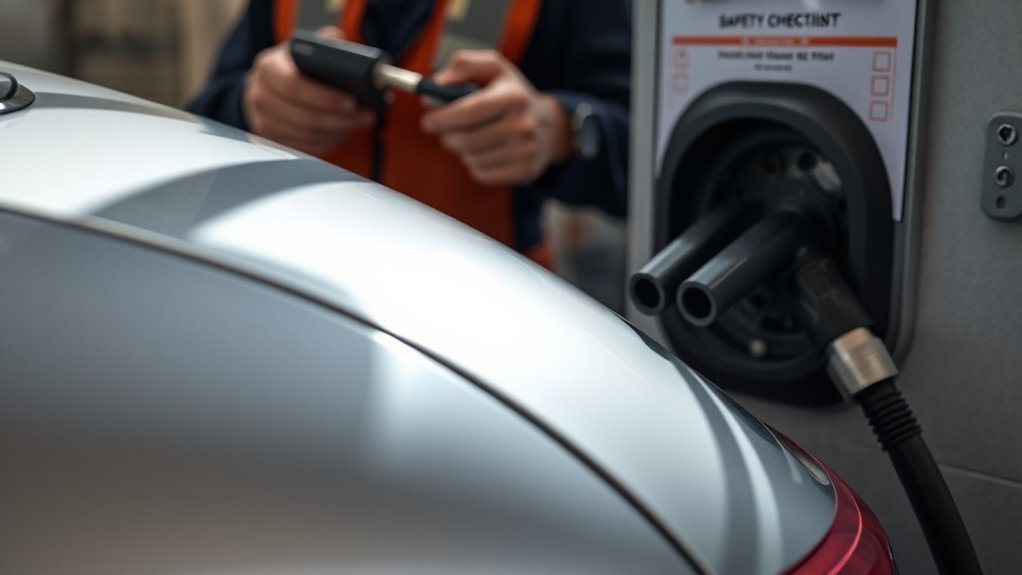
When inspecting EV chargers, you’ll often encounter a range of common issues that can compromise both safety and efficiency. Identifying these problems early is vital for maintaining peak performance and ensuring user safety.
- External damage: Dents and cracks can hinder charger efficiency and create safety hazards.
- Exposed wiring: This serious safety hazard must be repaired immediately to prevent electrical shocks or fire incidents.
- Slow charging speeds: Often indicative of underlying issues, it’s essential to evaluate connections and components for wear or malfunctions.
- Frequent error messages: These signals point to potential problems needing prompt attention to maintain charger reliability.
Why You Should Consider Professional Servicing for Your EV Charger
Considering professional servicing for your EV charger is essential for ensuring safety and efficiency.
Experts in electrical systems conduct thorough safety checks, identifying potential hazards before they become serious issues.
Regular maintenance not only extends the lifespan of your charger but also guarantees its peak performance with the latest technology.
Expertise In Electrical Systems
Guaranteeing the safety and efficiency of your EV charger hinges on expert servicing by licensed electricians.
These professionals bring essential qualifications, guaranteeing compliance with electrical safety regulations while minimizing hazards.
Here are key reasons to choose professional servicing:
- Identify hidden issues like loose connections and corrosion.
- Conduct thorough inspections with specialized testing equipment.
- Perform extensive diagnostics to maintain peak performance.
- Confirm smart chargers function correctly with necessary firmware updates.
Comprehensive Safety Checks
Thorough safety checks are essential for maintaining the reliability and performance of your EV charger, as they identify potential hazards before they escalate.
By engaging professional servicing, you guarantee extensive safety checks that include visual inspections and electrical testing, adhering to essential safety protocols.
Regular inspections help detect issues like loose connections, corrosion, and overheating—problems that casual checks might overlook.
NICEIC-approved contractors verify that your RCD and fault protection systems are functioning correctly, enhancing user safety.
Additionally, professionals check for necessary firmware updates, keeping your charging station compatible with the latest vehicle technology.
Prioritizing routine professional maintenance not only extends the lifespan of your EV charger but also minimizes risks of malfunctions and costly repairs, ensuring peace of mind.
Timely Maintenance Solutions
When it comes to maintaining your EV charger, timely professional servicing is essential for best performance and safety. Engaging licensed electricians for routine checks guarantees that your charger remains reliable and efficient.
Here are some reasons to contemplate professional servicing:
- Thorough inspections, including visual checks and electrical tests
- Early identification of potential issues to prevent costly repairs
- Firmware update checks for compatibility with new vehicle models
- Compliance with safety regulations, promoting user safety
Best Practices for Keeping Your EV Charger in Top Condition
Keeping your EV charger in top condition requires regular attention and maintenance. Start with yearly visual inspections to spot any signs of damage, wear, or corrosion that could affect performance and safety.
Every 3 to 5 years, conduct full electrical testing to verify compliance with safety regulations and operational integrity. Don’t forget to monitor and update the software on smart chargers regularly; this boosts performance and addresses security vulnerabilities.
Thoroughly check your charging accessories, including cables and connections, to confirm they’re secure and undamaged, allowing efficient charging.
Finally, maintain a clean environment around the charging station to prevent overheating and guarantee peak performance. Adhering to these user guidelines will keep your EV charger functioning effectively and safely, empowering your electric vehicle experience.
Frequently Asked Questions
How Often Should EV Chargers Be Tested?
You should test your EV charger every 3 to 5 years, depending on your charging frequency. Regular safety checks help guarantee peak performance and prevent potential hazards, maintaining both reliability and safety for your electric vehicle.
What Is the 80 20 Rule for EV Charging?
The 80/20 rule for EV charging states that 80% of your charging needs can be met by just 20% of stations. This optimizes charging efficiency and power output, enhancing convenience for most EV drivers like you.
Do EV Chargers Require Maintenance?
Absolutely, EV chargers need regular upkeep. Follow these maintenance tips: check for exterior damage, monitor charging efficiency, and guarantee software updates. Proactive care prevents problems, paving the way for safe, seamless charging experiences.
What Is the Life Expectancy of an EV Charger?
An EV charger typically lasts 10 to 15 years, depending on charger durability and lifespan factors like installation quality, usage frequency, and environmental conditions. Proper maintenance can help you extend its operational life considerably.
Conclusion
In summary, regular inspections and testing of your EV charger are vital for safety and performance. For instance, a fleet manager noticed intermittent charging issues with their chargers, leading to downtime. After a thorough inspection, they discovered corroded connections and outdated software that required urgent attention. By addressing these problems proactively, they enhanced efficiency and guaranteed safety. Adopting a routine maintenance schedule can prevent potential hazards and keep your EV charger operating at peak performance.





Leave a Reply