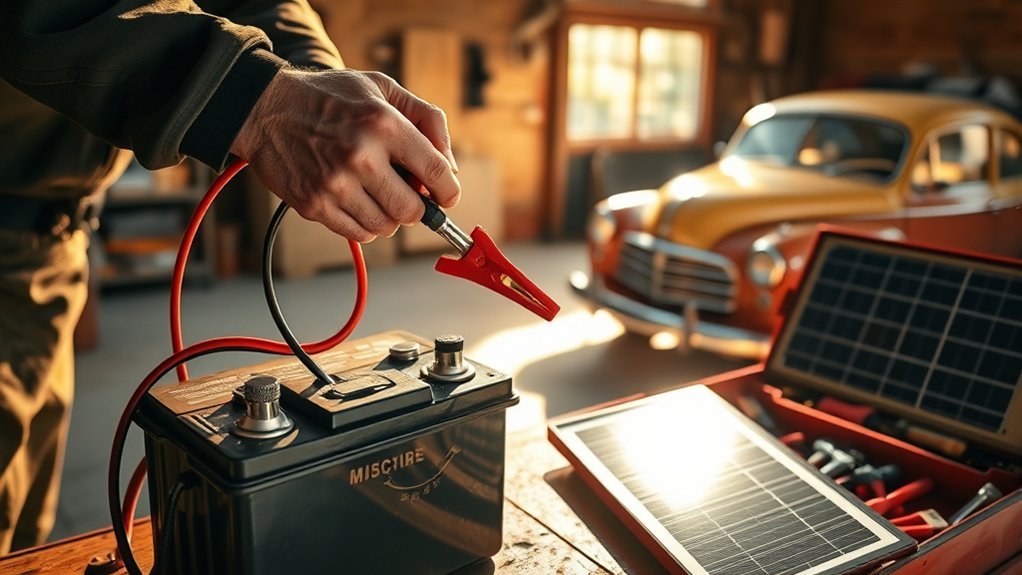
You can charge a car battery without a traditional charger using several safe DIY methods. Jump start your car with a donor vehicle by connecting battery terminals correctly. Alternatively, use a home inverter to convert AC to DC power, ensuring the proper setup. Solar panels can also effectively charge batteries with adequate sunlight and a charge controller. Lastly, portable jump starters offer a quick solution. Keep safety guidelines in mind, and you’ll learn more about each method.
Key Takeaways
- Jump Start with a Donor Vehicle: Use jumper cables to connect a working vehicle’s battery to the dead battery, ensuring proper terminal connections for safety.
- Utilize a Home Inverter: Convert AC power to DC using an inverter, ensuring compatibility with the battery’s voltage and secure lead connections.
- Employ Solar Panels: Charge the battery with dedicated solar panels and a solar charge controller, requiring ample sunlight for effective charging.
- Use a Portable Jump Starter: Boost the battery with a portable jump starter, confirming battery condition with a multimeter before use.
- Perform Regular Maintenance: Inspect the battery for damage and corrosion, and clean terminals to maintain optimal charging conditions and safety.
The Importance of Charging Car Batteries Safely
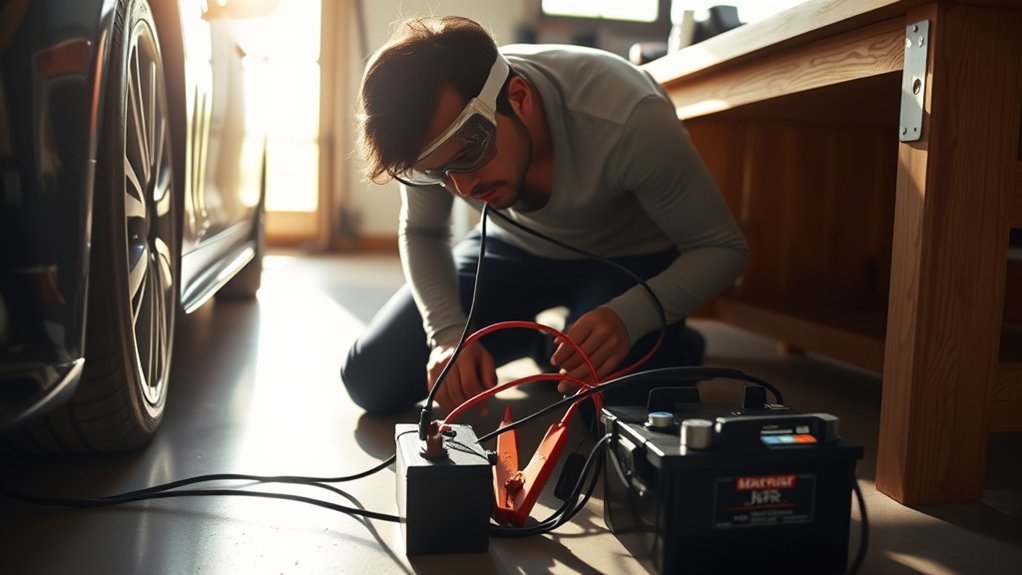
When you’re charging a car battery, safety should always be your top priority, as improper techniques can lead to battery damage or personal injury.
Start by ensuring the battery terminals are clean and free from corrosion; this promotes a safe and effective connection.
It’s crucial to verify that the dead battery matches the donor vehicle‘s size and mAh rating to avoid electrical issues during the charging process.
Utilize inverters and jump starters with built-in safety features, checking them before use to prevent overcharging and overheating.
Following manufacturer guidelines and employing proper battery maintenance practices can significantly reduce risks and extend your battery’s lifespan.
Always prioritize these safety measures to ensure an efficient and secure charging experience.
Common Signs of a Dead Car Battery
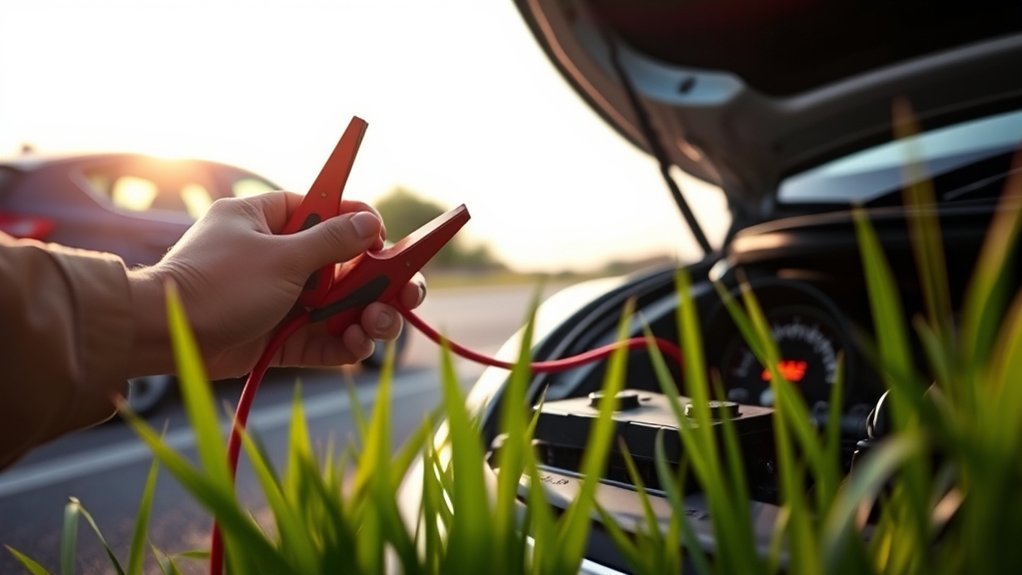
Recognizing the common signs of a dead car battery can save you from unexpected breakdowns. If your vehicle fails to start and the engine makes a clicking sound, that’s a clear indicator.
Dim headlights or interior lights that brighten when you rev the engine suggest a weak battery. Pay attention to the battery warning light on your dashboard; its illumination signals a potential issue with the battery or charging system.
A rotten egg smell near the battery indicates a leak or overcharging, pointing to possible failure. Additionally, frequent electrical issues, like malfunctioning power windows or radio, can signal a failing battery.
Following battery maintenance tips and employing troubleshooting techniques can help you address these issues promptly.
How to Jump Start Your Car Using a Donor Vehicle
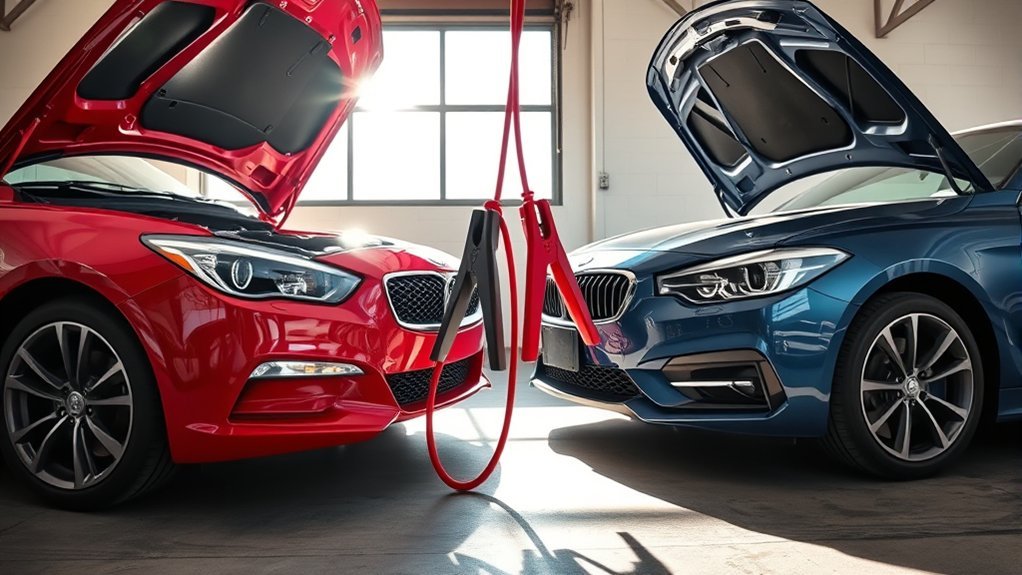
If your car won’t start due to a dead battery, jumping it using a donor vehicle can quickly restore power. Follow these steps for a safe and effective jump start:
- Ensure both vehicles are off and parked close together for access to the battery terminals.
- Clean the battery terminals of both vehicles to remove any corrosion.
- Connect the red (positive) lead to the dead battery’s positive terminal, then the donor vehicle’s positive terminal. Next, attach the black (negative) lead to the donor battery’s negative terminal and the other end to an unpainted metal surface on the dead vehicle.
Start the donor vehicle and let it run for about 10 minutes before attempting to start your car.
If it doesn’t start, wait a bit longer and try again.
Step-By-Step Guide to Charging Your Car Battery With a Home Inverter
To charge your car battery with a home inverter, you need to understand the inverter’s specifications and ensure it can convert AC power to the required DC voltage.
Properly connecting the inverter to your battery is crucial for safe operation, so follow the guidelines for attaching the leads correctly.
Additionally, be mindful of the charging time, as it varies based on the inverter’s power rating and the battery’s current state.
Home Inverter Basics Explained
When you find yourself in a situation where a conventional car battery charger isn’t available, using a home inverter can be a practical alternative for recharging your vehicle’s battery. This device converts AC power from a wall outlet into DC power suitable for charging.
To effectively use a home inverter, consider the following:
- Inverter Types: Ensure you choose an inverter compatible with your battery.
- Inverter Efficiency: Look for models with built-in safety features to prevent overcharging.
- Charging Time: Expect the process to take between 1.5 to 3 hours, depending on your inverter’s power supply and the battery’s condition.
Always consult the inverter’s manual for specific compatibility and safety information before proceeding.
Proper Connection Setup
Using a home inverter to charge your car battery requires a proper connection setup to ensure safety and efficiency.
First, check the inverter compatibility with your battery’s voltage, typically 12V for most car batteries. Next, secure the positive terminal of the battery to the positive output of the inverter, and connect the negative terminal to the negative output.
Ensure all connections are corrosion-free and tight to prevent issues. Before plugging the inverter into a wall outlet, verify each connection to avoid short circuits or damage.
Once confirmed, plug in the inverter and allow it to charge. After charging, disconnect the inverter, starting with the negative terminal to minimize spark risks, and store the inverter in a cool, dry place.
Charging Time Considerations
While the time it takes to charge a car battery with a home inverter can vary, understanding a few key factors will help you estimate the duration more accurately.
- Inverter capacity: Higher wattage inverters provide faster charging speed.
- Battery capacity: A larger battery takes longer to charge, affecting overall time.
- Charging conditions: Ambient temperature and battery condition can influence efficiency.
Typically, charging can take between 1.5 to 3 hours.
Make sure your inverter converts AC to DC, as car batteries require direct current. Check the inverter’s specifications to ensure compatibility with your battery’s voltage and capacity.
Always monitor the charging process for safety, as built-in features help prevent overcharging and overheating.
How to Use Solar Panels for Charging Your Car Battery
Solar panels can be a reliable method for charging your car battery, especially when you’re looking for an eco-friendly alternative.
To maximize charging efficiency, select dedicated solar panel types designed for car batteries. Ensure you use a solar charge controller to prevent overcharging and manage voltage levels, which optimizes safety and performance.
While solar panels can effectively recharge your battery, they typically require around 8 hours of sunlight, depending on the battery’s capacity.
It’s important to note that solar panels are more suited for topping off batteries rather than fully charging completely flat ones.
For best results, secure all connections and position the solar panel for maximum sunlight exposure throughout the day to maintain your battery’s health.
Using Portable Jump Starters to Charge Car Batteries
If you’re looking for a quick and efficient way to charge your car battery without a traditional charger, a portable jump starter can be an excellent solution.
These devices provide a powerful boost, allowing your vehicle’s alternator to charge the battery once the engine runs. To ensure effective use, follow these steps:
- Check the battery’s condition with a multimeter to confirm it can accept a charge.
- Turn off all auxiliary electrical systems to direct power to the starter.
- Securely connect the jump starter to clean, corrosion-free battery terminals.
Monitoring your vehicle during the jump start is crucial for identifying any unusual sounds or behaviors, which can aid in battery maintenance and prevent future issues.
Key Safety Precautions for DIY Car Battery Charging
When charging a car battery yourself, adhering to key safety precautions is essential to prevent accidents and ensure effective operation.
Start by cleaning the battery terminals to eliminate corrosion, which can cause poor connections and sparks. Ensure the dead battery matches the donor vehicle’s size and shape to avoid compatibility issues.
If the donor vehicle requires battery registration with the ECU, verify this to protect its electronics during the process. Always use inverters with built-in safety features to prevent overcharging and overheating.
Additionally, regularly inspect your battery for any signs of wear or damage, as compromised batteries pose significant safety risks.
Following these battery maintenance tips and charging safety guidelines will help ensure a safe charging experience.
Frequently Asked Questions
Can I Charge a Car Battery With a Regular Wall Outlet?
You can’t charge a car battery directly with a regular wall outlet. Instead, consider alternative methods, like using a power inverter or a trickle charger, which convert wall outlet charging into a suitable voltage for your battery.
How Long Does It Take to Charge a Car Battery Without a Charger?
Charging times vary significantly; you could wait from a few hours to several days. Prioritizing battery health is crucial, as improper methods can damage your battery, so always proceed with caution and check your progress regularly.
Is It Safe to Charge a Battery in Extreme Temperatures?
It isn’t safe to charge a battery in extreme temperatures. Temperature effects can significantly impact battery performance, leading to overheating or damage. Always aim to charge within the manufacturer’s recommended temperature range for optimal results.
What Tools Do I Need for DIY Battery Charging Methods?
You’ll need jumper cables, a multimeter, and safety gear like gloves and goggles. About 30% of DIY battery charging methods rely on alternative methods, so prioritize safety precautions to avoid accidents during your process.
Can I Use Any Car Battery for Jump-Starting?
You can use any car battery for jump-starting, but ensure compatibility issues don’t arise. Different voltages or battery types can complicate jump-starting techniques, so always check specifications before proceeding with the jump-start.
Conclusion
In conclusion, charging your car battery without a traditional charger is not only possible but can be done safely with the right methods. Whether you’re jump-starting with a donor vehicle or harnessing the sun’s power, these DIY techniques can save you when your battery’s dead. Just remember, safety first—nobody wants a shocking experience like that time your granddad tried to fix the TV with a fork! Stay informed and keep your battery charged!






Leave a Reply