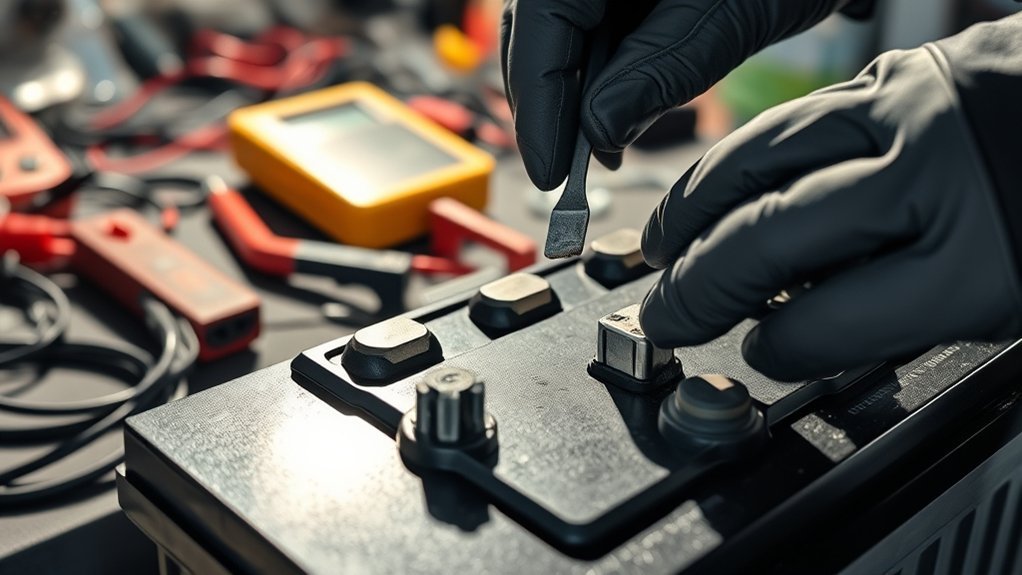
To recondition your car battery and extend its life, you’ll need a multimeter, battery charger, distilled water, and safety gear. Start by safely removing the battery from your vehicle and inspecting it for damage. Clean corrosion from the terminals and fill the cells with distilled water if needed. Charge the battery with a smart charger, ensuring you maintain proper voltage. Regular testing and maintenance can enhance performance, and there’s more to explore about optimizing your battery’s health!
Key Takeaways
- Gather essential tools like a multimeter, battery charger, distilled water, and safety gear for the reconditioning process.
- Safely remove the battery by disconnecting terminals and inspecting for any damage or corrosion.
- Charge the battery using a smart charger, ensuring optimal voltage levels and preventing overcharging.
- Regularly test battery performance with a multimeter and hydrometer to monitor voltage and electrolyte condition.
- Maintain battery health by cleaning terminals and charging every 30 days if the vehicle is not in use.
Why You Should Recondition Your Car Battery Instead of Buying a New One
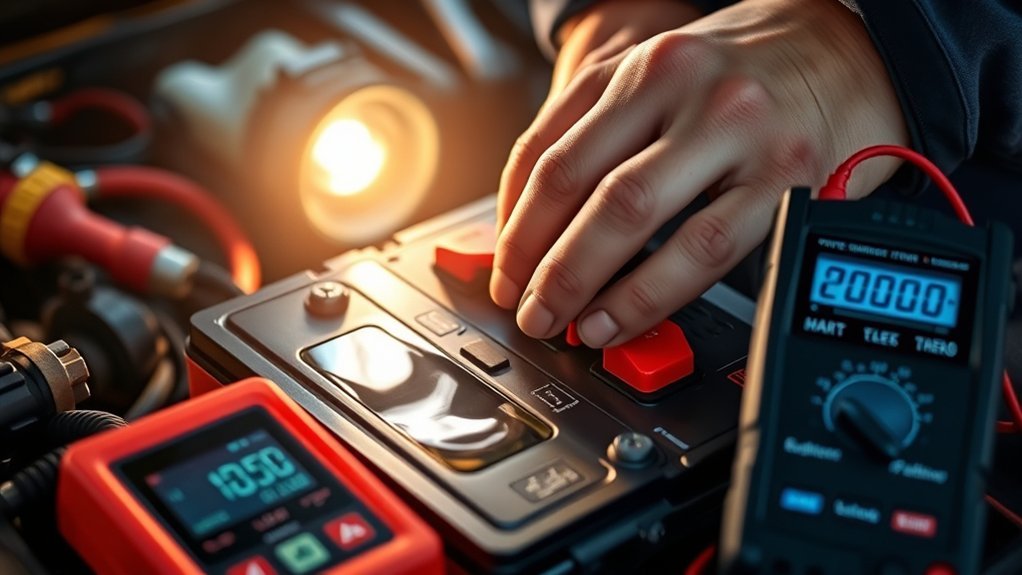
When you consider the cost of a new car battery, which can easily range from $100 to $200, reconditioning becomes a compelling alternative.
By opting for reconditioning, you can achieve significant cost savings, often using materials you already have at home. This process can extend your battery’s lifespan by 1 to 3 years and improve its efficiency by up to 30%.
Many batteries are designed for reconditioning, with techniques like equalization charging effectively breaking down sulfation build-up, a common failure cause.
Additionally, reconditioning has environmental benefits; it helps reduce waste by keeping batteries out of landfills and lessens the demand for new battery production, making it a smart choice for both your wallet and the planet.
What Tools Do You Need to Recondition Your Battery?
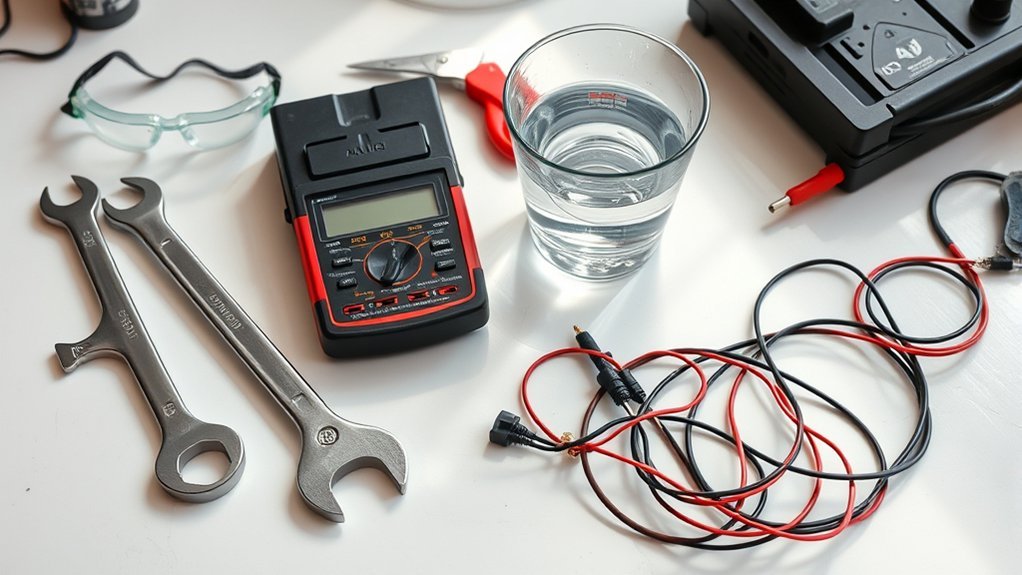
Reconditioning a car battery requires specific tools to ensure the process is effective and safe.
You’ll need the following:
- Multimeter: This tool measures voltage, allowing you to check the battery’s condition and monitor its performance during reconditioning.
- Battery Charger: Essential for providing the necessary power to revive a depleted battery, it’s vital for effective battery maintenance.
- Distilled Water: Used to replenish the electrolyte levels in lead-acid batteries, ensuring optimal performance post-reconditioning.
Additionally, safety gear like gloves and goggles is crucial to protect against harmful chemicals.
A hydrometer can also help assess the specific gravity of the electrolyte solution, giving you insights into the battery’s state of charge and the effectiveness of your reconditioning efforts.
Step-by-Step Guide to Safely Remove and Inspect Your Battery
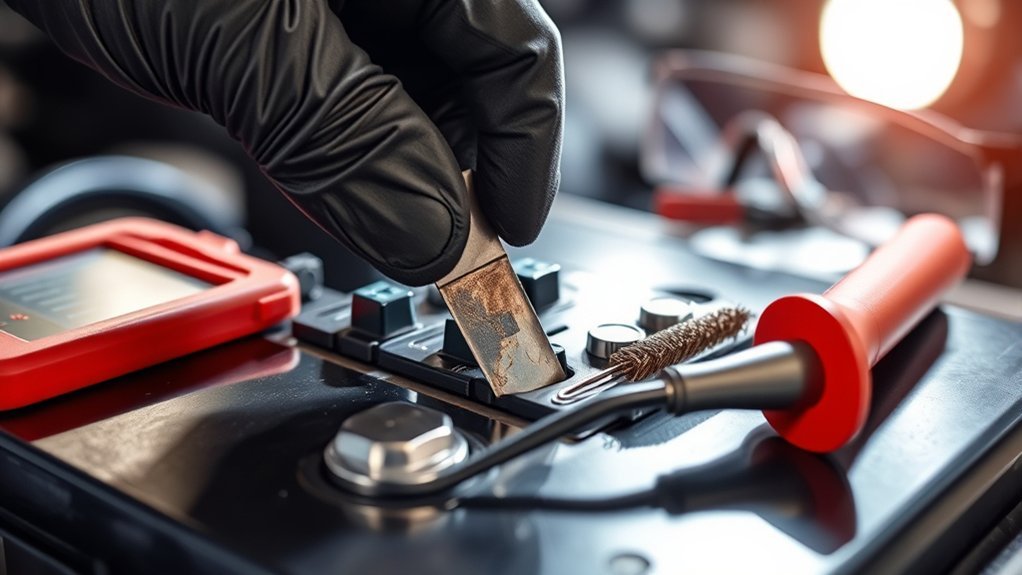
To safely remove and inspect your car battery, start by ensuring the vehicle is off and parked on a stable, flat surface.
Wear protective gear like gloves and safety glasses for battery safety.
Begin by disconnecting the negative terminal first—look for the minus sign—followed by the positive terminal to prevent short circuits.
Carefully lift the battery out, inspecting it for any signs of corrosion, leaks, or physical damage that could indicate issues.
Use a multimeter to check the battery’s voltage; a healthy battery should read around 12.6 volts or higher when fully charged.
Always handle the battery with care due to the sulfuric acid it contains, and remember to dispose of any old batteries at designated recycling centers.
Cleaning Battery Terminals and Filling Cells With Distilled Water
To ensure optimal battery performance, clean the terminals regularly to remove corrosion, enhancing electrical conductivity.
When filling battery cells, always use distilled water to prevent mineral buildup, which can hinder battery function.
Check the electrolyte level before adding water, maintaining it at about 1/4 inch above the lead plates for effective operation.
Importance Of Clean Terminals
Maintaining clean battery terminals is essential for ensuring optimal electrical conductivity in your vehicle’s battery system.
Corrosion can hinder performance, so regular terminal maintenance is crucial. Here are three key practices to follow:
- Inspect Regularly: Check terminals for corrosion, dirt, or grime every few months to identify potential issues early.
- Clean Effectively: Use a baking soda and water mixture to neutralize battery acid and eliminate corrosion, ensuring better connections.
- Apply Corrosion Prevention: Consider applying a protective coating after cleaning to guard against future corrosion.
Using Distilled Water
Using distilled water is vital for both cleaning battery terminals and maintaining the electrolyte balance in car batteries.
The distilled water benefits include preventing corrosion when you clean terminals with a wire brush, which ensures efficient electrical connections and prolongs battery life.
Regularly checking and topping up distilled water in the cells helps maintain proper electrolyte levels, preventing sulfation—a common issue that can diminish performance.
When filling the cells, make sure distilled water covers the plates but doesn’t exceed the fill line to avoid overflow during charging.
Remember, using distilled water instead of tap water is crucial, as tap water’s minerals and impurities can harm your battery’s efficiency.
These battery maintenance tips will help extend your battery’s lifespan.
Safe Filling Techniques
While handling a car battery, it’s crucial to adopt safe filling techniques to ensure optimal performance and longevity. Follow these steps for effective maintenance:
- Clean the terminals: Use a mixture of baking soda and water to neutralize corrosion, then rinse with clean water for a solid electrical connection.
- Check electrolyte levels: Before filling, ensure the electrolyte is about half an inch above the plates to avoid overfilling.
- Fill with distilled water: Use distilled water only; tap water can harm battery components. Fill carefully until the plates are just covered.
Always wear protective gloves and eyewear during this process for safe handling.
Adhering to these techniques will help extend your battery’s life and enhance its performance.
Best Charging Practices for Your Battery
To ensure your battery operates effectively, you need to maintain an optimal charging voltage range and avoid overcharging.
Stick to ideal charging frequency guidelines by recharging after every use and implementing a maintenance routine during inactivity.
These practices will help extend your battery’s lifespan and enhance its performance.
Optimal Charging Voltage Range
Charging your car battery requires careful attention to voltage levels to ensure optimal performance and longevity.
To maximize your battery’s lifespan, follow these key charging techniques:
- Voltage Range: Use a standard charger to maintain charging voltage between 13.8 to 14.4 volts for lead-acid batteries.
- Smart Chargers: Invest in a smart charger that adjusts voltage automatically, preventing overcharging and preserving battery health.
- Rest Voltage: After charging, ensure your battery reads 12.6 volts or higher at rest to confirm it’s in good condition.
Avoid Overcharging Your Battery
Maintaining the right charging voltage is key, but avoiding overcharging is equally important to safeguard your battery’s lifespan. Overcharging generates excessive heat, damaging battery plates and shortening overall life. Use smart chargers that adapt voltage based on your battery’s needs; this is essential charger selection advice. Regularly check the electrolyte’s specific gravity with a hydrometer to monitor the state of charge. Here are some battery maintenance tips:
| Action | Recommendation | Reason |
|---|---|---|
| Monitor Voltage | Keep between 13.8-14.4 volts | Prevents overcharging |
| Charge Duration | 4 to 8 hours | Avoids continuous charging |
| Use Smart Charger | Automatically adjusts voltage | Reduces overcharging risk |
Ideal Charging Frequency Guidelines
Regularly charging your car battery is crucial for sustaining its health and performance. To optimize battery maintenance, consider these guidelines for ideal charging intervals:
- Charge every 30 days if your vehicle isn’t in use to prevent sulfation and maintain optimal health.
- Monitor your battery’s voltage; a healthy battery should stay between 12.4 to 12.7 volts when fully charged.
- For best results, charge when the battery dips to around 50% capacity, which helps extend its lifespan.
Utilizing a smart charger can also automate the process, preventing overcharging and ensuring appropriate voltage levels are maintained.
Frequent short charging sessions lasting 10-15 hours are more beneficial than infrequent long charges, keeping your battery in its ideal charge range effectively.
How to Test Your Reconditioned Car Battery for Best Performance?
To ensure your reconditioned car battery performs at its best, it’s crucial to conduct a series of tests that assess its condition and functionality.
Start by using a multimeter to check the voltage; a healthy battery should read between 12.4 to 12.7 volts when fully charged.
Next, perform a load test with a battery load tester, confirming that the voltage remains above 9.6 volts under load for 15 seconds.
Utilize a hydrometer to measure the specific gravity of the electrolyte, aiming for readings between 1.265 and 1.299.
Additionally, monitor the battery’s temperature—excessive heat could indicate internal issues.
Finally, inspect terminals and connections for corrosion, ensuring proper battery maintenance and accurate performance readings.
Frequently Asked Questions
How Long Does a Reconditioned Battery Typically Last?
A reconditioned battery typically lasts between one to three years, depending on usage and maintenance. The reconditioning benefits enhance battery lifespan, improving performance and reliability, making it a cost-effective solution for your energy needs.
Can I Recondition Any Type of Car Battery?
You can’t recondition all car batteries. Lead acid batteries can often be revived, but lithium ion batteries typically require specialized methods. Always check specific guidelines for each battery type before attempting any reconditioning process.
Is It Safe to Recondition a Battery at Home?
Yes, it’s generally safe to recondition a battery at home if you follow proper battery safety protocols. Statistics show that 30% of DIY attempts succeed, highlighting the importance of using reliable home methods for effective results.
What Are the Signs That My Battery Needs Reconditioning?
If your battery performance drops significantly, you notice slow cranking, or it won’t hold a charge, it’s time to consider reconditioning methods. These signs indicate the battery could benefit from rejuvenation and maintenance techniques.
How Often Should I Recondition My Car Battery?
You should recondition your car battery every six months, depending on battery maintenance and lifespan factors. Regularly checking its performance helps prevent unexpected failures and maximizes its efficiency, keeping you confidently on the road.
Conclusion
Reconditioning your car battery can save you a significant amount of money, as studies show that up to 70% of battery failures can be attributed to sulfation, which may be reversible. By following the steps outlined, you not only breathe new life into your battery but also contribute to a more sustainable approach to vehicle maintenance. Keep your battery clean, charged, and well-maintained, and you’ll enjoy improved performance and longevity, reducing the need for costly replacements.







Leave a Reply