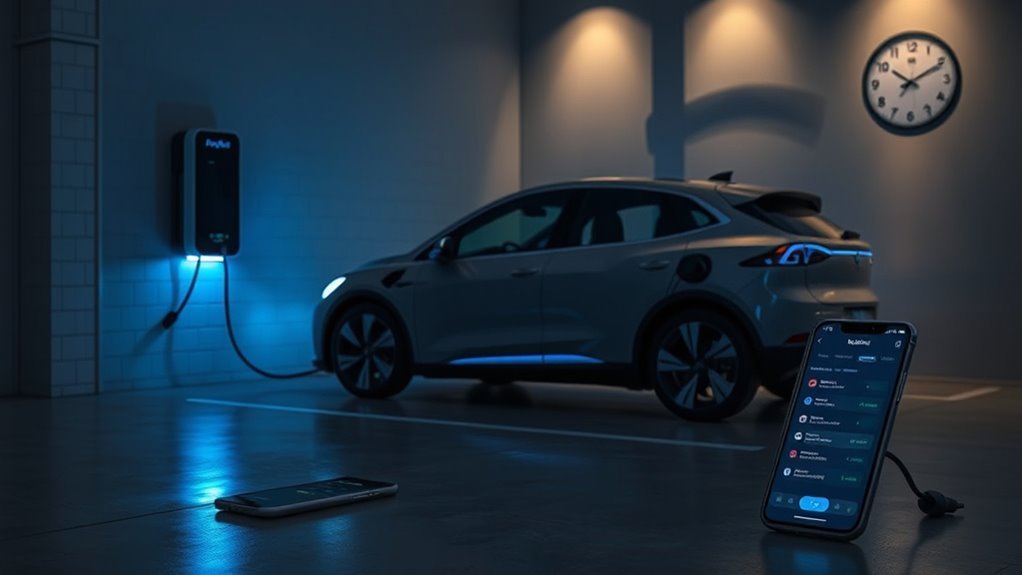
To schedule your EV charging during off-peak hours and save money fast, check your utility’s Time-of-Use plan for off-peak rates. Utilize your EV’s built-in scheduling features or smart charging apps to automate charging during these cheaper times. Off-peak rates can greatly lower your bills, with potential savings of up to 50%. Additionally, consider integrating solar energy for further cost reductions. Keep exploring to uncover more strategies for maximizing your savings and optimizing your charging.
Understanding Off-Peak Charging and Its Benefits
Have you ever considered how scheduling your electric vehicle (EV) charging during off-peak hours can greatly benefit both your wallet and the environment?
By charging during these low-demand periods, typically overnight or on weekends, you can tap into off-peak advantages that lead to significant savings. With time-of-use plans, you might save up to 50% on your electricity costs, with rates as low as $0.06 per kWh compared to peak rates exceeding $0.25. This means you could save around $420 annually, based on a typical consumption of 3,000 kWh for charging.
Charge your EV during off-peak hours to save up to 50% on electricity costs and contribute to a balanced energy system.
Moreover, utilizing off-peak hours fosters sustainable charging, reducing grid strain when demand is highest. By choosing to charge your EV during these times, you’re not just saving money; you’re also contributing to a more balanced energy system.
Embrace this strategy for both financial freedom and a healthier planet.
How Time-of-Use Plans Affect Off-Peak Charging Costs
Time-of-Use (TOU) plans can dramatically impact your EV charging costs by differentiating between peak and off-peak rates.
By charging during off-peak hours, you could cut your electricity expenses considerably, potentially saving hundreds of dollars each year.
Understanding these pricing structures empowers you to make smarter choices that benefit both your wallet and the energy grid.
Peak vs. Off-Peak Rates
While charging your electric vehicle (EV) during peak hours might seem convenient, it can quickly become an expensive habit due to the substantially higher rates imposed by utility companies.
Peak demand typically occurs from 4 PM to 9 PM on weekdays, where electricity pricing can reach up to 71¢/kWh. In contrast, off-peak rates, often late night through early morning, can drop to about 36¢/kWh, offering nearly 50% savings.
For instance, charging during peak hours might cost you $600 annually, but shifting to off-peak can reduce that to just $180, saving you $420 each year.
Savings Through TOU Plans
Many consumers are unaware of the significant savings potential offered by Time-of-Use (TOU) plans when it comes to charging electric vehicles (EVs).
By charging during off-peak hours, you can take advantage of lower rates, typically ranging from $0.10 to $0.14 per kWh, compared to peak rates that can soar above $0.25 per kWh.
This savings comparison reveals that you could save up to $420 annually based on a typical consumption of 3,000 kWh.
With over half of U.S. electricity customers having access to TOU plans, many enjoy savings of nearly 50%.
Embracing TOU benefits not only liberates your budget but also contributes to a more sustainable energy grid.
Make the switch to off-peak charging and watch your savings grow.
Identifying Your Utility’s Off-Peak Hours
To identify your utility’s off-peak hours, start by checking your electricity bill for Time-of-Use rate details.
You can also analyze your utility company’s website for additional information or contact them directly for specifics.
Knowing these hours not only helps you save money but also optimizes your EV charging schedule.
Check Utility Company Website
How do you guarantee you’re charging your electric vehicle (EV) at the most cost-effective times? Start by checking your utility company’s website.
Here’s what to look for:
- Time-of-Use (TOU) Plans: Identify off-peak hours as they can greatly influence your energy consumption trends and savings.
- Personalized Rates: Some companies let you input your address to see specific off-peak hours and rates tailored to your location.
- Regular Updates: Frequent visits to the site help you stay informed about any changes in off-peak hours or utility plan comparisons.
Analyze Your Electricity Bill
Ever wondered if you’re paying too much for electricity? Start by analyzing your bill breakdown. Check if your utility provider has a Time-of-Use (TOU) plan, which outlines rates based on the time of day. Peak hours usually run from 4 PM to 9 PM on weekdays, while off-peak hours span late night to early morning and weekends. By charging your EV during off-peak times, you could save up to 50% on your rates.
Here’s a quick rate comparison to guide you:
| Time Period | Rate Type | Example Rate |
|---|---|---|
| 4 PM – 9 PM | Peak | $0.20 per kWh |
| 12 AM – 6 AM | Off-Peak | $0.10 per kWh |
| Saturday/Sunday | Off-Peak | $0.10 per kWh |
Contact Utility Provider Directly
Contacting your utility provider directly is essential for uncovering the specific off-peak hours that can lead to significant savings on your electricity bill.
Effective utility provider communication can enhance your customer service experience and empower you to optimize your EV charging schedule. Here’s how to get started:
- Inquire about Time-of-Use (TOU) rates: Ask for details on off-peak hours—typically 9 PM to 8 AM on weekdays and all day on weekends.
- Explore online tools: Many utilities offer resources that simplify finding off-peak hours and associated rates.
- Ask about incentives: Engage with your provider to discover possible discounts for EV owners.
How to Set a Charging Schedule for Your EV
As you consider the best way to save on your electric vehicle (EV) charging costs, setting a charging schedule becomes essential.
Start by utilizing the built-in scheduling features of your EV or Level 2 charger. These tools allow you to program charging to begin during off-peak hours, typically between 9 PM and 8 AM.
Leverage charging apps like Tesla and ChargePoint, which let you customize your charging start and end times to guarantee you’re charging at the lowest rates available.
Don’t forget to check your utility company’s Time-of-Use (TOU) plan to identify specific off-peak rates, which can be about 50% lower than peak rates.
By charging during these hours, you could save around $420 annually, charging at $0.06/kWh instead of $0.20/kWh.
This energy management strategy not only cuts costs but also empowers you to take control of your EV charging.
Automating Your Charging Schedule With Smart Charger Features
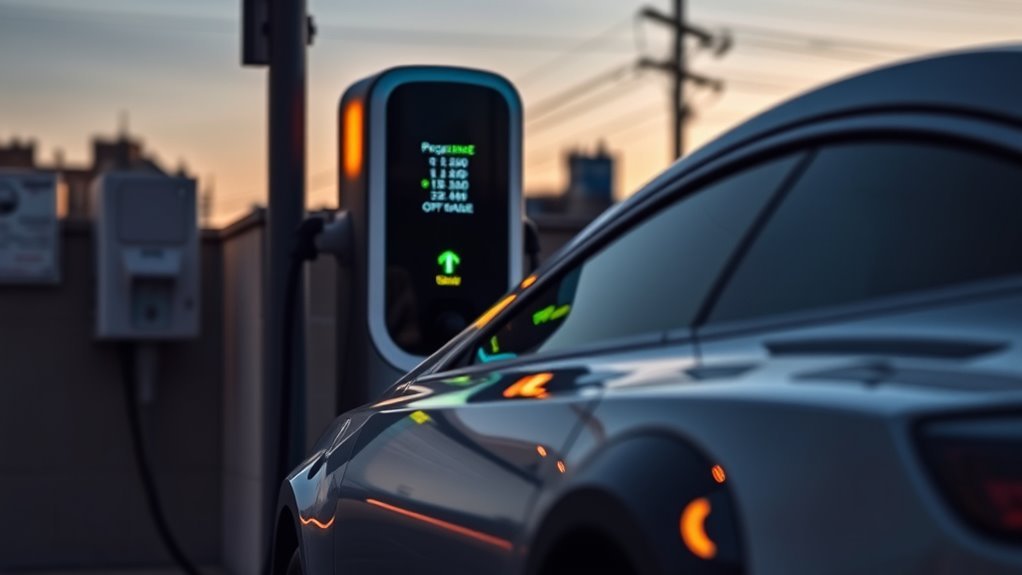
While managing your EV charging schedule manually can be cumbersome, automating the process with smart charger features simplifies the task and maximizes savings.
By leveraging charging apps connected to smart chargers like ChargePoint or JuiceBox, you can effortlessly set your charging to align with off-peak hours. Here’s how:
- Schedule Charging: Use built-in scheduling features to automate charging during the cheapest times, saving you money.
- Track Usage: Monitor electricity usage and costs per charge, gaining insights to refine your charging habits.
- Pre-Loaded Rates: Some chargers come with pre-loaded rate schedules, making it easier to set up automated charging based on your utility’s off-peak hours.
Embracing these smart features liberates you from manual oversight while ensuring your EV charges efficiently and cost-effectively.
With automation, you can enjoy peace of mind and significant savings effortlessly.
Cost-Saving Utility Rate Plans for EV Owners
If you’re an EV owner looking to cut costs, exploring cost-saving utility rate plans is essential. Many utility companies offer Time-of-Use (TOU) rates, allowing you to charge your vehicle at considerably lower rates during off-peak hours.
Explore cost-saving utility rate plans to reduce your EV charging costs with Time-of-Use rates during off-peak hours.
For instance, overnight rates can drop to as low as $0.09 per kWh, compared to peak rates exceeding $0.25. If you live in California or Virginia, charging your EV primarily during these times could save you hundreds annually.
Additionally, some utilities provide specialized EV rate plans with enticing utility incentives, such as free weekend charging or reduced overnight rates.
With over half of U.S. electricity customers having access to TOU plans, it’s a smart move to take advantage of them. By adjusting your EV charging schedule accordingly, you can liberate yourself from high energy costs and maximize your savings.
Don’t let your charging habits hold you back—embrace these opportunities today!
How Solar Energy Can Reduce Your Charging Costs
Harnessing solar energy can transform the way you charge your electric vehicle, leading to substantial cost savings.
By integrating solar panels into your home, you can create a sustainable charging solution that reduces your reliance on grid power. Here’s how it can work for you:
- Maximize Solar Panel Efficiency: Generate free electricity during peak sunlight hours, slashing your charging costs.
- Leverage Renewable Energy Incentives: Take advantage of local and federal programs to offset installation costs, making solar more accessible.
- Utilize Energy Storage: Charge your EV at night using stored solar energy, ensuring you benefit from off-peak electricity rates.
Best Practices for Maximizing Your EV’s Battery Life During Charging
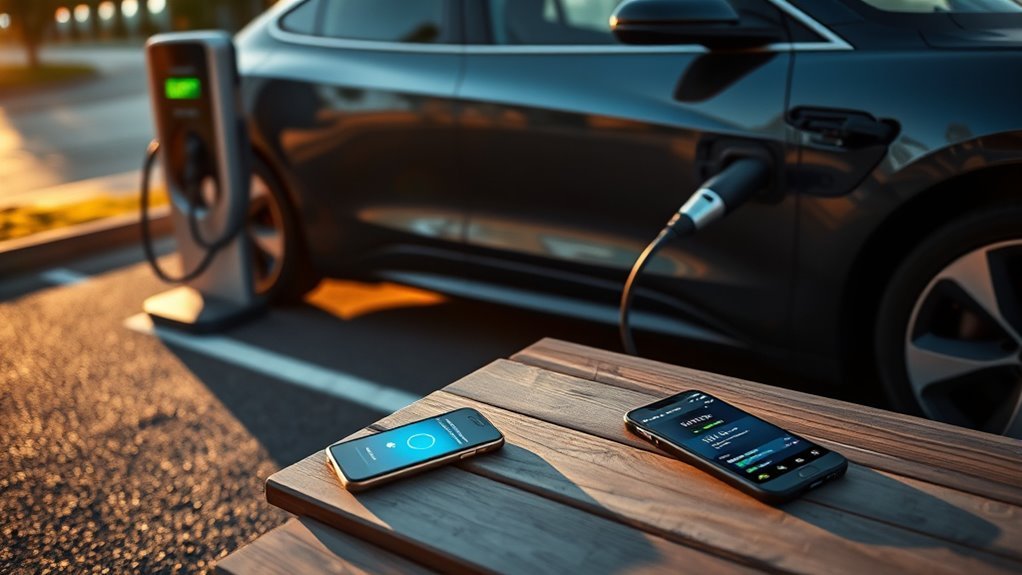
Charging your electric vehicle (EV) efficiently not only saves you money but also plays an important role in maximizing your battery’s lifespan.
To enhance battery maintenance, aim to keep your charge level between 20% and 80%. This practice helps reduce stress and heat generation, vital for prolonging battery life. Additionally, consider utilizing smart chargers that allow you to set specific charging times, automating your charging habits for best performance.
Maintain your EV’s battery by keeping the charge between 20% and 80% and using smart chargers for optimal performance.
Avoid frequent fast charging, as it generates excess heat, contributing to premature battery degradation.
Regularly updating your EV’s software can also improve battery management systems, ensuring efficiency and longevity.
By adopting these best practices, you empower yourself to extend your EV’s battery life while enjoying the freedom and savings that come with it.
Embrace these strategies, and you’ll achieve a sustainable, liberating driving experience that aligns with your values.
Real-Life Savings From Off-Peak Charging Strategies
While many EV owners might overlook the timing of their charging sessions, doing so can lead to considerable savings on electricity bills. By adopting off-peak strategies, you can markedly reduce your costs.
Consider these points:
- Charging during off-peak hours can save you up to 70% on electricity rates—California’s 36¢/kWh compared to peak rates of 71¢/kWh illustrates this.
- Utilizing Time-of-Use plans can lead to savings of nearly 50%, especially during late-night hours.
- Smart chargers that automate your charging schedule guarantee you always benefit from lower rates without hassle.
Incorporating these utility incentives not only boosts your savings—potentially around $420 annually—but also extends your EV’s battery life.
Frequently Asked Questions
What Is the Cheapest Time of Day to Charge EV?
The cheapest time to charge your EV is during off-peak hours, typically from 9 PM to 8 AM on weekdays. By avoiding peak hours, you’ll benefit from considerably lower charging rates and maximize your savings.
How to Optimize EV Charging for Lower Costs?
To optimize EV charging for lower costs, utilize smart charging technology. Conduct a cost analysis of your energy rates, and schedule charging during off-peak hours. This approach maximizes savings while enhancing your vehicle’s battery life.
What Is the 80 20 Rule for EV Charging?
The 80/20 rule for EV charging means you should charge up to 80% for efficiency and cost savings. This approach enhances battery lifespan while minimizing your expenses, freeing you from the constraints of frequent full charges.
How Much Will Off-Peak Charging Save on EV?
Charging your EV during off-peak hours can save you around $420 annually. With lower charging rates, you’ll enjoy significant cost savings, empowering you to maximize your budget and invest more in your electric vehicle journey.
Conclusion
By scheduling your EV charging during off-peak hours, you can save remarkably—up to 50% on your electricity costs. That’s right! Many utilities offer reduced rates during off-peak times, making it a smart financial move for you. Plus, automating your charging with smart features not only maximizes savings but also enhances your EV’s battery life. Embracing these strategies isn’t just about saving money; it’s also a step toward a more sustainable future. So, why wait? Start charging smarter today!





Leave a Reply