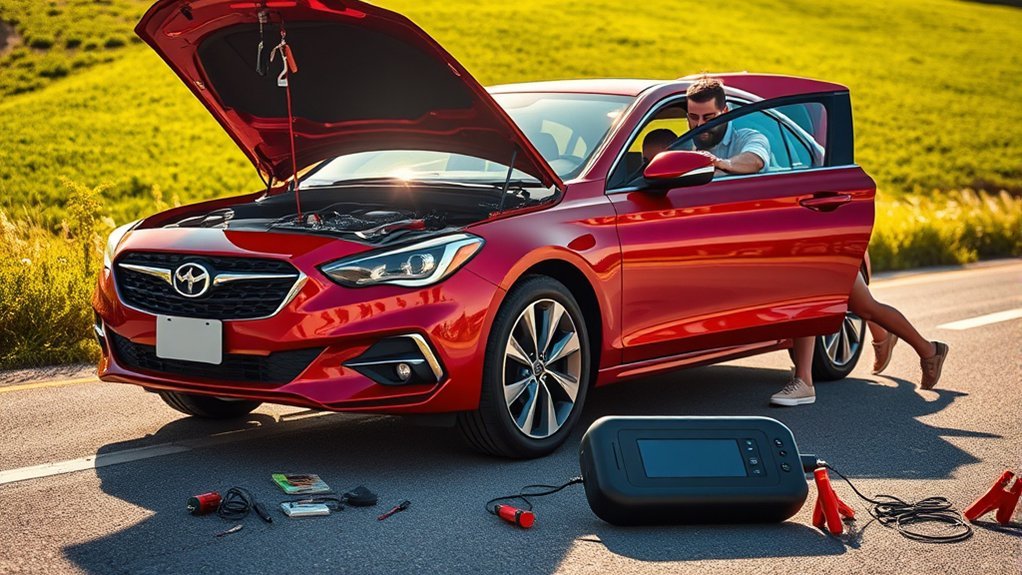
To start a car with a dead battery, you can push start manual vehicles or jump-start any vehicle type. For push starting, gather assistance to push the car to about 5 mph, shift into second gear, and release the clutch to start. Alternatively, jump-start using jumper cables connected to a functioning battery. Regular maintenance and checks can also prevent dead battery situations. Learn more about best practices for maintaining your car battery effectively.
Key Takeaways
- Check for signs of a dead battery, like illuminated dashboard lights or clicking sounds when attempting to start the engine.
- Push start manual transmission vehicles by gathering assistance to push the car to at least 8 km/h while in second gear.
- Ensure the ignition is on and the parking brake is released before attempting to push start the vehicle.
- If push starting isn’t feasible, consider jump-starting with jumper cables connected to a functioning vehicle or portable jump starter.
- Regular battery maintenance, including terminal checks and optimal charge levels, can help prevent dead battery situations in the future.
Signs of a Dead Battery: How to Identify the Problem
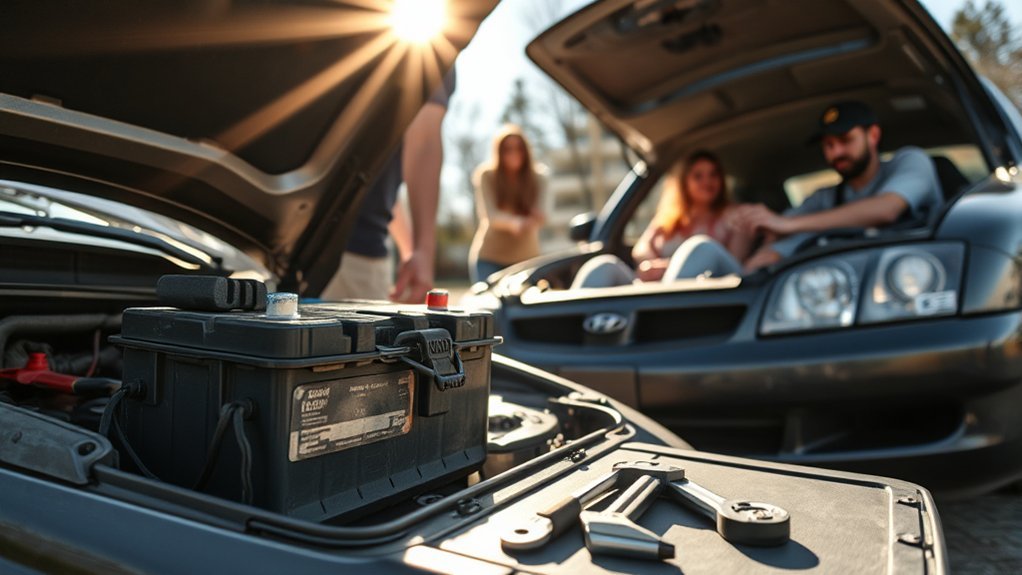
A dead battery can be a frustrating roadblock, but recognizing its signs early can save you time and hassle.
First, check for illuminated dashboard lights without the engine cranking, as this indicates insufficient power. If you hear a clicking sound when attempting to start the engine, your battery likely lacks the necessary power to turn it over.
Additionally, if your car’s been inactive for a while, you might encounter starting issues due to battery depletion, despite ignition functioning. Pay attention to dimming headlights or sluggish electrical components, as these can signal underlying electrical issues.
Understanding Push Starting: What It Is and When to Use It
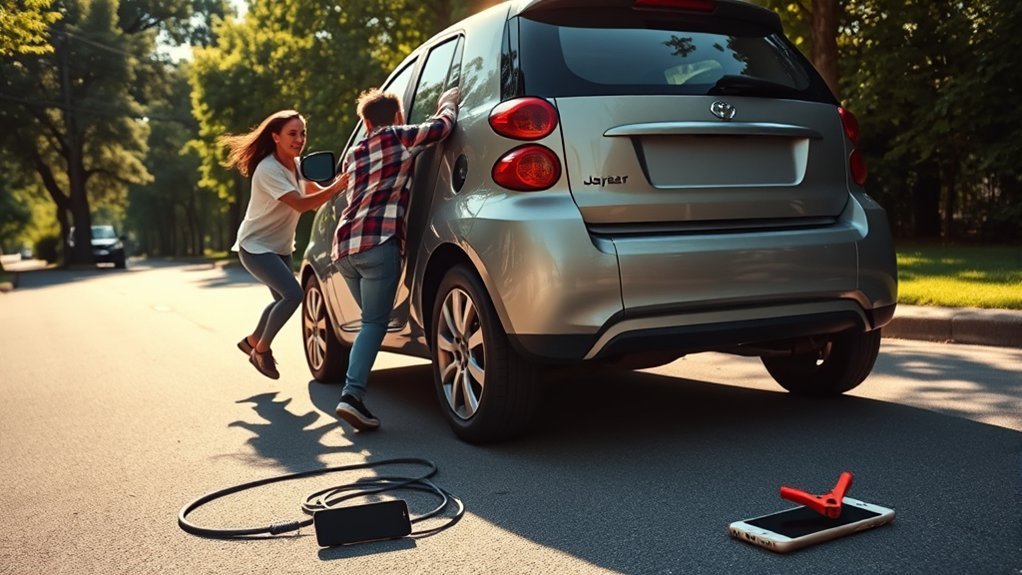
When your car battery fails, push starting can be a viable solution to get you back on the road. This technique utilizes momentum to engage the engine without electrical power, making it effective primarily for vehicles with a manual transmission.
To push start, you’ll need help from others to push your car until it reaches a speed of at least 8 km/h (approximately 5 mph). It’s best to put the car in second gear for optimal torque and speed balance.
However, remember that safety precautions are essential; with the engine off, you may have limited control over braking and steering.
Push starting isn’t suitable for automatic transmissions, especially those with traditional torque converters.
Step-By-Step Guide to Push Starting Your Car
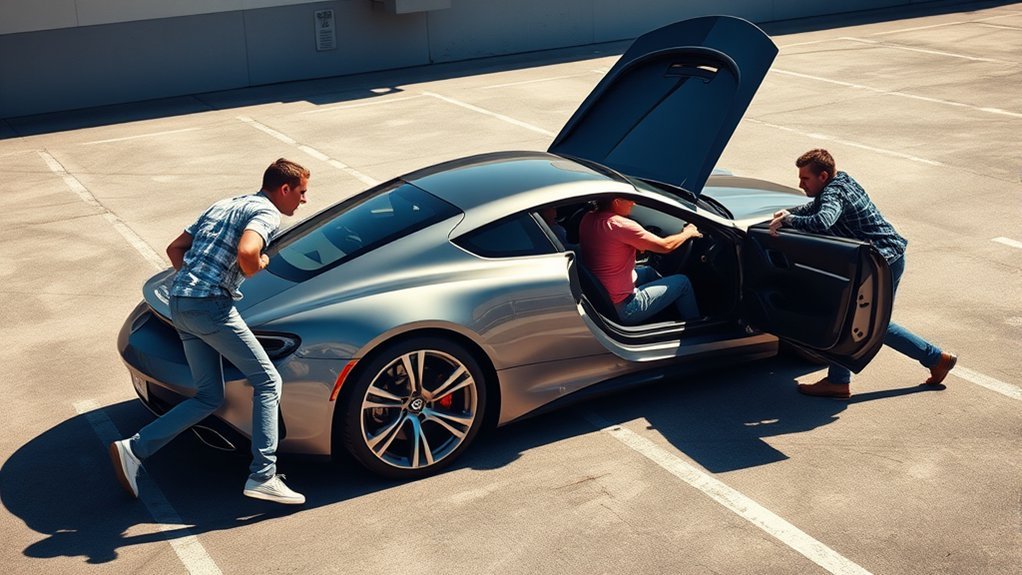
To push start your car effectively, follow this step-by-step guide to ensure a smooth and safe process.
First, gather assistance; you’ll need others to help push while you remain in the driver’s seat.
Ensure your vehicle readiness by turning the ignition on and releasing the parking brake. Shift into second gear for optimal torque.
As your helpers push the car to at least 8 km/h, fully engage the clutch. When you’re at the right speed, release the clutch at the precise moment to start the engine without stalling.
Maintain clear communication with your team throughout the process to synchronize timing and speed.
Mastering these push start techniques will increase your chances of success.
Essential Safety Tips for Push Starting
Ensuring safety is paramount when push starting a car, especially since the process involves multiple people and potential hazards.
Before you begin, make sure the area is clear of traffic and any obstacles. Engage the handbrake and keep your foot on the brake until your helpers are ready to push, preventing any unintentional rolling.
Remember, with the engine off, power steering and brakes may not function properly, making control more challenging. Clear communication with your team is essential; everyone should know when to start pushing and when to release the clutch.
If you opt for a downhill slope for added momentum, be cautious—higher speeds can lead to loss of control. Adhering to these push start safety and car battery precautions can prevent accidents.
What to Do When Your Battery Dies?
A dead battery can leave you stranded and frustrated, so recognizing the signs early is crucial. If your dashboard lights illuminate but the engine won’t start, or you hear a clicking sound, these indicate insufficient power.
Start your battery troubleshooting by checking connections for corrosion or looseness. If you’re prepared for emergencies, know that push starting is an option if you have help and a slope. Ensure the ignition is ‘on’, remove the parking brake, and shift to second gear.
Alternatives to Push Starting Your Car: Jump Starts and Other Methods
When your car won’t start and push starting isn’t an option, jump-starting offers a reliable alternative. You can use jumper cables connected to a functioning vehicle’s battery or opt for portable jump starter options for convenience. Ensure you connect the cables correctly: positive to positive and negative to a grounded metal surface on the dead vehicle. Regular battery maintenance, including checks and timely replacements every 5-6 years, can prevent these situations. If jump-starting fails, calling for roadside assistance can be a practical solution.
| Method | Equipment Needed | Maintenance Tips |
|---|---|---|
| Jumper Cables | Jumper cables, another vehicle | Check cables for wear |
| Portable Jump Starter | Self-contained jump starter | Test regularly for reliability |
| Roadside Assistance | Phone to call for help | Keep contact information updated |
Choosing the Right Starting Method for Your Vehicle Type
Choosing the right starting method for your vehicle type is crucial, as different vehicles have unique requirements and limitations.
For manual transmissions, push starting typically requires you to engage first gear and ensure the ignition is correctly positioned. However, automatic transmissions with torque converters usually aren’t compatible with push starting; instead, you’ll need to consider jump-starting.
Specific models, like the SEAT Leon, require clutch engagement, while the Vauxhall VX220 benefits from a combination of gear selection and start button activation.
If you have a vehicle equipped with keyless entry, such as the Mazda 3, you might start it without pressing the clutch.
Always assess your vehicle compatibility with these starting techniques to ensure a successful start.
How to Keep Your Car Battery Healthy and Lasting Longer
To keep your car battery healthy and extend its lifespan, regularly check and clean the battery terminals to prevent corrosion.
Make sure all electrical components are turned off when the vehicle isn’t in use, and drive your car at least once a week for optimal charging.
For extended periods of inactivity, consider using a battery maintainer to keep it in top condition.
Regular Battery Maintenance Tips
Maintaining your car battery is crucial for ensuring its longevity and reliability.
Regularly check your battery terminals for battery corrosion, as it can impede electrical connections and reduce battery life. Clean any corrosion you find to keep the terminals in optimal condition.
To maintain a proper charging frequency, drive your vehicle at least once a week for 30 minutes; this prevents the battery from draining during periods of inactivity. Use a multimeter to test your battery’s voltage; a healthy battery should read around 12.6 volts when fully charged.
Additionally, avoid leaving lights or accessories on while the engine is off, as this drains the battery. Schedule professional battery check-ups every 3-6 months, especially as it nears the 5-6 year mark.
Optimal Charging Practices
Ensuring your car battery remains healthy and lasts longer requires a combination of regular maintenance and optimal charging practices.
First, regularly inspect and clean your battery terminals to prevent corrosion, which can hinder electrical flow. To keep your battery fully charged, drive for at least 30 minutes once a week; short trips often fail to provide adequate charging.
If your vehicle will be inactive for an extended period, use a battery maintainer or trickle charger—essential battery accessories—to maintain optimal charge levels.
Additionally, test your battery’s health annually, as most batteries last 5-6 years. By employing these charging techniques, you’ll help prevent unexpected failures and extend your battery’s lifespan.
Temperature and Storage Considerations
Extreme temperatures can dramatically impact your car battery’s performance and lifespan. In cold weather, your battery capacity can drop by up to 50%, while high temperatures accelerate harmful chemical reactions, leading to degradation.
To mitigate these effects, store your car in a climate-controlled environment to avoid temperature extremes that can damage the battery. Regularly check and clean the battery terminals to prevent corrosion, which can hinder performance and cause early failure.
Aim to keep your battery charged above 75%, as deep discharges can significantly shorten its life, especially for lead-acid batteries. If you anticipate long periods of inactivity, consider using a battery maintainer or trickle charger to keep your battery topped off and in optimal condition.
Frequently Asked Questions
Can I Push Start an Automatic Transmission Car?
You can’t push start an automatic transmission car. Unlike manual vehicles, automatics require engine power to engage the transmission. If your battery’s dead, consider jump-starting or using a portable battery charger instead.
What Tools Do I Need for Jump-Starting?
Jump-starting’s like a lifeline for your car. You’ll need a battery charger and a set of jumper cables. These tools connect your battery to a working source, reviving your vehicle efficiently and safely.
How Long Should I Let the Car Run After Jump-Starting?
You should let the car run for at least 30 minutes after jump-starting. This ensures the battery charges sufficiently. If possible, drive it around during this time to maximize the charging process.
Can Cold Weather Affect My Battery’s Performance?
Yes, cold weather can significantly affect your battery’s performance. Extreme temperatures reduce chemical reactions inside the battery, leading to decreased power. Regular battery maintenance, including checks before winter, can help mitigate these issues.
What Are Signs My Battery Needs Replacing?
Your battery’s lifespan shortens if you notice slow engine cranking, dim headlights, or electrical issues. These replacement indicators signal it’s time for a new battery to ensure reliable performance and avoid unexpected breakdowns.
Conclusion
In conclusion, knowing how to start a car with a dead battery can save you from frustrating situations. Did you know that about 75% of car breakdowns are battery-related? By understanding push starting and other alternatives, you can quickly get back on the road. Remember to keep your battery healthy through regular maintenance, ensuring you avoid future issues. With the right knowledge and techniques, you can confidently handle your car’s battery problems when they arise.







Leave a Reply