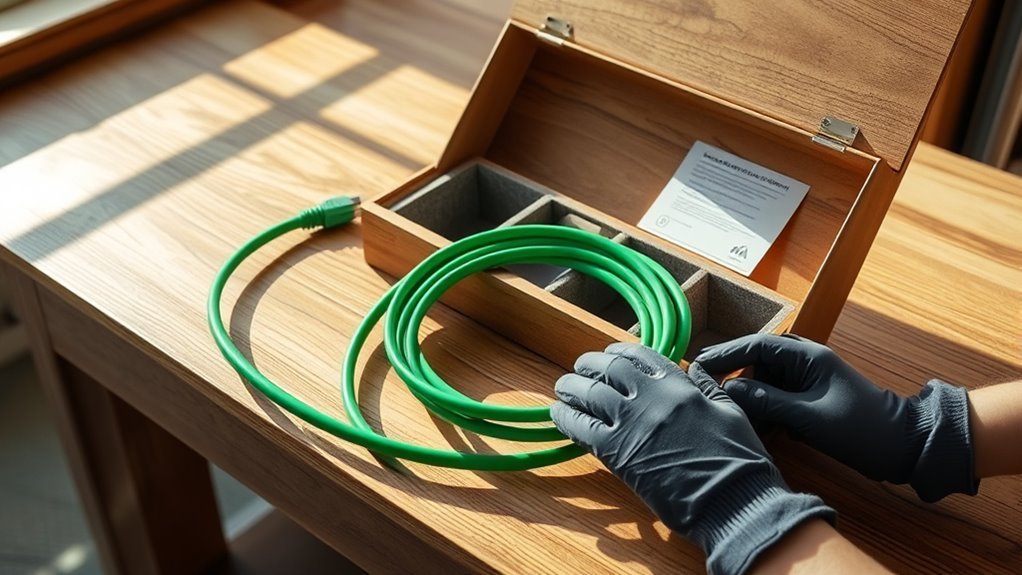
To store your EV charging cable effectively, wrap it in large loops to prevent kinks and internal damage. Keep it in a cool, dry place, away from sharp objects and heavy items that could cause wear. Use wall hooks or cable holders to minimize tripping hazards and avoid moisture exposure. Regularly inspect connections for corrosion and clean them to guarantee good conductivity. Following these tips will enhance your cable’s longevity, and you’ll discover additional strategies for ideal care.
Why Proper Storage of EV Charging Cables Is Essential
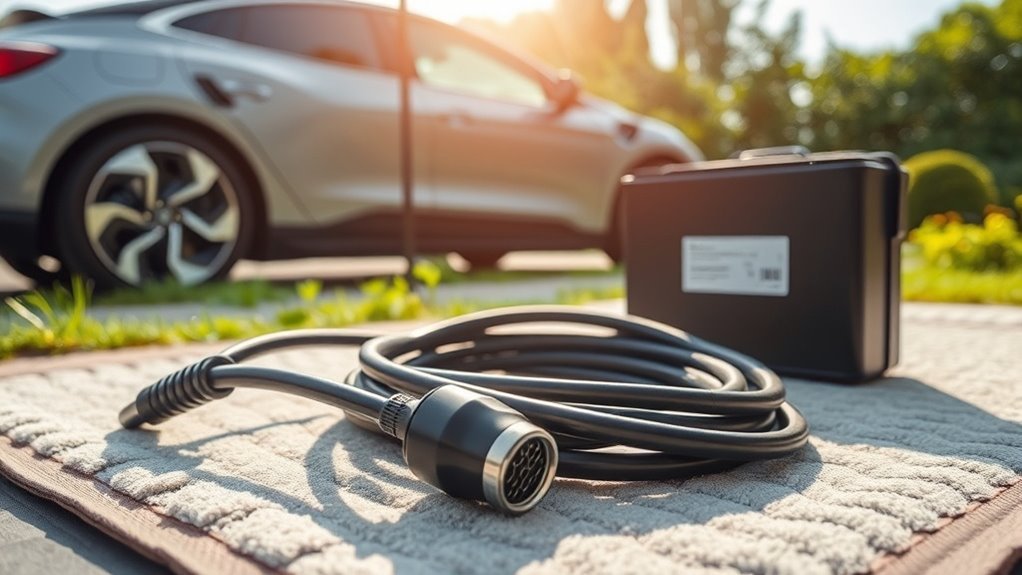
Proper storage of EV charging cables is crucial because it directly impacts their performance and longevity. Several significant factors influence this, including protection from environmental impact. Sunlight, moisture, and dirt can degrade cable integrity, leading to wear and reduced functionality.
By keeping your cables off the ground, you minimize risks associated with tripping hazards and physical damage from foot traffic or heavy objects.
Regular inspection and cleaning of your cables are essential. Addressing dirt or rust on the plug ends ensures peak connectivity and safety during charging.
Utilizing cable management solutions, like wall hooks or reels, promotes organized storage and reduces clutter, making access easier.
Finally, properly rolling cables and storing them in a cool, dry place helps maintain their internal integrity, preventing issues like kinking or internal wire damage.
Proper storage not only enhances the lifespan of your cables but also contributes to a more sustainable approach to electric vehicle usage.
Best Practices for Wrapping and Storing Your EV Charging Cable
Effective storage techniques can considerably enhance the lifespan and performance of your EV charging cable. By employing proper cable winding techniques and smart storage solutions, you can avoid damage and guarantee reliability.
Here are some best practices to follow:
- Wrap your cable in large loops to prevent kinking and internal wire damage.
- Store the cable in a cool, dry place, away from sharp or heavy objects.
- Utilize wall hooks or cable holders to keep the cable off the floor.
- Regularly inspect the plug ends for dirt or rust, cleaning them with a soft cloth.
- Avoid leaving the charging cable outdoors, as moisture and sunlight can cause deterioration.
Top Tools for Organizing Your EV Charging Cables
Organizing your EV charging cables can greatly enhance both convenience and safety. Using the right tools will help you keep your cables tidy and accessible. Here are some top tools you should consider:
| Tool Type | Benefits |
|---|---|
| Wall-Mounted Hooks | Keeps cables off the ground, reducing tripping hazards. |
| Cable Reels | Neat storage for longer cables, preventing tangling and damage. |
| J-Hooks | Simple and effective, securing cables without clutter. |
| Cable Storage Boxes | Protects from moisture and dirt, prolonging cable lifespan. |
Incorporating color-coded wraps or tags can further streamline your organizational efforts. By understanding different hook types and the reel benefits, you’ll enhance both the performance and longevity of your EV charging cables, making your charging experience more efficient.
How to Inspect and Maintain Your EV Charging Cable?
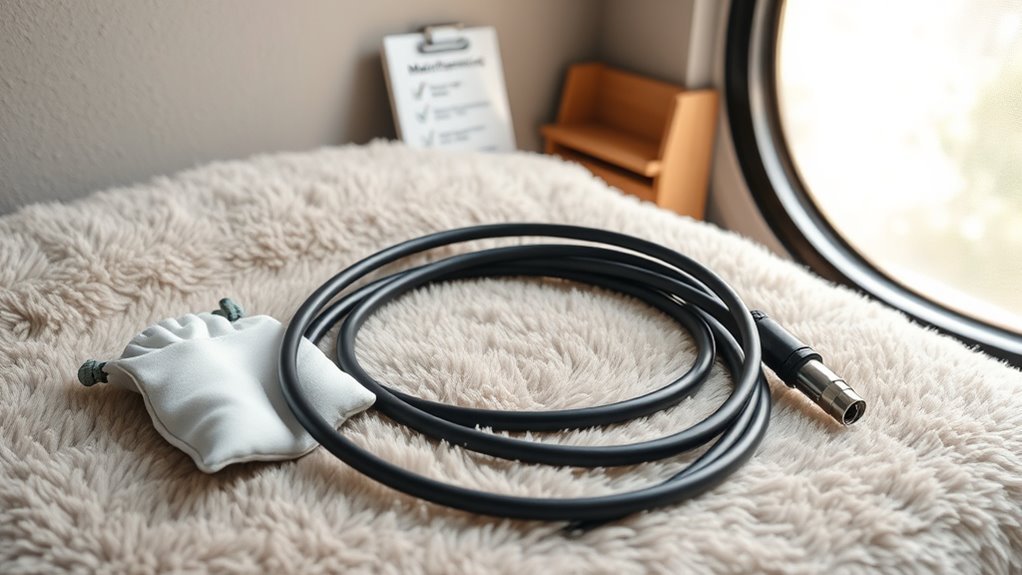
To guarantee your EV charging cable remains safe and functional, establish a routine for visual inspections.
Regularly check for any signs of wear or damage, and assess the flexibility of the cable to avoid potential issues.
Visual Inspection Routine
When performing a visual inspection of your EV charging cable, start by checking the plug ends for dirt, rust, or any visible damage, as these factors can greatly impact connectivity and safety during charging.
Regular checks are essential for damage identification. Here’s what to look for:
- Fraying or cuts along the cable length
- Kinks that may indicate internal wire damage
- Any discoloration or cracks in the insulation
- Signs of moisture exposure or mildew
- Cleanliness of plugs and connectors
Ensure you store the cable in a cool, dry place away from direct sunlight.
Clean the cable and plugs gently with a soft, dry cloth, avoiding strong cleaners.
Make it a habit to inspect before each use and replace any damaged cables immediately.
Cable Flexibility Check
While evaluating your EV charging cable, it’s crucial to check its flexibility, as this can reveal potential internal damage. Gently bend the cable; it should retain its shape without stiffness or kinks. Signs of reduced flexibility may indicate compromised cable durability, which can affect both safety and charging efficiency.
Always avoid tight bends or sharp angles during storage, as these can further damage the internal structure. Additionally, inspect the plug ends for cleanliness; debris can hinder connections and diminish charging efficiency. Regularly clean the connectors with a soft, dry cloth.
Finally, store the cable in a cool, dry location, away from sunlight and moisture to maintain its longevity and peak performance.
Best Locations for Mounting Your EV Charging Cables
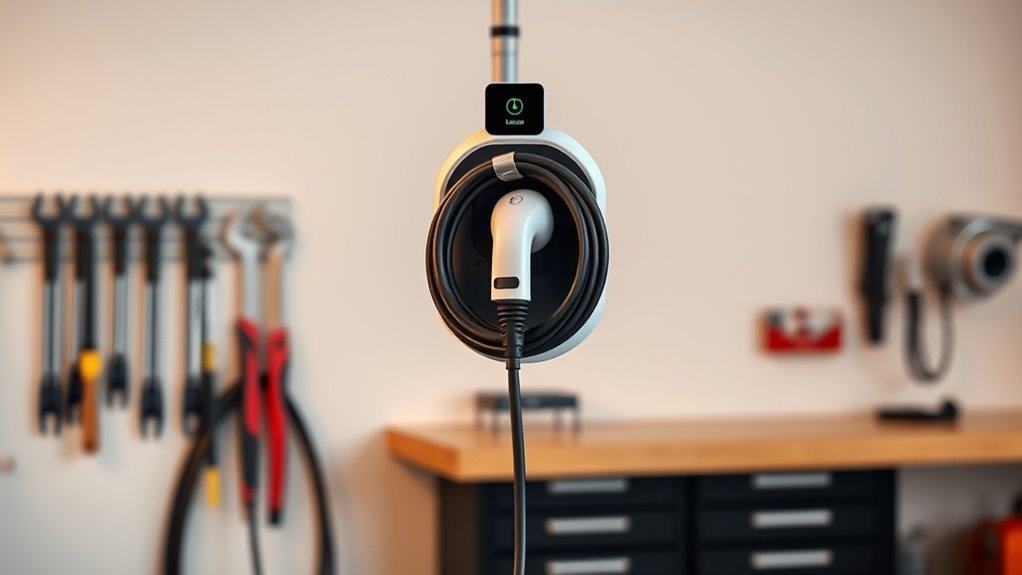
Finding the right location to mount your EV charging cables is essential for guaranteeing both accessibility and longevity. Consider these ideal mounting options:
- Wall-mounted solutions: Keep cables off the ground, minimizing wear and tear.
- Ceiling-mounted retractors: Perfect for garages with limited wall space, offering easy access while organizing cables.
- Holster docks: Specifically designed for J1772 or NACS connectors, they securely hold cables to prevent tangling.
- Proximity to charging station: Choose a location close to the station to enhance convenience and avoid trip hazards with excessive cable length.
- Sheltered areas: Confirm the mounting spot is protected from direct sunlight and moisture to extend the cables’ lifespan.
Additional Tips to Prevent Cable Damage and Extend Lifespan
To extend the lifespan of your EV charging cable, consider implementing effective cable management solutions that keep it organized and untangled.
Regularly inspect the cable for any signs of damage and make sure it’s stored in a cool area to prevent deterioration from heat and moisture.
These practices will help maintain peak performance and reliability for your charging needs.
Use Cable Management Solutions
Cable management solutions are vital for maintaining the longevity and performance of your EV charging cable. By implementing effective strategies, you can greatly extend its lifespan.
Here are some installation tips to take into account:
- Utilize wall-mounted hooks or holster docks to keep cables off the ground.
- Store cables in a cool, dry location away from direct sunlight and moisture.
- Employ cable reels or organizers to prevent tangling and kinking.
- Avoid bending cables tightly; instead, wrap them in large loops.
- Regularly inspect and clean the plug ends to guarantee ideal connectivity.
Regularly Inspect for Damage
While using your EV charging cable, regular inspections for damage are essential to guarantee its safe operation and longevity.
Start by checking the plug ends for dirt, rust, or physical damage that could hinder connection integrity. Next, inspect the cable itself for signs of wear, such as fraying or kinking, which can compromise performance.
Cleaning the cable and connectors with a soft, dry cloth helps remove debris and moisture, preventing corrosion. Aim to perform these inspections every few months to catch potential issues early.
Store in Cool Area
Storing your EV charging cable in a cool area is crucial for preventing damage and guaranteeing its longevity. Proper cool storage minimizes the risk of overheating and insulation degradation.
Follow these tips for best humidity control and cable care:
- Avoid direct sunlight to prevent UV damage.
- Use waterproof storage solutions to keep moisture at bay.
- Choose a clean environment free from sharp objects.
- Maintain a stable temperature to avoid fluctuations that harm cable integrity.
- Inspect the storage area regularly to confirm perfect conditions.
Frequently Asked Questions
How Do You Protect EV Charging Cable?
To protect your EV charging cable, implement effective cable maintenance and storage solutions. Store it in a cool, dry place, avoid tight bends, and regularly inspect for damage to guarantee long-lasting functionality and reliability.
How to Properly Store a Charging Cable?
Oh, the chaos of tangled cables! To store a charging cable properly, embrace cable organization with wall hooks or storage solutions. Wrap it loosely, inspect regularly, and keep it dry for peak performance and longevity.
How to Protect Charging Cables From Damage?
To protect your charging cables from damage, prioritize cable maintenance. Store them properly, keep connectors clean, avoid tight bends, and shield them from moisture and UV exposure. These practices guarantee longevity and peak performance.
How to Store EV Cable?
To store your EV cable like it’s the crown jewel of your garage, utilize cable organization solutions. Hang it on hooks, wrap it loosely, and keep it in a cool, dry place for ideal longevity.
Conclusion
To safeguard your EV charging cable’s lifespan, storage is key. By skillfully securing and stashing it away, you’ll thwart wear and tear, ensuring it stays safe and sound. Stay savvy with your storage solutions, using suitable straps and stations for ideal organization. Regularly inspect for signs of strain or damage, and you’ll maintain functionality and flexibility. With these simple steps, you can enjoy a dependable and durable charging experience, prolonging performance for your electric vehicle.







Leave a Reply