Yes, it’s safe to leave your EV charging overnight. Modern electric vehicles come with advanced Battery Management Systems that prevent overcharging and regulate battery health. By setting your charger to operate during off-peak hours, you can save on costs and maintain peak battery levels. Just make sure your charging station is installed by a professional and regularly inspect it for any issues. Want to discover more tips and best practices for overnight charging?
Why Overnight Charging Is Safe
When you plug in your electric vehicle (EV) overnight, you can rest easy knowing that it’s designed with safety in mind. Modern EVs come equipped with advanced Battery Management Systems (BMS) that prevent overcharging, automatically halting the process once your battery reaches full capacity. This feature not only guarantees charging convenience but also enhances battery longevity, allowing you to maximize the lifespan of your investment.
Overnight charging of your EV is safe, convenient, and enhances battery longevity with advanced management systems.
Moreover, thermal management systems help regulate battery temperature during charging, greatly reducing the risk of overheating. In the UK, compliance with stringent safety standards for EV charger installation further assures your peace of mind.
Unlike traditional petrol vehicles, EVs pose a lower fire risk when left plugged in overnight. Plus, chargers stop drawing power once your vehicle is fully charged, eliminating wasted electricity and boosting energy efficiency.
Enjoy the liberation of knowing that overnight charging isn’t only safe but also beneficial for you and the environment.
Does Overnight Charging Harm EV Batteries?
While some might worry that overnight charging could harm EV batteries, modern technology has made this concern largely unfounded. Today’s electric vehicles come equipped with advanced Battery Management Systems that prevent overcharging and regulate power draw, ensuring your battery remains healthy.
To maximize battery lifespan, it’s best to keep your charge between 20% and 80%. Overnight charging can help maintain this range if managed well. However, frequent full charges to 100% can accelerate battery degradation, so try to avoid daily maximum charging.
Moreover, the real culprits of battery wear are high heat and those constant full charges, not the act of charging overnight. By automating your charging to stop at ideal levels, you can enhance your battery’s longevity while enjoying the convenience of overnight charging.
This way, you’ll maintain charging efficiency without compromising your battery’s health.
Best Practices for Overnight EV Charging
To guarantee a smooth and safe overnight charging experience for your electric vehicle, following best practices is essential.
Start by establishing a charging schedule that aligns with off-peak hours, typically at night. This not only saves you money on electricity but also supports sustainability.
Use a certified Level 2 charger, as modern EVs have built-in systems to prevent overcharging once the battery reaches its target percentage.
For ideal battery maintenance, keep your battery charge between 20% and 80%. Frequent full charges can stress the battery over time, so aim for a balanced approach.
Confirm your home charging station is installed by a licensed electrician, complying with safety standards.
Regularly inspect your charging equipment for any wear or damage; this prevents safety hazards and confirms efficient charging sessions.
Key Safety Tips for Charging During Bad Weather
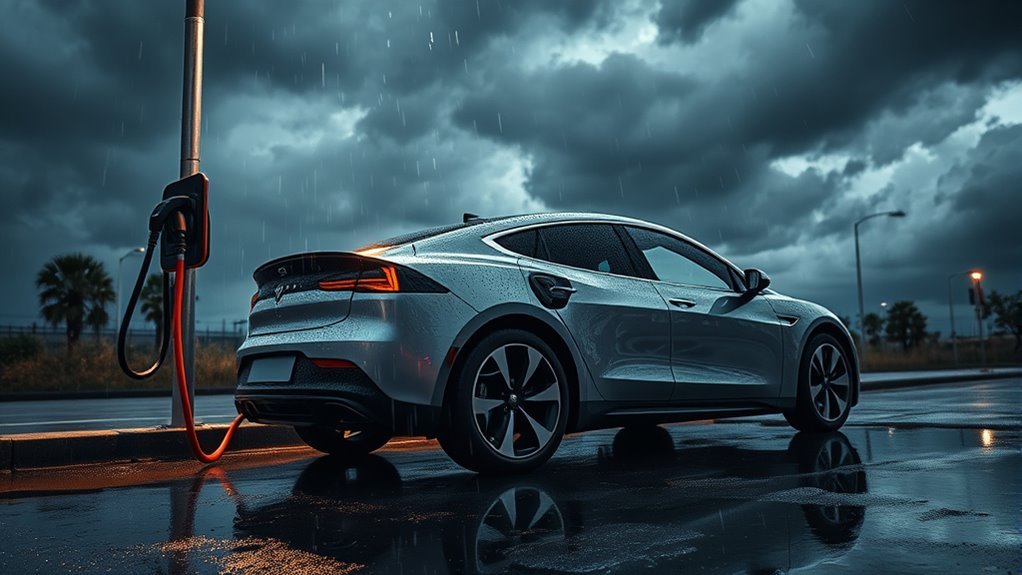
Charging your electric vehicle during bad weather can be safe as long as you take a few precautions.
First, always inspect the charging station for visible damage or exposed wires before plugging in. If you spot any hazards, don’t charge—your safety is paramount.
When snow or ice accumulates, gently clear the connectors and vehicle charging ports, avoiding hot water or sharp tools to prevent damage.
While EV connectors are designed to be water-resistant, steer clear of using them if they’re submerged or if there’s significant flooding nearby; this could lead to electrical hazards.
If you encounter any issues or notice damage while charging, report it to the site owner or operator immediately.
Tips for Making Your Home Charging Station Safe
Ensuring your home charging station is safe is essential for both your electric vehicle and your peace of mind. Start by having a licensed electrician install your charging equipment to adhere to safety standards and avoid warranty issues.
Opt for a certified Level 2 charger, as it offers faster, safer charging and minimizes your charging time compared to standard outlets. Regularly inspect your charging equipment for any signs of wear or damage to help prevent electrical hazards.
Stick to the manufacturer’s guidelines for charging practices, and avoid excessive full charges to keep your battery healthy and prolong its life. Finally, don’t forget to implement surge protection for your charging station to protect against potential electrical issues that could harm your EV or the charging equipment.
How to Navigate Idle Fees and Charging Regulations
When charging your EV, it’s essential to understand the idle fee policies at your chosen station.
Many chargers offer free overnight charging, but you need to be aware of local regulations to avoid unexpected costs.
Checking charging station apps can help you navigate these rules and guarantee a smoother charging experience.
Understanding Idle Fee Policies
Maneuvering idle fee policies can save you money and hassle during your EV charging experience. Understanding the specifics of idle fee structures and local charging policies is crucial. Many chargers begin charging idle fees once your vehicle is fully charged, so it’s important to vacate promptly. However, some locations waive these fees after 11 PM, making overnight charging more affordable. Always check charger regulations through dedicated apps to avoid unexpected costs.
| Location | Idle Fee Start Time | Overnight Fee Waiver |
|---|---|---|
| Charger A | After full charge | Yes (11 PM – 8 AM) |
| Charger B | After full charge | No |
| Charger C | After 1 hour | Yes (10 PM – 7 AM) |
| Charger D | After full charge | Yes (Midnight – 6 AM) |
| Charger E | After 30 minutes | No |
Charging Time Considerations
To make the most of your overnight EV charging experience, it’s important to understand how charging time regulations and idle fees work at different stations.
Many public chargers won’t impose idle fees during off-peak hours, typically after 11 PM, giving you flexibility in your charging duration.
To maximize charging efficiency and avoid unexpected costs, check local charging apps for specific policies.
Planning your vehicle retrieval around charging completion can help you dodge those penalties associated with idling.
Awareness of each station’s idle fee structure greatly impacts your overall overnight charging cost.
Local Regulations Awareness
Understanding local regulations surrounding EV charging can greatly enhance your overnight charging experience. To navigate idle fees and guarantee local charger compliance, keep these tips in mind:
| Time Frame | Idle Fee Policy | Charging Etiquette |
|---|---|---|
| Before 9 AM | Must vacate to avoid fees | Plan your departure accordingly |
| 11 PM – 9 AM | No idle fees typically | Take advantage of lower rates |
| Post-Charging | Monitor duration closely | Avoid lingering longer than needed |
| Local Apps | Check specific policies | Stay informed on charger rules |
| Penalties | Familiarize with fines | Prevent unexpected costs |
Community Tips for Overnight Charging Success
While steering through the world of overnight EV charging, it’s essential to tap into the collective wisdom of fellow drivers. Here are some community tips that can enhance your charging experience:
Navigating overnight EV charging becomes easier when you share insights and tips with fellow drivers.
- Utilize Smart Chargers: Program your charger to operate during off-peak hours, maximizing cost savings and reducing grid load. This aligns with good charging etiquette and benefits everyone.
- Stay Informed: Check local regulations and use apps to monitor any idle fees that might apply at public stations. Community feedback can help you avoid surprises.
- Inspect Charging Stations: Before plugging in, take a moment to check for visible damage or wear. Ensuring safety during overnight charging is a shared priority among drivers.
How Do Electric Vehicles Manage Charging Automatically?
As you plug in your electric vehicle for an overnight charge, you can rest easy knowing that advanced systems are hard at work managing the process automatically.
Your EV’s Battery Management System (BMS) plays an essential role in this. It continuously monitors battery status and halts charging once your desired percentage is reached, preventing overcharging.
Modern EVs communicate seamlessly with certified Level 2 chargers, which automatically cut off power when the battery is full. This means you can leave your EV plugged in without worry.
Additionally, advanced thermal management systems keep your battery at an ideal temperature during charging, enhancing safety and performance.
With automated charging, you can trust that your vehicle will maintain its charge levels effectively.
Frequently Asked Questions
Is It Okay to Leave EV Plugged in Overnight?
Yes, it’s totally okay to leave your EV plugged in overnight. With advanced battery management systems, you’ll enjoy maximum charging efficiency while ensuring your vehicle’s ready for the next day without worrying about overcharging.
Can an Electric Car Be Left on Charge Overnight?
Yes, you can leave your electric car on charge overnight. Thanks to advanced battery management systems ensuring charging safety, your vehicle’s ready for tomorrow, freeing you from the worry of range anxiety and power shortages.
Will Overnight Charging Damage the Battery?
Overnight charging won’t damage your battery, but it can affect battery lifespan if you consistently charge to 100%. Keep your charging cycles balanced by maintaining your battery between 20% and 80% for ideal health.
What Happens if You Leave a Device Plugged in Even After It Is Charged 100%?
If you leave a device plugged in after it’s fully charged, it won’t overcharge, but frequent full charges can affect battery maintenance by shortening charging cycles. Aim for ideal levels to extend battery life.
Conclusion
So, go ahead and plug in your EV overnight without a second thought! It’s as safe as a cozy blanket on a winter night. With the right practices, you won’t harm your battery or turn your home into a charging circus! Just remember the safety tips and navigate those pesky idle fees like a pro. You’ll wake up to a full charge and be ready to zoom into the day, leaving worries in the dust!






Leave a Reply