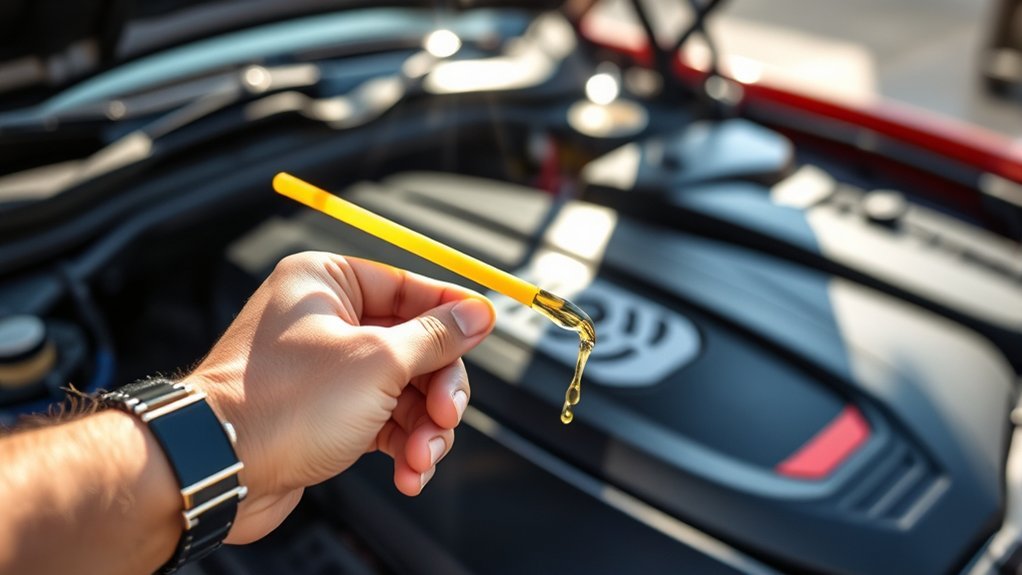
To check your car’s oil level, park on level ground and let the engine cool. Locate the dipstick with an orange or yellow handle. Pull it out, wipe it clean, reinsert, then remove again to check the oil level between the minimum and maximum marks. If it’s low, add oil gradually using a funnel. Clean oil is amber; dark oil means it needs changing. Keep an eye on your oil levels for peak performance and longevity. Learn how to analyze oil quality next.
Key Takeaways
- Park the vehicle on level ground and ensure the engine is cool before starting the check.
- Locate the dipstick, pull it out, wipe it clean, reinsert, and then remove again for a reading.
- Check the oil level against the minimum and maximum indicators on the dipstick.
- If the oil level is low, add motor oil gradually using a clean funnel and wait before rechecking.
- Regularly monitor oil color and texture to assess quality; clean oil is amber, while dark oil indicates a need for change.
How to Properly Check Your Car’s Oil Level
To guarantee your car runs smoothly, it’s essential to check the oil level regularly.
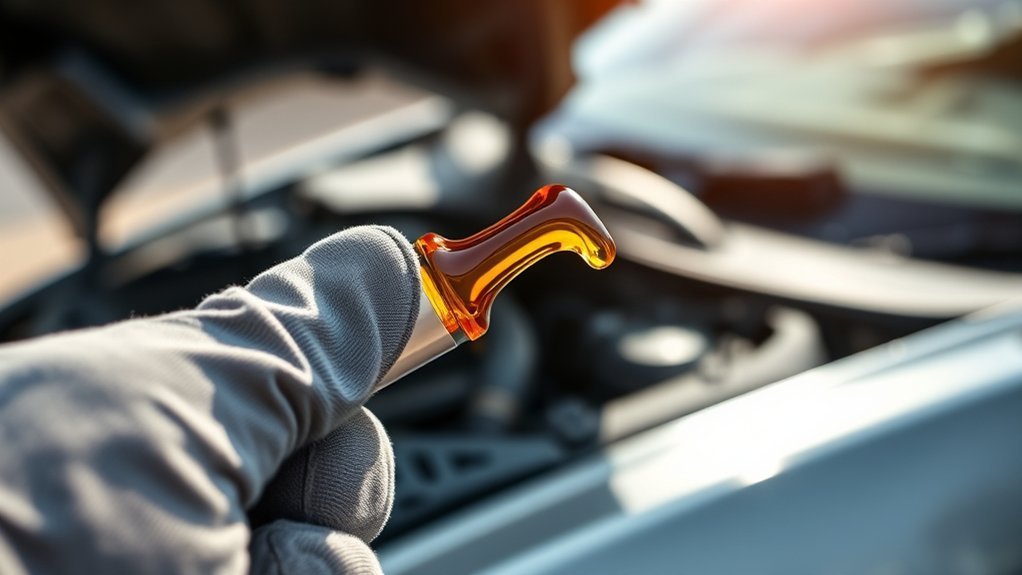
Start by parking your vehicle on level ground and make sure the engine is cool. Locate the dipstick, usually marked with an orange or yellow handle. Pull it out, wipe it clean with a cloth, then reinsert it fully before removing it again to read the oil level against the minimum and maximum indicators.
To check your oil level, park on level ground, ensure the engine is cool, and use the dipstick for an accurate reading.
If the oil level is below the minimum mark, it’s time to add motor oil. Use a funnel to prevent spills and refer to your owner’s manual for the correct oil type.
It’s important to check your engine oil every few weeks or after each fuel fill-up. Regular oil changes and inspections help keep your vehicle running efficiently and prolong engine life by avoiding low oil conditions.
Prioritize this simple task to maintain your car’s performance.
Best Timing for Checking Oil: Cold or Warm?
When considering the best time to check your oil, you’ll find that warm checks often yield more accurate readings due to the oil’s expansion and settling.
Manufacturers typically recommend waiting a specific period after turning off a warm engine to guarantee a reliable measurement.
Conversely, cold checks can result in lower readings, so understanding the pros and cons of each method is essential for proper maintenance.
Cold Check Accuracy
Although many car owners prefer checking oil levels when the engine is cold for consistency and ease, this method can result in lower readings due to the oil settling in the sump.
For accurate cold check accuracy, consider these points:
- Wait at least 5-30 minutes after turning off the engine for a more reliable reading.
- Always wipe the dipstick before inserting it back to guarantee you get the correct oil level.
- Regularly check your oil to maintain proper oil levels, regardless of the method.
- Understand that both cold and warm checks have acceptable margins for error, so don’t stress over minor discrepancies.
Keep these tips in mind to guarantee you’re effectively checking the oil and maintaining your engine oil level.
Warm Check Benefits
Checking your oil at operating temperature offers significant advantages over cold checks. When you perform a warm check, the engine oil has circulated and settled, giving you a more accurate reading against the dipstick’s markers.
Many manufacturers, including Hyundai and Kia, recommend this method for ideal precision. Cold checks can yield lower readings since oil may not fully drain back into the oil pan, leading to potential overfilling if adjustments are made based on those readings.
Additionally, warm oil expands, enhancing your ability to gauge the oil level correctly. Be sure to wait a few minutes after turning off the engine, as some owner manuals suggest, to guarantee reliable results when checking your oil level.
Decoding Your Oil Dipstick: What the Readings Mean?
The oil dipstick serves as a vital tool for evaluating your vehicle’s oil levels and condition. Understanding what the readings mean is essential for maintaining your engine’s health.
- MIN Mark: If your oil level is below this mark, it’s important to add oil immediately to prevent engine damage.
- MAX Mark: This indicates the full oil level. Your oil should ideally be within this range.
- Oil Color: Clean engine oil appears amber and transparent. Dark or sludgy oil indicates it may need changing.
- Consult Owner’s Manual: Different vehicles might’ve specific oil level recommendations, making your owner’s manual indispensable for accurate interpretation.
Steps to Take When Oil Level Is Low
When you discover that your oil level is low, it’s crucial to take prompt action to safeguard your engine. First, consult your owner’s manual to identify the correct type of oil. Using the wrong oil can damage your engine. Next, use a clean funnel to add oil gradually, starting with about half a quart (16 ounces). Be cautious not to overfill, as this can lead to additional engine issues. After adding oil, wait a minute before checking the dipstick again to guarantee an accurate reading.
| Step | Action | Purpose |
|---|---|---|
| 1 | Check oil level | Assess current oil level |
| 2 | Consult manual | Identify correct oil type |
| 3 | Add oil | Restore oil to proper level |
| 4 | Wait to recheck | Guarantee accurate dipstick reading |
| 5 | Monitor regularly | Prevent engine wear |
If oil levels remain low, have a professional mechanic inspect for leaks or issues.
How to Analyze Oil Quality and Its Importance
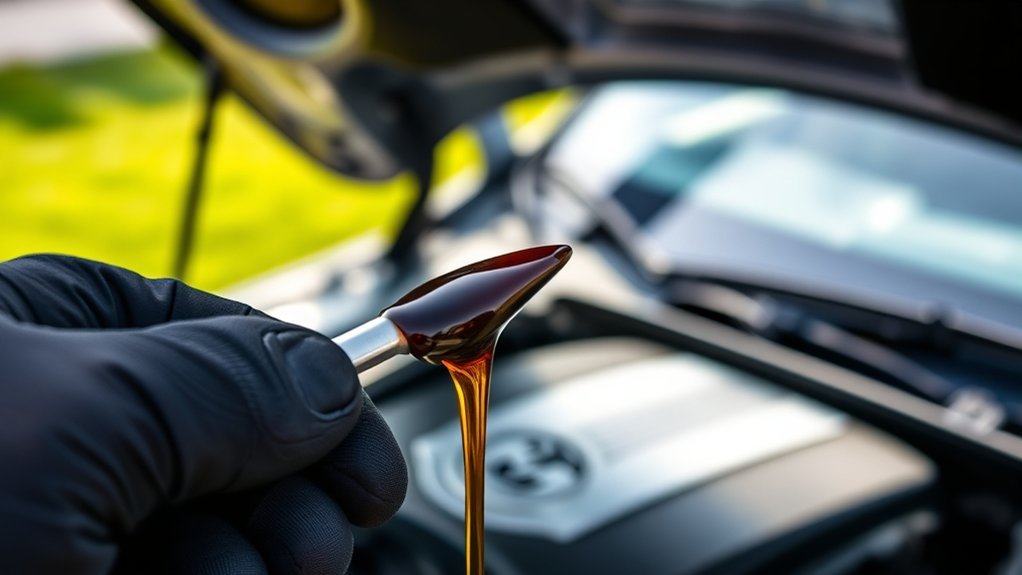
Understanding oil quality is essential for maintaining a healthy engine. To effectively analyze oil quality, you should regularly check oil using the dipstick. Here’s how to do it:
- Check Oil Color and Consistency: Clean engine oil is amber and transparent, while dirty oil appears dark and sludgy.
- Monitor Oil Degradation: If the oil has turned considerably darker or feels gritty, it may be contaminated or degraded, indicating a need for change.
- Assess Oil Level: Verify the oil level is between the minimum and maximum marks on the dipstick; any deviation could signal potential problems.
- Prevent Engine Wear: Regular monitoring can help you avoid overheating and increased friction caused by low or degraded oil, ultimately preserving your engine’s lifespan.
How to Maintain Oil Quality: Recommended Check Frequency
To maintain ideal oil quality, you should check the oil level every few weeks or after each fuel fill-up. Regular checks, preferably done when the engine is cold or at least 10 minutes post-shutdown, provide the most accurate readings.
Don’t forget to check your owner’s manual for specific recommendations from your manufacturer, typically suggesting oil changes every 3,000 miles or 3 months. While newer vehicles often feature digital dashboards to monitor oil levels, manual checks are essential for thorough car maintenance.
Checking your owner’s manual is crucial for tailored oil change recommendations, ensuring optimal vehicle performance and maintenance.
During your inspection, wipe the dipstick clean before reinserting it to get a clear reading. If the oil level is low, don’t hesitate to add more oil.
Observing oil quality and levels consistently can prevent engine wear, overheating, and severe damage, ultimately enhancing your vehicle’s longevity. Regularly check MOT requirements to confirm compliance and peak performance.
Where to Get Professional Help With Oil Maintenance
Finding the right professional help for oil maintenance is essential for keeping your vehicle in ideal condition.
If you need to make sure your car’s oil level is consistently checked, consider these options:
- Jiffy Lube: They offer professional oil level checks and can recommend oil types based on your vehicle’s specifications.
- Complimentary Fluid Top-offs: Many Jiffy Lube locations provide complimentary fluid top-off services with their Signature Service Oil Change.
- Les Schwab: For those who prefer not to check or change oil themselves, Les Schwab offers oil change services at select locations.
- Local Availability: Always check local Jiffy Lube or Les Schwab locations for service availability, as it may vary by region.
Frequently Asked Questions
How to Properly Check Oil Level in Car?
To properly check your oil level, use the dipstick reading after an oil change. Monitor oil viscosity regularly, noting any oil leaks, to prevent engine wear. Follow your maintenance schedule, ensuring ideal oil pressure and performance.
Do You Check the Oil When the Car Is Hot or Cold?
Check the oil when the engine’s cold for consistent viscosity and accurate readings. Hot engine checks may show higher levels due to oil thinning. Follow maintenance tips for ideal vehicle performance and regular oil changes.
Do You Check the Oil With a Car Running or Off?
You check oil with the engine off, ensuring a calm moment for the dipstick’s wisdom. Observe oil temperature, color, and type; listen for engine noise, and embrace this routine maintenance for your vehicle’s liberation.
How Often Should I Check My Oil Levels in My Car?
You should check your oil levels every few weeks, especially after gas fill-ups. Consider oil change frequency, mileage, and seasonal adjustments. Regular checks help you assess oil quality, mitigate engine wear, and debunk common oil myths.
Conclusion
Keeping an eye on your car’s oil level is essential for its longevity and performance. By checking regularly and understanding what your dipstick reveals, you can catch potential issues before they snowball into costly repairs. Remember, a stitch in time saves nine—addressing low oil levels and maintaining oil quality can save you headaches down the road. Don’t hesitate to seek professional help if you’re unsure; it’s always better to be safe than sorry when it comes to your vehicle’s health.






Leave a Reply