
OCPP, or Open Charge Point Protocol, is the crucial communication standard that guarantees electric vehicle (EV) chargers and backend systems work seamlessly together. It enhances interoperability, allowing chargers from different manufacturers to communicate effectively and avoiding vendor lock-in. With advanced features in versions 1.6 and 2.0.1, OCPP supports smart charging, mutual authentication, and dynamic pricing models. Understanding these improvements and challenges can help you grasp the future potential of EV infrastructure and what’s to come.
What Is OCPP and Why Does It Matter for EV Charging?
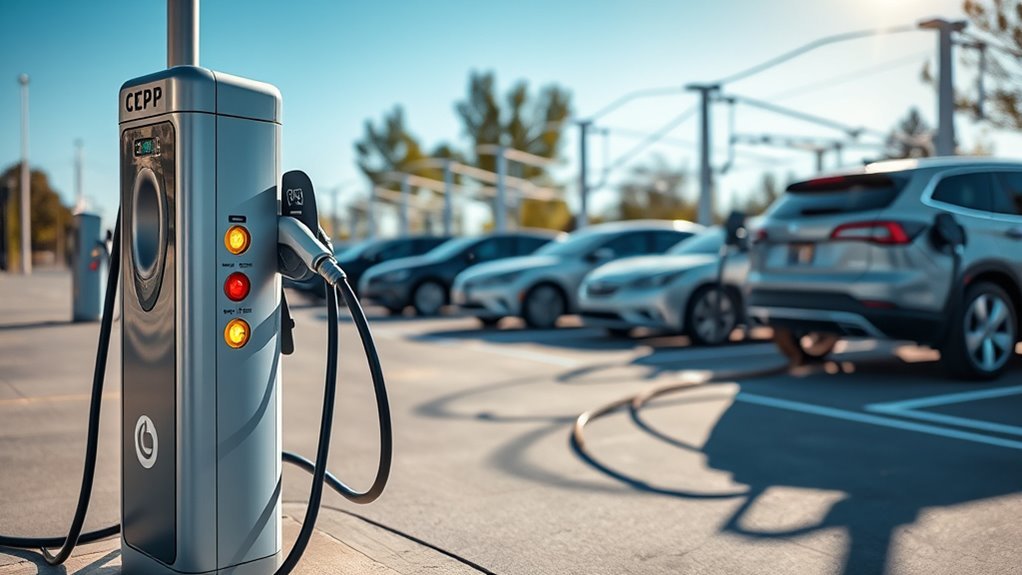
The Open Charge Point Protocol (OCPP) plays an important role in the electric vehicle (EV) charging ecosystem by enabling effective communication between EV chargers and backend management systems.
By acting as a universal language, OCPP guarantees compatibility across various manufacturers and platforms, which is crucial for seamless EV charging operations. One of the key OCPP benefits is avoiding vendor lock-in, allowing charging network operators to select hardware and software solutions based on performance and cost.
Additionally, OCPP facilitates essential data exchanges like charging commands and status updates, enhancing operational efficiency. With multiple versions, including advanced functionalities such as smart charging and improved security, OCPP considerably enriches user experience.
The latest version, 2.0.1, focuses on security and interoperability, making it indispensable for the future growth and scalability of EV charging networks, as demand for electric vehicles continues to surge.
Key Features of OCPP Versions 1.6 and 2.0.1
OCPP versions 1.6 and 2.0.1 offer distinct features that enhance the functionality of EV charging networks. Understanding these OCPP features helps you make informed decisions when comparing the two versions.
| OCPP Features | Version 1.6 | Version 2.0.1 |
|---|---|---|
| User Authentication | ID tag authorization | Enhanced security with mutual authentication |
| Communication Method | SOAP over HTTP | JSON over WebSocket, improving efficiency |
| Smart Charging | Basic load management | Advanced load management with plug-and-charge |
While OCPP 1.6 introduced practical functionalities like remote session control and real-time notifications, OCPP 2.0.1 greatly improves security and integrates flexible pricing models. You’ll find that these OCPP comparisons highlight the evolution of EV charging network capabilities, ensuring both safety and efficiency in your charging experience.
How OCPP Ensures Interoperability Across Different Charging Networks
As electric vehicle (EV) adoption increases, guaranteeing interoperability across different charging networks becomes essential for enhancing user experience. OCPP provides a universal communication protocol that facilitates seamless data exchange between EV chargers and management systems, delivering significant interoperability benefits. This means you can access various charging stations without worrying about compatibility issues, effectively preventing vendor lock-in.
With OCPP’s persistent WebSocket connection, low-latency, bidirectional communication occurs, enabling real-time status updates and command execution. This capability boosts charging network efficiency, as chargers from different manufacturers can work together harmoniously.
Additionally, OCPP supports mixed hardware environments, allowing operators to upgrade management software independently of hardware, simplifying expansion across multiple locations. Features like remote start/stop and monitoring guarantee you enjoy consistent access to charging services, regardless of the network.
Ultimately, OCPP empowers you with the freedom to choose charging options that best suit your needs.
How OCPP Standards Future-Proof EV Infrastructure

While guaranteeing a robust electric vehicle (EV) infrastructure is essential, OCPP standards, particularly OCPP 2.1, play a pivotal role in future-proofing this landscape. These standards implement future proofing strategies by supporting bidirectional charging and Vehicle-to-Grid (V2G) integration, allowing for both energy consumption and supply back to the grid.
| Feature | Benefit | Impact |
|---|---|---|
| Interoperability | Easy tech integration | Seamless upgrades |
| Vendor Flexibility | Reduced operational risk | Smooth shifts |
| Enhanced Security | Cyber threat protection | Long-term reliability |
| Scalability | Adaptable to market changes | Future-proof infrastructure |
With OCPP’s infrastructure adaptability, you can easily incorporate new technologies without being locked into a specific vendor. This flexibility guarantees you stay ahead of technological advancements while maintaining a secure and reliable EV charging network.
Top Challenges in Implementing OCPP and Solutions
Implementing OCPP can present several challenges that require strategic solutions to guarantee a seamless EV charging network. Here are the top issues you might encounter:
Implementing OCPP poses challenges that necessitate strategic solutions for a seamless EV charging network.
- Mixed Vendor Environments: Inconsistencies in message formatting can complicate charging station integration from various manufacturers.
- Firmware Compatibility Challenges: Older chargers may need regular updates to align with OCPP’s evolving standards for peak performance.
- Network Connectivity: Weak cellular coverage or ISP outages can disrupt communication, so robust connectivity solutions are vital.
- Interoperability Testing: It’s essential to conduct thorough testing and certification to confirm all OCPP-compliant devices communicate effectively across platforms.
What’s Next for OCPP: Future Developments and Trends?
As OCPP evolves, you’ll see significant advancements in Vehicle-to-Grid integration and smart charging features, enhancing energy management capabilities.
Expanded interoperability standards will guarantee that you can seamlessly access a wider range of charging networks.
These developments aim to streamline your experience while addressing the increasing demands of electric vehicle infrastructure.
Enhanced Vehicle-to-Grid Integration
With the introduction of OCPP 2.1, the landscape of Vehicle-to-Grid (V2G) integration is set to evolve considerably.
You’ll see significant advancements in bidirectional charging, enhancing energy management and grid stability.
Here are four key developments to expect:
- Improved load management strategies tailored for V2G systems.
- Enhanced support for decentralized energy resources (DER) to optimize local energy markets.
- Seamless communication between EVs and charging stations, thanks to ISO 15118-20.
- Streamlined integration of advanced payment systems to make V2G solutions more user-friendly.
These innovations will empower you to participate in energy sustainability while enjoying the benefits of your electric vehicle, fostering a more resilient and efficient energy ecosystem.
Advanced Smart Charging Features
While the evolution of OCPP 2.1 brings a host of advanced smart charging features, the true potential lies in its ability to adapt to future energy demands.
With bidirectional power transfer, you can’t only draw energy from the grid but also return it, enhancing grid stability. OCPP 2.1’s load management capabilities allow you to dynamically control energy distribution across multiple charging stations, optimizing energy usage during peak periods.
Future developments will refine integration with Vehicle-to-Grid (V2G) technologies, enabling seamless energy exchanges. Enhanced tariff integration also accommodates real-time energy market rates, promoting off-peak charging.
Additionally, advanced diagnostics improve operational efficiency, reducing downtime and ensuring your charging infrastructure remains robust and responsive to evolving needs.
Expanded Interoperability Standards
Expanded interoperability standards are essential for the future of OCPP, especially as the demand for flexible and efficient electric vehicle (EV) charging networks grows. Here’s what you can expect:
- Bidirectional Charging: OCPP 2.1 will support V2G integration, enhancing charging network flexibility.
- Seamless Communication: Building on ISO 15118-20 will optimize energy management between EVs and infrastructure.
- Enhanced Security: Future updates will introduce advanced encryption and authentication to counter cybersecurity threats.
- Dynamic Pricing Models: The integration of advanced tariff information allows for real-time adjustments to pricing, maximizing interoperability benefits.
Frequently Asked Questions
How Does OCPP Impact Charging Station Installation Costs?
OCPP enhances installation efficiency, leading to significant cost reduction. By standardizing communication protocols, you streamline setups, reduce errors, and simplify integration, ultimately lowering operational expenses and making charging station installations more economically viable for you.
Can OCPP Be Used for Residential EV Chargers?
Yes, OCPP can be used for residential charging. It offers benefits like remote monitoring and management, optimizing energy usage, and enabling firmware updates, which enhance user experience and efficiency in home EV charger setups.
What Devices Are Compatible With OCPP?
OCPP devices include various EV chargers from leading manufacturers, ensuring compatibility across multiple networks. You’ll find options for both public and private charging stations, allowing seamless integration into existing infrastructure for enhanced user experience and flexibility.
How Often Is the OCPP Standard Updated?
The OCPP standard typically sees updates every few years, with new OCPP versions introducing features and improvements. Staying informed about these updates guarantees you’re leveraging the latest advancements for efficient EV charging solutions.
Is OCPP Open-Source or Proprietary?
You’ll find OCPP is open-source, offering flexible licensing that promotes collaboration. This openness enhances OCPP benefits, enabling developers to innovate freely, ensuring compatibility across various EV charging networks without restrictive proprietary limitations.
Conclusion
In the evolving landscape of electric vehicle charging, OCPP stands as the backbone, ensuring a seamless connection between diverse networks like threads weaving a tapestry. Its robust features not only foster interoperability but also safeguard the future of EV infrastructure against obsolescence. As you navigate this dynamic environment, embracing OCPP means you’ll be part of a sustainable journey, charging forward into a more connected and efficient world, where every plug-in feels like a step toward a greener tomorrow.







Leave a Reply