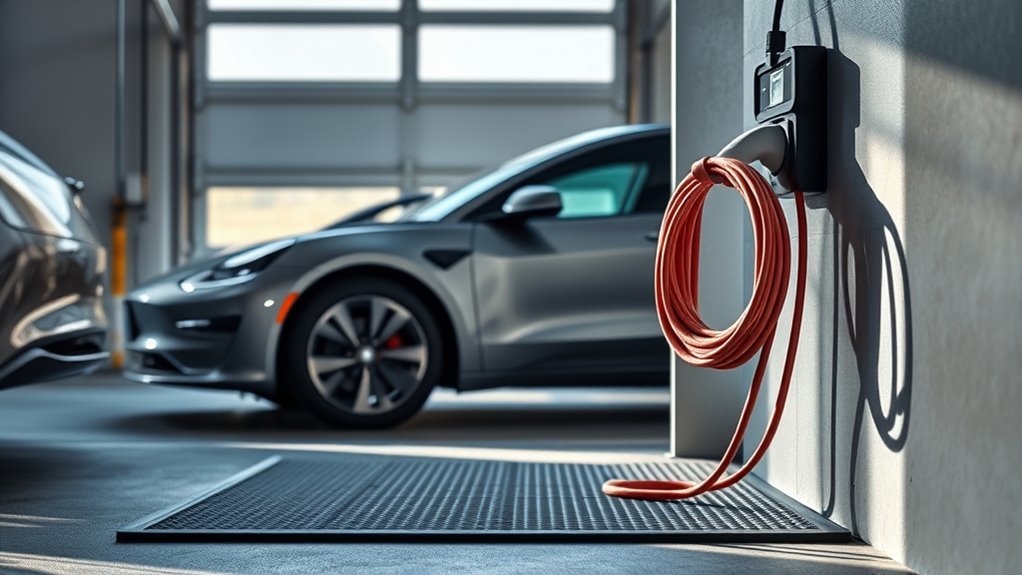
To protect your EV charging cable from garage door damage, start by using quality cable protectors like SplashNColor’s EV Garage Pass Through. Adjust garage door settings to avoid hard closures and install a 14/50 outlet for flexible charging options. Consider DIY solutions like PVC pipes or rubber ramps to shield the cable. Regularly inspect both the charging cable and garage door mechanism. There’s more to discover about effective cable management techniques to keep your setup safe.
Understanding the Risks of Cable Damage From Garage Doors
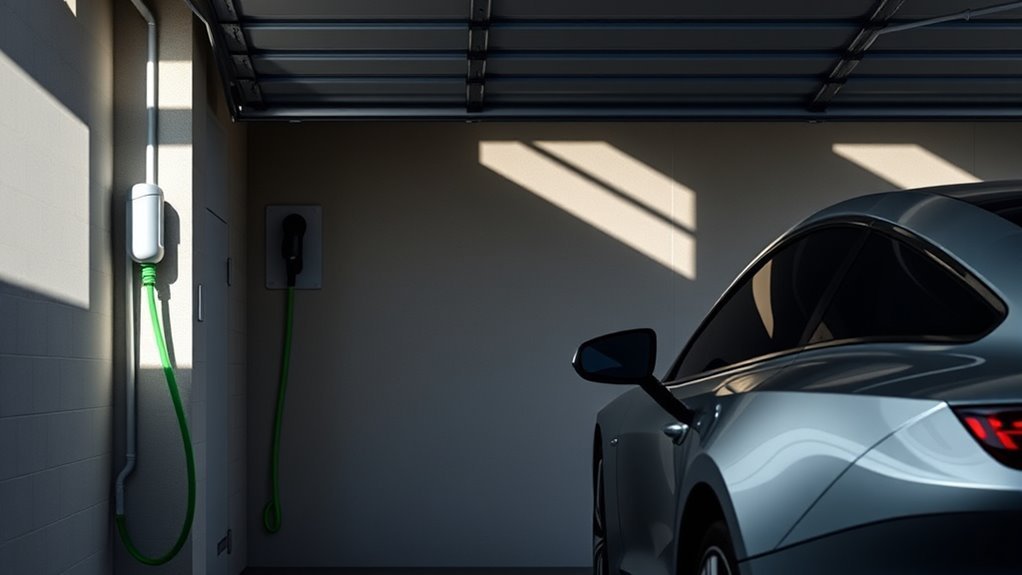
When garage doors close improperly, they can pose significant risks to your electric vehicle (EV) charging cable. Repeated pinching or crushing can lead to cable insulation wear, increasing the likelihood of electrical shorts. This damage not only affects the cable’s integrity but also raises safety concerns for your charging setup.
Improperly closing garage doors can damage EV charging cables, leading to insulation wear and potential safety hazards.
Furthermore, compromised seals from consistent pinching can invite air and moisture infiltration, negatively impacting your garage environment.
To mitigate these risks, you should consider making garage door adjustments. Regular inspections of the door’s alignment and sensors can prevent improper closures. Additionally, using protective cable management products can shield your EV charging cable from potential harm.
Implementing these proactive measures will help maintain the integrity of your cable insulation and guarantee a safe charging experience. Prioritizing these adjustments not only protects your investment but also enhances your peace of mind while embracing the future of electric mobility.
Top Strategies for Protecting Your EV Charging Cable
Protecting your EV charging cable is essential for guaranteeing safe and efficient operation. Start by using a quality cable protector, like the SplashNColor EV Garage Pass Through Cable Protector, which shields your cable from potential damage while accommodating cables up to 20mm in diameter.
Adjusting your garage door settings is another effective strategy; preventing hard closures can greatly reduce cable wear and extend the lifespan of both your cable and garage door seal.
Installing a 14/50 outlet beside the garage door allows flexible charging options, minimizing the need for the cable to pass through the door.
Consider DIY solutions, such as using PVC pipes or rubber cable protector ramps, to further prevent cable pinching.
Finally, regularly inspect and maintain both your charging cable and garage door mechanism to optimize charging efficiency and guarantee safe charging practices.
Prioritize these strategies to enhance your EV charging experience.
What Other EV Owners Do to Protect Their Cables
Many EV owners have discovered effective methods to safeguard their charging cables, sharing insights that can enhance your setup. For instance, using 1×4 boards on either side of the cable can prevent pinching by your garage door, as highlighted in a community discussion with 152 comments. Adjusting your garage door settings can also reduce the risk of hard closures against the cable. Installing a Tesla wall connector outside your garage allows flexible charging options, minimizing damage risks. Additionally, DIY solutions like PVC pipes or rubber ramps are popular for cable maintenance and protection.
| Solution | Community Experiences | Effectiveness |
|---|---|---|
| 1×4 Boards | 152 comments shared tips | Highly effective |
| Garage Door Adjustments | Many users found success | Effective |
| External Wall Connector | Flexible charging options | Minimizes damage |
Engaging with these community experiences can empower your cable management strategies.
Step-By-Step DIY Solutions for Cable Pass-Throughs
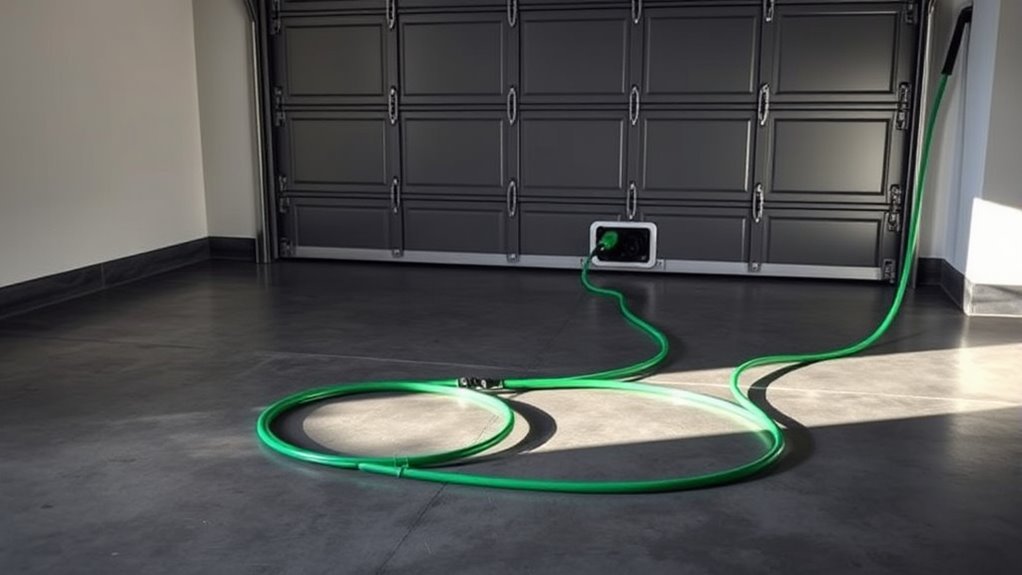
Creating a passthrough for your EV charging cable can greatly enhance the longevity of both the cable and your garage door’s functionality. Here’s how to implement effective DIY passthroughs to prevent cable pinching:
Enhance your garage’s efficiency by creating a passthrough for your EV charging cable to prevent wear and ensure smooth operation.
- Use PVC pipe: Cut a section to fit your cable diameter, allowing for flexibility and protection against the garage door’s weight.
- 3D print a custom passthrough: Design a tailored solution that matches your cable’s specifications, ensuring a snug fit and maximum protection.
- Install a cable protector ramp: Consider options like the LZSTEC EV Charging Cable Protector, crafted from durable rubber, enabling the cable to slide under the door without a risk of damage.
Once you’ve set up your passthrough, use silicone caulk to secure any protectors and create a watertight seal.
This approach not only guards against wear but also keeps your garage door functioning efficiently.
Selecting the Best Products for Cable Management
When selecting the best products for cable management, you’ll want to take into account both durability and functionality to guarantee your EV charging cables remain protected.
The SplashNColor EV Garage Pass Through Cable Protector, priced at $16.99, is a popular choice but has mixed user testimonials regarding durability, with some cracking after minimal use.
For enhanced protection, consider the UNDOR Pro Protect units at $65.99, which offer a gapless installation for cables under 0.9 inches thick, ensuring pinch-free operation.
Additionally, explore DIY alternatives like PVC pipes or rubber ramps, which community members recommend for effective, cost-efficient solutions.
Engaging in product comparisons can help you weigh these options based on user feedback and longevity.
Ultimately, a mix of well-reviewed products and innovative DIY strategies will empower you to safeguard your EV cable effectively.
Frequently Asked Questions
Can I Run EV Cable Under Garage Door?
Yes, you can run your EV cable under a garage door, but you must implement proper cable routing and safety measures. Consider using cable protectors and adjusting the door limits to prevent damage and guarantee safe operation.
Are Charging Cable Protectors Worth Buying?
Charging cable protectors can be worth buying, especially considering that 30% of users report cable damage without them. However, weigh their cost-effectiveness against durability issues; DIY solutions might offer better long-term benefits for your needs.
How to Protect Your EV Charging Cable From Theft?
To protect your EV charging cable from theft, employ effective cable security strategies like using a locking charging station, retractable systems, and identifiable tags. Additionally, consider theft prevention techniques such as surveillance cameras and community insights.
How Common Is EV Cable Theft?
EV cable theft’s a rising tide, with nearly 10% of owners reporting incidents. Prioritize charging station security and effective cable management to safeguard your investment, ensuring your EV journey remains uninterrupted and worry-free.
Conclusion
In summary, protecting your EV charging cable from garage door damage is essential for longevity and safety. Did you know that nearly 30% of EV owners experience cable wear due to improper storage or positioning? By implementing effective strategies, such as cable management solutions and proper pass-through installations, you can greatly reduce the risk of damage. Don’t wait for a costly repair—take proactive steps now to preserve your investment and guarantee seamless charging experiences.






Leave a Reply