Yes, you can charge your EV using solar panels, harnessing clean energy for your vehicle. Solar EV charging generally involves either an on-grid system, which connects to your home’s electricity, or an off-grid system with battery storage. On-grid setups are easier and cheaper to install, while off-grid systems provide energy independence. Both options greatly cut energy costs and reduce fossil fuel reliance. Discover the details about choosing the right system and its many advantages.
What Is Solar EV Charging?
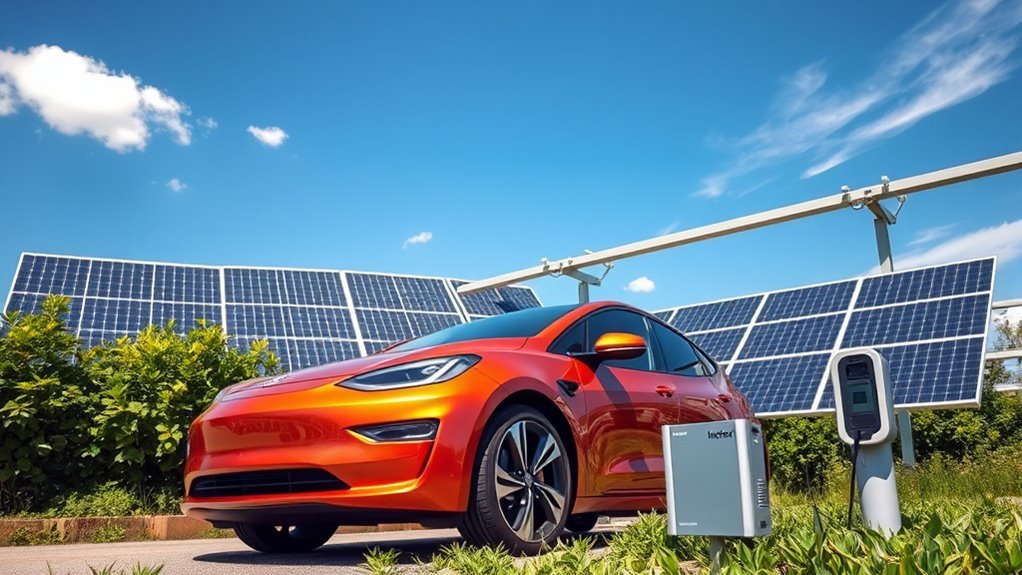
When you think about charging your electric vehicle (EV), consider the advantages of using solar power.
Solar EV charging harnesses solar energy to generate electricity, which can charge your EV directly or via an inverter for AC supply. There are two main systems: on-grid and off-grid.
On-grid systems connect directly to your home’s electricity, allowing you to offset your energy consumption and charge your EV with minimal initial investment. Off-grid systems, however, store solar energy in batteries, giving you the freedom to charge your EV anytime, even without sunlight—but they typically come with higher costs.
By choosing solar EV charging, you greatly reduce your reliance on fossil fuels, lower your electricity bills, and contribute to a sustainable energy future.
Embracing this technology empowers you to drive towards energy independence while enjoying the benefits of clean, renewable solar energy for your electric vehicles.
How Do Solar Panels Charge an EV?
How do solar panels actually charge your electric vehicle (EV)? First, they generate direct current (DC) electricity, which your EV can’t use directly. This is where inverter technology comes into play. The inverter converts the DC electricity into alternating current (AC), making it compatible for charging your EV.
Solar panels generate DC electricity, which inverters convert to AC for charging your electric vehicle.
You can harness this solar energy through either on-grid or off-grid systems. On-grid systems are more straightforward; they connect to the existing electricity grid and allow you to offset your home’s energy consumption, maximizing solar panel efficiency.
Conversely, off-grid systems require additional infrastructure, such as batteries, to store energy, which can lead to higher initial costs.
Charging your EV with solar energy not only reduces your reliance on fossil fuels but also helps lower electricity bills. It’s an empowering choice that supports both the environment and your wallet.
Choosing Between On-Grid and Off-Grid Solar Charging Systems
When choosing between on-grid and off-grid solar charging systems for your EV, consider how each option fits your needs.
On-grid systems typically offer lower upfront costs and easier integration with your home, while off-grid systems provide energy independence, especially in remote areas.
Understanding these key differences will help you make an informed decision that aligns with your lifestyle and budget.
On-Grid System Advantages
While off-grid solar systems offer independence from the utility grid, on-grid systems provide significant advantages for EV owners looking to streamline their charging experience.
With on-grid setups, you can directly use electricity generated from your solar panels for charging, maximizing grid efficiency. Any excess energy you produce can be fed back into the grid, potentially earning you credits through solar incentives.
These systems typically require less initial investment than off-grid alternatives, making them more accessible. Plus, they seamlessly integrate with your home’s existing electrical system, allowing you to offset overall electricity consumption and lower monthly bills.
However, keep in mind that in power outages, on-grid systems won’t provide backup power for charging, which is an essential consideration.
Off-Grid System Benefits
Off-grid solar systems present a compelling solution for EV owners seeking energy autonomy and sustainability. By utilizing batteries to store solar energy, you can charge your EV even during cloudy days or at night, making this ideal for remote locations.
This setup grants you energy independence, allowing you to rely solely on renewable sources without grid dependency. Additionally, off-grid systems greatly reduce your carbon footprint, promoting a cleaner environment and sustainable transportation.
While the initial investment may be higher due to battery and inverter costs, the long-term benefits of reduced reliance on fossil fuels and increased self-sufficiency can outweigh these expenses.
Just remember to stay on top of maintenance to guarantee peak performance and efficiency.
Cost Considerations Comparison
Choosing between on-grid and off-grid solar charging systems for your electric vehicle hinges on several cost considerations that can greatly impact your investment.
On-grid systems typically require a lower initial investment, making them more accessible, while off-grid setups often involve higher expenses due to batteries and inverters.
However, off-grid systems offer energy independence, particularly in areas with unreliable grid access.
Installation challenges can arise with both systems, but off-grid setups may have more complex requirements.
Maintenance costs also differ; on-grid systems generally have lower upkeep, while off-grid systems incur ongoing expenses for battery maintenance.
Ultimately, evaluating each option’s cost efficiency will help you determine the best solution for charging your EV.
The Advantages of Charging Your EV With Solar Power
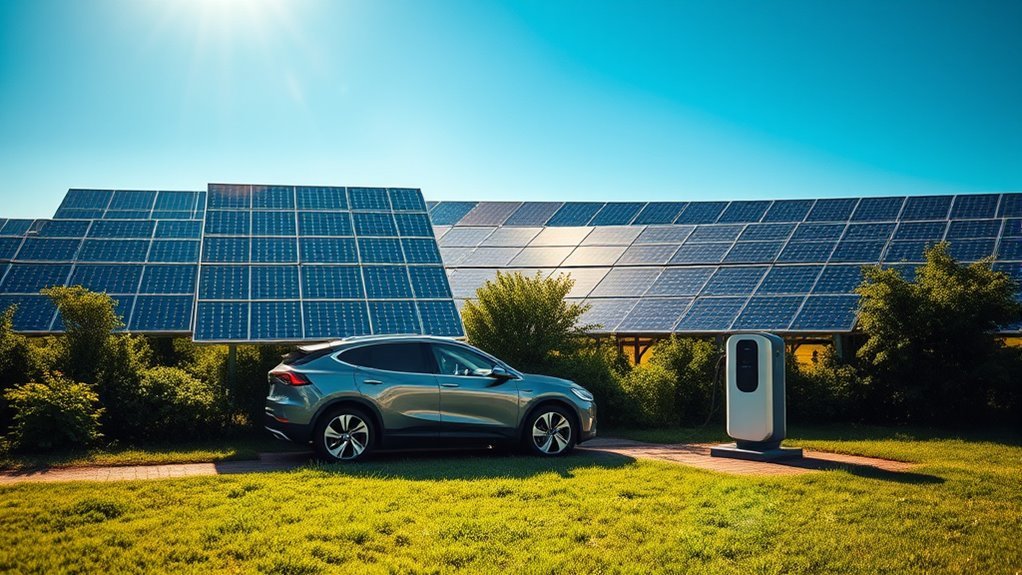
As you consider the benefits of charging your electric vehicle (EV) with solar power, you’ll find that it not only reduces your reliance on fossil fuels but also promotes a cleaner, more sustainable mode of transportation. Utilizing solar energy enhances charging efficiency and aligns perfectly with sustainability goals.
| Advantage | Details | Impact |
|---|---|---|
| Reduced Bills | Offsets home electricity costs | Savings on utility costs |
| Environmental Benefits | Lowers carbon footprint | Promotes ecological health |
| Energy Independence | Especially crucial for off-grid systems | Greater autonomy |
What Are the Costs of Installing a Solar EV Charging System?
When considering the installation of a solar EV charging system, it’s essential to understand the associated costs, which can vary widely. The initial outlay can range from $10,000 to $30,000, depending on key installation factors like system size, battery storage, and installation complexity.
On-grid systems typically require a lower upfront investment than off-grid systems, which can exceed $30,000 due to the need for high-capacity batteries and additional inverters.
A detailed cost breakdown reveals that government incentives and rebates can greatly offset these expenses, with some programs covering up to 30% of installation costs.
Additionally, remember that long-term savings on your electricity bills from solar energy can help recoup the initial investment, often providing a return within 5 to 10 years.
Embracing solar for your EV charging not only liberates you from rising utility costs but also contributes to a sustainable future.
What Equipment Do You Need for Solar EV Charging?
Understanding the costs of installing a solar EV charging system leads directly to the equipment you’ll need to make it functional.
First, you’ll require solar panels, and choosing the right solar panel types—like monocrystalline or polycrystalline—can greatly impact efficiency.
Next, an inverter is essential to convert the DC electricity generated to AC for your EV. Make sure the inverter specifications can handle both your home appliances and EV charging simultaneously.
If you’re going off-grid, consider adding battery storage to capture excess solar energy and a charge controller to manage the power distribution effectively.
For on-grid setups, you can simplify your installation by forgoing batteries, as you’ll draw directly from the grid.
Finally, integrating a monitoring system lets you track energy production and consumption, optimizing your solar EV charging experience.
With the right equipment, you’re well on your way to a sustainable, liberated energy future.
Assessing Your Home’s Solar Potential
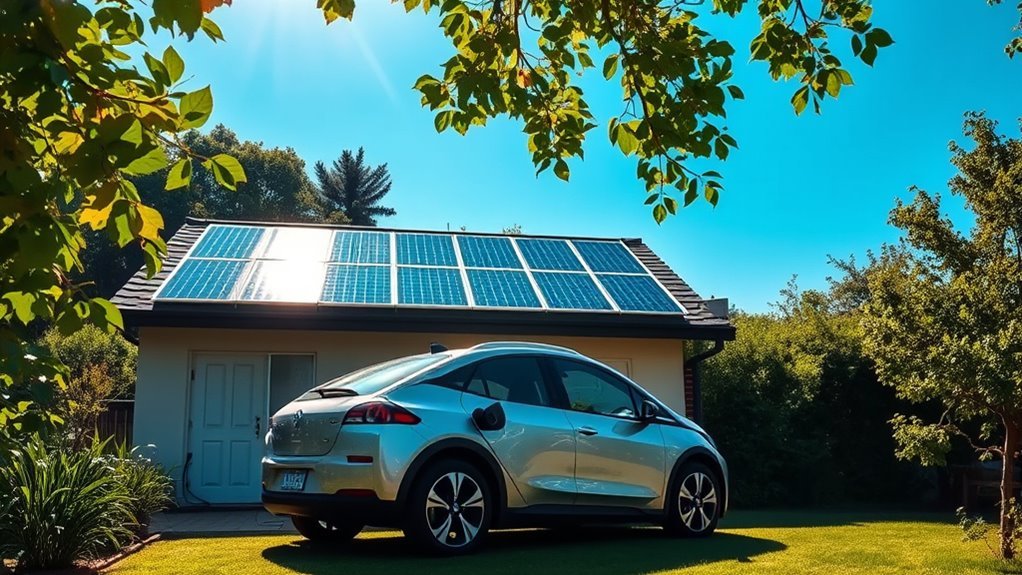
Evaluating your home’s solar potential is essential for maximizing the efficiency of your solar EV charging system. Start by examining your roof orientation—south-facing roofs typically capture the most sunlight, making them ideal for solar panel installation.
Next, conduct a shading analysis to assess any local factors that might obstruct sunlight, such as trees or nearby buildings. These can greatly reduce the sunlight your panels receive, impacting energy production.
Conduct a shading analysis to identify obstacles like trees or buildings that may hinder sunlight and affect energy production.
Utilizing solar irradiance maps or tools can provide insights into the average solar energy available in your area throughout the year.
Additionally, conducting an energy audit will reveal your electricity consumption patterns, helping you size an appropriate solar system for charging your EV.
Finally, don’t forget to check local regulations and incentives, as they can enhance the financial viability of your solar installation, ensuring you harness the full potential of your renewable energy system.
Maintenance Tips for Your Solar EV Charging Setup
To keep your solar EV charging setup running smoothly, you’ll need to prioritize regular panel cleaning and battery maintenance.
Clean your solar panels at least twice a year to guarantee they operate at peak efficiency, while also monitoring the battery system to address any issues before they escalate.
Regular Panel Cleaning
Keeping your solar panels clean is essential for maintaining the efficiency of your EV charging setup. Dirt, dust, and debris can decrease panel efficiency by up to 25%, limiting the energy available for charging.
To keep your panels performing at their best, follow these cleaning techniques:
- Clean at least twice a year, or more often in dusty areas.
- Use a soft brush or sponge with mild soap and water to avoid damaging the surface.
- Guarantee your safety with a stable ladder or scaffolding; consider hiring professionals if needed.
Regularly monitor your solar system’s energy output for significant drops, as this can indicate when it’s time for a thorough cleaning.
Your EV deserves the best energy!
Battery Maintenance Practices
Maintaining your solar EV charging setup goes beyond just keeping the panels clean; battery upkeep plays an essential role in ensuring reliable performance.
Regularly check your battery’s state of charge, keeping it within the ideal range to enhance battery life and charging efficiency. Periodically clean the terminals and connections to prevent corrosion, ensuring a solid electrical connection.
Monitor battery temperatures, as extreme heat or cold can adversely affect their longevity. Conduct routine inspections for signs of wear, leakage, or damage to maintain safe operation.
Finally, always follow the manufacturer’s guidelines for charging cycles and maintenance schedules to maximize performance and durability.
How Solar EV Charging Impacts the Environment
Solar EV charging offers a powerful pathway to reduce your environmental impact.
By harnessing the benefits of solar energy, you can substantially decrease your carbon footprint while enjoying the freedom of renewable resources.
Here’s how solar EV charging makes a difference:
Solar EV charging significantly impacts our environment by promoting clean energy and reducing dependence on fossil fuels.
- Reduces greenhouse gas emissions: Charging with solar power emits no pollutants, unlike fossil fuels.
- Decreases reliance on non-renewable sources: Shifting to solar helps combat climate change and promotes sustainability.
- Enhances energy independence: Off-grid solar systems empower you to charge your EV without relying on the traditional power grid, especially in remote areas.
Debunking Myths About Solar EV Charging
While many people believe myths about solar EV charging, understanding the realities can help you make informed decisions about your energy choices.
One common myth is that solar panels can’t charge EVs efficiently; however, both on-grid and off-grid systems provide ample energy for charging.
Another misconception is that solar charging is too expensive, but on-grid setups often require lower initial investments, making them accessible for most homeowners.
You might think solar power only works in sunny areas, yet panels still generate electricity on cloudy days, ensuring consistent charging.
Additionally, it’s false that all solar energy must be used immediately; off-grid systems with batteries store energy for use when the sun isn’t shining.
Finally, many believe solar EV charging is complicated, but it easily integrates into existing home electrical systems.
Myth clarification surrounding these solar misconceptions empowers you to embrace solar EV charging confidently.
Frequently Asked Questions
Can I Charge My EV Directly From Solar Panels?
You can’t charge your EV directly from solar panels due to charging conversion requirements. Instead, harness solar panel efficiency through an inverter system, enabling effective energy use for charging while reducing your environmental impact and costs.
Why Is My Electric Bill so High When I Have Solar Panels?
Your electric bill’s high because your solar panel efficiency might be lacking, failing to meet your electricity consumption. Seasonal changes and maintenance issues can also increase reliance on grid power, leading to unexpected costs.
How Many Solar Panels Do I Need to Charge My EV Car?
You’ll need about 8 to 12 solar panels to meet your EV charging requirements. Consider solar panel efficiency and local sunlight; it’s ironic how harnessing the sun can liberate you from hefty electricity bills.
Why Can’t Electric Cars Charge Themselves With Solar Panels?
Electric cars can’t charge themselves with solar panels due to solar panel efficiency and the need for EV charging technology. Direct current from panels needs conversion into alternating current, requiring a dedicated charging system for compatibility.
Conclusion
To sum up, charging your EV with solar panels isn’t just a smart choice; it’s like giving your car a bath in sunshine! By harnessing solar energy, you not only reduce your energy costs but also play a monumental role in protecting the environment. As you explore your options and assess your home’s solar potential, you’ll find that embracing solar EV charging is an investment in both your future and the planet’s well-being. So, why wait? Start your solar journey today!






Leave a Reply