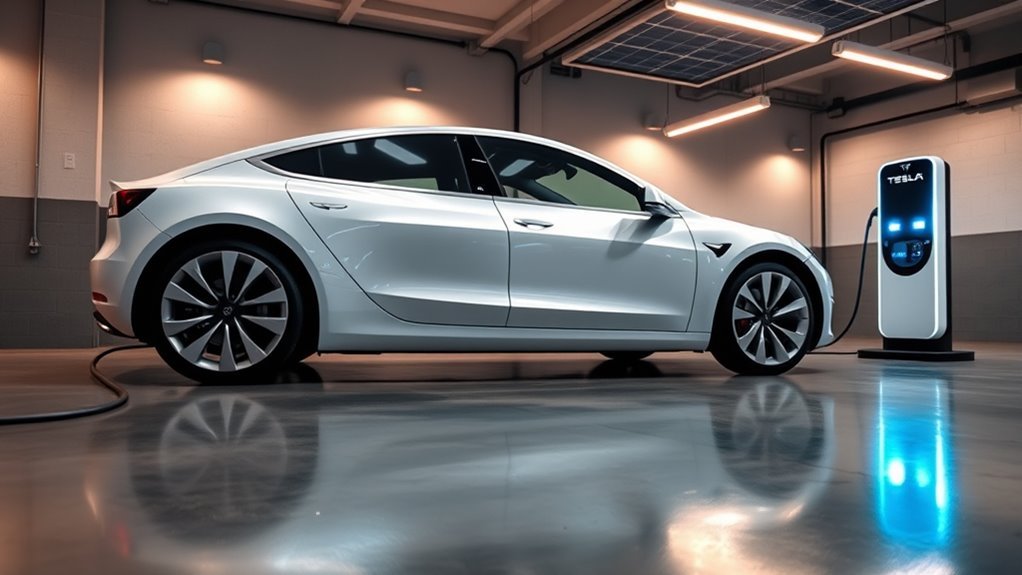
Charging your Tesla at home typically costs between $39 and $57 a month. This varies based on your vehicle model and local electricity rates. For example, the Model Y is cheaper, while the Cybertruck may reach up to $73 monthly. Switching from gas to electric could save you over $150 a month, leading to more than $1,800 in annual savings. Curious about tips for further reducing your costs? There’s more valuable info ahead.
Key Takeaways
- Monthly charging costs for Tesla vehicles range from $39 to $57, depending on the model and driving habits.
- Cybertruck owners may experience higher monthly costs, reaching up to $73.
- Charging costs average around 6 cents per mile, offering substantial savings compared to gas vehicles.
- Local electricity rates significantly influence overall charging expenses, averaging $0.16 per kWh.
- Consider investing in solar panels to potentially reduce charging costs to around $4.05 for Model Y.
What Are the Average Costs of Charging a Tesla at Home?
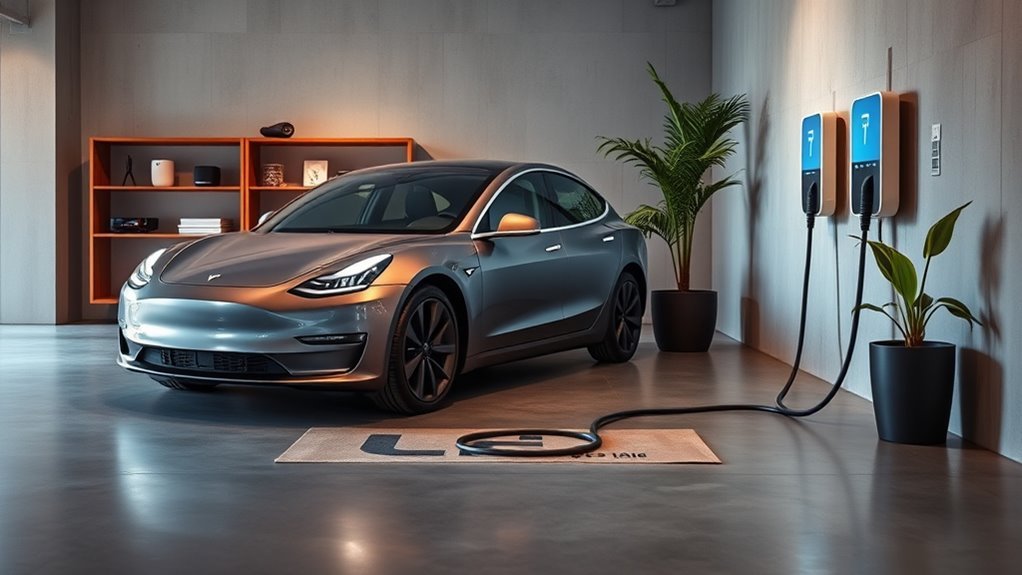
Have you ever wondered how much it really costs to charge a Tesla at home? The average cost ranges from about $10.98 for the Model Y to $18.00 for the Cybertruck.
The average cost to charge a Tesla at home varies, from $10.98 for the Model Y to $18.00 for the Cybertruck.
This cost comparison highlights the importance of charging efficiency, as home charging is generally more economical than using public chargers, which can be considerably pricier.
When you evaluate your monthly expenses, you’ll find that typical home charging costs fall between $39 and $57, with the Cybertruck on the higher end, around $65 to $73.
Keep in mind that your electric bill might increase by $25 to $67 monthly, depending on local rates and your driving habits.
To maximize savings, consider utilizing time-of-use plans, which can reduce your cost to as low as 4 cents per kWh during off-peak hours.
Embracing these strategies empowers you to charge efficiently and economically.
Monthly Charging Costs and Savings
When you switch to charging your Tesla at home, you can expect monthly costs ranging from $39 to $57, depending on the model.
This investment often leads to savings of over $150 each month compared to traditional gas vehicles, with annual savings exceeding $1,800.
However, keep in mind that factors like local electricity rates and charging times can influence your overall costs.
Average Monthly Charging Costs
Charging your Tesla at home can cost you between $39 and $57 a month, depending on the model you choose, with the Cybertruck pushing that range to about $65 to $73.
This cost comparison reveals a significant change in your monthly expenses, especially considering the charging infrastructure supports a more affordable energy source.
While you might see an increase of about $50 to $67 on your electric bill, the overall expense remains much lower than traditional gasoline costs.
Plus, if you take advantage of time-of-use rates by charging during off-peak hours, you can reduce your monthly costs even further.
Shifting to a Tesla not only liberates you from high gas prices but also encourages sustainable energy use.
Savings Compared to Gas
Switching to a Tesla not only transforms your driving experience but also considerably cuts down your monthly expenses.
In your savings analysis, you’ll discover that the average monthly charging cost for a Tesla ranges from $39 to $57, while traditional gas vehicles can hit around $204. That’s over $150 saved monthly, leading to potential annual savings exceeding $1,800.
With Teslas averaging just 6 cents per mile compared to 16 cents for gas vehicles, budget considerations become a breeze.
Plus, you can maximize savings even further by charging during off-peak hours with time-of-use plans.
Embracing electric driving isn’t just a choice; it’s a liberating move towards financial freedom and sustainability.
Factors Influencing Costs
Understanding the factors that influence your Tesla’s charging costs is essential for maximizing savings and managing your budget effectively. Your monthly expenses can range from $39 to $73, heavily shaped by electricity rates, which average around $0.16 per kWh in the U.S.
Your charging habits play a significant role too; frequent charging can increase your electric bill by $25 to $50. However, shifting to a Tesla can save you over $150 monthly compared to gasoline vehicles.
To enhance those savings, consider utilizing time-of-use plans for off-peak charging, minimizing your costs even further. By being mindful of these factors, you can enjoy the freedom of electric driving while keeping expenses in check.
Tesla Charging Costs vs. Gas Expenses
When you compare the costs of charging a Tesla at home to fueling a traditional gas vehicle, the savings become strikingly clear.
On average, charging a Tesla ranges from $39 to $57 monthly, while gas expenses hit about $204. This translates to annual savings of over $1,800, primarily due to lower fueling costs.
By employing smart charging strategies, you can optimize your expenses even further. For instance, charging costs about 6 cents per mile compared to 16 cents for gasoline vehicles.
Even though your electric bill might increase slightly, the overall savings from reduced gas expenses often outweigh that boost. If you drive around 12,000 miles a year, switching to a Tesla can save you more than $1,200 annually.
These cost comparisons highlight the financial freedom that comes with electric driving, empowering you to spend less on fuel and more on what truly matters.
Key Factors That Affect Your Tesla Charging Costs
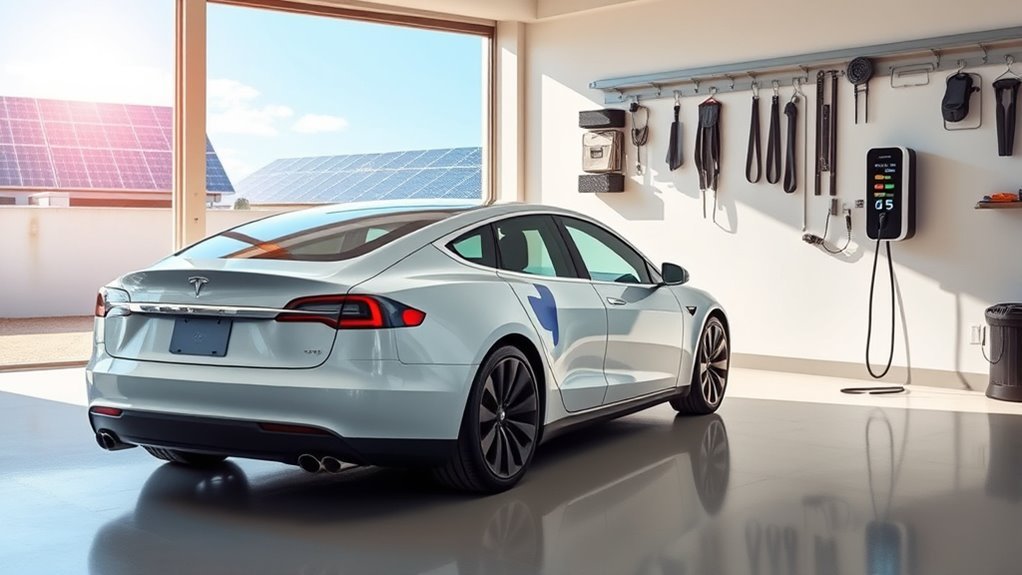
Charging a Tesla at home offers impressive savings compared to traditional gas vehicles, but several factors can influence your overall costs.
Local electricity rates play a significant role, varying from about $0.16 per kWh on average, with states like California charging up to 35 cents.
Local electricity rates significantly impact charging costs, averaging around $0.16 per kWh, with some states reaching up to 35 cents.
Your Tesla’s battery size also impacts costs; larger batteries, such as the Cybertruck’s 123 kWh, will naturally incur higher expenses than smaller models like the Model Y, which has a 75 kWh battery.
Additionally, charging efficiency, typically between 85-90%, means some energy is lost during the charging process, subtly increasing your costs.
Your driving habits also matter—if you drive around 1,000 miles monthly, your expenses will differ compared to someone who drives less.
Finally, consider time-of-use plans, which can slash costs to as low as 4 cents per kWh by allowing you to charge during off-peak hours.
Tips for Reducing Your Tesla Charging Costs
By taking advantage of various strategies, you can greatly reduce your Tesla charging costs.
Start by monitoring your charging habits; switching to a time-of-use electricity plan can lower rates during off-peak hours to as low as 4¢ per kWh. This can greatly cut your monthly expenses, which typically range from $39 to $57.
Engage with the Tesla community through forums to share experiences and gather tips tailored to your driving patterns and local energy prices. You’ll find that others have successfully navigated similar challenges.
Additionally, track Supercharger rates using the Tesla app to avoid peak pricing, which can hit 41¢ per kWh.
If you’re ready for a bigger investment, consider solar panels, which can reduce your charging cost to around $4.05 for a Model Y.
Embrace these strategies to empower your financial freedom while enjoying your Tesla.
The Benefits of Charging Your Tesla With Solar Energy
Charging your Tesla with solar energy not only slashes your electricity costs but also champions an environmentally friendly lifestyle.
By harnessing the sun’s power, you gain energy independence while contributing to a sustainable future.
This approach can lead to significant long-term savings and a positive impact on both your wallet and the planet.
Cost Savings Potential
When you harness solar energy to power your Tesla, you’re not just making an eco-friendly choice; you’re also tapping into significant cost savings. Charging costs drop to around $0.06 per kWh, making it about $4.05 for a Tesla Model Y. This cost analysis shows that investing in a solar system, typically around $19,000, can yield a return on investment in about five years through energy savings. Adding just five solar panels can cover your Tesla’s charging needs, enhancing your financial freedom.
| Investment Cost | Average Monthly Savings | Payback Period |
|---|---|---|
| $19,000 | $50 | 5 years |
| N/A | $4.05 per charge | N/A |
| N/A | Eliminates gas prices | N/A |
Environmentally Friendly Solution
Harnessing solar energy to power your Tesla isn’t just about cutting costs—it’s a powerful step towards a more sustainable lifestyle.
By charging with solar, you considerably reduce your electricity expenses to around $0.06 per kWh, translating to only about $4.05 for a full charge of a Model Y.
Investing in a solar system may seem intimidating at around $19,000, but with a return on investment in about five years, you’re not just saving money; you’re making a sustainable energy choice.
Adding just five solar panels can cover your Tesla’s charging needs, eliminating dependence on external electricity sources.
This solar investment not only enhances your freedom but also contributes to a greener environment for all.
Energy Independence Benefits
By choosing to charge your Tesla with solar energy, you’re not just reducing costs; you’re gaining a significant level of energy independence.
Here’s how solar panel installation empowers you:
- Cost Effectiveness: Charging your Tesla can drop to about $0.06 per kWh, translating to roughly $4.05 for a Model Y.
- Investment Returns: A solar system may cost around $19,000, but you could see a return on investment in just five years.
- Complete Coverage: Adding five solar panels can cover your charging needs entirely.
- Stable Savings: Solar energy protects you from fluctuating electricity rates, ensuring consistent savings.
Frequently Asked Questions
How Much Does Tesla Charging Cost at Home per Month?
Charging a Tesla at home typically costs you between $39 and $57 monthly, depending on your energy consumption and charging efficiency. Utilizing off-peak hours can help you save even more on your electric bill.
How Much Does a Tesla Home Charger Add to an Electric Bill?
Charging a Tesla at home typically adds $39 to $57 to your electric bill, depending on charging efficiency and local electricity rates. Monitoring those rates can help you optimize your costs and enhance your savings.
What Is $9.99 Monthly Charge by Tesla For?
Think of the $9.99 monthly subscription as your key to accessing a treasure chest of charging benefits. It enhances your Tesla experience with real-time traffic, satellite maps, and entertainment, transforming every drive into an adventure.
Does a Tesla Home Charger Save Money?
Yes, a Tesla home charger saves you money. You’ll enjoy significant savings compared to gas vehicles, while also benefiting from charging convenience. This savings comparison makes electric driving a liberating choice for your wallet and the environment.
Conclusion
In the grand scheme of things, charging your Tesla at home can save you a bundle compared to traditional gas expenses. By understanding the average costs and implementing a few savvy strategies, you can keep those monthly bills low. Plus, if you harness solar energy, you’ll not only cut costs but also boost your eco-friendly cred. With a little planning, you can drive your electric dream without breaking the bank—talk about hitting two birds with one stone!






Leave a Reply