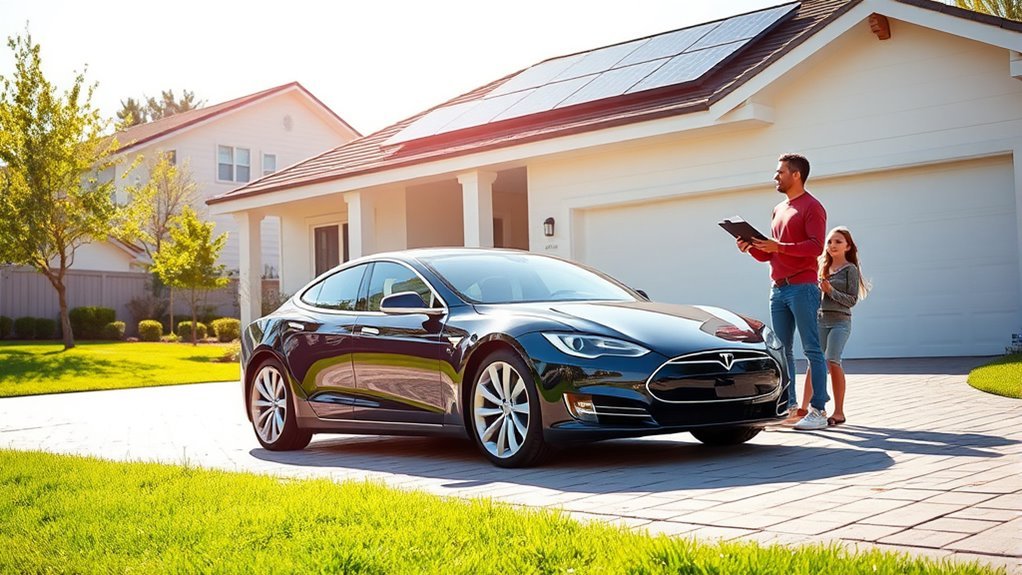
Are you looking to reduce your out-of-pocket costs on a new Tesla? Federal tax incentives significantly lower the effective price of qualified electric vehicles, but meeting strict IRS criteria remains a requirement for success.
Quick Answer
To qualify for the 2026 federal EV tax credit, you must meet specific household income limits, and your chosen Tesla model must satisfy North American assembly and battery sourcing requirements. You can apply the credit as a point-of-sale discount at the dealership to lower your purchase price immediately.
Understanding the 2026 Tesla Federal Tax Credit

Buying a Tesla in 2026 involves navigating the federal Clean Vehicle Tax Credit. This incentive provides up to $7,500 in tax savings, provided you and the vehicle meet all government standards.
Eligibility depends on your Modified Adjusted Gross Income (MAGI). For married couples filing jointly, the limit is $300,000. Heads of households must earn $225,000 or less, while single filers must stay below $150,000.
Your vehicle must also meet strict manufacturing rules. This includes final assembly in North America and specific sourcing requirements for battery components. You can transfer this credit to the dealer to receive an instant price reduction during your purchase.
Income Eligibility Requirements
Your income determines your eligibility for the federal tax credit. The IRS evaluates your MAGI from the year you take delivery or the previous tax year, whichever is lower.
The income thresholds are as follows:
- Married couples filing jointly: $300,000
- Heads of household: $225,000
- Single filers: $150,000
Used electric vehicle credits have lower income caps. These are $150,000 for married couples, $112,500 for heads of household, and $75,000 for single filers. Always verify your income status with a tax professional before relying on the credit to fund your purchase.
Vehicle Eligibility Standards
Not every Tesla qualifies for the full credit. The government mandates specific benchmarks for safety, manufacturing, and technology to ensure your vehicle is eligible for federal support.
Key requirements include:
- Battery Capacity: The vehicle must feature a battery with at least 7 kilowatt hours of capacity.
- Final Assembly: The car must undergo final assembly in North America.
- Weight Limit: The vehicle’s gross weight rating must remain under 14,000 pounds.
- New Status: You must be the first person to purchase and register the vehicle.
Pricing caps also apply to your choice of model. The Manufacturer’s Suggested Retail Price (MSRP) for vans, SUVs, and pickups cannot exceed $80,000. For sedans and smaller passenger cars, the limit is $55,000.
How to Claim Your Tax Credit
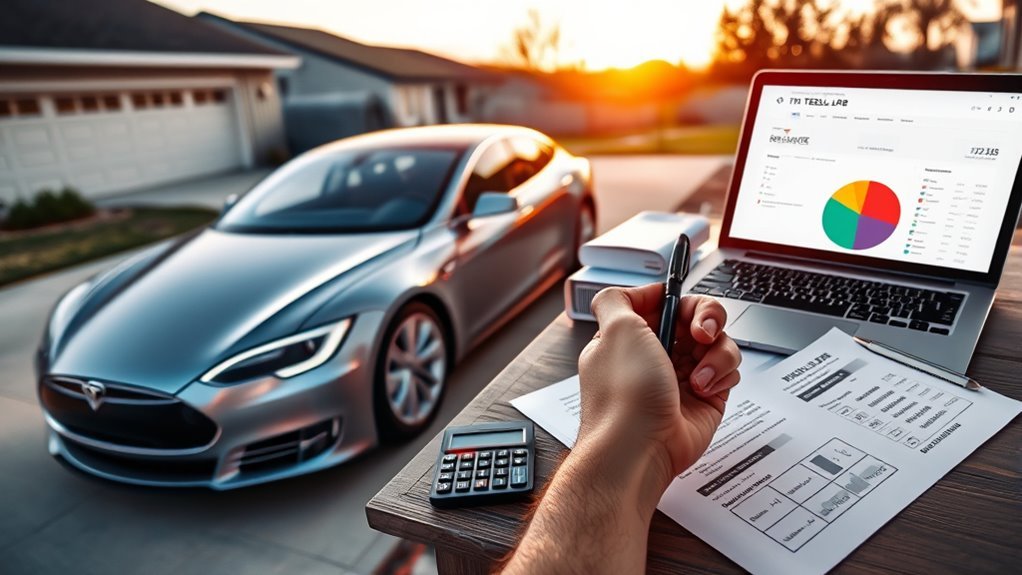
You can claim the credit in one of two ways. You may claim it when filing your annual federal tax return, or you can transfer the credit to the dealership at the time of sale. Transferring the credit provides an immediate discount on the purchase price.
Verification Steps
Before committing to a purchase, confirm the vehicle’s eligibility using the manufacturer’s window sticker or the VIN database maintained by the National Highway Traffic Safety Administration. This confirms the location of final assembly.
Documentation Requirements
Keep organized records to support your tax filing. You will need the time-of-sale report provided by the dealer, which confirms the transaction details and credit eligibility. Ensure your purchase contract clearly lists the vehicle’s purchase price and date.
Filing with the IRS
If you choose to claim the credit on your taxes rather than at the dealer, use the correct IRS forms for the tax year. Currently, this involves documenting your eligibility on your return. Always keep your purchase agreement as proof in case of a future audit.
The Role of MSRP Caps
MSRP caps prevent high-end luxury vehicles from receiving taxpayer-funded subsidies. These price limits include the base price of the vehicle and any factory-installed options. They do not include destination charges, dealer-installed accessories, or taxes.
If you purchase a used Tesla, a different set of rules applies. The vehicle must cost $25,000 or less, and it must be at least two years old to qualify for the used EV credit of up to $4,000.
Additional Incentives for EV Owners
Federal tax credits are only one part of the potential savings. Many states provide additional rebates that you can stack on top of the federal offer.
Consider these extra savings:
- State Rebates: Research local incentives that provide cash back or tax offsets.
- Home Charging Credits: You may claim a credit for 30% of the cost to install a home charger, up to $1,000.
- Business Use Deductions: Business owners can sometimes use Section 179 to deduct portions of the vehicle cost.
Always consult a qualified professional before making financial decisions based on these credits, as tax laws often change.
Frequently Asked Questions
Can I claim the credit for a business vehicle?
Yes, but the requirements differ from personal use. Consult a tax professional regarding Section 179 deductions for commercial vehicle use.
What happens if I earn more than the income limit?
If your MAGI exceeds the stated threshold for the year of delivery or the prior year, you cannot claim the credit for that vehicle purchase.
Does the $7,500 credit apply to every new Tesla?
Not necessarily. Eligibility depends on the specific battery sourcing, the model’s price, and whether the vehicle undergoes final assembly in North America.
Summary
Securing the Tesla tax credit requires careful planning regarding your income and the specific vehicle model you choose. Always verify that your Tesla meets assembly and battery sourcing requirements before finalizing your deal to ensure you qualify for the full benefit. Use the credit at the point of sale to maximize your immediate savings on your new electric vehicle.







Leave a Reply