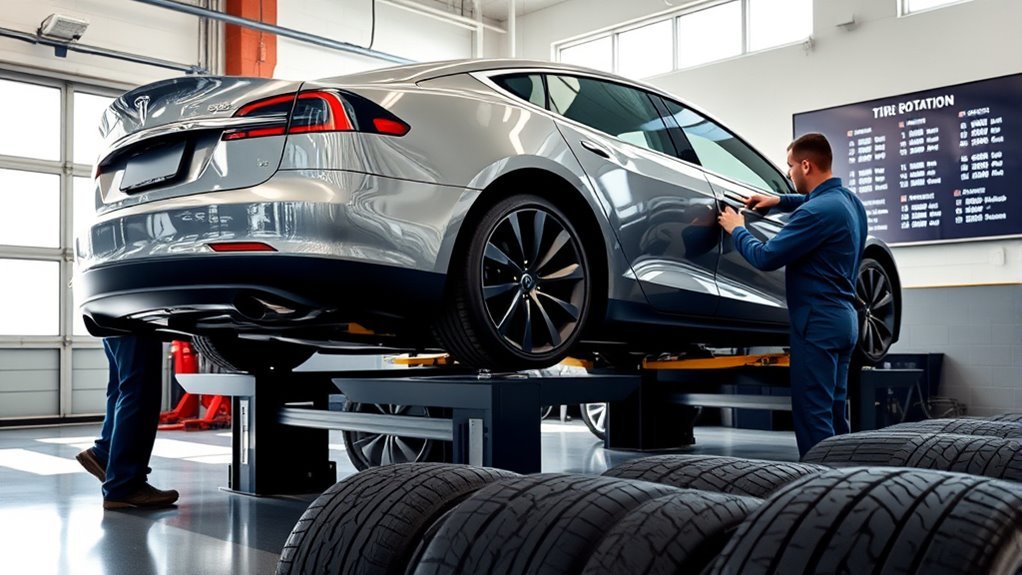
For your Tesla’s ideal performance, you should rotate your tires every 6,250 miles or sooner if you spot tread depth differences of 2/32 inches or more. Regular rotation helps prevent uneven wear and enhances handling. Keep an eye on signs like uneven tread wear or excessive scuffing during inspections. By maintaining a consistent rotation schedule, you’ll guarantee your tires last longer and perform better. Discover more about best practices to maximize your Tesla’s tire health.
Key Takeaways
- Rotate Tesla tires every 6,250 miles for even wear and optimal handling, as recommended by the manufacturer.
- Monitor tread depth; rotate sooner if a difference of 2/32 inches (1.5 mm) or more is noticed.
- Seasonal tire changes can impact wear, so adjust your tires accordingly for summer or winter conditions.
- Regularly inspect for uneven tread wear, which signifies the need for tire rotation.
- Use authorized service centers for professional tire rotations to ensure proper techniques are followed.
Understanding Tesla’s Tire Rotation Guidelines

When it comes to maintaining your Tesla, understanding tire rotation guidelines is vital for optimal performance and longevity.
Tesla recommends rotating your tires every 6,250 miles to guarantee even wear and ideal handling. This practice not only enhances your vehicle’s performance but also extends the lifespan of your tires. If you notice a tread depth difference of 2/32 inches or more between tires, it’s important to rotate them sooner to prevent alignment issues.
Additionally, consider seasonal tire changes; switching to summer or winter tires can further affect wear patterns. Proper tire alignment is also significant, as misalignment can lead to uneven wear, compromising your Tesla’s efficiency.
Signs It’s Time for a Tire Rotation
You should keep an eye out for signs that your tires need rotation to guarantee peak performance.
If you notice uneven tread wear or reach the 6,250-mile mark, it’s time to take action.
Additionally, a quick visual inspection can reveal scuffing or worn tread indicators, signaling that your tires need attention.
Uneven Tread Wear
Uneven tread wear can greatly impact your Tesla’s performance and safety, making it essential to recognize the signs that indicate a tire rotation is necessary.
Here are some indicators to watch for:
- A tread depth difference of 2/32 inches (1.5 mm) or greater between tires.
- One side of your tires shows considerably more wear than the other.
- Tread depth gauges reveal any tire with less than 4/32 inches (3 mm) of tread depth.
- Visual inspections show worn tread bars indicating the need for rotation.
Mileage Milestone Reached
As you reach key mileage milestones, it’s essential to keep an eye on your Tesla’s tire health to guarantee peak performance.
Tesla recommends tire rotations every 6,250 miles or whenever you notice a tread depth difference of 2/32 inch (1.5 mm) or more. Regular mileage tracking is crucial, as significant wear differentials can signal the need for a rotation.
Don’t fall for tire rotation myths—your driving style and conditions can impact wear patterns, prompting some owners to rotate more frequently. By adhering to these guidelines, you can extend your tires’ lifespan and enhance vehicle handling.
Neglecting tire maintenance can lead to uneven wear and costly replacements, so stay proactive in your approach to tire care.
Visual Inspection Indicators
Monitoring tire health goes beyond just tracking mileage; visual inspections play a significant role in determining when it’s time for a rotation.
Here are some key visual cues to watch for:
- Tread Depth: Use a tread depth gauge; a difference of 2/32 inches (1.5 mm) or more indicates a rotation is necessary.
- Tread Bars: If these bars are flush with the tread surface, it’s time for rotation or replacement.
- Uneven Wear Patterns: Regularly check for signs of uneven wear, as this suggests a need for rotation to maintain performance.
- Dust Accumulation: Excess dust in wheel wells could signal tire issues, prompting a closer inspection.
Stay proactive with these checks to enhance your Tesla’s tire life!
How Often to Rotate Your Tesla Tires for Optimal Performance?
To keep your Tesla performing at its best, you should rotate your tires every 6,250 miles. This regular maintenance guarantees even tire wear, enhancing your vehicle’s handling and safety.
Keep an eye on tire pressure, as it can fluctuate with seasonal changes, impacting performance. If you notice a tread depth difference of 2/32 inches (1.5 mm) or greater between tires, don’t wait for the mileage marker; rotate them immediately.
AWD models might have different wear dynamics compared to RWD cars, which could mean less frequent rotations. However, monitoring your tire condition is essential.
Some drivers choose to adjust their rotation frequency based on observed tread wear rather than sticking strictly to mileage intervals. By staying proactive, you not only extend tire lifespan but also enjoy a smoother driving experience, liberating you from the worry of unexpected performance issues.
Keep those tires rolling!
Best Practices for Tesla Tire Rotation
While you might think tire rotation is just another maintenance task, it plays an essential role in maximizing your Tesla’s performance and safety.
By following these best practices, you can debunk common tire rotation myths and enhance your driving experience:
- Rotate your tires every 6,250 miles to guarantee even wear and peak performance.
- Keep an eye on tread depth; rotate tires if there’s a difference of 2/32 inches (1.5 mm) or greater.
- Always install new tires on the rear axle to prevent oversteer, especially when replacing just two tires.
- Engage with the Tesla community to share and learn from owner experiences, gaining insights into effective tire maintenance.
DIY Tire Rotation: Steps and Tips
If you’re ready to tackle a DIY tire rotation on your Tesla, you’ll need a few essential tools and a clear step-by-step guide.
Start by ensuring safety precautions are in place, as working under a lifted vehicle can be hazardous.
Knowing the right techniques will help you maintain peak tire performance and extend their lifespan.
Essential Tools Needed
When tackling a DIY tire rotation, having the right tools at your disposal makes all the difference in guaranteeing a safe and efficient process. Equip yourself with these essential tire rotation tools to maintain your vehicle effectively:
- Jack and Jack Stands – Safely lift your vehicle and maintain stability during the process.
- Lug Wrench – Loosen and tighten lug nuts securely, preventing them from becoming loose while driving.
- Tread Depth Gauge – Assess tire wear and determine if rotation is needed based on tread depth differences.
- Torque Wrench – Guarantee lug nuts are tightened to the manufacturer’s specified torque settings, avoiding issues like warped brake rotors.
Keeping a mileage log helps you track your maintenance schedule, guaranteeing timely rotations.
Step-by-Step Rotation Guide
Before you plunge into the tire rotation process, it’s essential to understand the steps involved to guarantee your vehicle maintains peak performance and safety.
First, safely lift your Tesla using jack stands and remove all four wheels. If your tires are non-directional, switch the front tires to the opposite sides in the rear, moving the rear tires straight to the front. For directional tires, move the front tires straight back while adhering to the sidewall’s rotation arrow.
After reinstalling, tighten the lug nuts in a crisscross pattern for even pressure. Finally, reset the tire estimates and mileage through the Controls > Service > Reset menu, ensuring proper tire pressure calibration.
Don’t let tire rotation myths sway you—understanding rotation frequency factors is key!
Safety Precautions Required
To guarantee your safety during a DIY tire rotation, it’s crucial to take specific precautions that protect both you and your vehicle.
Implement these safety measures to promote tire safety and personal protection:
- Confirm your vehicle is on a flat, stable surface, and use wheel chocks to prevent rolling.
- Wear appropriate personal protective equipment (PPE), like gloves and safety glasses, to guard against injuries.
- Use a reliable jack and jack stands to securely lift the vehicle, making sure it’s stable before removing any tires.
- After rotating, check and adjust tire pressures according to the specifications on the Tire and Loading Information label for peak handling.
Choosing the Right Service for Tire Rotation
How can you guarantee your Tesla’s tires are rotated properly? Choosing the right service is vital for maintaining tire health. Many Tesla owners prefer professional tire rotation services at authorized service centers, adhering to the recommended intervals of every 6,250 miles or based on tread depth differences.
Choosing the right service for tire rotation is crucial for your Tesla’s tire health and longevity.
While this option guarantees proper technique, it may come with varying tire rotation costs.
If you’re looking for cost-effective solutions, some tire shops like Discount Tire offer free tire rotation services.
Alternatively, if you’re handy, consider a DIY tire rotation. This can save you time and money while allowing you to personally assess tire wear.
However, if you opt for mobile service options, confirm they follow the manufacturer’s recommended rotation patterns, as practices can vary.
Regular checks for tread depth are essential, so don’t hesitate to consult local tire shops for professional assessments, confirming you make the best choices for your Tesla’s tire maintenance.
How Driving Habits Affect Tire Wear and Rotation Frequency
While many Tesla owners adhere to the recommended tire rotation schedule, your driving habits can considerably influence tire wear and the frequency of rotations needed.
Understanding how your driving styles impact tire longevity is imperative. Here are four key factors to take into account:
- Aggressive Acceleration: Rapid starts can lead to faster tread wear, requiring more frequent rotations.
- Hard Cornering: This driving style can cause uneven wear, especially in rear-wheel drive models, so keep an eye on tread depth.
- Road Conditions: Regularly driving on rough or unpaved roads accelerates tire degradation, prompting earlier rotations.
- Driving Environment: Highway driving often leads to more even wear compared to city commuting, potentially extending rotation intervals.
Common Tire Rotation Mistakes to Avoid
Though many Tesla owners are aware of the importance of tire rotations, several common mistakes can undermine their effectiveness. One major error is neglecting the recommended interval of every 6,250 miles. Ignoring this maintenance tip can lead to uneven tire wear and a shorter lifespan.
Additionally, failing to check for tread depth differences of 2/32 inches before rotation could compromise handling.
Neglecting to check tread depth differences of 2/32 inches can jeopardize your vehicle’s handling performance.
Another common pitfall is rotating only two tires instead of all four, which can create instability in wet conditions. Don’t let tire rotation myths mislead you—every tire matters for peak performance.
Finally, skipping regular visual inspections can prevent you from catching early signs of uneven wear, leading to premature rotations.
Frequently Asked Questions
How Often Should I Do Tire Rotation on My Tesla?
You should rotate your Tesla’s tires every 6,250 miles. Following these tire maintenance tips helps guarantee even wear, improves performance, and supports your Tesla care, ultimately extending tire lifespan and saving you money on replacements.
How Often Should I Rotate EV Tires?
You’d think electric vehicles don’t need tire rotations, right? Yet, to combat uneven tire wear, rotate your EV tires every 6,250 miles—or sooner if you notice significant tread differences. Your ride deserves it!
Does Tesla Tell You When You Need a Tire Rotation?
No, Tesla doesn’t provide vehicle alerts for tire maintenance. It’s up to you to track mileage and check for wear. Regularly monitoring your tires will guarantee peak performance and longevity.
What Is the Tire Rotation Pattern for a Tesla?
Think of your Tesla’s tires as dancers, gracefully moving through a routine. For ideal tire wear, rotate front to rear on the same side, and cross rear tires to the front, following maintenance tips for longevity.
Conclusion
In summary, regularly rotating your Tesla’s tires is vital for maintaining performance and extending tire life. For instance, if you drive primarily in city traffic, you might notice uneven wear, making a rotation every 5,000 to 7,500 miles necessary. By adhering to Tesla’s guidelines and keeping an eye on your tires, you can guarantee a smoother ride and save money in the long run. Remember, proactive maintenance today leads to better performance tomorrow!







Leave a Reply