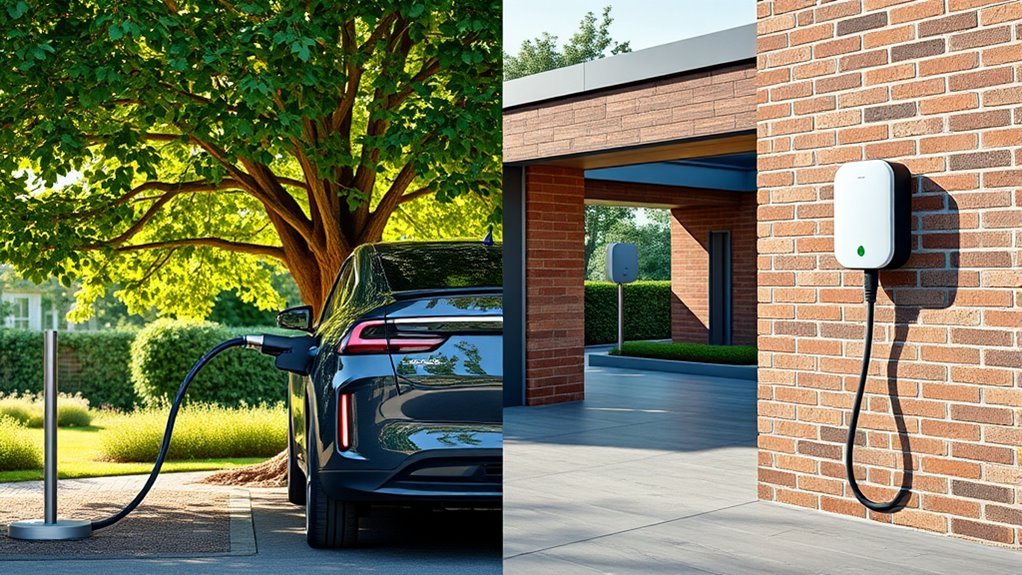
When deciding between tethered and untethered EV chargers for your UK home, consider your priorities. Tethered chargers offer the convenience of an integrated cable, perfect for hassle-free daily charging. However, untethered options provide flexibility to choose your cable and adapt to future vehicle types. While tethered chargers reduce theft risks, untethered models boast a cleaner look. Your choice depends on your specific needs and vehicle compatibility. Explore these factors further to make the best decision for your electric vehicle charging experience.
Tethered Vs. Untethered: Which EV Charger Should You Choose?
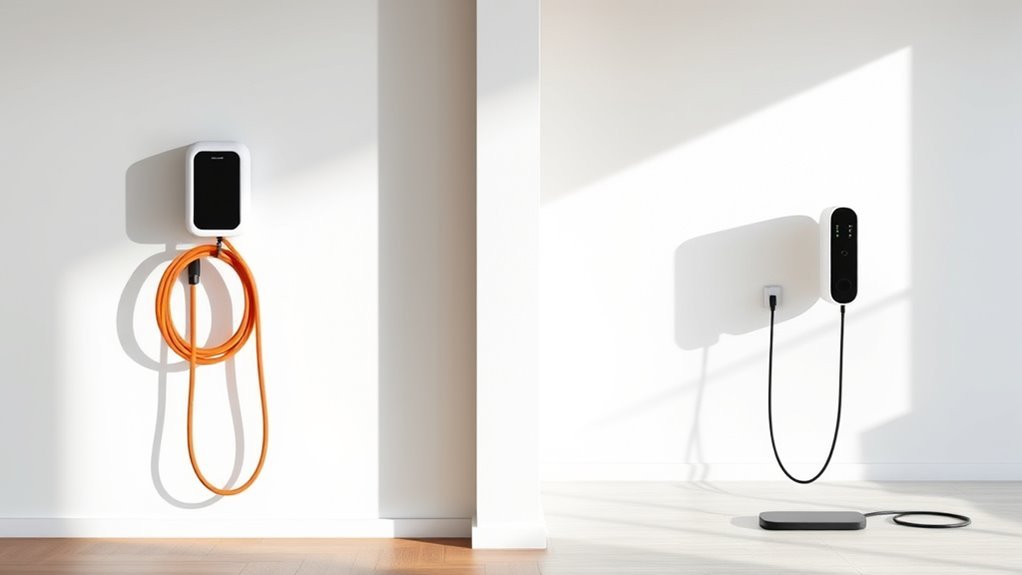
When deciding between tethered and untethered EV chargers, it’s important to contemplate your specific needs and circumstances.
Tethered chargers come with a permanently attached cable, providing quick plug-and-play installation options. This is ideal for single EV households prioritizing convenience and charging speed.
Tethered chargers offer convenient plug-and-play installation, perfect for single EV households focused on speed and ease.
However, if you have multiple EVs with varying connector types, an untethered charger allows you to adapt by using different cables, future-proofing your setup.
While tethered chargers may cost slightly more due to the included cable, untethered options often have lower initial costs, though you’ll need to purchase cables separately.
Consider the average cable length of tethered chargers, which is typically around 5 meters—this could limit your reach depending on your parking setup.
Ultimately, choose a charging solution that aligns with your lifestyle and empowers you to embrace the freedom of electric driving.
Tethered EV Chargers: Key Features and Benefits
Tethered EV chargers offer significant advantages for homeowners looking for convenient and efficient charging solutions. With a permanently attached cable, you gain immediate access for hassle-free charging, eliminating the need to retrieve a separate cable every time.
Here are some key features and benefits:
- Standard Cable Length: Around 5 meters for flexible positioning.
- Enhanced Security: Reduces risks of cable theft or disconnection.
- User-Friendly: Ideal for those preferring a simple, plug-and-play experience.
- Single EV Households: Perfect for users with one electric vehicle.
- Long-Term Convenience: Higher upfront cost balanced by reduced maintenance efforts.
When considering installation, tethered chargers cater to your user preferences, providing a streamlined solution for daily charging.
Embracing this technology can liberate you from the hassle of conventional charging methods, making your shift to electric driving seamless and enjoyable.
Untethered EV Chargers: What You Need to Know
If you’re considering an untethered EV charger for your home, you’ll find that it offers a flexible and aesthetically pleasing solution for charging your electric vehicle.
With a socket-only design, you can choose your charging cable based on your specific model, embracing untethered benefits that allow for adaptability as EV technology evolves. This flexibility means you won’t have to replace the entire unit when new connector types emerge.
Choose your charging cable based on your EV model, ensuring adaptability as technology evolves without replacing the entire unit.
Additionally, untethered chargers typically have a cleaner look since no cable hangs when not in use, enhancing your home’s appearance.
While they often come at a lower upfront cost than tethered options, remember to factor in the price of a separate charging cable.
One consideration is cable management; you’ll need to store and manage your charging cable, which can be less convenient.
Balancing aesthetics, flexibility, and practicality makes untethered chargers an appealing choice for modern EV owners.
Crucial Differences Between Tethered and Untethered EV Chargers
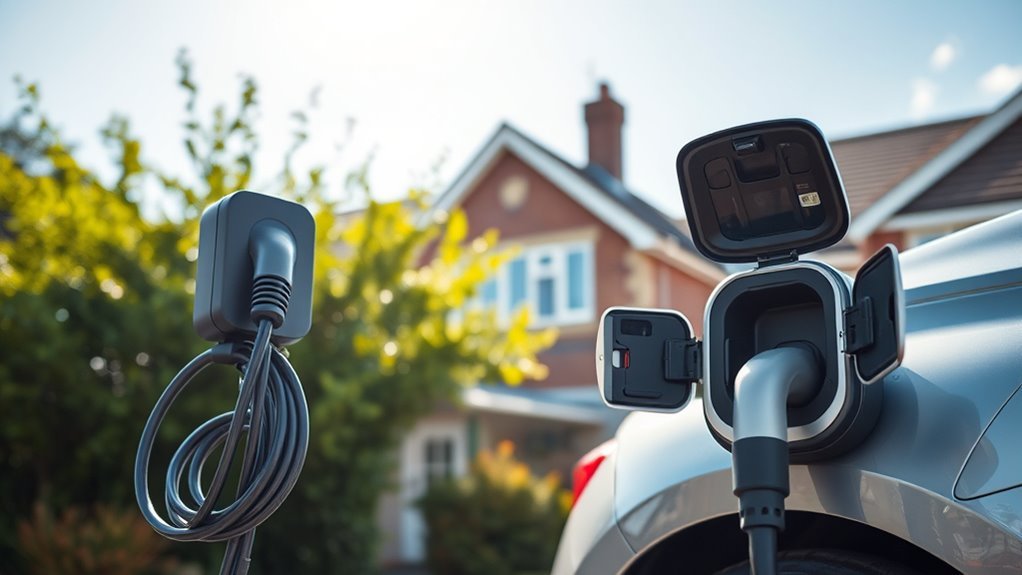
While both tethered and untethered EV chargers serve the essential function of powering your electric vehicle, they differ greatly in design and usability.
Understanding these differences will help you make informed installation considerations and conduct a thorough cost analysis.
- Tethered chargers come with a fixed cable, offering immediate access but limiting compatibility with various vehicle connectors.
- Untethered chargers feature a socket-only design, allowing flexibility for multiple vehicle types and future upgrades.
- Tethered chargers usually include the cable in the price, while untethered may require a separate purchase.
- The standard length for tethered cables is about 5 meters, whereas untethered models allow you to choose lengths based on your needs.
- Aesthetically, untethered chargers present a cleaner look without exposed cables when not in use.
Pros and Cons of Tethered Vs. Untethered EV Chargers?
When considering EV chargers for your home, weighing the pros and cons of tethered versus untethered options is essential for making an informed decision.
Tethered chargers offer undeniable charging convenience with an integrated cable, making daily use effortless. However, they can limit future flexibility due to compatibility with only one connector type.
On the flip side, untethered chargers typically have a lower upfront cost but require you to manage and store cables separately. They give you the freedom to adapt to different EV models and enhance aesthetic appeal by allowing for cleaner storage.
Security is another factor; tethered chargers reduce the risk of theft, while untethered ones expose you to potential cable loss.
Ultimately, your choice should reflect your priorities—whether you value immediate convenience and security or flexibility and a streamlined look.
Frequently Asked Questions
Is It Best to Have a Tethered or Untethered EV Charger?
Choosing between a tethered or untethered EV charger depends on your needs. For daily convenience, tethered chargers excel, while untethered options offer flexibility for multiple vehicles. Assess your lifestyle to find the best fit.
What Is the Best EV Charger for Home in the UK?
The best home EV charger in the UK typically ranges from £800 to £1200, with installation costs potentially reduced by the OZEV grant. Choose one that supports Type 2 connections for maximum compatibility and future-proofing.
What Is the Most Common EV Charger Type in the UK?
The most common EV charger type in the UK is the tethered charger. Its charging convenience, featuring a fixed cable, makes it user-friendly and ideal for daily charging, preferred by over 80% of electric vehicle owners.
Which Two Connector Types Are Most Commonly Used for EVS in the UK?
The two most commonly used connector types for EVs in the UK are Type 1 and Type 2. Prioritize connector compatibility to maximize charging speed, ensuring your vehicle charges efficiently and effectively at any station.
Conclusion
In the domain of EV chargers, choosing between tethered and untethered options is like selecting a trusty steed for your journey. Tethered chargers offer the convenience of a reliable companion, always ready to fuel your ride. Meanwhile, untethered chargers grant you the freedom to roam, accommodating various vehicles. Ultimately, your choice depends on your unique landscape—whether you prefer the security of a tethered ally or the flexibility of an untethered path. Make the choice that best suits your voyage.






Leave a Reply