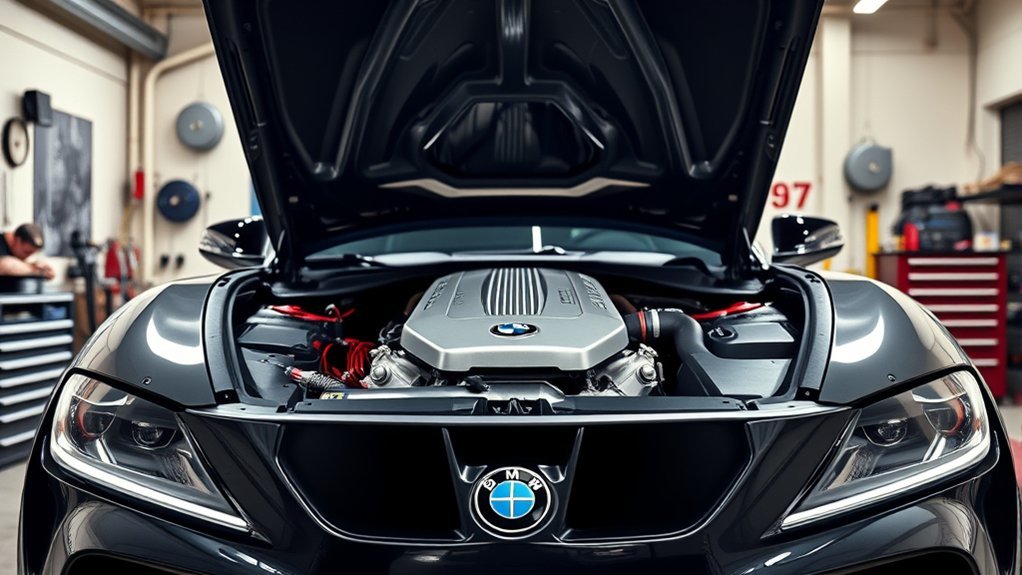
The B58 engine in the modern Toyota Supra is a product of intense collaboration between Toyota and BMW. While BMW built the engine, Toyota rigorously tested it to meet their legendary reliability standards. The 2021 updates, which brought a revised exhaust design and improved fueling, pushed power delivery and torque to new heights. The engine’s closed-deck block ensures long-term durability. Read on to see how this joint engineering shapes the driving experience and what exciting developments lie ahead.
Quick Answer
- Collaboration: The B58 is a BMW-built inline-six engine that Toyota rigorously tested and approved for the MkV Supra.
- Performance Upgrades: The 2021 update (B58TU1) introduced an integrated exhaust manifold and upgraded fueling, boosting the Supra to 382 horsepower.
- Durability: Features like a closed-deck aluminum block and forged crankshaft allow the engine to handle massive power with standard internals.
- Tuning Potential: The engine is famous for its ability to comfortably reach over 500 horsepower with simple bolt-on modifications.
The Evolution of the B58 Engine: From BMW to Toyota
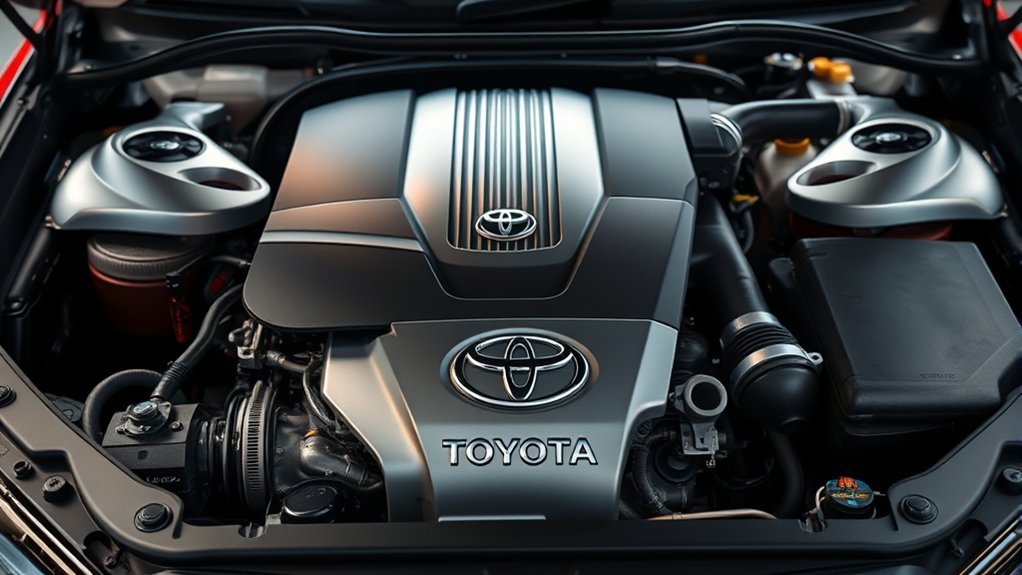
When you trace the lineage of the B58 engine, you’ll find a fascinating journey that highlights the collaboration between BMW and Toyota. Introduced by BMW in 2015, the B58 serves as the foundation for the Toyota Supra. It shows how two automotive giants can unite to push modern sports cars forward.
During development, Toyota extensively tested the engine. They ensured features like the closed-deck design and robust internals met their strict reliability standards. For the 2021 Supra, the engine received major updates. These included a revised exhaust manifold integrated into the cylinder head. This change increased the power output from 335 horsepower to an impressive 382 horsepower.
This evolution connects the B58 to Toyota’s legendary 2JZ engine. Both share a straight-six configuration and incredible tuning potential. Advanced features like variable-valve lift and sophisticated direct fuel injection highlight the engineering prowess from both manufacturers. The B58 has easily become a symbol of innovation in sports cars.
How Toyota Tweaked the B58 for Better Performance and Reliability
When you look at how the B58 engine was tuned for the Supra, you’ll notice significant enhancements in its block and performance calibration.
Toyota’s rigorous durability testing procedures guaranteed that higher power outputs would not sacrifice long-lasting reliability.
These joint adjustments reflect Toyota’s commitment to marrying track performance with daily dependability in the MkV Supra.
Engine Block Enhancements
To ensure the B58 engine met strict performance and reliability goals, the engineering team relied on a robust engine block. One notable feature is the closed-deck configuration. This setup increases rigidity and strength compared to older open-deck designs. By utilizing lightweight aluminum, the engine reduces overall weight while maintaining serious durability.
The inclusion of a forged steel crankshaft and strong connecting rods bolsters the bottom end. This allows the engine to handle higher power outputs without risk of failure.
Additionally, Toyota’s rigorous durability validation processes confirm the engine thrives under demanding track conditions.
Paired with a revised exhaust manifold design and updated pistons in the 2021 model, these block features create a highly responsive and liberated driving experience.
Performance Calibration Adjustments
To maximize the B58 engine’s performance, engineers applied precise calibration adjustments that improved both power delivery and reliability.
By introducing an integrated exhaust manifold and revising the piston design, the updated engine produces an impressive 382 horsepower and 368 lb-ft of torque.
These hardware and software adjustments elevated the Supra’s capabilities. The car achieves a 0-60 mph time of just 3.9 seconds while easily meeting Toyota’s high standards for daily durability.
This tuning reflects a commitment to delivering an exhilarating sports car experience without compromising the B58 engine’s inherent strengths.
Ultimately, these meticulous modifications exemplify a deep drive for innovation and performance excellence.
Durability Testing Procedures
Though durability is sometimes overlooked in modern performance engineering, Toyota prioritized rigorous testing procedures for the BMW B58 engine. This ensured the platform met their stringent reliability standards.
The closed-deck design was thoroughly vetted to confirm it prevents cylinder head gasket failures under extreme conditions. By implementing detailed testing protocols, Toyota pushed the engine to its limits. They simulated various driving scenarios to confirm long-term durability.
Significantly, the engine uses a reliable mechanical water pump for the main cooling circuit, paired with an electric pump for the turbos. This setup prevents overheating during intense driving.
Toyota reportedly tested the engine block up to 700 horsepower. This highlights their focus on future high-performance applications and guarantees the Supra remains a resilient performer on the street and track.
Specific Tuning Adjustments and Exhaust Upgrades in the B58 Engine
When examining the tuning adjustments and exhaust upgrades for the MkV Supra, it’s clear this powertrain is highly optimized. These adjustments elevate performance, allowing the 2021 Supra to achieve 382 horsepower and 368 lb-ft of torque.
The meticulous tuning of the BMW B58 engine propels the MkV Supra to exhilarating new heights.
Key enhancements include:
- A modified exhaust manifold integrated into the cylinder head to improve thermal efficiency.
- Revised piston designs that safely maximize power output while maintaining durability.
- A closed-deck engine design reinforced to easily handle higher horsepower capabilities.
This setup enables the Supra to rocket from 0 to 60 mph in just 3.9 seconds.
Toyota’s rigorous validation process guarantees that the B58 engine delivers exhilarating performance while standing up to the daily demands of a sports car.
Through these specific tuning adjustments, the Supra provides a thrilling experience waiting to be released.
Improvements in Intake Systems and Cooling Mechanisms
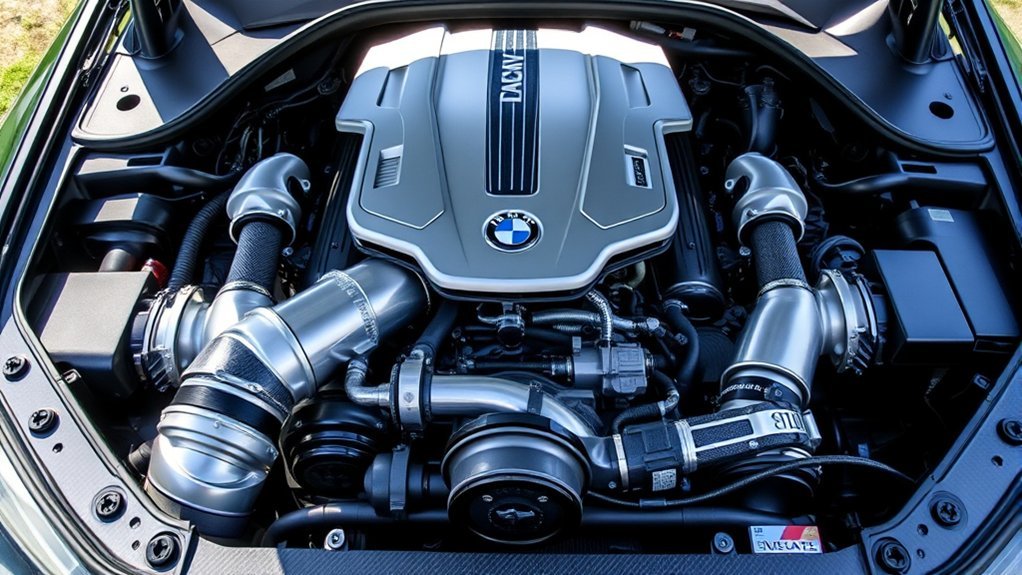
As you examine the B58 engine, you’ll notice strategic improvements in both the intake system and cooling mechanisms.
The enhanced intake flow design maximizes airflow to greatly boost engine performance and responsiveness.
Coupled with a highly efficient cooling system, these innovations guarantee that the engine maintains ideal operating temperatures under heavy stress.
Enhanced Intake Flow Design
As you explore the B58 engine, you’ll find its intake flow design plays a crucial role in optimizing performance. This design focuses on efficient air delivery, which greatly boosts combustion efficiency and overall power.
Key aspects include:
- An air-to-water intercooler integrated directly into the intake manifold for shorter charge piping.
- Support for higher boost pressures, allowing tuners to exceed 700 horsepower with minimal hardware changes.
- Optimized airflow geometry that enhances the engine’s throttle response.
These enhancements contribute directly to the engine’s reliability and durability under demanding conditions.
Improved Cooling Efficiency
Many modern engines struggle with heat management under high stress, but the B58 stands out with its exceptional cooling efficiency.
The integrated exhaust manifold design minimizes turbo lag and improves thermal management by allowing engine coolant to warm up faster. The engine also uses a sophisticated split-cooling system. This refines temperature control across the cylinder head and engine block during various driving conditions.
Additionally, the closed-deck design bolsters rigidity, facilitating better heat dissipation during high loads.
The oiling system features a variable-displacement pump, which provides precise lubrication and cooling during spirited driving.
These innovations balance performance with reliability, keeping your engine safe from overheating and extending its longevity.
How Toyota’s Durability Standards Enhance Everyday Performance
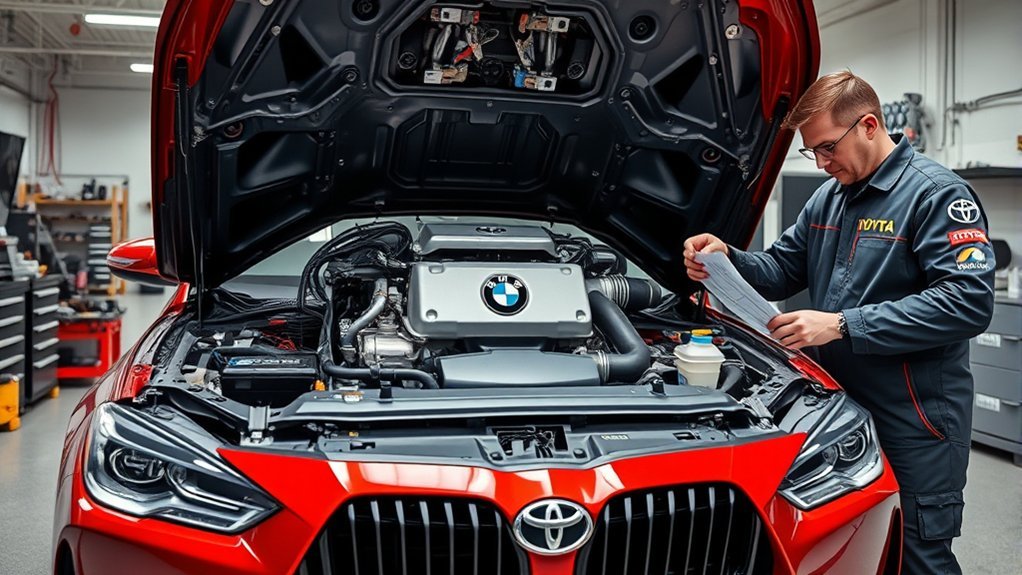
Toyota’s rigorous durability standards noticeably enhance the everyday performance of the B58 engine. The thorough testing protocols guarantee the engine is reliable under various conditions, making it a dependable choice for daily commuters and track enthusiasts alike.
Toyota’s rigorous testing ensures the B58 engine delivers unmatched reliability, making it an ideal choice for performance enthusiasts.
Key engine features include:
- Forged connecting rods and crankshaft: These components provide superior strength and reliability over standard cast parts.
- Closed-deck block: This layout helps the engine manage higher cylinder pressures and temperatures safely.
- Massive tuning potential: The engine’s robust factory design allows owners to easily add horsepower on stock components.
These features solidify the B58’s reputation for reliability. Enjoy the peace of mind that comes with knowing your engine is built to last.
How Toyota’s Sports Car Heritage Influences the B58’s Driving Experience
The influence of Toyota’s sports car heritage is unmistakable in how the B58 engine was tuned for the Supra.
Toyota’s extensive testing regime ensures the B58 meets rigorous performance and reliability standards. This echoes the legendary durability of iconic Toyota engines like the 2JZ. The B58’s closed-deck design and forged internals reflect a shared commitment to robust construction.
The engine’s software calibration is tuned to deliver a pure sports car experience. It offers responsive acceleration and smooth, linear power delivery throughout the rev range.
This collaborative design emphasizes cornering agility and throttle control, resulting in an exhilarating driving experience.
The B58 embodies the thrill and precision that driving enthusiasts crave. When you drive a Supra equipped with the B58, you’re tapping into a tradition of performance.
Why Do These Modifications Matter for Drivers and Enthusiasts?
How do these engine features elevate the driving experience for enthusiasts?
The collaborative updates to the B58 engine enhance performance in ways that thrill any driver. With an updated fuel system and a revised exhaust manifold, the 2021 Supra achieves 382 horsepower. This allows it to sprint from 0 to 60 mph in just 3.9 seconds.
Here’s why that matters:
- Instant Acceleration: The twin-scroll turbocharger spools quickly, giving you a rush of speed with virtually no lag.
- Durability and Reliability: The closed-deck block and forged crank guarantee the engine can comfortably handle spirited driving.
- Heritage and Performance: These updates merge Toyota’s testing legacy with cutting-edge BMW technology.
Each detail underscores a commitment to engineering excellence. You get an engine that resonates with your passion for driving.
The Future of the B58 Engine and Its Potential Developments
As automotive engineering advances, the BMW B58 engine stands poised to redefine modern performance standards. Its impressive tuning potential demonstrates a remarkably robust foundation.
Recent updates to the fueling and cooling systems show a clear commitment to refining the B58’s efficiency. Newer iterations have introduced a 48-volt mild-hybrid system. This pushes power and torque while strictly adhering to global emissions regulations.
This positions the B58 as a highly versatile platform. Aftermarket tuners continue to push the boundaries, routinely unlocking massive power gains. Thanks to its durable design, the B58 will likely remain the gold standard for inline-six engines in both BMW and Toyota lineups for years to come.
Why the B58 is a Tuner’s Dream
One of the biggest reasons the B58 has gained a legendary reputation is its massive aftermarket support. Often compared to the iconic 2JZ, the B58 can handle significant power increases without requiring internal engine work.
- Stage 1 Tunes: A simple software flash can increase output by 50 to 80 horsepower with no physical hardware changes.
- Stage 2 Tunes: Upgrading the downpipe and intake, paired with an ECU tune, easily pushes the engine past 450 horsepower.
- Stock Internals Limit: The factory forged crankshaft and closed-deck block are so strong that many builders safely run over 600 horsepower before needing to upgrade internal components.
This ease of modification makes the B58 one of the most cost-effective platforms for modern car enthusiasts looking to build a high-horsepower street car.
Frequently Asked Questions
Why Did Toyota Use the B58 Engine?
Toyota used the BMW B58 engine because it perfectly fit the required inline-six, front-engine, rear-wheel-drive layout needed for the new Supra. Developing a brand-new inline-six engine from scratch would have been prohibitively expensive. The B58 offered world-class power, a smooth torque curve, and the forged internals necessary to meet Toyota’s reliability standards.
Which Toyota Has the B58 Engine?
The fifth-generation Toyota GR Supra (A90) features the B58 3.0-liter engine. This modern powerhouse enhances the car’s performance and honors Toyota’s long-standing legacy of utilizing robust inline-six engines in its flagship sports cars.
Why Did Toyota Use a BMW Engine in the Supra?
Toyota used a BMW engine in the Supra to share development costs and maintain the car’s traditional inline-six layout. BMW is renowned for building excellent straight-six engines. This strategic partnership allowed Toyota to deliver a high-performance sports car that met stringent global expectations.
When Did Toyota Revise the B58?
Toyota and BMW introduced a major revision to the B58 engine for the 2021 model year (known as the B58TU1). This update added an integrated exhaust manifold and improved fueling. These changes boosted the Supra from 335 to 382 horsepower, greatly improving its acceleration and overall track performance.
Conclusion
To summarize, the collaboration behind the B58 engine showcases a brilliant balance of performance and reliability. By combining BMW’s exceptional inline-six architecture with Toyota’s rigorous durability testing, they created a powertrain that exceeds expectations. For drivers and enthusiasts, these enhancements mean getting the best of both worlds: German engineering backed by the peace of mind of Japanese quality control. As the automotive landscape shifts toward smaller engines and electrification, the B58 stands out as a true modern classic.







Leave a Reply