
If your Toyota Camry is overheating, the top causes include low coolant levels, a faulty thermostat, clogged radiators, and malfunctioning water pumps. You should check the coolant level, inspect for leaks, and monitor engine temperature closely. Ensuring your radiator fans work properly and maintaining your hoses can also prevent issues. Regular radiator maintenance, including coolant flushing, is essential. Stay informed on effective prevention methods to keep your engine running smoothly and avoid expensive repairs.
Signs Your Camry Is Overheating
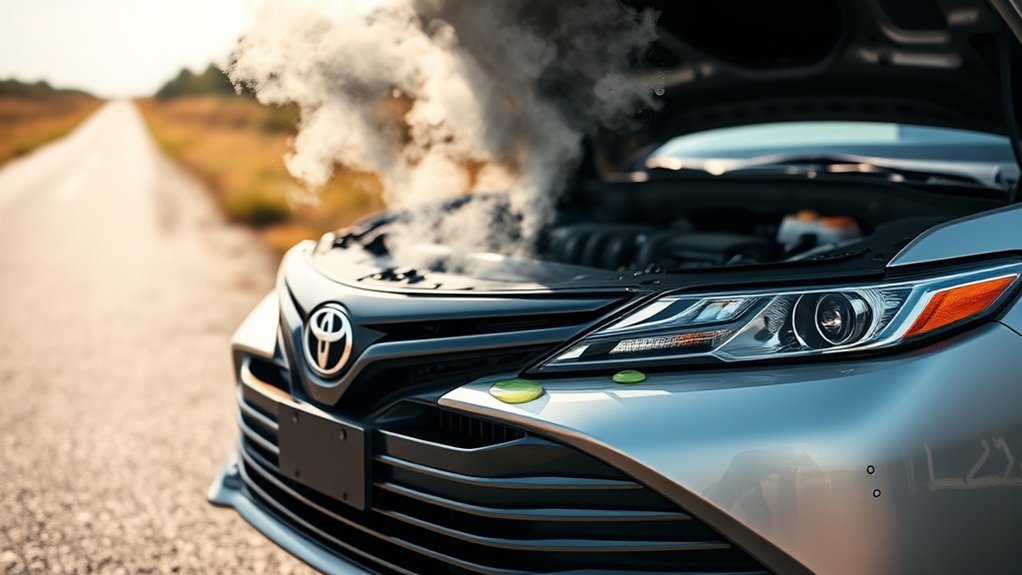
When your Toyota Camry shows signs of overheating, it’s vital to act quickly to prevent engine damage. You might notice a high engine temperature gauge, which is a clear indication that your vehicle’s cooling system isn’t functioning properly.
Additionally, boiling coolant in the overflow reservoir often signifies that the coolant levels are alarmingly low or that there’s a cooling system malfunction. If you observe an overflowing radiator overflow tank, particularly when idling or at stoplights, take immediate action.
Other symptoms include engine fans that only activate when the A/C is on, which suggests a cooling system issue. Unusual occurrences like smoke from the engine or a sudden lack of cabin heat are further red flags.
Regularly monitoring coolant levels and checking for leaks is important in identifying these overheating signs early, ultimately liberating you from the risk of severe engine damage.
What Causes Overheating in a Toyota Camry?
Overheating in a Toyota Camry can stem from several critical issues that affect the vehicle’s cooling system.
Low coolant levels, often due to leaks or evaporation, greatly hinder optimal coolant flow and cooling efficiency. A faulty thermostat can disrupt coolant movement, leading to improper engine temperature regulation.
Low coolant levels and a faulty thermostat can severely disrupt engine temperature regulation and cooling efficiency.
Additionally, clogged radiators prevent effective heat dissipation, causing the coolant to remain excessively warm and unable to cool the engine efficiently.
Water pump failures are particularly problematic, as they severely compromise coolant circulation, thereby impeding the necessary flow for maintaining ideal engine temperatures.
Finally, malfunctioning radiator fans can inhibit proper airflow, especially at idle or low speeds, exacerbating overheating when the engine is under load.
Addressing these issues promptly is crucial to prevent Toyota Camry overheating and guarantee a smoothly running engine.
First Steps to Check for Overheating Symptoms
To effectively identify overheating symptoms in your Toyota Camry, start by checking the coolant level in the reservoir. Low coolant can greatly exacerbate overheating issues.
Follow these steps to assess your vehicle’s cooling system:
- Inspect the coolant level: Verify it’s within the recommended range.
- Examine the radiator: Look for visible damage, discoloration, or leaks.
- Monitor the engine temperature gauge: Watch for any spikes or unusual readings that indicate overheating.
- Check radiator fans: Verify they’re operational, as malfunctioning fans can impede airflow, particularly at idle.
Additionally, listen for unusual noises from the engine, like boiling sounds, which may signal that the coolant is overheating.
How to Diagnose Thermostat and Water Pump Problems
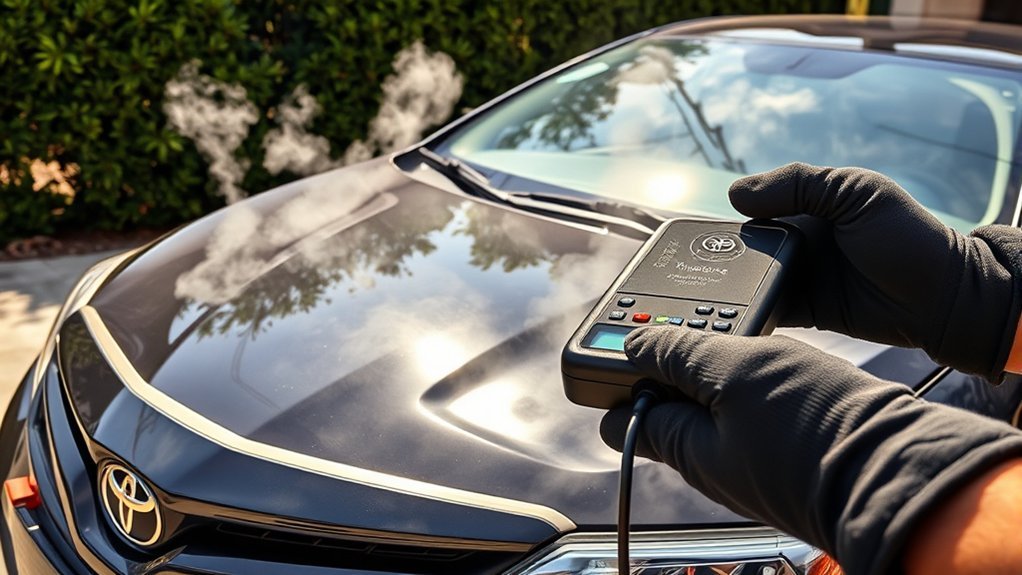
To diagnose thermostat and water pump problems in your Toyota Camry, start by identifying signs of thermostat failure and inspecting the water pump for leaks or unusual noises.
You’ll also want to test the coolant flow rate to guarantee proper circulation.
Regular checks of coolant condition can reveal deeper issues that may contribute to overheating.
Signs of Thermostat Failure
How can you tell if your thermostat is failing? A malfunctioning thermostat can lead to engine overheating due to improper coolant flow. Watch for these signs:
- High engine temperature readings: If your gauge spikes unexpectedly, it may indicate thermostat failure.
- Boiling coolant in the secondary reservoir: This can occur even after recent water pump replacement.
- Delayed engine warm-up: If it takes longer than usual for your engine to reach operating temperature, suspect a faulty thermostat.
- Physical inspection: Check for damage or corrosion around the thermostat housing.
Utilizing a bi-directional scanner can also help you test the thermostat’s function, ensuring it opens and closes at the correct temperatures during operation.
Water Pump Inspection Tips
While diagnosing issues with your vehicle’s cooling system, paying close attention to the water pump is essential, as it plays a key role in maintaining proper coolant circulation.
Regularly inspect the water pump for signs of leakage, corrosion, or noise; these can indicate potential failure that disrupts coolant flow.
Check the drive belt’s condition for wear and proper tension, since a loose or damaged belt affects water pump efficiency.
Monitor engine temperature closely—if overheating occurs despite a recent water pump replacement, the thermostat might be malfunctioning.
Additionally, listen for unusual sounds like grinding or whining, which may signal internal damage.
Finally, use a pressure tester to check for leaks around the water pump, ensuring your cooling system remains sealed and effective.
Testing Coolant Flow Rate
A thorough test of the coolant flow rate is essential for diagnosing potential thermostat and water pump problems in your Toyota Camry.
Here’s how to effectively assess coolant movement:
- Remove the thermostat and run the engine; observe if coolant flows freely, indicating a functional water pump.
- Monitor the temperature gauge; significant fluctuations or consistently high readings may signal a thermostat issue.
- Check for air bubbles in the reservoir during operation; trapped air can disrupt circulation and hint at possible failures.
- Rev the engine and observe coolant movement; a drop in engine temperature may suggest pump failure.
The Importance of Radiator Maintenance
You should establish a regular inspection schedule for your radiator to catch signs of damage early.
Look for leaks, corrosion, or any deterioration that could impact coolant quality and flow.
Maintaining your radiator not only prevents overheating but also guarantees your engine operates efficiently and lasts longer.
Regular Inspection Schedule
Regular radiator maintenance is essential for preventing overheating issues in your Toyota Camry.
A well-scheduled inspection can identify potential problems before they escalate. Here’s a concise checklist to follow:
- Inspect the radiator and coolant reservoir for signs of discoloration or physical damage every six months.
- Check coolant levels and quality to enhance the radiator’s efficiency in dissipating heat.
- Flush the radiator and replace old coolant every 30,000 miles to prevent contamination and maintain peak cooling performance.
- Ensure radiator fans are functioning correctly during inspections, as they play a critical role in maintaining airflow.
Signs of Radiator Damage
Radiator damage can considerably compromise your Toyota Camry’s cooling efficiency, leading to overheating if not addressed promptly.
Look for visible leaks, discoloration, or corrosion, as these signs can impair the radiator’s ability to guarantee proper coolant functioning. A burned-out radiator fan or a clogged radiator can hinder airflow, further exacerbating engine overheating risks.
Regular inspection and maintenance are essential; verify the radiator is free from physical damage and that the fan operates correctly. Neglecting these checks can result in increased engine temperatures and costly repairs.
By promptly addressing any signs of radiator issues, you not only safeguard your engine but also prevent severe damage that could disrupt your driving experience.
Prioritize your radiator’s health to maintain peak performance.
Importance of Coolant Quality
Proper radiator maintenance directly impacts coolant quality and, consequently, your Toyota Camry’s overall performance. High-quality coolant is essential to prevent overheating and guarantee efficient heat absorption.
Here are key practices to maintain coolant quality:
- Regular Inspections: Check coolant levels and condition frequently to avoid contamination.
- Balanced Mixture: Maintain a 50/50 ratio of antifreeze to water for best heat transfer.
- Radiator Cap Functionality: Confirm your radiator cap maintains proper pressure to prevent coolant from boiling.
- Routine Flushing: Periodically flush the radiator to remove debris and contaminants, promoting better coolant flow.
Identifying and Fixing Bad Hoses and Coolant Leaks
Inspecting your Toyota Camry’s hoses for wear and tear is vital, as even a small crack can lead to significant coolant leaks and overheating. Bad hoses compromise the coolant transport between the engine and radiator, restricting flow and exacerbating overheating issues.
Regular checks for cracks, bulges, or leaks are important in maintaining your cooling system’s integrity. Don’t overlook the connections; loose or improperly connected hoses can impede coolant flow, worsening overheating problems.
Make certain that all connections are secure and properly tightened to facilitate peak performance. If you suspect a coolant leak, address it promptly. Ignoring the problem can lead to severe engine damage and costly repairs.
When to Replace Your Toyota Camry’s Radiator Fan?
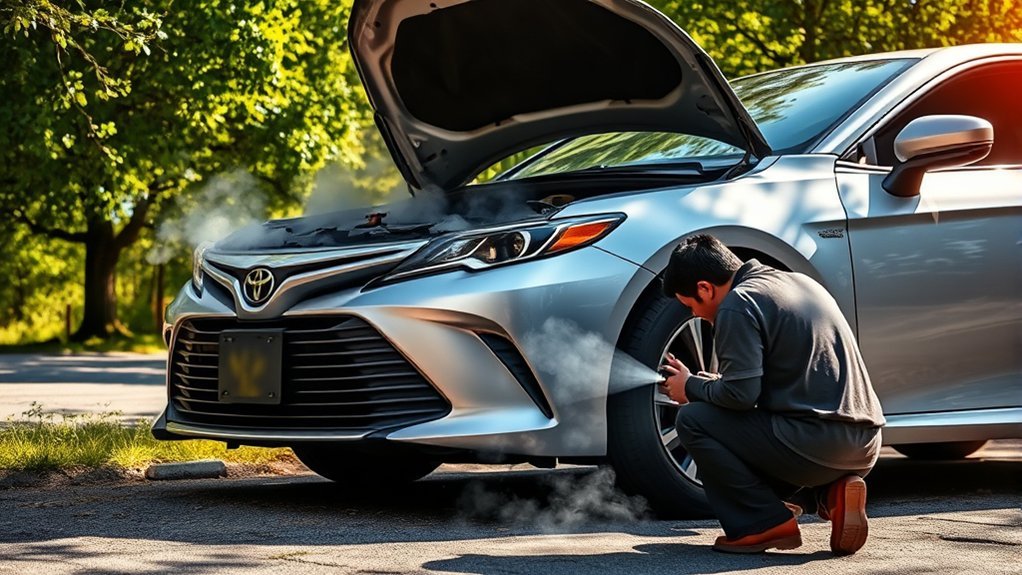
Maintaining the integrity of your Toyota Camry’s cooling system goes beyond checking hoses for leaks; it also involves ensuring that the radiator fan operates effectively.
Knowing when to replace the radiator fan is essential in preventing overheating and protecting your engine.
Knowing when to replace your radiator fan is crucial for preventing engine overheating and ensuring optimal performance.
Consider replacing the radiator fan if you notice:
- It fails to activate when the engine temperature rises or when you turn on the air conditioning.
- Unusual noises, visible damage, or corrosion in the electrical connections.
- It operates intermittently or only at high speeds, indicating a fault.
- Signs of wear or damage in the fan’s wiring and connectors.
Addressing these issues promptly can help you avoid severe engine damage and maintain performance.
If you find that your radiator fan is malfunctioning, don’t hesitate to take action—timely replacement is key to keeping your Toyota Camry running smoothly.
Preventing Overheating Issues
To prevent overheating issues in your Toyota Camry, it’s important to stay proactive about your vehicle’s cooling system.
Regularly check coolant levels, as low coolant can lead to overheating and serious engine damage. Inspect hoses for damage or clogs; these are essential for effective coolant circulation between the engine and radiator.
Schedule routine radiator maintenance, guaranteeing that the fan and thermostat function correctly to prevent overheating. Utilize high-quality coolant and maintain the proper mixture to enhance heat absorption and prevent contamination that could impair cooling efficiency.
Additionally, periodically inspect the water pump for signs of wear or failure, as it plays a significant role in circulating coolant throughout the engine.
Seeking Professional Help for Persistent Problems
How do you know when it’s time to seek professional help for your Toyota Camry’s overheating issues? If you’ve replaced the thermostat and water pump but still face overheating problems, it’s crucial to get a professional diagnosis. Recurring issues can lead to significant engine damage if left unchecked.
Here are some indicators that signal the need for certified repair shops:
- Overflowing radiator overflow tank.
- Non-operational engine fans.
- Persistent overheating after routine maintenance.
- Unexplained coolant leaks or sensor malfunctions.
Engaging with certified technicians guarantees accurate identification and resolution of complex overheating issues. Their expert tools and experience help prevent unnecessary repairs, providing you peace of mind.
Regular maintenance checks can catch problems early, protecting your vehicle and enhancing its longevity. Don’t wait until it’s too late; seek professional help to safeguard your Toyota Camry’s performance.
Frequently Asked Questions
What Causes a Toyota Camry to Overheat?
A Toyota Camry can overheat due to coolant leaks, thermostat failure, or radiator issues. These factors disrupt coolant flow, hinder heat dissipation, and prevent effective engine cooling, leading to potentially severe engine damage if not addressed.
What Are 10 Common Causes of Overheating on a Toyota?
Ten common causes of overheating in a Toyota include low coolant levels, radiator issues, thermostat failure, water pump malfunction, clogged hoses, faulty fans, engine block damage, radiator cap failure, head gasket leaks, and external temperature effects.
What Are Three Simple Things to Check if Your Car Is Overheating Toyota?
Check your coolant levels to verify they’re adequate, inspect the radiator function for any blockages or leaks, and assess the thermostat for issues that might prevent proper coolant flow. These steps help maintain ideal engine temperature.
Why Is My Car Overheating Even Though the Coolant Is Full?
Your car might be feeling a bit under the weather despite a full coolant reservoir. Check for a coolant leak, thermostat failure, or radiator issues; these can lead to overheating even when coolant levels seem fine.
Conclusion
To keep your Toyota Camry running efficiently, you must monitor for signs of overheating, maintain essential components, and address issues promptly. By regularly checking the thermostat, guaranteeing the water pump functions properly, and maintaining the radiator, you can prevent overheating. Additionally, replacing faulty hoses and monitoring coolant levels will further safeguard your engine. If problems persist, don’t hesitate to seek professional help. Staying proactive will guarantee your Camry remains reliable and performs at its best for years to come.







Leave a Reply