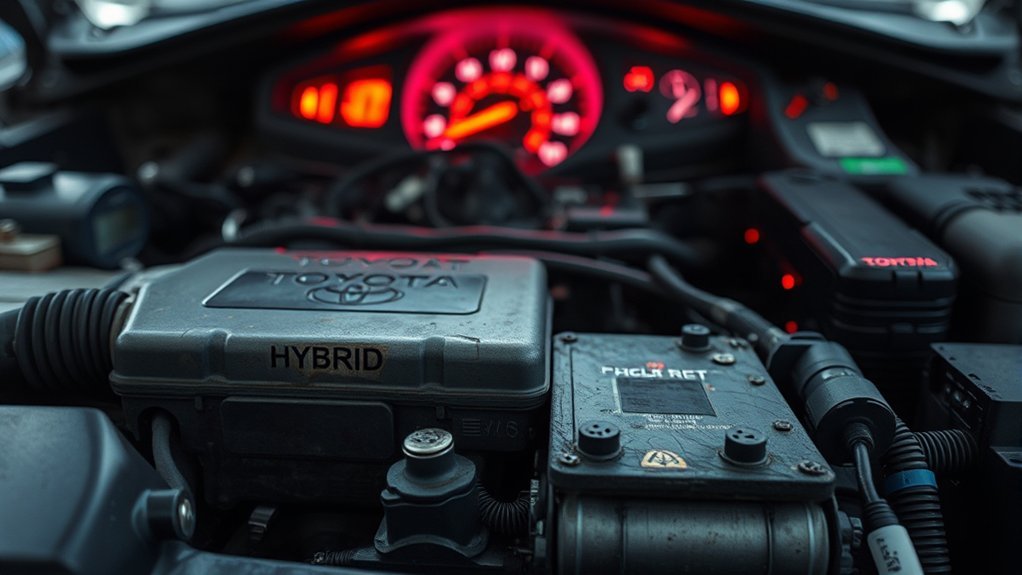
If your Toyota hybrid battery fails, you’ll notice decreased fuel efficiency, sluggish acceleration, and dashboard warning lights. A dead battery renders your vehicle inoperable, driving performance down to that of a conventional car. Costs for a replacement range from $2,500 to $8,000, with refurbished options available for $1,000 to $3,000. Regular maintenance and monitoring can help extend battery life. Want to know more about signs, repair options, and how to save on replacement costs?
What Hybrid Battery Failure Means for Your Toyota
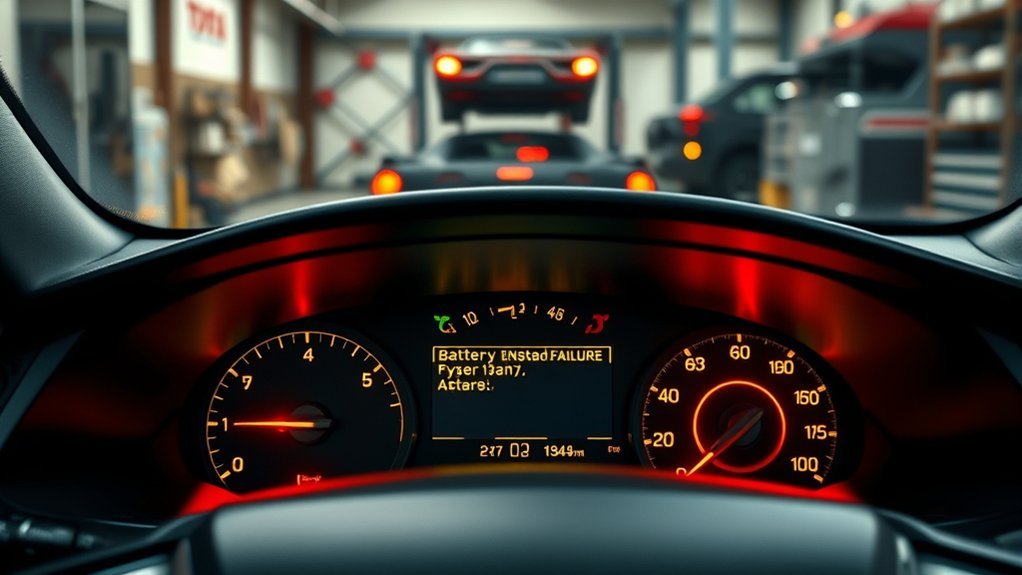
When your Toyota’s hybrid battery fails, it can lead to significant disruptions in your vehicle’s operation. The hybrid systems rely heavily on this battery to not only start the gasoline engine but also power essential components.
A failing hybrid battery can disrupt your Toyota’s operation, impacting both engine start and essential systems.
You might notice warning signs like dashboard warning lights or significant decreases in fuel efficiency and acceleration. These indicate that your battery isn’t performing at its best, affecting your Toyota Prius’s overall performance.
Typically, a hybrid battery lasts between 8 to 10 years or 100,000 to 150,000 miles, but factors such as climate and driving habits can influence its health.
If failure occurs, battery replacement costs can range from $2,500 to $8,000, with refurbished options being a more budget-friendly choice.
Regular maintenance and monitoring your driving habits can help extend your battery’s life, ensuring you enjoy the freedom of efficient driving for years to come.
Key Symptoms of a Failing Hybrid Battery to Watch For
How can you tell if your hybrid battery is on the verge of failure? Recognizing the signs early can save you from more significant issues down the road. Here are some key symptoms to watch for:
- Decreased fuel efficiency: If you notice your fuel consumption spiking without explanation, it could mean your hybrid battery is struggling.
- Warning lights: Pay attention to dashboard indicators like the hybrid system warning light or battery symbol; they’re critical alerts.
- Sluggish acceleration: If your car feels unresponsive, especially during demanding situations, your hybrid battery mightn’t be providing the necessary power.
- Erratic charging behavior: Watch for inconsistent battery charge levels or rapid charge loss, which suggests potential failure.
Additionally, listen for unusual noises, such as increased fan sounds or electrical humming, which can indicate abnormal battery operation.
Stay vigilant to maintain your vehicle in peak condition!
Immediate Effects of a Dead Hybrid Battery on Your Vehicle
A dead hybrid battery doesn’t just mean your vehicle won’t start; it can greatly impact your driving experience and the car’s overall performance. Without a functioning hybrid battery, your vehicle may struggle with sluggish acceleration and decreased fuel efficiency. The gasoline engine takes over, leading to potential safety concerns and further damage. Regenerative braking systems become ineffective, wasting energy as heat instead of capturing it for reuse.
Here’s a quick overview of the immediate effects:
| Effect | Description |
|---|---|
| Power Loss | The vehicle may become inoperable |
| Sluggish Acceleration | Performance suffers considerably |
| Decreased Fuel Efficiency | Comparable to conventional vehicles |
| Ineffective Regenerative Braking | Energy is wasted rather than reused |
Recognizing these warning signs early can save you from the higher battery replacement costs that vary based on your vehicle’s model and condition.
Repair and Replacement Options for Your Hybrid Battery
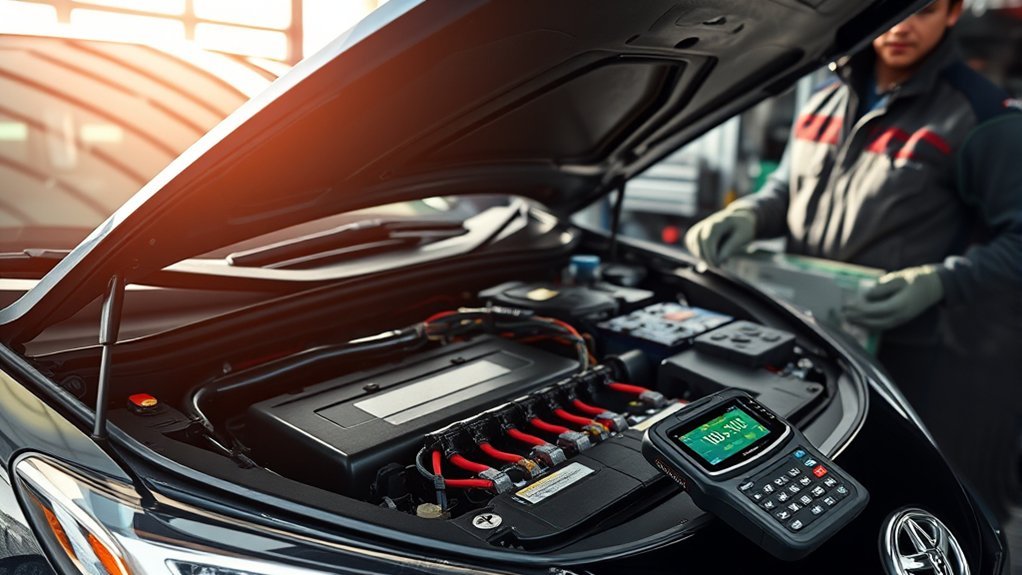
If you find yourself facing a dead hybrid battery, understanding your repair and replacement options can greatly impact your next steps. Here are several paths you might consider:
- Battery Replacement: This is often necessary to restore your hybrid battery’s power, with costs ranging from $2,500 to $8,000.
- Refurbished Batteries: A cost-effective option, usually priced between $1,000 and $3,000, these batteries can offer similar warranties to new ones.
- Module Replacement: This targeted approach allows you to replace specific failing battery modules, potentially extending overall battery life at a lower cost.
- Diagnostic Services: Professional assessments can accurately evaluate battery capacity and failure, guiding you toward the best repair options.
Cost of Replacing a Hybrid Battery
When it comes to replacing a Toyota hybrid battery, you’ll find costs can vary considerably, typically ranging from $2,000 to $8,000 for new batteries.
Don’t forget to factor in labor expenses, which can add an additional $300 to $600 to your total bill.
Exploring refurbished options or aftermarket batteries might save you some money, but it’s essential to weigh those savings against warranty coverage and performance.
Replacement Cost Range
Replacing a Toyota hybrid battery can set you back anywhere from $2,000 to $8,000, depending on your vehicle’s model and year. This replacement cost range varies greatly, particularly if you opt for OEM batteries or refurbished batteries.
Here are some key points to take into account:
- New OEM batteries typically cost more but come with longer warranties.
- Refurbished batteries can save you money, often priced between $1,000 and $3,000.
- Installation costs usually add an extra $300 to $600 to your total expenses.
- Most hybrid batteries are covered under warranty for 8 years or 100,000 miles, potentially reducing out-of-pocket costs.
Understanding these factors can help you make an informed decision about your battery replacement.
Labor Expense Considerations
While considering the costs of replacing a hybrid battery, it’s important to understand how labor expenses can greatly impact your overall budget.
Labor costs typically range from $300 to $600, depending on your vehicle model and service provider. This amount can considerably add to the overall expense since hybrid batteries alone can cost between $1,200 and $3,000.
Professional installation is vital due to the complexity of hybrid systems, ensuring safety and accuracy during the process. Some repair shops may offer flat-rate labor fees, allowing you to better predict your total expenses.
Hybrid Battery Maintenance Tips to Prevent Failure
To keep your hybrid battery in top shape, make regular driving a priority, aiming for at least weekly trips.
You’ll also want to manage temperature by storing your vehicle in shaded areas and ensuring the battery cooling fan is clean.
Finally, schedule routine battery maintenance inspections to catch any potential issues before they escalate into costly repairs.
Regular Driving Habits
Maintaining your hybrid battery’s health hinges considerably on your regular driving habits, as infrequent use can lead to capacity loss and diminished performance.
To guarantee your battery stays in top shape, consider these tips:
- Embrace gentle driving habits—accelerate and brake softly to reduce wear.
- Monitor your battery performance; watch for warning signs like decreased fuel efficiency or fluctuating charge levels.
- Whenever possible, keep your vehicle in shaded areas to protect against extreme temperatures.
- Schedule regular maintenance, including cleaning the battery cooling fan and professional inspections, to catch issues early.
Temperature Management Techniques
Effective temperature management is essential for the longevity and efficiency of your hybrid battery, as excessive heat can greatly accelerate its aging process and lead to premature failure.
Regularly inspect and clean the battery cooling fan and vents to guarantee proper airflow, preventing overheating and promoting battery health.
Parking in shaded areas or using reflective sunshades can shield your battery from excessive heat, extending its lifespan.
Additionally, avoid deep discharges by keeping the battery charge above a certain level, as this maintains battery performance over time.
Utilizing diagnostic tools to monitor battery temperature can help you identify issues early, assuring you take proactive steps to safeguard your investment.
Embrace these techniques for a healthier, longer-lasting hybrid battery.
Battery Maintenance Inspections
Proper temperature management sets the stage for successful battery maintenance inspections, which play an essential role in preventing hybrid battery failure.
Regular checks of your hybrid battery and cooling system can reveal potential problems before they escalate. Here are a few tips to enhance your battery care:
- Keep a maintenance log to track battery health indicators, like charge cycles and warning lights.
- Monitor fuel efficiency; sudden drops can signal underlying issues.
- Adopt gentle driving habits to reduce stress on your battery components.
- Clean the battery cooling fan filter annually to guarantee peak airflow and prevent premature battery degradation.
Consult a hybrid specialist if you notice any warning signs.
Taking these steps will help you maintain your battery and extend its life.
Frequently Asked Questions About Toyota Hybrid Batteries?
When you’re driving a Toyota hybrid, understanding the intricacies of its battery can greatly enhance your ownership experience.
You might wonder about the average life span of your hybrid battery, which typically ranges from 8 to 10 years or 100,000 to 150,000 miles.
Keep an eye out for common signs of battery failure, like a noticeable drop in fuel efficiency and dashboard warning lights. If you face issues, you may need to replace the battery, with repair costs varying widely—refurbished options can be $1,000 to $3,000, while new OEM batteries may run from $2,500 to $8,000 plus labor.
Regular maintenance is key to extending battery life, so confirm your battery cooling system is clean.
Most hybrid batteries come with a warranty for 8 years or 100,000 miles, giving you peace of mind as you navigate the roads.
Frequently Asked Questions
What’s the Cost to Replace a Toyota Hybrid Battery?
Replacing a Toyota hybrid battery typically costs between $2,000 and $3,000. Explore battery replacement options, consider warranty coverage details, and weigh dealership versus aftermarket choices while keeping maintenance tips in mind for budget-friendly solutions.
What Happens When a Toyota Hybrid Battery Fails?
When your Toyota hybrid battery fails, you’ll face battery performance issues, signs of degradation, and reduced fuel efficiency. Exploring replacement options and warranty coverage details is essential for effective hybrid vehicle maintenance and cost comparison analysis.
Is It Safe to Drive With a Hybrid System Warning Light On?
It’s not safe to drive with a hybrid system warning light on. Prioritize battery diagnostics and follow technician advice. Ignoring dashboard alerts jeopardizes vehicle performance; consider emergency measures and proper battery maintenance to guarantee driving safety.
Is It Worth Replacing a Toyota Hybrid Battery?
Replacing your Toyota hybrid battery is worth it if you analyze costs, warranty coverage, and battery longevity. Consider maintenance tips, performance impact, and resale value, plus the environmental benefits of staying with hybrid technology.
Conclusion
In summary, staying vigilant about your Toyota’s hybrid battery can save you from a world of trouble down the road. If you notice any warning signs, it’s best to address them sooner rather than later. By keeping up with maintenance and knowing your options, you can keep your hybrid running smoothly for years to come. Remember, an ounce of prevention is worth a pound of cure—don’t let battery issues catch you off guard!







Leave a Reply