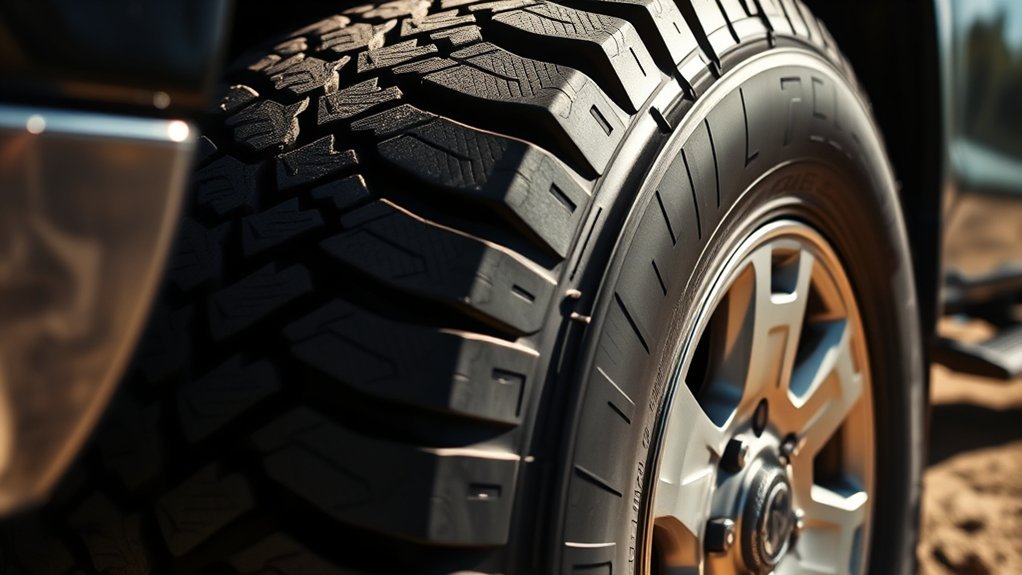
For your Toyota Tundra, the recommended tire pressure is around 30 PSI for the front tires and 33 PSI for the rear tires. It’s best to check these levels when the tires are cold for accurate readings. If you’re towing heavy loads, consider increasing the rear tire pressure to between 40-44 PSI for better stability. Keeping these figures in mind helps enhance your driving experience and guarantee your safety on the road. There’s more to know about maintaining tire pressure effectively!
How to Determine the Ideal Tire Pressure for Your Toyota Tundra
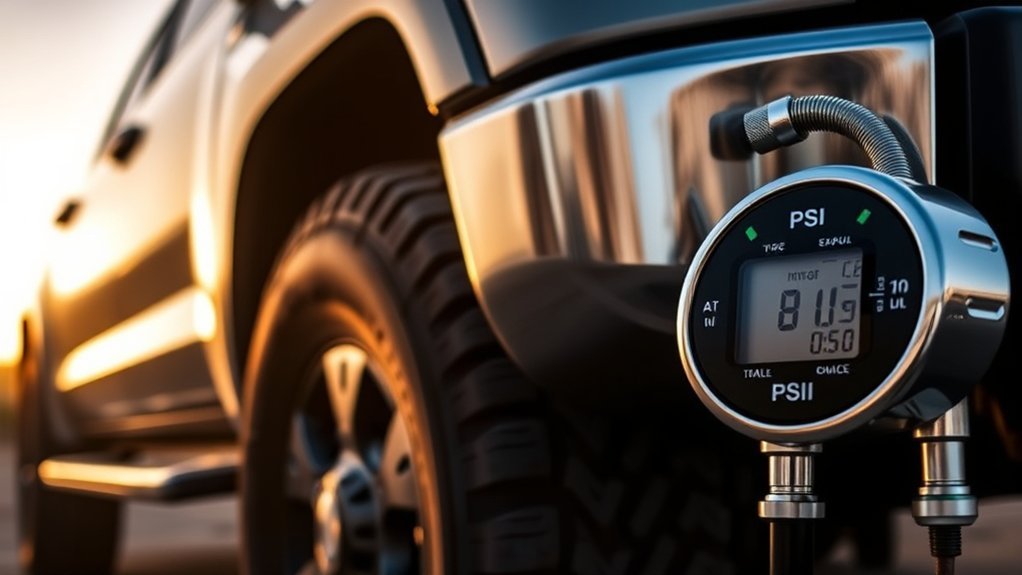
How can you guarantee your Toyota Tundra’s tires are always at the right pressure? Start by checking your vehicle’s owner manual or the sticker on the driver’s side door frame. This will give you the manufacturer-recommended PSI levels.
For your Tundra, the best tire pressure for the front tires is typically around 30 PSI, while the rear tires should be inflated to about 33 PSI. Always check tire pressure when the tires are cold for the most accurate readings, as heat from driving can inflate the numbers.
If you’re towing heavy loads, you might want to adjust to higher pressures, like 40 PSI, for better stability. Regularly monitor your tire pressure, ideally biweekly, to maintain peak performance and safety.
Keeping your tires properly inflated not only enhances your driving experience but also extends tire longevity, giving you the freedom to roam with confidence.
How to Check Your Toyota Tundra Tire Pressure
Checking your Toyota Tundra’s tire pressure is a straightforward task that can greatly impact your driving experience.
Start by unscrewing the valve cap from each tire, then firmly press a tire pressure gauge onto the valve stem until the hissing sound stops. This indicates you’re getting an accurate PSI reading. Remember to check each tire one at a time for precision.
It’s best to measure tire pressure when the tires are cold, ensuring ideal accuracy—aim for around 30 PSI for the front and 33 PSI for the rear. If your reading falls below these recommended levels, inflate the tire using an air compressor and recheck the pressure.
Regularly monitoring tire pressure, ideally every two weeks or before long trips, can enhance your vehicle’s safety, boost fuel efficiency, and extend the lifespan of your tires.
Enjoy a smoother ride by staying on top of your tire pressure!
Why Keeping Your Tire Pressure in Check Matters
Keeping your tire pressure in check isn’t just a good habit; it’s essential for your safety and vehicle performance. Proper tire pressures enhance traction and control, which greatly improves your driving experience.
Regularly checking your tires not only boosts fuel efficiency but also extends their lifespan by promoting even wear. Under-inflated tires lead to increased rolling resistance, reducing your mileage and costing you more at the pump.
Regular tire checks enhance fuel efficiency and promote even wear, saving you money and extending tire life.
Your tires’ load carrying capacity relies heavily on correct PSI, ensuring they safely support your vehicle’s weight and any additional loads. This reduces the risk of blowouts and handling issues.
Utilizing a Pressure Monitoring System (TPMS) helps you stay informed about your tire pressures, preventing safety hazards caused by low inflation. By prioritizing tire maintenance, you’re investing in both safety and performance, giving you peace of mind on every journey.
Adjust Your Tire Pressure When Towing
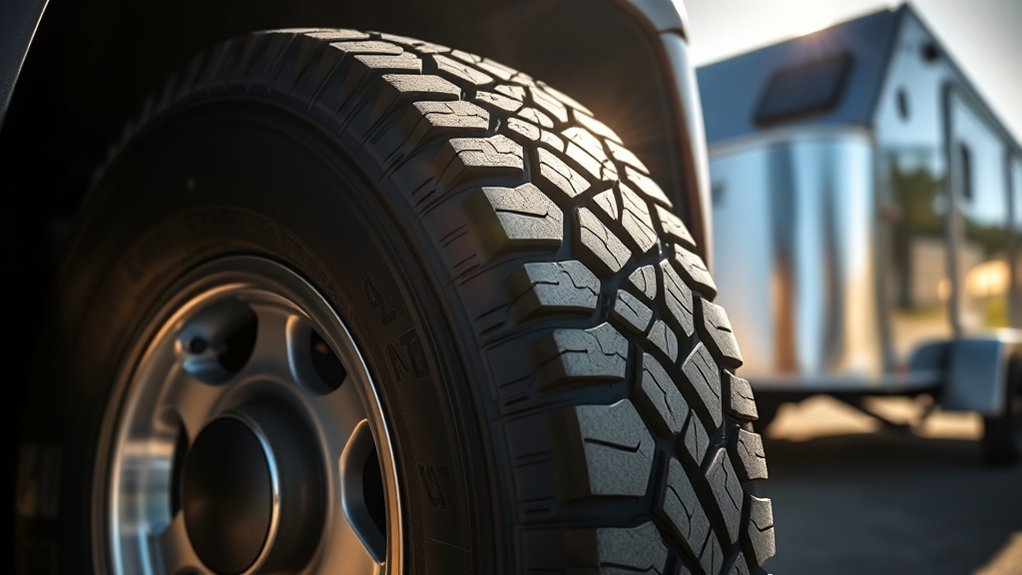
When you’re towing a trailer, adjusting your tire pressure is vital for maintaining stability and safety on the road. To effectively support the extra weight, it’s recommended to increase your tire pressure by 5-10 psi above the standard settings.
Many Toyota Tundra owners find running their rear tires at 40-44 psi works well for towing the trailer.
Don’t forget to take into account the tongue weight, as it affects weight distribution across your tires. Regular checks are important—temperature changes and weight shifts can impact your tire inflation.
Utilize your TPMS to help monitor tire pressure, and consult a load/psi chart for specific tire models, such as the LT275/65R20, to determine the most suitable pressure while towing.
Adjusting your tire pressure guarantees a safer, smoother ride, letting you enjoy the freedom of the open road.
Toyota Tundra Tire Pressure Myths Debunked
While many Toyota Tundra owners may think that the maximum tire pressure printed on the sidewall is ideal for daily driving, this misconception can lead to safety hazards and a less comfortable ride.
The recommended tire pressure for your Tundra is typically around 30 psi for the front tires and 33 psi for the rear tires. Running your tires at excessively high pressures can cause uneven wear and affect handling, especially under different loads.
It’s crucial to remember that the Tire Pressure Monitoring System (TPMS) alerts you when tire pressure is low, but it won’t indicate if you’re over-inflated. Additionally, always check tire pressure when tires are cold, as driving heats them up, leading to inaccurate readings.
Trusting manufacturer recommendations over personal preferences can enhance safety and performance, providing a smoother driving experience. Don’t let myths derail your Tundra’s potential!
Owner Experiences With Tire Pressure Adjustments
Many Toyota Tundra owners find themselves adjusting tire pressure based on their specific needs, especially when towing.
You’ll often hear about preferences like 40 psi for the front and 43 psi for the rear to enhance stability under heavy loads.
Common Pressure Preferences
Tundra owners often find that adjusting tire pressure is key to enhancing performance and ensuring safety. Many report running around 40 psi for even wear, especially when towing heavy loads.
One owner keeps it at 38 psi cold and adjusts to 40 psi hot, showcasing how temperature changes impact pressure. A common practice among Tundra owners is inflating rear tires to about 43 psi while towing, which helps with handling and stability.
Some drivers prefer up to 44 psi when towing for better control. Overall, tire pressure preferences vary widely based on weight distribution and driving conditions, underscoring the importance of finding what works best for your specific situation.
Stay attentive to these adjustments for peak performance.
Towing Impact on PSI
When you’re towing with your Toyota Tundra, adjusting tire pressure becomes vital for maintaining safety and performance.
Many owners find that increasing tire pressure to around 40 psi in the front and 44 psi in the rear effectively accommodates the added weight of their trailers.
One user reported running their tires at 40 psi cold and 43 psi hot while towing a 6K trailer for ideal performance.
Tire manufacturers often recommend raising pressure by 5-10 psi during towing.
It’s important to weigh your rear axle with and without the trailer to determine the best adjustments.
Maintaining higher tire pressures not only improves fuel consumption but also reduces the risk of tire failure due to heat buildup from under-inflation.
Seasonal Tips for Tire Pressure Management
As the seasons change, so does the air pressure in your Toyota Tundra’s tires.
In winter, be certain to check your tire pressure more often since it can drop about 1 psi for every 10°F decrease in temperature.
Adjusting your tire pressure according to seasonal conditions helps guarantee peak performance and safety on the road.
Seasonal Temperature Effects
Understanding how seasonal temperature changes affect tire pressure is essential for maintaining your Toyota Tundra’s performance and safety.
As temperatures drop, tire pressure can decrease by about 1 psi for every 10°F drop, so it’s important to check your pressures more often in winter. Aim for 34-36 psi for peak performance.
Conversely, in the heat of summer, tire pressure can spike, requiring adjustments to prevent over-inflation.
Always check your cold tire pressure before driving, especially after significant temperature changes, to guarantee accurate readings.
Remember, fluctuations in temperature affect tire shape and road contact, impacting handling and fuel efficiency.
Utilize your TPMS to stay informed, but regular manual checks are key for maintaining safety and performance all year round.
Adjustments for Winter Months
With winter just around the corner, adjusting your tire pressure becomes even more important for your Toyota Tundra.
Cold temperatures can drop tire pressure by about 1 psi for every 10°F decrease. To prepare for winter driving, consider these adjustments:
- Inflate to 34-36 psi: This slightly higher pressure compensates for the cold.
- Check when cold: Always measure tire pressure when tires are cold for an accurate reading.
- Monitor regularly: Keep an eye on tire pressure to enhance traction and handling on icy roads.
Maintaining proper tire pressure in your LT tires not only boosts safety but also prevents uneven wear and improves fuel efficiency during those chilly months.
Stay safe and enjoy your winter adventures!
When to Seek Professional Help for Tire Pressure Issues
When you see a tire pressure monitoring system (TPMS) alert on your dashboard, it’s essential to seek professional help right away. Ignoring this warning can lead to serious safety risks. A service center can conduct a thorough inspection to uncover leaks, punctures, or other damages that mightn’t be visible during a quick check.
If you notice uneven tire wear patterns, consulting a tire specialist can reveal alignment or inflation issues needing attention.
Additionally, when towing or carrying heavy loads, adjusting tire pressures beyond standard recommendations is vital for safety and performance.
If you’re unsure about the correct tire pressure settings for your Toyota Tundra, a professional can reference manufacturer guidelines, ensuring your tires are properly inflated for your driving conditions.
Don’t hesitate to get help; proper tire pressure is key to your vehicle’s performance and your safety on the road.
Frequently Asked Questions
What Is the Proper Tire Pressure for a Toyota Tundra?
For ideal driving performance, keep your Toyota Tundra’s tire pressure around 30 PSI in the front and 33 PSI in the rear. Monitor it frequently, and adjust seasonally for safety and efficiency. Stay liberated, drive smart!
Is 40 Psi Good Tire Pressure for a Toyota?
No, 40 psi isn’t ideal for your Toyota. Tire pressure myths can mislead you. Focus on tire wear factors and use tire inflation tips to find the right balance for comfort and performance.
Is 40 Psi Too High for Truck Tires?
40 psi isn’t too high for truck tires if you adjust for ideal loading and temperature effects. Just remember, finding that sweet spot balances comfort and traction, letting you conquer the road with confidence.
Should My Front and Back Tires Be the Same Psi?
No, your front and back tires shouldn’t have the same PSI. Tire pressure differences optimize performance, with front tire benefits enhancing steering and rear tire requirements ensuring stability, especially when towing or carrying loads.
Conclusion
In the grand scheme of your driving experience, keeping your Toyota Tundra’s tire pressure in check is like nurturing a healthy relationship—it requires attention and care. By staying proactive about adjusting your tire pressure, especially when towing or with seasonal changes, you’re ensuring a smoother ride and better performance. So, give your tires the love they deserve, and they’ll reward you with safety and efficiency on the road. Remember, a little maintenance goes a long way!







Leave a Reply