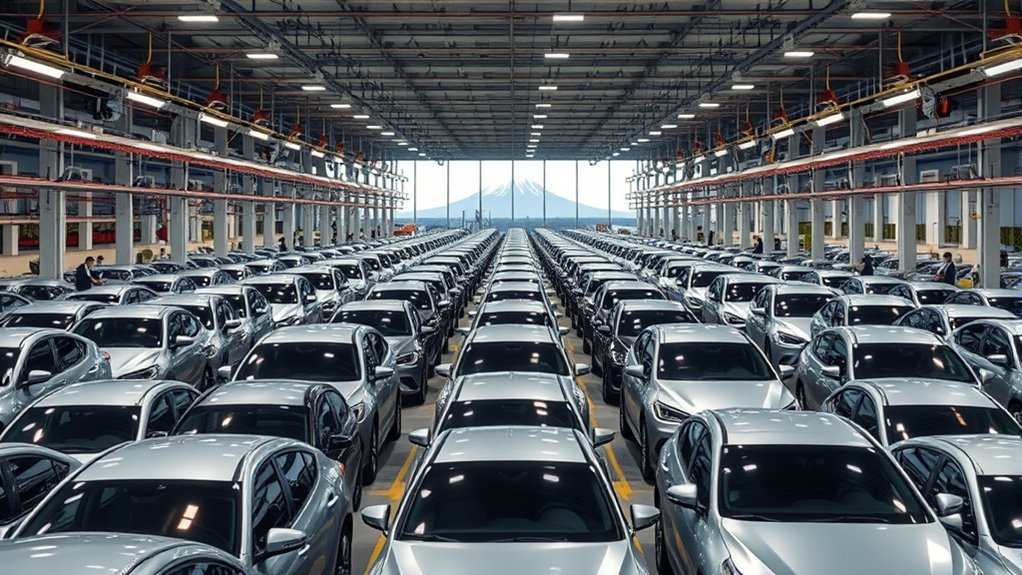
About 40% of Toyota vehicles sold in the U.S. are built in Japan, showcasing the importance of Japanese manufacturing in the company’s global strategy. The remaining 60% are produced in North America, where many popular models are tailored for local preferences. Both Japanese and North American plants meet stringent quality standards, ensuring consistent craftsmanship. If you’re curious about how this impacts your purchase decisions or the broader trends in Toyota manufacturing, there’s more to explore.
What Percentage of Toyotas Are Built in Japan?
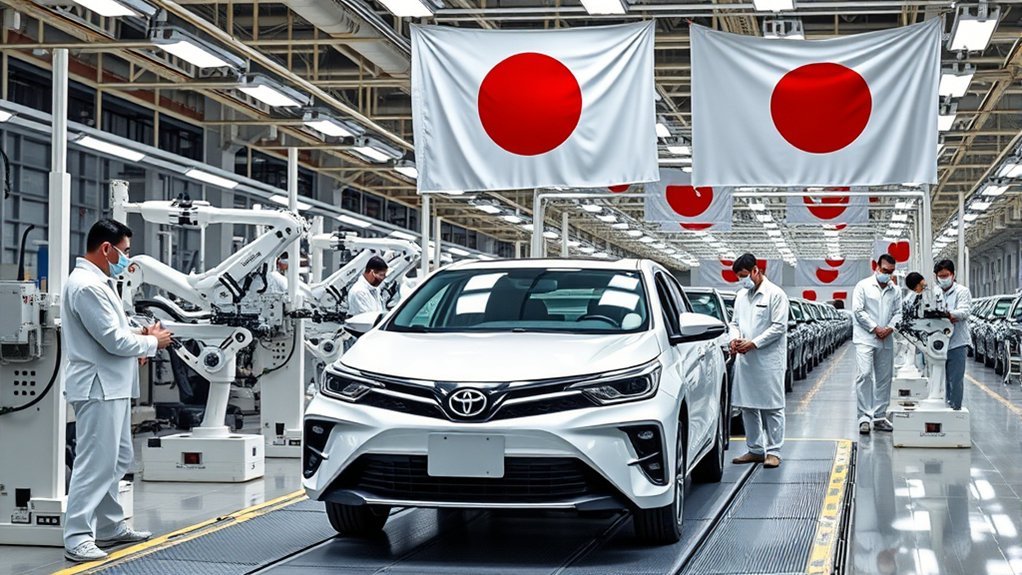
When considering the percentage of Toyotas built in Japan, it’s essential to recognize that as of 2023, around 40% of the Toyota vehicles sold in the United States come from Japanese manufacturing plants.
This percentage highlights the importance of Japan in Toyota’s global production strategy. However, the remaining 60% of Toyotas are made in North America, primarily through facilities in the U.S., Canada, and Mexico.
Japan plays a crucial role in Toyota’s production, with 60% of vehicles manufactured in North America.
These North American plants have become vital, producing many popular models that cater specifically to consumer preferences in the region. While Japanese-made Toyotas are celebrated for their impeccable quality and craftsmanship, the North American facilities also uphold Toyota’s rigorous standards.
Depending on the model, the percentage of Toyotas built in Japan may vary, but you can trust that whether made in Japan or North America, each vehicle meets Toyota’s commitment to excellence.
The Global Landscape of Toyota Manufacturing
When you consider Toyota’s global manufacturing strategy, it’s clear that their supply chain spans multiple countries, impacting the components used in Japanese-made vehicles.
Despite this, Toyota maintains strict quality standards across all assembly locations, ensuring that every vehicle meets the same performance and reliability benchmarks.
This approach not only bolsters their reputation but also supports a consistent experience for drivers worldwide.
Global Supply Chain Impact
As Toyota navigates the complexities of modern manufacturing, its global supply chain plays an essential role in the production of vehicles, including those made in Japan. By sourcing parts from various countries, Toyota guarantees that even its Japanese-made models may feature components from non-Japanese suppliers.
In North America, the assembly of vehicles often incorporates parts manufactured in Japan, highlighting the interconnected nature of the supply chain. With over 200 suppliers contributing to both Japanese and North American-made vehicles, Toyota enhances quality control across the board.
Recent trends show a move toward using identical components globally, further diminishing historical differences based on assembly location. This integration reinforces Toyota’s commitment to delivering consistent quality, regardless of where the vehicle is assembled.
Quality Standards Consistency
While many assume that the quality of Toyota vehicles varies by production location, the reality is that the company enforces consistent quality standards across its global manufacturing operations. This approach guarantees that every vehicle made, whether in Japan or North America, meets high expectations.
- Toyota maintains uniform quality across its supply chain.
- Over 200 suppliers contribute to enhanced quality control.
- Japanese-made Toyotas use parts from diverse global sources.
- Assembly processes and SOPs are identical worldwide.
This commitment to quality means that you can expect the same level of craftsmanship in both Japanese and American-assembled models.
Recent Toyota vehicles exhibit minimal part variations, reinforcing the brand’s dedication to delivering excellence, regardless of where they’re made.
How Does Toyota Ensure Quality Control?
Toyota guarantees quality control by implementing uniform standards across all its global suppliers, which confirms that both internal and external components meet high-quality benchmarks, regardless of where they’re manufactured.
With over 200 suppliers, Toyota enhances quality control by enabling senior engineers to shift into supplier roles, fostering improved craftsmanship and production standards.
By employing consistent Standard Operating Procedures (SOP) throughout its manufacturing plants, Toyota confirms identical quality control processes, whether vehicles are produced in Japan or North America.
The company’s rigorous testing and running changes during the first year of production help identify and rectify engineering and design issues, ultimately leading to enhanced reliability in vehicles made in Japan.
This unwavering commitment to quality assurance extends to every vehicle, with no significant discrepancies found among mainstream products from different locations, showcasing Toyota’s dedication to delivering dependable vehicles worldwide.
Comparing Japanese and North American Production
When comparing Japanese and North American production of Toyotas, it’s crucial to acknowledge that the manufacturing location influences not only the assembly but also regional preferences and market demands.
Here are some key points to reflect upon:
- Certain flagship models, like the Lexus LS, are mainly made in Japan.
- Many popular models are now produced in North America to meet local demand.
- Toyota’s global parts sourcing results in similar components across both regions.
- Quality standards remain consistent regardless of where the vehicle is assembled.
As production increasingly shifts towards North America, the distinction between Japanese and North American models blurs, especially for post-2007 vehicles.
This evolution reflects Toyota’s commitment to adapting to market needs while maintaining uniform quality.
Ultimately, whether a Toyota is built in Japan or North America, the brand’s reputation for reliability and excellence endures.
Debunking Myths About Toyota Manufacturing Locations
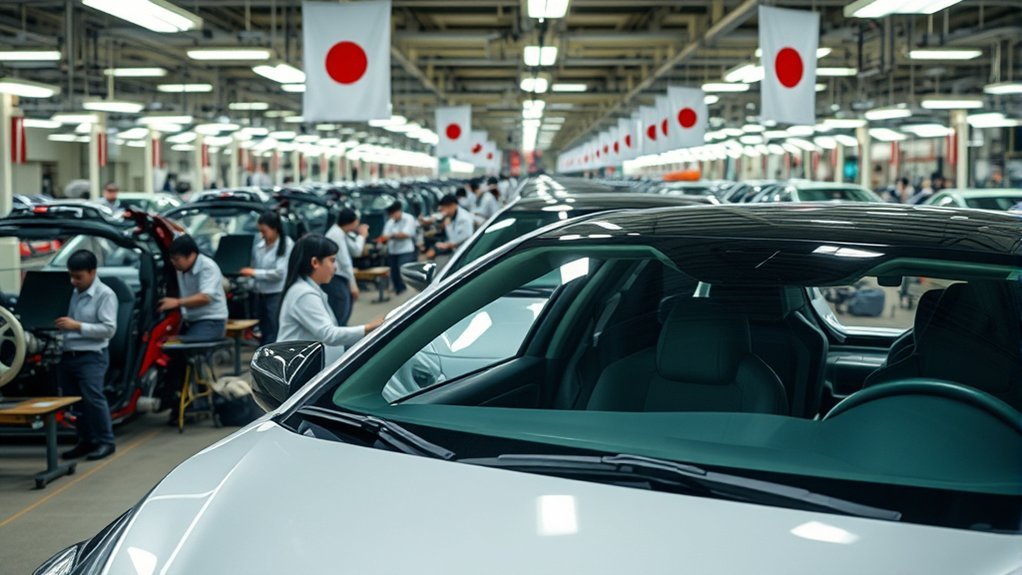
Although many consumers hold the belief that all Toyotas manufactured in Japan are inherently superior, this notion doesn’t reflect the reality of modern production practices.
Many consumers mistakenly believe Japanese-made Toyotas are superior, but modern production practices ensure uniform quality across all manufacturing locations.
In fact, Japanese-made Toyotas often include parts sourced from global suppliers, just like their North American counterparts. Toyota maintains uniform quality standards across all manufacturing locations, ensuring that vehicles meet the same high criteria, regardless of where they’re assembled.
Recent models show minimal differences in parts between Japanese and North American production, highlighting a trend toward standardized manufacturing processes.
Historically, distinctions in quality and design existed, but since 2007, these gaps have largely closed. The perception that Japanese Toyotas are inherently better stems from outdated information, as contemporary practices align quality across all regions.
Understanding this can liberate you from misconceptions, allowing you to appreciate Toyotas for their consistent excellence, no matter where they’re built.
Why Japanese-Made Toyotas Hold Unique Value
While many consumers might overlook the nuances of manufacturing locations, Japanese-made Toyotas offer distinct advantages that set them apart.
These vehicles embody a unique value that appeals to discerning drivers like you. Here’s why:
- Superior Engineering: Japan’s rigorous manufacturing standards guarantee first-rate design quality.
- Reliability: You can trust the longevity of these cars due to meticulous attention to detail.
- Craftsmanship: Approximately 40% of Toyotas sold in the U.S. are made in Japan, reflecting Toyota’s commitment to quality.
- Performance: Many enthusiasts believe that performance models, built in Japan, feature tuned specifications and premium components.
Owning a Japanese-made Toyota means embracing a legacy of continuous improvement and innovation, all rooted in Japan’s automotive culture.
When you choose one of these vehicles, you’re not just buying a car; you’re investing in a tradition of excellence that sets your ride apart from the rest.
Key Factors to Evaluate Before Purchasing a Toyota
Investing in a Toyota requires careful consideration beyond just the vehicle’s origin. While many people believe that Japanese-made Toyotas are superior, North American-built models, like those from San Antonio, offer comparable quality due to identical Standard Operating Procedures and rigorous quality control.
Before making your purchase, wait 3-4 months after a model’s release to avoid early production issues. Assess the local content of the vehicle, as both manufacturing location and suppliers influence its reliability.
Prioritize features and performance over the assembly site, since recent models show minimal differences in parts across the globe. Engage with automotive communities and industry professionals to gather insights on maintenance and performance, which can greatly enhance your ownership experience.
Even though you might consider a foreign import, remember that many reliable options are produced right here in the United States, offering the best of both worlds.
Trends Shaping the Future of Toyota Manufacturing
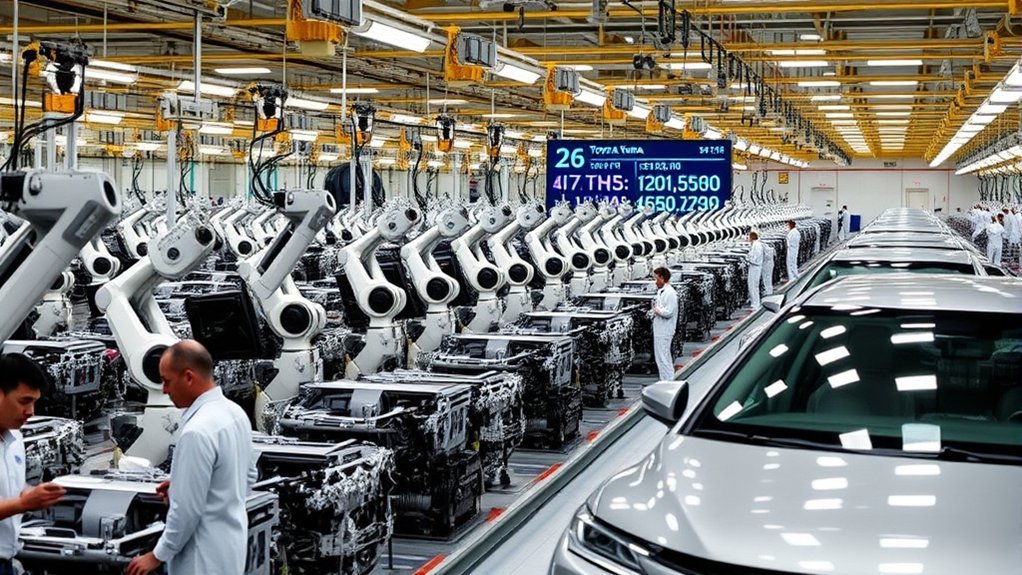
As you consider the future of Toyota manufacturing, you’ll notice a strong emphasis on global supply chain optimization and the integration of advanced manufacturing technologies.
These trends not only enhance efficiency but also guarantee that quality remains consistent across all production facilities.
Global Supply Chain Optimization
In an era where efficiency and adaptability are paramount, Toyota’s approach to global supply chain optimization showcases its commitment to maintaining high-quality standards while reducing costs. This strategy allows for the production of Toyotas made in Japan and beyond, ensuring reliability and performance across the board.
- Over 200 global suppliers enhance quality control.
- Senior engineers often shift to suppliers for improved workmanship.
- Standard Operating Procedures maintain uniformity in production.
- Continuous improvements tackle engineering and design issues.
Advanced Manufacturing Technologies Integration
While many manufacturers struggle to keep pace with rapid technological advancements, Toyota is proactively integrating advanced manufacturing technologies to redefine its production landscape.
By embracing smart automation, the company enhances efficiency and precision in its assembly lines. Utilizing the Toyota Production System (TPS), Toyota focuses on lean manufacturing and continuous improvement, minimizing waste while maximizing quality.
The adoption of Industry 4.0 principles allows for greater data connectivity and real-time monitoring, improving decision-making and responsiveness.
Toyota’s investment in smart factories, powered by Internet of Things (IoT) technologies, enables better resource management and predictive maintenance.
In addition, the company explores advanced techniques that reduce carbon emissions, aligning with sustainability goals while promoting environmentally friendly production practices.
Frequently Asked Questions
Which Toyotas Are Built in Japan?
You’ll find key models like the Corolla, Camry, and Lexus series built in Japan, where Toyota upholds strict manufacturing standards. These vehicles reflect the brand’s commitment to quality, engineering excellence, and reliability.
What Percentage of Cars Driven in Japan Are Made in Japan?
In Japan, about 90% of cars you see gliding down the streets are domestically produced, reflecting a robust commitment to domestic production. This local manufacturing guarantees quality and reliability, capturing the hearts of consumers nationwide.
How to Tell if Your Toyota Is Japan Built or American Built?
To determine your Toyota’s manufacturing locations, check the VIN on the dashboard; a “J” indicates Japan, while “1,” “4,” or “5” signifies U.S. or Canada. Also, inspect the door jamb sticker for details.
Which Toyota Models Are Not Made in Japan?
Many Toyota models aren’t made in Japan, including the Camry, RAV4, Corolla, Tacoma, Tundra, and Highlander. Global manufacturing allows these vehicles to be produced in North America while maintaining Toyota’s high quality standards.
Conclusion
In summary, while approximately 40% of Toyotas are made in Japan, the company’s global manufacturing network guarantees that all vehicles meet high standards. Curiously, more than 80% of Toyota vehicles sold in the U.S. are produced locally, showcasing their commitment to local economies. As you consider your next Toyota purchase, remember that both Japanese and North American models uphold the brand’s reputation for reliability and quality, making any choice a solid investment.







Leave a Reply