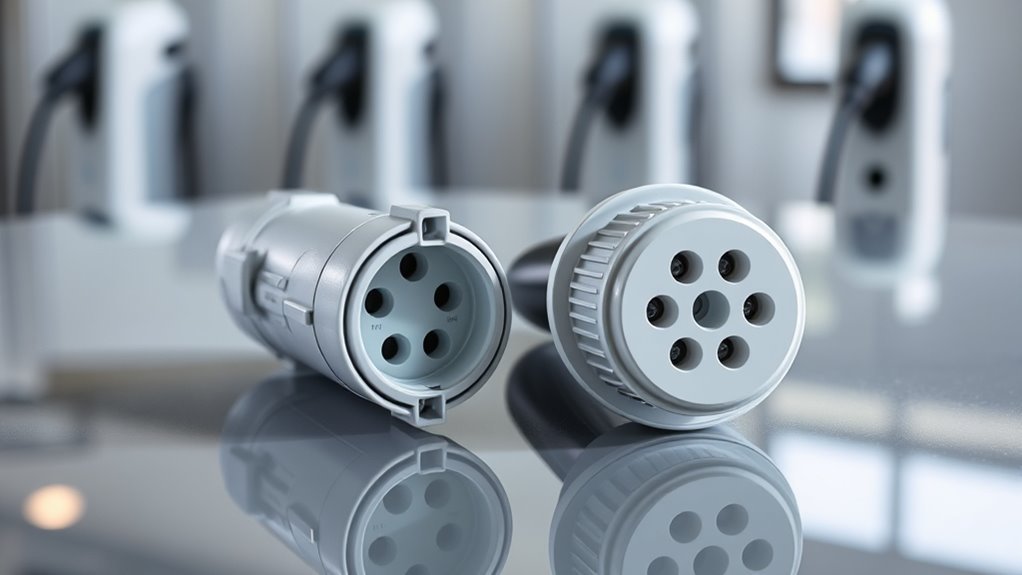
Type 1 and Type 2 EV connectors vary in design and charging capabilities, impacting your charging experience. Type 1, standard in North America, supports single-phase AC charging up to 7.4 kW, while Type 2, common in Europe, offers faster charging with both single-phase and three-phase options, reaching up to 43 kW. Adapters help bridge compatibility issues, especially when traveling. If you want to know about specific usage tips and Tesla compatibility, there’s more to explore.
Overview of EV Charging Connectors
When considering electric vehicle (EV) charging, it’s essential to understand the different types of connectors available, as they can greatly impact your charging experience.
The primary connector designs are Type 1 (SAE J1772) and Type 2 (Mennekes), each adhering to regional standards. Type 1 connectors, common in North America and Japan, boast a 5-pin design that supports single-phase AC charging, delivering up to 7.4 kW.
The main EV connector types, Type 1 and Type 2, vary by region, with Type 1 supporting single-phase AC charging in North America and Japan.
In contrast, the 7-pin Type 2 connector, prevalent in Europe, accommodates both single-phase and three-phase charging, offering up to 22 kW.
You’ll find that Type 1 connectors generally provide a slower Level 1 charging option, while Type 2 connectors allow for notably quicker Level 2 charging.
Additionally, Type 2 connectors feature an electronic locking mechanism for added security, unlike Type 1.
Adaptors are available to bridge the gap between these connectors, ensuring compatibility across different charging infrastructures.
Key Features of Type 1 EV Connectors
Type 1 EV connectors, standardized as SAE J1772, offer a reliable and efficient charging solution primarily for vehicles in North America and Japan.
With a five-pin design, these connectors support single-phase AC charging, delivering up to 7.4 kW. The Type 1 specifications allow for a maximum output of 19.2 kW, accommodating both Level 1 and Level 2 charging. You can expect charging speeds of approximately 1.2 kW for Level 1 and up to 7.2 kW for Level 2, making it versatile for various charging needs.
One of the key Type 1 advantages is the mechanical locking clip that secures the plug to your vehicle during charging, ensuring a safe connection.
However, keep in mind that Type 1 connectors are limited to AC charging and don’t feature the automatic locking mechanisms found in some other types. This simplicity can be an advantage, reducing complexity in your charging experience.
Benefits of Type 2 EV Connectors
Although many EV owners appreciate the simplicity of Type 1 connectors, the benefits of Type 2 connectors are hard to overlook.
These connectors, standardized as IEC 62196-2, feature a versatile 7-pin design that supports both single-phase and three-phase AC charging. This capability allows you to enjoy charging efficiency, delivering up to 22 kW or even 43 kW on compatible vehicles, greatly reducing charging times.
Moreover, Type 2 connectors come with advanced safety features, including an electronic locking mechanism that guarantees a secure connection throughout the charging process. This not only enhances reliability but also gives you peace of mind.
As Type 2 connectors increasingly become the global standard, you’ll find them compatible with a broader range of EVs and charging stations. Their ability to handle both AC and DC charging further improves convenience, making your electric vehicle experience more liberated and efficient.
How Do Type 1 and Type 2 Charging Speeds Compare?
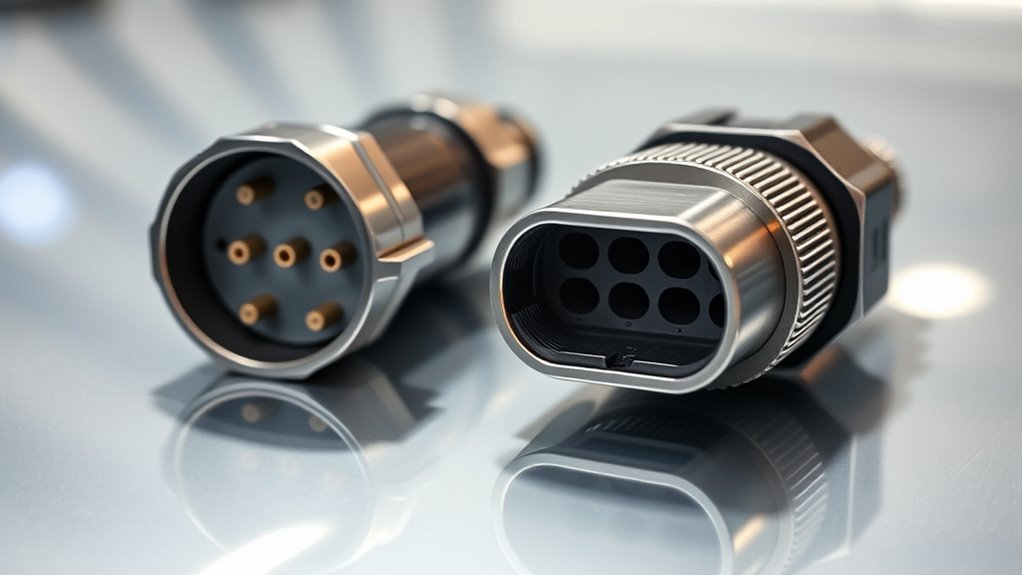
When comparing Type 1 and Type 2 connectors, you’ll notice a significant difference in charging speeds.
Type 1 connectors offer slower Level 1 charging at around 1.2 kW, while Type 2 connectors can deliver up to 22 kW with Level 2 charging.
This higher power output, especially with three-phase connections, allows Type 2 to provide much faster charging times, making it the superior choice for quick energy replenishment.
Level 1 Charging Speed
While both Type 1 and Type 2 connectors offer Level 1 charging options, their performance varies considerably.
Type 1 operates at 120V, delivering around 1.2 kW, which adds approximately 4 miles of range per hour. This slower charging time is generally suitable for overnight home charging.
In contrast, Type 2 connectors, while primarily designed for Level 2 charging, can still function at 240V, providing a more effective performance. They support both single-phase and three-phase charging, enhancing their versatility.
This efficiency comparison underscores Type 2’s advantage, allowing for faster charging speeds. If you’re seeking a quicker turnaround, particularly in public charging scenarios, the Type 2 connector is the clear choice for enhancing your electric vehicle experience.
Level 2 Charging Speed
Level 2 charging greatly enhances the efficiency of powering electric vehicles, and the differences in charging speeds between Type 1 and Type 2 connectors are notable.
Type 1 connectors deliver up to 7.2 kW, offering about 25 miles of range per hour, while Type 2 connectors support up to 22 kW, adding around 80 miles of range per hour. This disparity means that Type 2 charging is generally faster, particularly for vehicles with compatible onboard chargers.
Furthermore, Type 2 connectors allow for three-phase charging, enhancing overall charging efficiency, while Type 1 is limited to single-phase.
Both connector types are designed for durability, but the increased power output of Type 2 can greatly reduce charging times, providing a clear advantage for users seeking liberation from lengthy charging waits.
Fast Charging Capabilities
Fast charging capabilities greatly influence the convenience and efficiency of electric vehicle (EV) usage, especially when comparing Type 1 and Type 2 connectors.
Type 1 connectors support AC charging up to 7.2 kW, providing around 25 miles of range per hour with Level 2 charging, ideal for home use. In contrast, Type 2 connectors can deliver up to 22 kW, considerably reducing charging time and enabling faster three-phase AC charging at public stations.
This flexibility in charging technology allows Type 2 to accommodate both single-phase and three-phase power inputs, enhancing compatibility across various charging stations.
Ultimately, the charging speed relies on your vehicle’s onboard charger capacity and the output of the charging station, making connector standards essential for efficient EV utilization.
What You Need to Know About EV Compatibility
Understanding EV compatibility is essential for maximizing your electric vehicle’s charging options. The type of connector your vehicle uses directly influences your access to the charging infrastructure.
In North America and Japan, Type 1 connectors (SAE J1772) are standard, supporting vehicle models like the Nissan Leaf and Ford Focus Electric. In contrast, Type 2 connectors (Mennekes) dominate Europe, accommodating cars like the Audi e-Tron and BMW i3, and can handle higher power levels up to 22 kW.
If you own a Type 1 EV and plan to travel in regions with Type 2 infrastructure, consider investing in adapters. These tools enhance compatibility, allowing you to utilize Type 2 charging stations effectively.
How to Use Type 1 to Type 2 Adapters for EV Charging
While traveling in regions with Type 2 charging stations, having a Type 1 to Type 2 adapter can greatly enhance your EV charging experience.
First, verify your adapter is certified and meets regional electrical standards for ideal adapter safety. This helps you avoid electrical hazards while charging.
When connecting, check that the Type 2 station supports the necessary power output; Type 2 can deliver up to 22 kW, while Type 1 is limited to 7.2 kW.
Using the adapter correctly can greatly improve your charging efficiency, allowing you to tap into the broader network of Type 2 stations, especially in Europe.
Remember, the adapter typically features a five-pin design on the Type 1 side and a seven-pin design on the Type 2 side, ensuring compatibility.
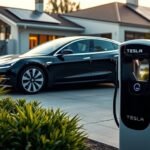
Tesla’s Connector Compatibility: Type 1 and Type 2
Tesla vehicles have adopted different charging connectors based on regional standards, ensuring compatibility with various charging networks.
In Europe, Tesla uses the Type 2 connector, which allows access to the extensive Supercharger network and supports faster charging speeds of up to 22 kW. This is particularly advantageous for Tesla owners in regions where Type 2 is prevalent.
In North America, Tesla employs the proprietary North American Charging Standard (NACS) but provides Type 1 adapters for compatibility with SAE J1772 stations. However, Tesla’s unique connector design enforces charging exclusivity, preventing non-Tesla vehicles from using its stations.
Looking ahead to 2025, many automakers are expected to adopt NACS, improving interoperability between Tesla vehicles and other EVs. This shift could enhance your charging options and support the broader adoption of electric vehicles, giving you more freedom on the road.
Frequently Asked Questions
Can I Use Type 1 Connectors in Europe?
You can’t typically use Type 1 connectors in Europe due to compatibility issues. While Type 1 advantages include simplicity, its limitations restrict charging infrastructure access, making it less practical for your needs across the continent.
What Vehicles Use Type 2 Connectors?
Many electric vehicle models, like the BMW i3 and Nissan Leaf, use Type 2 connectors. These connectors meet European specifications, ensuring compatibility with widespread charging infrastructure, enabling your journey toward sustainable transportation.
Are Type 1 and Type 2 Connectors Waterproof?
Both Type 1 and Type 2 connectors typically have a waterproof rating, but regular connector maintenance is essential. Make certain seals are intact to prevent water ingress, which can lead to electrical issues and safety concerns.
How Long Do EV Connectors Typically Last?
EV connectors typically last around 10 to 15 years with proper care. To extend their lifespan expectations, follow maintenance tips like keeping connectors clean, avoiding extreme temperatures, and regularly inspecting for wear and tear.
Can I Charge a Type 2 Vehicle With Type 1?
You can’t charge a Type 2 vehicle directly with a Type 1 connector. However, using connector adapters can guarantee charging compatibility. Remember, “where there’s a will, there’s a way” to power up your ride!
Conclusion
In choosing between Type 1 and Type 2 EV connectors, it’s essential to take into account compatibility and charging speed. While some may worry about the availability of adapters, rest assured that these solutions are widely accessible. Embracing the right connector guarantees efficient charging and a smoother driving experience. By understanding these differences, you can make an informed choice, maximizing your EV’s potential and enjoying the benefits of sustainable driving without hassle.






Leave a Reply