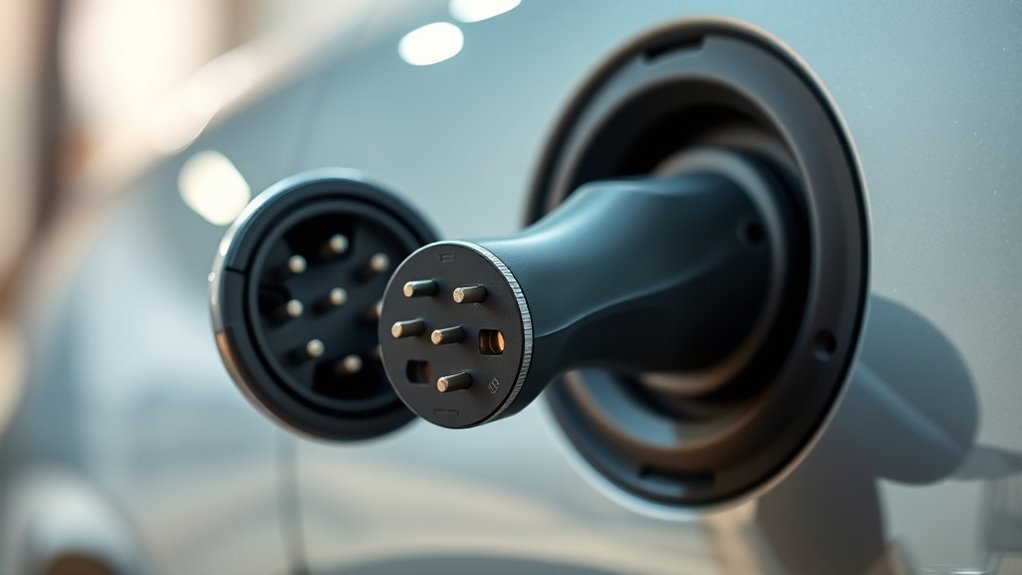
The Type 2 Connector is a 7-pin AC charging interface widely used in Europe. It allows for efficient charging of electric vehicles, supporting both single-phase and three-phase power delivery. Its design includes safety features like a built-in locking mechanism and communication pins for safe interactions between the vehicle and charger. The connector’s versatility makes it compatible across various EV models. If you’re curious how it outperforms other connectors and its latest innovations, there’s more to discover.
What Is the Type 2 Connector and Why Is It Important?
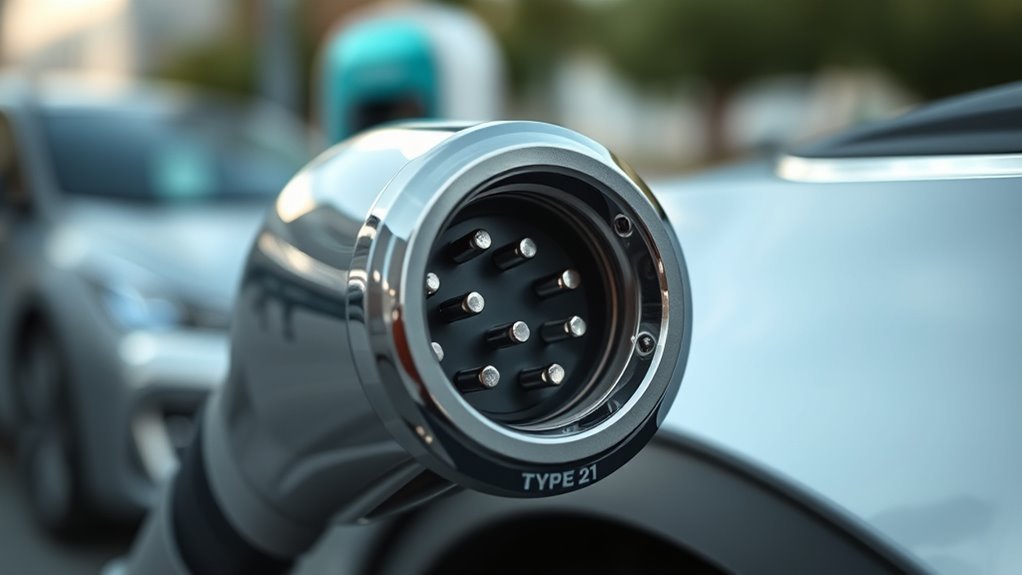
The Type 2 connector is an important component in the world of electric vehicles, serving as a standardized 7-pin AC charging interface mainly used in Europe.
With Type 2 specifications allowing both single-phase and three-phase power delivery, it supports charging rates of up to 22 kW, making it a powerful and efficient choice. This connector’s design offers significant Type 2 benefits, such as a built-in locking mechanism that guarantees a secure connection during charging and prevents accidental disconnection.
Moreover, the Type 2 connector is essential for the widespread adoption of electric vehicles, as it assures compatibility across various EV models and charging infrastructure.
Since becoming the official charging standard in the EU in 2013, it plays an important role in meeting future regulations and enhancing interoperability at charging stations.
Embracing the Type 2 connector means embracing a more liberated, sustainable future in transportation.
Understanding How the Type 2 Connector Works
Understanding how the Type 2 connector works helps appreciate its role in electric vehicle charging. This connector features a seven-pin design that enhances charging efficiency and safety mechanisms. The three-phase pins (L1, L2, L3) allow for powerful AC charging, while communication pins (CP and PP) guarantee safe interactions between the vehicle and charger.
Here’s a quick overview:
| Component | Function | Importance |
|---|---|---|
| L1, L2, L3 | Power delivery for charging | Enables high charging rates |
| N | Neutral current return | Guarantees balanced load |
| PE | Protective earth | Prevents electrical hazards |
| CP | Communication initiation | Activates charging process |
| PP | Cable identification | Enhances safety, prevents overload |
With a maximum current of 32A, the Type 2 connector is essential for both home and public charging, guaranteeing a reliable electric vehicle experience.
User-Friendly Features of the Type 2 Connector That Enhance EV Charging
While charging your electric vehicle, you’ll appreciate the user-friendly features of the Type 2 connector that make the process seamless.
Designed for convenience, this connector enhances your charging experience with its thoughtful features, including:
- Robust seven-pin design: Guarantees safe and efficient power delivery while facilitating communication between the vehicle and charger.
- Automatic locking mechanism: Secures the connector during charging, preventing accidental disconnections and guaranteeing a stable power supply.
- One-handed operation: Its circular shape with a flattened top allows for easy alignment, letting you plug and unplug effortlessly without extra tools.
These elements combine to create a user-friendly design that prioritizes charging convenience.
It accommodates different charging levels, making it versatile for various environments.
With the Type 2 connector, you can charge with confidence, knowing that it’s built for your ease and liberation on the road.
How Does the Type 2 Connector Stack Up Against Other Charging Options?
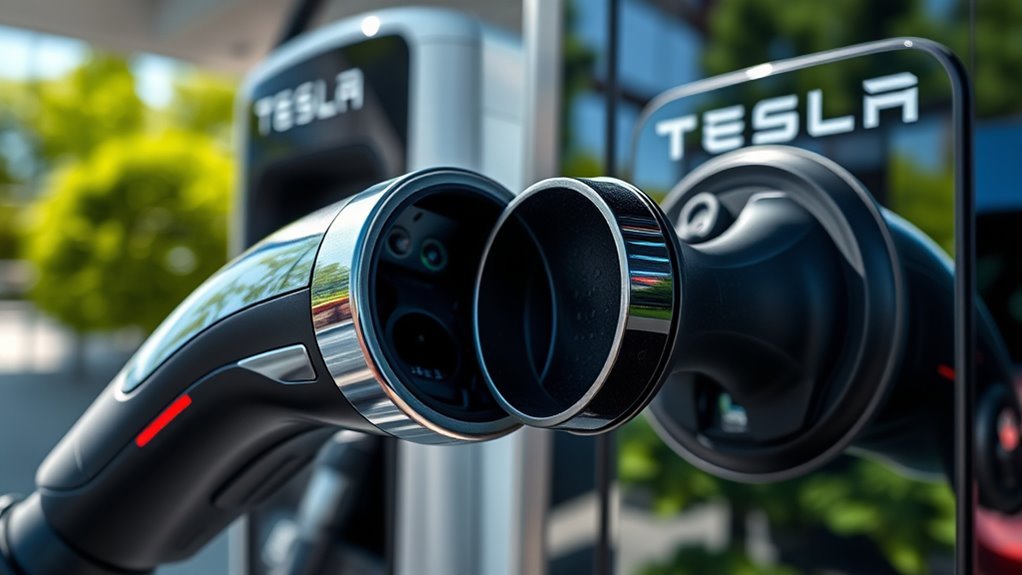
When comparing charging options for electric vehicles, the Type 2 connector stands out due to its versatility and advanced features. Unlike the Type 1 connector, which is limited to single-phase AC charging at a maximum of 7.2 kW, the Type 2 supports both AC and DC charging, offering capabilities up to 43 kW for AC and a whopping 350 kW for DC through its CCS2 version. This makes the Type 2 connector ideal for various charging scenarios.
Moreover, its seven-pin design includes safety and communication features that enhance the charging process, ensuring efficiency and security. The automatic locking mechanism adds an extra layer of safety, preventing accidental disconnections.
Regarding global adoption trends, the Type 2 connector is widely accepted across Europe and is even being integrated into Tesla vehicles, making it a more compatible choice compared to regionally focused options like CHAdeMO.
Innovations Shaping the Future of the Type 2 Connector in EV Charging Infrastructure
As the electric vehicle market continues to grow, innovations in the Type 2 connector are revolutionizing EV charging infrastructure. These advancements not only enhance charging efficiency but also prioritize user safety and convenience.
- Smart Charging: New technologies allow dynamic load management, optimizing energy use through communication between your vehicle and the charging station.
- Safety Innovations: Improved locking systems and automatic disconnect features greatly reduce the risk of accidents during charging.
- Global Standardization: The Type 2 connector is being adopted worldwide, creating a seamless charging experience for you as an EV owner.
Ongoing developments in materials and manufacturing are increasing the durability and efficiency of Type 2 connectors, enabling them to handle higher power outputs.
With these innovations, you can look forward to faster, safer, and more accessible charging solutions that empower your electric driving experience.
Frequently Asked Questions
What Is a Type 2 Connector?
A Type 2 connector’s a standardized charging interface for electric vehicles, featuring 7 pins. Its specifications support efficient charging rates, while its benefits include compatibility with various systems, enhancing your EV charging experience considerably.
Is Type 2 Always AC?
No, Type 2 isn’t always AC. While its specifications primarily cater to AC charging, it can also support DC fast charging when combined with CCS Combo 2, offering advantages in charging flexibility and speed for your electric vehicle.
Can a Level 2 Charger Be Plugged Into a Regular Outlet?
You can’t plug a Level 2 charger into a regular outlet! It’d be like trying to race a rocket on a bicycle path. For ideal charging speed, stick to a dedicated 240-volt outlet.
Is Type 2 the Same as J1772?
No, Type 2 isn’t the same as J1772. While Type 2 offers broader compatibility and higher power output, J1772 has limitations. Understanding these differences helps you choose the right charging solution for your needs.
Conclusion
In conclusion, the Type 2 connector is a game-changer in the EV charging landscape. It combines user-friendly features and adaptability, making it a preferred choice for many. As the saying goes, “where there’s a will, there’s a way,” and with ongoing innovations, the Type 2 connector is paving the way for a more efficient and accessible future in electric vehicle charging. Embracing this technology helps you stay ahead in the evolving world of sustainable transportation.






Leave a Reply