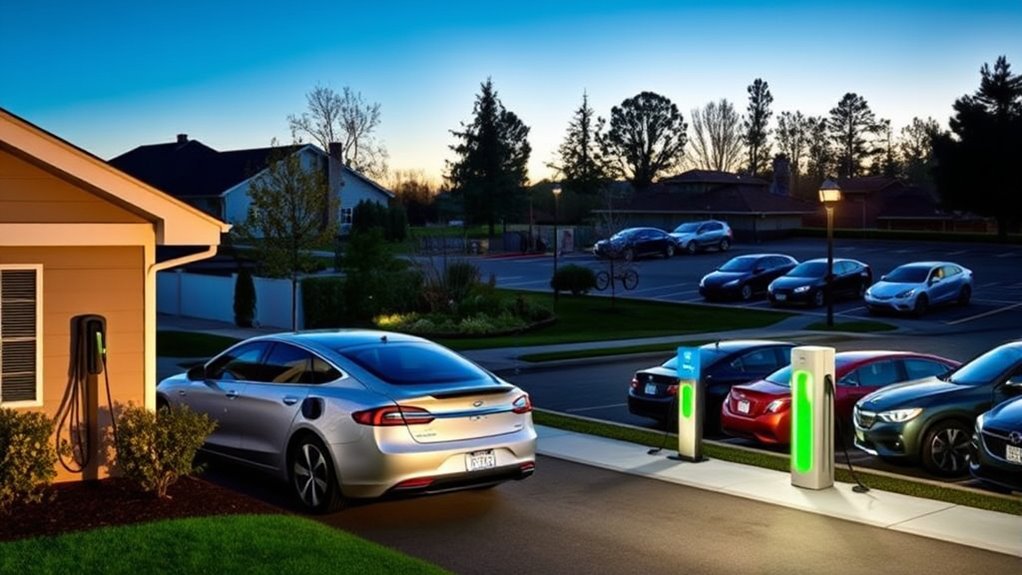
Electric vehicle (EV) chargers come in three main types: Level 1, Level 2, and DC Fast Chargers. Level 1 is slow and ideal for home use, while Level 2 charges faster and is often found at workplaces, adding 10-20 miles of range per hour. DC Fast Chargers provide quick boosts, perfect for long trips. Public charging stations also offer various options. Choosing the right charger can enhance your EV experience. Explore how each option fits your lifestyle.
Understanding EV Chargers: Types and Options
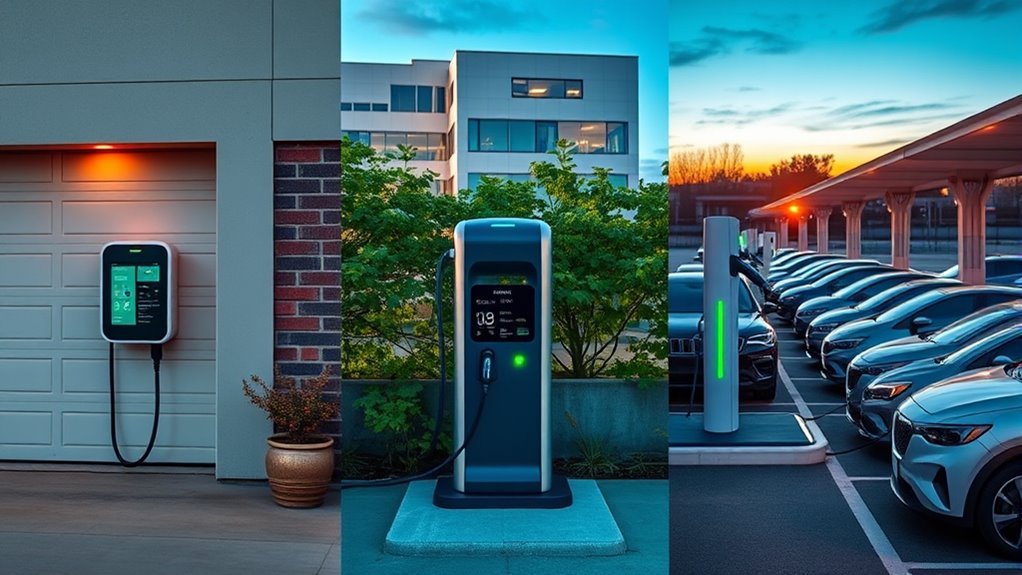
When you’re exploring electric vehicle (EV) charging options, it’s crucial to understand the various types available to guarantee you choose the right one for your needs.
The charging infrastructure you’ll encounter includes Level 1, Level 2, and DC fast chargers. Level 1 chargers operate at 120V and can take about 20 hours for a full charge, while Level 2 chargers, running at 240V, greatly speed up the process, offering a full charge in 3 to 7 hours.
For rapid replenishment, DC fast chargers provide 100 to 200+ miles of range in just 30 minutes, making them perfect for long trips.
It’s vital to reflect on connector compatibility as well—most North American EVs use the SAE J1772 connector for Level 1 and 2 charging, whereas Level 3 chargers might require CCS, CHAdeMO, or Tesla connectors.
Choosing wisely guarantees you stay powered and liberated on every journey.
Home Charging: The Convenient Choice for EV Owners
Home charging offers unparalleled convenience for EV owners, making it the most practical choice for daily use. With over 80% of charging sessions occurring at home, you can enjoy the ease of plugging in your vehicle overnight.
Level 1 chargers utilize a standard 120-volt outlet, but for quicker charging, consider a Level 2 home charger that operates on a 240-volt outlet. This option can charge your EV 3 to 7 times faster, reaching 80% in just 4-10 hours.
For faster charging, upgrade to a Level 2 home charger, reaching 80% in just 4-10 hours.
While installing a Level 2 charger may require a licensed electrician, potential subsidies can help offset those costs. Charging overnight not only guarantees your vehicle is ready for the day but is also generally more affordable than public charging or gasoline, markedly reducing your overall charging costs.
Embrace the freedom of home charging, and transform your daily routine into a seamless experience.
Workplace Charging: Benefits and Accessibility
Workplace charging stations have become essential for EV drivers, providing an efficient way to extend vehicle range during the workday. By utilizing Level 2 chargers, employees can add 10-20 miles of range per hour, effectively reducing range anxiety. Approximately 34% of EV drivers take advantage of workplace charging, highlighting its importance for daily commuting.
| Benefit | Description |
|---|---|
| Employee Incentives | Free or subsidized charging boosts job satisfaction. |
| Charging Utilization | Maximizes electric range, supplementing home charging. |
| Reduced Range Anxiety | Alleviates concerns about depleting battery during commutes. |
| Government Incentives | Encourages businesses to invest in EV infrastructure. |
| Enhanced Sustainability | Supports corporate green initiatives and reduces emissions. |
Access to workplace charging not only promotes electric vehicle adoption but also fosters a more liberated approach to commuting. With government incentives available, companies are motivated to enhance their charging infrastructure, benefiting everyone involved.
Where to Charge: Public Charging Stations
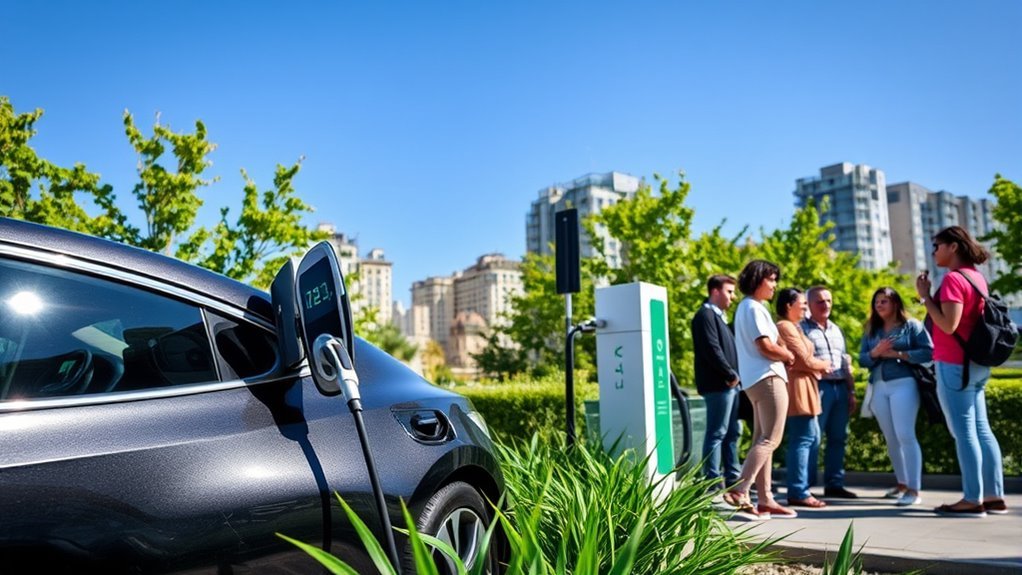
Public charging stations play an essential role for EV drivers, especially during long journeys or when battery levels are running low.
With over 31% of drivers relying on public chargers regularly, you’ll find them in convenient locations like gas stations (29%), retail stores (26%), and malls/restaurants (22%). This accessibility means you can charge while running errands or grabbing a bite.
Public chargers come in various types, including Level 1, Level 2, and DC fast charging, with DC fast chargers offering the quickest options—reaching 80% capacity in just 15 to 60 minutes.
To locate these stations easily, apps like ChargeHub help you find available chargers and streamline payment options. You can choose from membership accounts, pay-as-you-go methods, or contactless bank cards, though be aware that costs might be higher than home charging.
Embrace the freedom of charging on the go!
How Fast Can You Charge? A Look at Level 1, Level 2, and DC Fast Charging?
When it comes to charging your electric vehicle, the speed varies considerably among Level 1, Level 2, and DC Fast Charging options.
Level 1 charging is the slowest, taking up to 50 hours for an 80% charge, while Level 2 offers a more practical 4-10 hours.
In contrast, DC Fast Charging can get you to 80% in just 20 minutes, making it the preferred choice for quick top-ups during long trips.
Level 1 Charging Speed
Level 1 charging is the slowest option available for electric vehicle (EV) owners, using a standard 120-volt outlet to deliver approximately 2-5 miles of range per hour.
With this method, you can expect a Battery Electric Vehicle (BEV) to take 40-50+ hours to charge from empty to 80%. However, it’s ideal for overnight use, allowing you to wake up to a fully charged vehicle.
While Level 1 chargers are often included with most EVs, be cautious; using them on circuits not designed for high-demand charging can lead to circuit overload.
Though less than 1% of public charging options are Level 1, it provides a convenient and low-cost way to keep your EV ready for the road.
Level 2 vs. DC Fast
While Level 1 charging offers a slow but steady way to keep your electric vehicle charged, many drivers find themselves seeking faster options for daily use or long trips.
Level 2 Charging, operating at 240 volts, boosts your range by 10-20 miles per hour and can charge a battery electric vehicle (BEV) to 80% in just 4-10 hours—perfect for home or workplace setups.
In contrast, DC Fast Charging takes charging efficiency to the next level, delivering rapid power up to 500 kW. This means you can achieve 80% in as little as 15-60 minutes, making it ideal for road trips.
As charging infrastructure expands, knowing these options empowers you to choose the best charging solution for your needs.
Choosing the Right Charging Option for Your Needs
When choosing the right charging option for your needs, consider the convenience of home charging, which accounts for over 80% of sessions.
You might also want to explore workplace charging benefits, which can reduce range anxiety during your daily commute.
Finally, public charging stations are essential for those longer trips or when home options aren’t available, ensuring you stay powered wherever you go.
Home Charging Benefits
Choosing the right home charging option for your electric vehicle (EV) can greatly enhance your overall driving experience. By investing in home charging, you can enjoy several benefits:
- Convenience: Charge your EV overnight and start each day with a full battery.
- Time Efficiency: Level 2 chargers can recharge your vehicle 3 to 7 times faster than Level 1.
- Cost Savings: Home charging is generally cheaper than public stations, potentially saving you up to $2,500 annually on fuel and maintenance.
- Control: You manage your charging schedule, reducing the stress of finding public stations during your day.
Workplace Charging Advantages
Workplace charging offers considerable advantages for electric vehicle (EV) owners, making it an essential consideration for both employees and employers. By providing charging stations, you not only alleviate range anxiety but also enhance daily commuting convenience, as most EVs can fully charge in just 3 to 7 hours. This setup supports your sustainability commitment while allowing employees to maximize their driving range.
| Advantage | Description |
|---|---|
| Employee Incentives | Attracts and retains talent with green benefits |
| Reduced Range Anxiety | Guarantees convenient access to charging |
| Government Incentives | Offsets installation costs for employers |
| Daily Convenience | Supplements home charging for longer trips |
| Sustainability Commitment | Reinforces corporate responsibility and values |
Embracing workplace charging can considerably elevate employee satisfaction and promote a greener future.
Public Charging Accessibility
Accessing public charging stations is essential for electric vehicle (EV) drivers, particularly those without home charging options.
With 31% of EV drivers relying on them for convenience, knowing how to navigate these options can enhance your freedom.
Here are some key points to take into account:
- Types of Chargers: Understand Level 1, Level 2, and DC fast charging (Level 3) for varied charging times.
- Location Awareness: Find stations in shopping centers, gas stations, and restaurants to charge while you’re out.
- Connector Compatibility: Check if your EV needs an adapter, especially Tesla vehicles at non-Tesla stations.
- Charging Etiquette: Be mindful of others to overcome accessibility challenges and guarantee everyone can charge efficiently.
Frequently Asked Questions
What Are the Three Types of EV Chargers?
The three types of EV chargers are Level 1, Level 2, and Level 3. Level 1 offers slow charging speeds, while Level 2 provides moderate speeds, and Level 3 delivers rapid charging for quick top-ups.
What Are the Different Types of Home EV Chargers?
Ever wondered which home EV charger suits you best? You’ve got Level 1 chargers for slow, overnight charging and Level 2 chargers for faster, efficient charging. Choose based on your needs and lifestyle!
What Are the Categories of EV Chargers?
EV chargers fall into three categories: Level One, Level Two, and Level Three. Each offers varying charging speeds and installation requirements, with Level One being the slowest and Level Three providing rapid charging capabilities for quick refueling.
Is It Better to Charge an EV at Home or at a Public Charging Station?
Charging your EV at home is typically better due to cost efficiency and faster charging speed. Home charging lets you fully replenish your battery overnight, saving you money and ensuring you’re ready for your daily adventures.
Conclusion
In the electrifying world of EV charging, picking the right option is like choosing the perfect tool for your toolbox. Whether you’re plugging in at home, charging up at work, or finding a public station on the go, each choice has its unique benefits. As you navigate this landscape, consider your lifestyle and needs, and you’ll guarantee your journey is always powered up and ready to roll. Charge smart, drive happy!






Leave a Reply