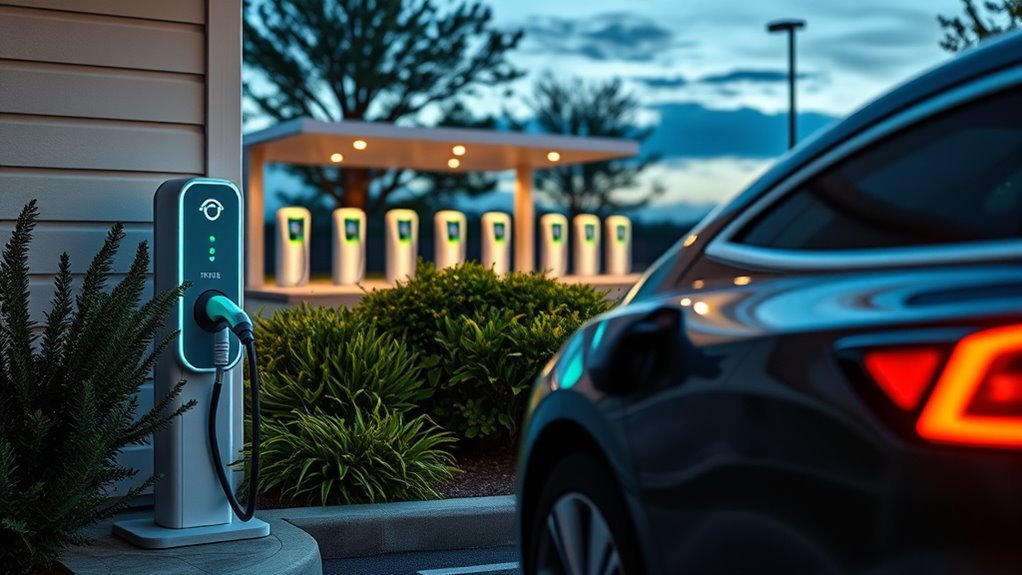
Charging your electric vehicle (EV) in the UK revolves around three key types: home, public, and rapid charging. Most of your charging will likely happen at home with dedicated 7kW chargers, while public charging stations offer over 30,000 locations for on-the-go top-ups. For longer journeys, rapid chargers can fill up your battery in just 30 minutes. Want to know more about safely charging, finding stations, and cost comparisons? Keep exploring further!
What Are the Different Types of EV Charging?
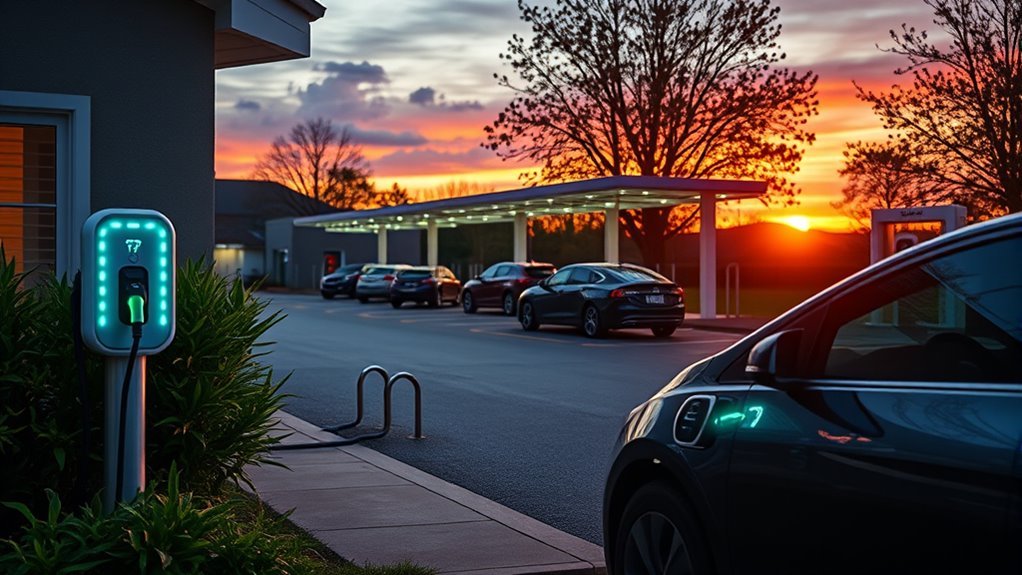
When you’re considering electric vehicle (EV) charging options, it’s important to understand the different types available. The charging infrastructure offers two primary categories: Destination Chargers and On-the-Road (Rapid) Chargers.
Destination Chargers provide AC charging at rates between 3.7kW and 22kW, ideal for longer stays at locations like shopping centers. In contrast, Rapid Chargers deliver impressive charging speeds, ranging from 50kW to 400kW, allowing you to charge your EV from 10% to 80% in about 30 minutes—perfect for those long-distance journeys.
In the UK, home chargers typically offer 7kW AC charging, while workplace chargers can go up to 22kW. Public charging costs vary, with rapid options usually priced between 60p and 80p per kWh.
With over 30,000 locations and more than 79,000 connectors, the UK’s charging infrastructure supports your freedom to travel without limits.
How to Charge Your EV at Home Safely
Charging your electric vehicle (EV) at home can be incredibly convenient, especially since over 90% of EV charging in the UK happens in residential settings.
To guarantee safety and efficiency, consider a professional home charger installation rather than relying on standard 3-pin plugs, which pose risks. A dedicated charger typically offers a 7kW charging speed, fully charging a 64kWh battery in about 10 hours.
For safety and efficiency, opt for a professional home charger installation instead of standard 3-pin plugs.
When planning your installation, remember that hiring a Part P certified electrician is essential. While the average cost for a home charge point installation is around £800, smart chargers can help optimize electricity costs and work with solar panels for even greater savings.
For peace of mind, follow these charging safety tips: regularly inspect your equipment, avoid overloading circuits, and make sure your charging area is dry and well-ventilated.
Embrace the freedom of EV charging at home, while keeping safety as a top priority.
How to Locate Public Charging Stations for Your EV
Finding public charging stations for your electric vehicle (EV) can be straightforward, especially with the wealth of resources available today. Over 30,000 public charging locations in the UK and more than 79,000 connectors make it easier than ever to recharge on the go.
To locate these stations efficiently, consider using popular charging station apps like Zap-Map. These apps provide real-time availability of chargers and allow you to plan your routes effectively.
You’ll typically find public chargers in council car parks, supermarkets, and motorway service stations, offering both destination and rapid charging options. Familiarize yourself with major public charging networks such as BP Pulse, Shell Recharge, and Ionity.
Most new public chargers accept contactless payment, making your charging experience seamless. By leveraging navigation tools and charging station apps, you can enjoy the freedom of driving an EV without the worry of running out of charge.
What You Should Know About Rapid Charging for Long Journeys?
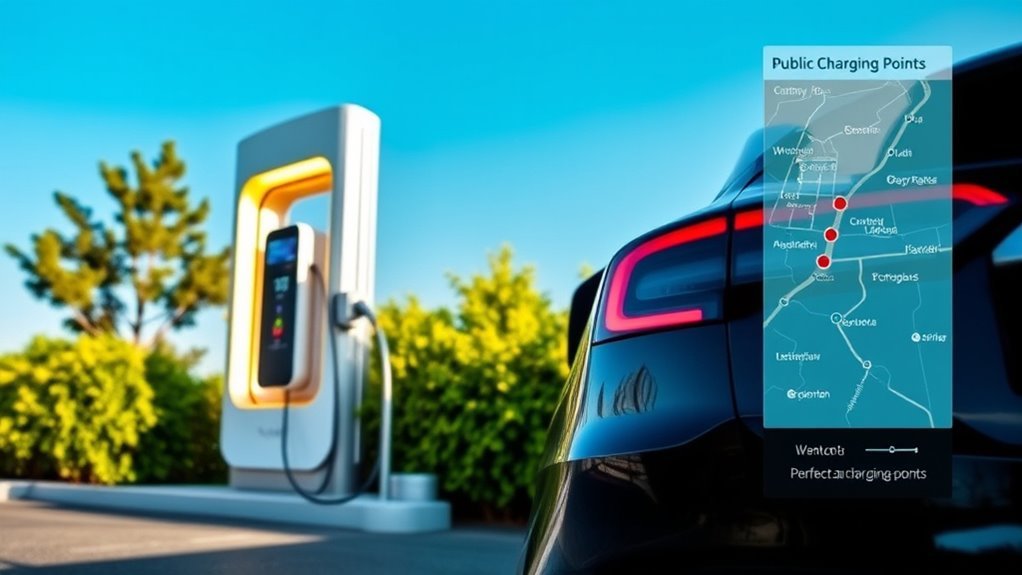
Although planning a long journey in your electric vehicle (EV) may seem intimidating, understanding rapid charging can considerably ease your travel experience.
These chargers, often found at motorway service stations, allow you to charge from 10% to 80% in as little as 30 minutes.
Here are some key points to remember:
- Charging etiquette: Be mindful of others and move your vehicle once charged.
- Battery management: Keep your battery below 80% for ideal rapid charging efficiency.
- Cost awareness: Charging typically ranges from 40p to 80p per kWh, with premium options like Tesla Superchargers being more economical.
- Ultra-rapid chargers: These can charge your EV in under 30 minutes but are only compatible with select models.
Comparing Costs of Home, Public, and Rapid EV Charging
When it comes to the costs associated with charging your electric vehicle (EV), understanding the differences between home, public, and rapid charging can help you make informed decisions.
Home charging typically costs between 8p and 35p per mile, depending on your electricity rates. If you opt for off-peak tariffs, you can save even more.
Home charging costs range from 8p to 35p per mile, with potential savings using off-peak tariffs.
Public charging varies widely, with prices ranging from free to over 50p per kWh, influenced by location and network providers like BP Pulse and Shell Recharge.
Meanwhile, rapid charging, essential for long trips, generally falls between 40p and 80p per kWh; Tesla Superchargers are a notable example.
Installing a dedicated home charger can cost £800 to £1,500, plus potential smart charger fees.
If you can charge at work, it may even be free, offering a cost-effective alternative to public charging.
Understanding these options empowers you to choose the most economical charging solution.
Frequently Asked Questions
How Long Does It Take to Charge an EV Completely?
Charging an EV completely depends on charging speed and battery capacity. Typically, it takes anywhere from 30 minutes to several hours. Faster chargers greatly reduce this time, allowing you to enjoy the freedom of electric driving sooner.
What Are the Best EVS for Long-Range Charging?
When seeking freedom on the open road, consider EVs like the Tesla Model 3 or Ford Mustang Mach-E. Their long-range performance and charging efficiency let you explore without worrying about frequent stops.
Can I Charge My EV With a Regular Socket?
Yes, you can charge your EV with a regular socket, but it’s slower. Make certain your home charging setup has the right socket compatibility to avoid issues. Consider upgrading to a dedicated charger for efficiency.
What Maintenance Is Required for Home Charging Stations?
Regularly perform routine reviews for your charging station’s upkeep. Check connections, clean components, and guarantee installation safety. Proper maintenance prevents potential pitfalls, keeping your electric vehicle charging experience smooth and stress-free, fostering freedom on the road.
Are There Any Government Incentives for EV Charging Installation?
Yes, there’re government grants and installation subsidies available for EV charging stations. These incentives help reduce upfront costs, making it easier for you to adopt electric vehicles and contribute to a greener future.
Conclusion
So there you have it—charging your EV isn’t just about finding a plug and hoping for the best. Whether you’re cruising at home or out chasing charging stations like a scavenger hunt, knowing your options can save you time and money. Remember, rapid charging is great for those long hauls, but you might want to pack a snack while you wait. After all, who doesn’t love a little drama with their electric vehicle experience? Happy charging!





Leave a Reply