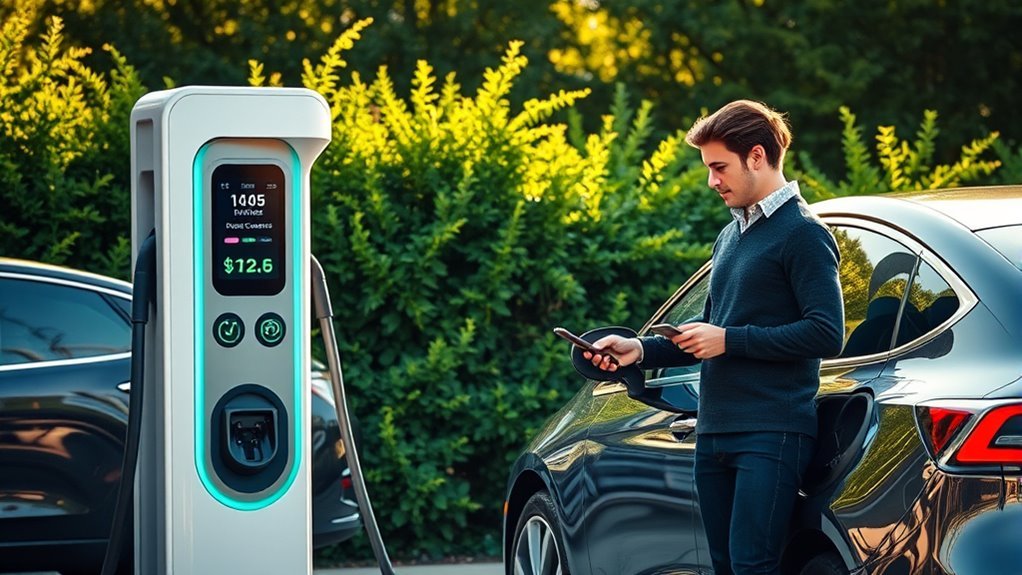
Electric Vehicle (EV) charging stations are key facilities that convert grid electricity to recharge your EV’s battery. There are several types: Level 1 chargers for home use, Level 2 chargers for quicker charging, and DC fast chargers for rapid refueling. Each type operates using different voltages and power outputs. Costs can vary based on location and charger type, with pricing models typically based on kilowatt-hours. Discovering how these stations work and their advantages can enhance your electric driving experience.
What Are Electric Vehicle (EV) Charging Stations?
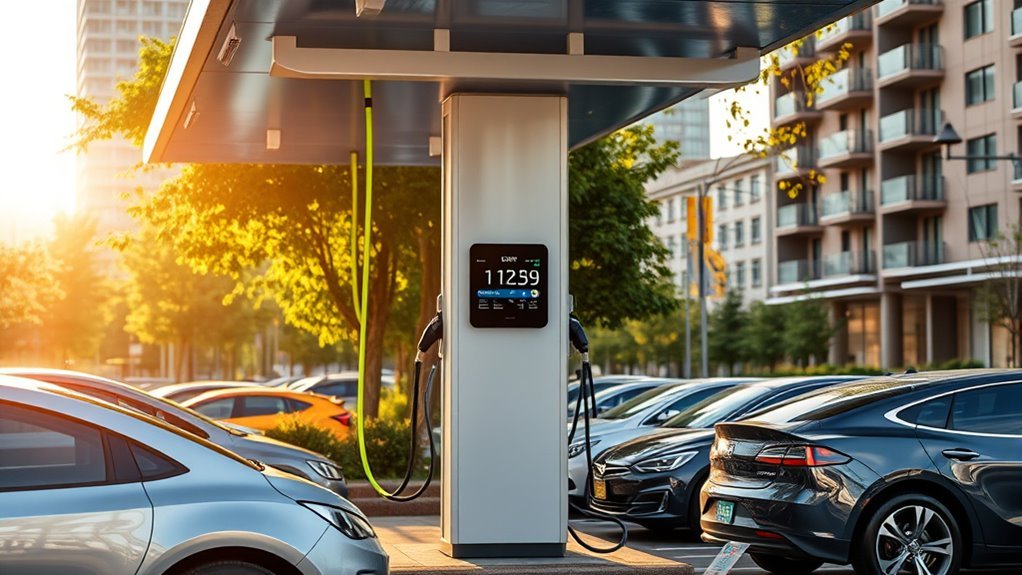
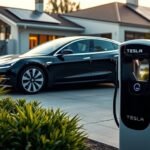
Electric Vehicle (EV) charging stations, often referred to as Electric Vehicle Supply Equipment (EVSE), play an important role in the shift to electric mobility.
These stations convert electrical energy from the grid into chemical energy, recharging your EV’s battery. You can find charging station locations at grocery stores, office parks, and fuel stations, making it convenient to power up while you shop or work.
The benefits of using EV stations are clear: with Level 1 chargers providing 4-5 miles of range per hour and DC fast chargers delivering up to 200 miles in just 30 minutes, you can easily keep your vehicle charged.
However, reliability is vital; studies indicate a notable percentage of DC fast chargers may be out of service.
As you embrace electric mobility, knowing where to find reliable charging options guarantees you’re always ready to hit the road.
How Do EV Charging Stations Work?
Charging stations operate by converting electrical energy from the grid into a form that can recharge your electric vehicle’s battery. When you plug in, the station’s onboard charger transforms AC power into DC power, supplying your battery with the energy it needs. Fast chargers utilize direct current (DC), greatly speeding up the charging process compared to standard AC chargers.
Control systems within these stations play an essential role in energy regulation, adjusting the flow based on your battery’s state of charge (SOC) and temperature. This guarantees a safe and efficient charging experience. Typically, public charging stations require payment, with pricing models varying by time or kilowatt-hour (kWh) consumed.
| Charging Method | Key Features |
|---|---|
| AC Charging | Slower, common for home use |
| DC Fast Charging | Rapid charging, ideal for public stations |
Different Types of EV Chargers Explained
When it comes to charging your electric vehicle, understanding the different types of chargers is essential.
You’ll find Level 1 chargers perfect for overnight home use, while Level 2 chargers offer faster options for both home and public settings.
For those long road trips, DC fast chargers are the ultimate solution, delivering impressive range in a fraction of the time.
Level 1 Chargers Overview
While many EV owners seek faster charging solutions, Level 1 chargers remain a practical choice for those who primarily charge at home.
These chargers utilize a standard 120-volt outlet and offer several Level 1 benefits:
- Convenient home charging with no special equipment needed
- Replenishes about 40 miles of range in just 8 hours
- Portable charging cords come included with most EVs
- Ideal for users with low daily mileage needs
- Accessible due to the widespread availability of household outlets
Though they’re the slowest option, Level 1 chargers efficiently meet daily charging demands, allowing you to wake up to a fully charged vehicle each morning.
Embracing this simple solution empowers you to drive confidently without the hassle of frequent public charging stops.
Level 2 Chargers Overview
Level 2 chargers offer a significant upgrade in charging speed and convenience, making them an excellent choice for both home and public use.
Operating at 208/240 volts, you can expect charging rates between 7.68 kW and 19.2 kW, adding about 25-30 miles of range per hour. The SAE J1772 connector, standard in North America, guarantees compatibility with most electric vehicles.
When considering installation, anticipate costs around $250 for a 240-volt outlet, but be aware that site-specific requirements might increase expenses.
The Level 2 benefits are clear: faster charging capabilities compared to Level 1 chargers, making them ideal for daily use.
Embracing this technology empowers your electric vehicle experience, bringing freedom and efficiency to your charging routine.
DC Fast Chargers Overview
DC Fast Chargers, often referred to as Level 3 chargers, revolutionize the EV charging experience with their rapid capabilities.
These chargers provide an impressive 100 to 200+ miles of range in just 30 minutes, transforming how you think about long-distance travel.
Here’s what you should know:
- Operate at power outputs ranging from 50 kW to 500 kW
- Compatible with CCS, CHAdeMO, and J3400 (NACS) connectors
- Over 20% of public EV charging ports in the U.S. are now DC Fast Chargers
- Enhance your user experience by minimizing downtime
- Supported by federal funding for an expanding charging network
With the growing infrastructure, DC Fast Chargers promise to make your electric vehicle journey smoother and more convenient.
Voltage and Power: What You Need to Know for Charging
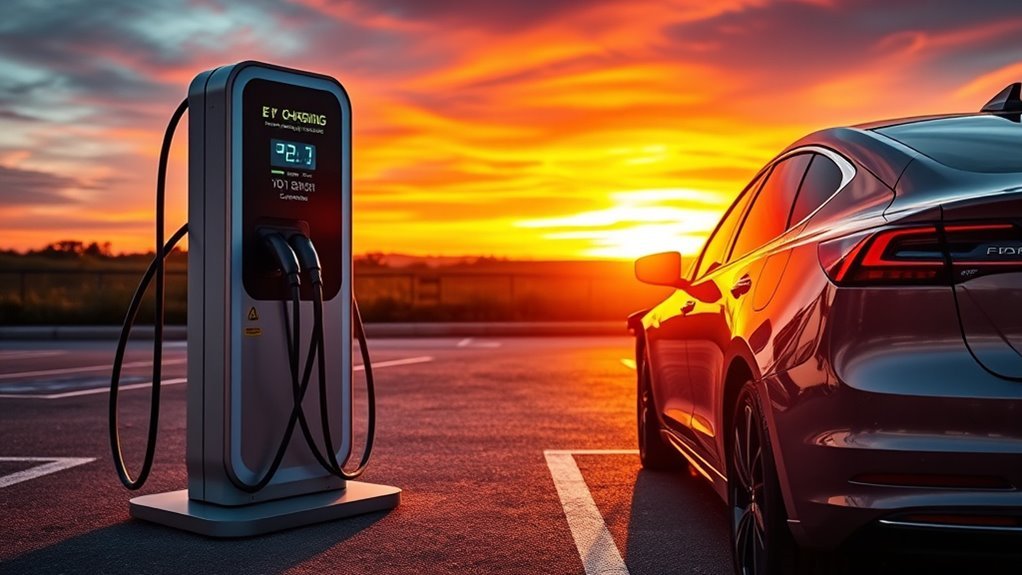
How does understanding voltage and power impact your EV charging experience? It’s essential for maximizing charging efficiency and ensuring voltage compatibility with your electric vehicle.
EV charging stations operate at various voltage levels—Level 1 uses 120V, providing about 4-5 miles of range per hour, while Level 2 runs on 240V, delivering 25-30 miles per hour. If you’re in a hurry, Level 3 DC fast chargers can push up to 350 kW, adding 200 miles in just 30 minutes.
EV charging stations vary in voltage, with Level 1 offering slow charging and Level 3 providing rapid power for quick range boosts.
Knowing these power outputs helps you choose the right charging solution. Level 1 chargers typically output between 1.4 kW and 2.88 kW, while Level 2 varies from 3.3 kW to 19.2 kW.
Selecting the appropriate charger not only enhances your vehicle’s efficiency but also aligns with your lifestyle. Understanding voltage and power isn’t just technical; it’s about liberating your driving experience.
Why Charging Connector Standards Matter
While you mightn’t think about it often, charging connector standards play an essential role in your electric vehicle (EV) experience. They guarantee connector interoperability, making it easier for you to charge your vehicle wherever you go.
With major automakers like Ford, GM, and Honda adopting Tesla’s NACS connector, the landscape is shifting toward greater standardization. Here’s why this matters:
- Reduces consumer confusion
- Enhances charging station accessibility
- Promotes a cohesive charging infrastructure
- Facilitates broader EV adoption
- Encourages industry collaboration
Costs of EV Charging Stations: What to Expect
As the EV market grows and charging standards evolve, understanding the costs associated with charging stations becomes increasingly important for drivers.
You’ll find that public EV charging stations typically charge by the kilowatt-hour (kWh), with prices ranging from $0.10 to $0.50 per kWh, depending on the charging network and location. While free public stations exist, they’re rare and often unreliable.
When considering a home charging solution, installing a Level 2 charger generally costs around $250 for the outlet, plus an additional $400 to $700 for the charger itself. This option usually offers a more economical long-term solution compared to public charging.
Whether you’re charging at home or using public stations, a cost comparison helps you make informed decisions about your EV charging habits.
Understanding these costs empowers you to navigate your charging options effectively.
Public vs. Private Charging Stations: Key Differences
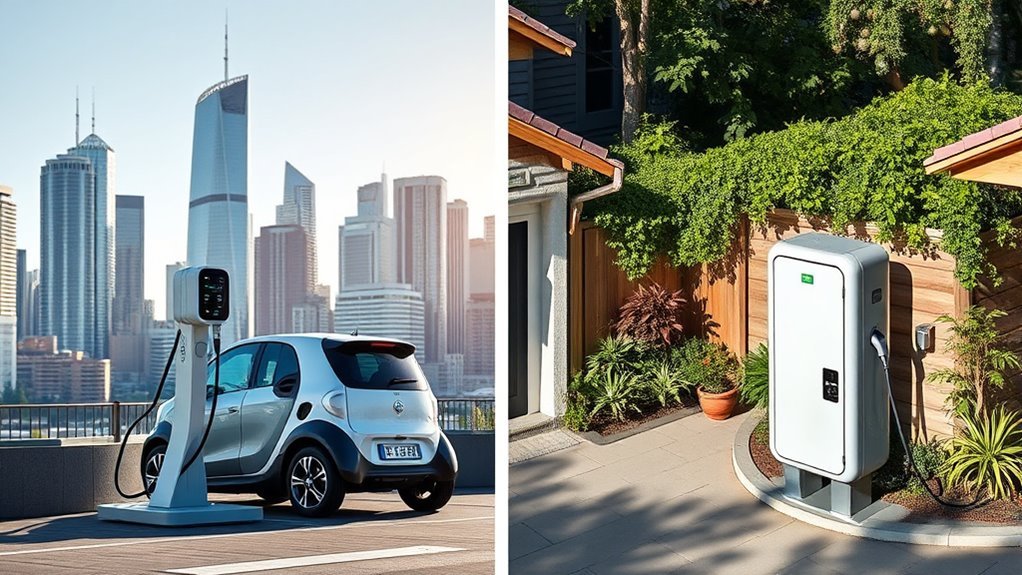
When it comes to EV charging stations, understanding the differences between public and private options is essential for your charging strategy.
Public stations, often found in bustling areas, typically charge you per use and can vary in accessibility and speed, especially with the rise of DC fast chargers.
In contrast, private stations offer the convenience of home charging without costs, making them ideal for your daily needs.
Accessibility And Location
Understanding the differences in accessibility and location between public and private EV charging stations is vital for every electric vehicle owner.
- Public stations are often in high-traffic areas like grocery stores and shopping centers.
- Private stations are typically found at homes, workplaces, and hotels.
- Charging equity varies greatly, with some regions boasting ample public stations and others lagging behind.
- As of 2023, over 20% of public ports are DC fast chargers, catering to the need for quicker charging solutions.
- Urban planning plays an important role in determining where these stations are placed, affecting convenience and adoption rates.
Payment Models And Costs
While maneuvering through the world of electric vehicle charging, it’s essential to grasp the distinct payment models and costs associated with public and private charging stations.
Public stations often operate on a pay-as-you-go model, charging based on kilowatt-hours or minutes, leading to significant cost variations depending on location and provider. Many also require membership fees or subscriptions for reduced rates.
In contrast, private charging stations, like those at home, use residential electricity rates, making them significantly cheaper. The average cost to install a Level 2 charger is around $250, plus $400 to $700 for the charger.
While free public options exist, their reliability pales compared to the predictability of private setups, giving you more control over your EV charging costs.
Charging Speed And Availability
As you navigate the electric vehicle (EV) landscape, it’s crucial to recognize the stark differences in charging speed and availability between public and private charging stations.
Here are some key points to reflect on:
- Public charging stations are often in high-traffic areas, providing convenience.
- DC fast chargers offer 100-200+ miles of range in just 30 minutes.
- Pricing structures vary, often including per-minute or membership fees.
- Charging reliability can be an issue, with 23% of DC fast chargers potentially inoperable.
- Private charging typically allows for overnight charging, with Level 2 chargers delivering 25-30 miles of range per hour.
Understanding these differences helps you choose the right charging network, ensuring a smooth EV experience tailored to your needs.
How to Choose the Right Charging Station for Your Needs?
How do you choose the right charging station to meet your needs? Start by evaluating your typical driving range and charging habits. If you mostly drive short distances, a Level 1 charger may suffice for overnight charging.
However, if you need a quicker solution, consider a Level 2 charger, which delivers 20-30 miles of range per hour and is ideal for home or workplace use.
Next, assess the installation requirements. A Level 2 charger usually costs around $250 to install and needs a 240-volt outlet near your parking area.
Also, check the compatibility of connectors with your vehicle—J1772 is common for Level 1 and Level 2, while CCS or CHAdeMO suits DC fast charging.
Finally, explore any available incentives for installation—your region might offer financial assistance to help you shift to a more liberated electric lifestyle.
Future Trends in EV Charging Infrastructure
With the electric vehicle (EV) market rapidly evolving, future trends in EV charging infrastructure promise to reshape how you charge your vehicle.
As the landscape changes, here’s what to expect:
- Increased DC fast charging stations: Over 20% of public charging ports are now DC fast chargers, thanks to infrastructure investment from federal funding.
- Higher-powered charging systems: The development of the Megawatt Charging System (MCS) will support future electric vehicle needs, pushing boundaries on charging efficiency.
- Standardized connectors: Major automakers are adopting the J3400 connector, enhancing interoperability across brands.
- Home charging solutions: Favorable electricity plans and incentives are making home charging stations more accessible and convenient.
- Collaboration with local governments: Strategic planning guarantees that charging infrastructure meets power requirements and user accessibility.
These future charging technologies won’t only enhance your charging experience but also drive further EV adoption.
Frequently Asked Questions
How Does an EV Charging Station Work?
An EV charging station works by converting grid power into chemical energy for your vehicle’s battery. Key components include the charger, control systems, and connectors, ensuring efficient energy flow tailored to your battery’s needs and status.
How Much Does It Cost to Charge an Electric Car at a Charging Station?
Charging costs at stations typically range from $0.10 to $0.60 per kilowatt-hour, depending on energy rates and charging speed. Choosing the right station can save you money while maximizing your electric vehicle’s potential.
What Does EV Charging Mean?
EV charging means supplying energy to your electric vehicle’s battery using various charging methods. Understanding EV terminology helps you navigate the process, ensuring you make informed choices for efficient and cost-effective charging experiences.
How Much Does It Cost to Charge an Electric Car at a Public Charging Station?
Charging costs at public infrastructure typically range from $5 to $15 for a full charge, depending on speed and location. While some stations offer free options, most will require you to pay for electricity used.
Conclusion
As you navigate the world of electric vehicles, understanding EV charging stations becomes essential. With various types, costs, and standards to take into account, the right choice can enhance your driving experience. But what if you pick the wrong charger? The implications could be frustrating or costly. As the EV market evolves, staying informed on future trends will be key. Are you ready to charge into the future and make the most of your electric vehicle journey?





Leave a Reply