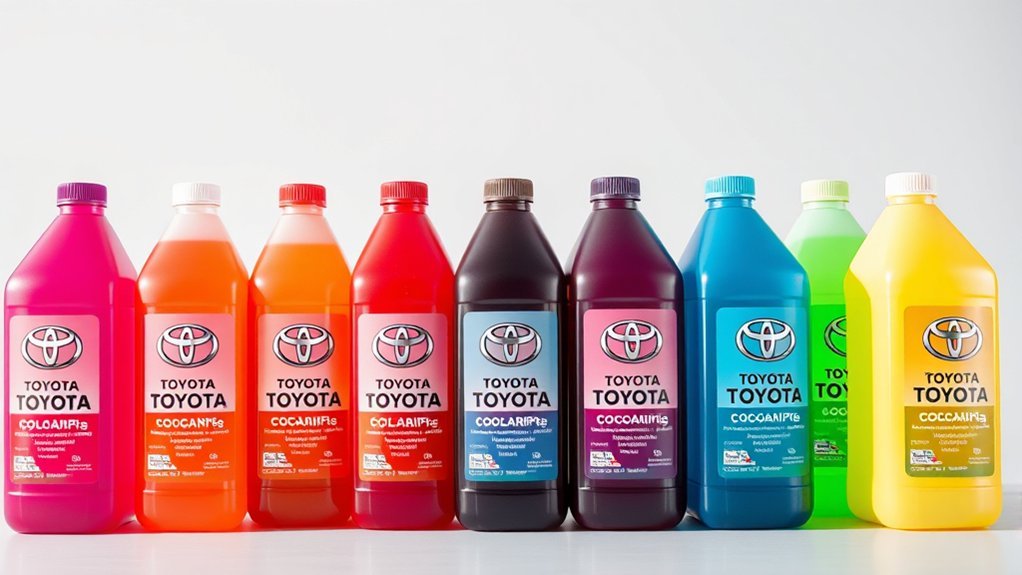
Toyota primarily uses Super Long Life Coolant (SLLC), which is characterized by its pink color. Older models may utilize Long Life Coolant (LLC), identified by its red hue. It’s vital to consult your owner’s manual for specific types and compatibility, as mixing different coolants can lead to engine damage and corrosion. Regularly changing the coolant every 30,000 miles or two years guarantees peak performance and longevity. Stay tuned to discover more about coolant maintenance and best practices.
What Is Toyota Coolant and Why Is It Important?
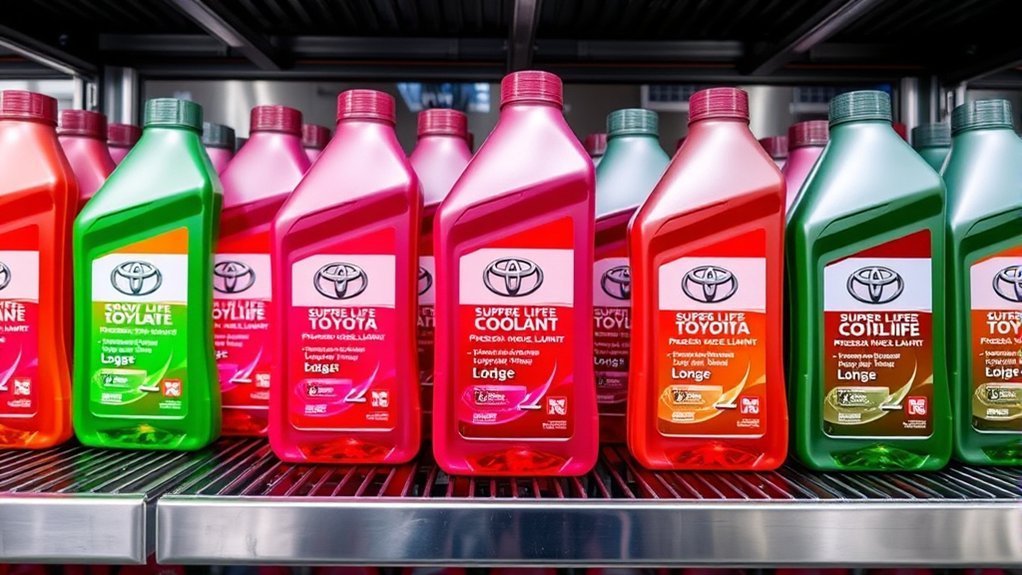
Toyota coolant, specifically the Super Long Life Coolant (SLLC), plays an important role in maintaining your vehicle’s engine health. This pre-mixed liquid, primarily made of ethylene glycol and deionized water, guarantees ideal engine temperatures and prevents overheating.
It’s essential to use the recommended coolant for your specific engine type, as mixing different coolant types can lead to corrosion and engine damage. Various colors, including pink, red, blue, and green, indicate different technologies like Organic Acid Technology (OAT) and Hybrid Organic Acid Technology (HOAT), enhancing performance and longevity.
Regular maintenance is significant; change the coolant every 30,000 miles or 2 years, and perform a complete flush every 100,000 to 150,000 miles. Neglecting coolant levels can jeopardize your cooling system components, leading to severe issues like overheating and head gasket failure.
Prioritizing the right Toyota coolant keeps your engine running smoothly and efficiently.
Types of Coolant Used in Toyota Vehicles
In Toyota vehicles, coolant types vary considerably, impacting performance and maintenance schedules.
You’ll find Super Long Life Coolant (SLLC) in most models, recognizable by its pink hue, while older models may use the red Long Life Coolant (LLC).
It’s crucial to consult your owner’s manual, as coolant color alone doesn’t guarantee compatibility with your specific vehicle.
Toyota Coolant Types Overview
When it comes to maintaining ideal engine performance, understanding the various coolant types used in Toyota vehicles is crucial.
Toyota primarily employs the Super Long Life Coolant (SLLC), which is pink and utilizes hybrid organic acid technology for enhanced durability.
Older models often require the traditional red coolant, which relies on inorganic acid technology and has a shorter replacement interval.
Additionally, Toyota has developed a blue coolant for vehicles with Subaru boxer engines.
The Frostox HT-12, a green coolant featuring silicate organic acid technology, is suitable for specific models like the Mk5 Supra.
Always consult your owner’s manual to verify you’re using the correct coolant type and color for your specific Toyota vehicle’s compatibility.
Color Significance and Compatibility
Coolant color plays an important role in identifying the right type for your Toyota vehicle, as each hue signifies a specific formulation and compatibility.
For most models manufactured post-2004, the pink Super Long Life Coolant, formulated with hybrid organic acid technology, is the recommended choice.
Older Toyota models may require the red Long Life Coolant, which demands more frequent replacements.
The color of the coolant—whether pink, red, blue, or green—indicates different formulations, making it vital to consult your owner’s manual for specific requirements.
Mixing coolant types, such as organic acid technology (OAT) and inorganic acid technology (IAT), can lead to corrosion and performance issues.
Always verify the coolant you use matches your Toyota model’s compatibility for peak performance.
Understanding the Color Coding of Toyota Coolants
Understanding the color coding of Toyota coolants is essential for maintaining your vehicle’s cooling system effectively.
Toyota utilizes specific colors to denote different types of coolant: pink for Super Long Life Coolant (SLLC), red for Long Life Coolant (LLC), and green or blue for particular applications like the Mk5 Supra or Subaru boxer engines.
Toyota’s coolant color coding—pink for SLLC, red for LLC, and green/blue for specific models—ensures proper maintenance and performance.
This color coding aids in identifying the correct type, but remember, it doesn’t guarantee compatibility. Mixing different coolant colors can lead to serious issues, such as reduced effectiveness and increased corrosiveness.
Always use the specified OE coolant for your Toyota to guarantee peak performance. Additionally, the shift from red LLC to pink SLLC in 2004 highlights advancements in coolant formulation, offering longer-lasting protection.
For precise information on which coolant to use, consult your owner’s manual and seek professional advice tailored to your vehicle’s specific needs.
Finding the Right Coolant for Your Toyota: Essential Tips
To guarantee your Toyota’s cooling system functions at its best, it’s essential to select the right coolant tailored to your vehicle’s requirements. Start by consulting the owner’s manual for specific coolant recommendations, as using the incorrect type can cause performance issues and potential damage.
Toyota primarily uses Super Long Life Coolant (SLLC), identifiable by its pink color, often referred to as Toyota red.
Regular coolant flushes are advised every 30,000 miles or every two years to prevent overheating and corrosion. Remember, mixing coolant types can lead to complications like increased corrosiveness, so stick to Toyota’s specified OEM coolant for ideal results.
Most OEM coolants come premixed as 50/50 solutions, ensuring ease of use without the hassle of mixing coolant yourself. By following these guidelines, you can keep your Toyota’s cooling system running smoothly and efficiently.
Why Toyota’s Super Long Life Coolant Matters
Choosing the right coolant is just the beginning; knowing why Toyota’s Super Long Life Coolant (SLLC) matters can considerably impact your vehicle’s performance and longevity. Here’s why you should opt for SLLC:
Understanding the importance of Toyota’s Super Long Life Coolant (SLLC) can enhance your vehicle’s performance and lifespan.
- Extended Engine Protection: SLLC, introduced in 2004, utilizes hybrid organic acid technology that offers superior protection for your engine.
- Long Replacement Intervals: With a first replacement recommendation of 100,000 miles, this coolant guarantees a long life, reducing maintenance frequency.
- Pre-Mixed Formula: SLLC comes pre-mixed with deionized water, eliminating corrosion risks and guaranteeing the correct fluid is used.
- Broad Compatibility: Suitable for all Toyota models, including hybrids, SLLC enhances compatibility, preventing performance issues that arise from mixing different coolant types.
How to Tell When Your Coolant Needs Changing?
How can you tell when it’s time to change your coolant? Regularly monitoring your coolant is essential for engine health. Check your owners manual for specific intervals, typically every 30,000 miles or 2 years. Here are some signs that indicate a coolant change is necessary:
| Indicator | Action Required |
|---|---|
| Low coolant levels | Refill and consider changing |
| Engine overheating | Check coolant condition |
| Sediment or rust present | Perform a coolant flush |
| Check engine light on | Inspect coolant system |
Additionally, watch for steam from the radiator or unusual smells. These can signal that your coolant is no longer effective and needs replacement. Staying proactive about these signs will help maintain your engine’s performance and longevity.
The Importance of Regular Toyota Coolant Maintenance
Maintaining regular coolant checks is critical for the longevity of your Toyota’s engine. Neglecting coolant maintenance can lead to engine overheating and severe damage.
To keep your vehicle running smoothly, consider these essential practices:
- Change coolant every 30,000 miles or 2 years to prevent issues like head gasket failure.
- Perform a complete coolant flush every 100,000 to 150,000 miles to remove contaminants from the cooling systems.
- Monitor coolant levels regularly; low levels can lead to overheating and serious engine complications.
- Use the correct Toyota coolant (like the Super Long Life Pink coolant) to avoid compatibility issues and corrosion.
Understanding Mixing Toyota Coolants: Best Practices
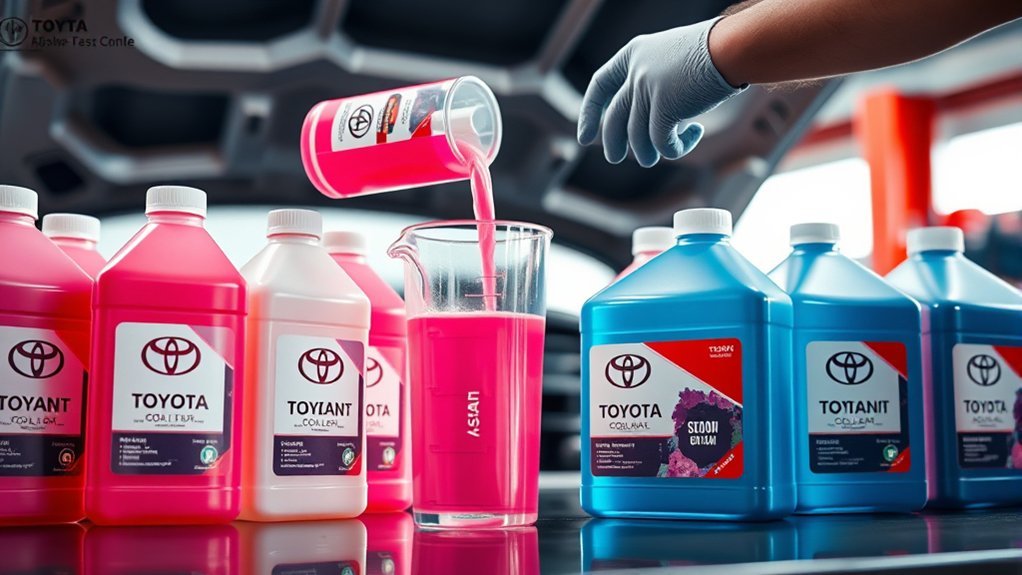
While it might seem convenient to mix different types of Toyota coolants, doing so can severely compromise your engine’s cooling system. Mixing Organic Acid Technology (OAT) and Inorganic Acid Technology (IAT) coolants leads to reduced effectiveness and increased corrosiveness.
Specifically, avoid mixing Toyota’s Super Long Life Pink coolant with other brands or types; this dilutes essential protective additives, risking performance.
When switching coolants, always perform a complete flush of the cooling system to eliminate any residual old coolant and contaminants. This step is vital to maintaining ideal engine function.
Additionally, adhere strictly to Toyota’s specifications for coolant based on your vehicle’s model and year. Using the wrong coolant can result in overheating and significant engine damage.
For the best results, stick to the same brand and type already present in your system, ensuring your engine runs smoothly and efficiently without the risk of complications.
Steps to Change Your Toyota Coolant
Before you start the coolant change, gather the necessary tools, including a radiator wrench, a funnel, and a suitable container for the old coolant.
Follow the coolant replacement steps carefully to guarantee a proper and effective change, starting with draining the old coolant.
This systematic approach will help maintain your Toyota’s cooling system and prevent potential issues.
Gather Necessary Tools
To successfully change your Toyota coolant, you’ll need to gather essential tools that guarantee a smooth process. Ascertain you have the following items on hand:
- Coolant flush kit – To help remove old coolant effectively.
- Funnel – For easy pouring of the new coolant into the radiator or reservoir.
- Container for old coolant – To collect and dispose of the used coolant safely.
- Safety gloves – To protect your hands while handling coolant and other fluids.
Make sure you have the correct type of Toyota coolant, like the Super Long Life pink coolant, and distilled water for proper mixing.
Always park your vehicle on a level surface and allow the engine to cool completely before starting.
Follow Coolant Replacement Steps
Start by verifying your engine is completely cool, then locate the radiator drain plug. Open it to drain the old coolant into a suitable container.
After draining, flush the cooling system with water to remove any contaminants before sealing the drain plug again.
If you’re using concentrated coolant, mix it with distilled water in a 50/50 ratio; otherwise, use premixed Toyota Super Long Life Coolant (pink) or Long Life Coolant (red) as specified in your owner’s manual.
Fill the radiator with the new coolant, then run the engine to circulate the fluid.
Finally, check for leaks and verify proper disposal of the old coolant. Following these steps verifies your Toyota’s cooling system operates efficiently.
Frequently Asked Questions About Toyota Coolant
What should you know about Toyota coolant? Understanding the specifications and maintenance of Toyota coolant is essential for your vehicle’s health. Here are some key points:
- Type: Toyota primarily utilizes Super Long Life Coolant (SLLC), which is pink in color and engineered for longevity.
- Compatibility: Always consult your owner’s manual for compatibility; mixing different coolants can lead to engine issues.
- Maintenance Schedule: Change the coolant every 30,000 miles or 2 years to guarantee peak performance.
- Flushing: Flush the cooling system every 100,000 to 150,000 miles to prevent corrosion and maintain efficiency.
Using the specified Toyota coolant helps avoid reduced effectiveness and potential engine damage.
Frequently Asked Questions
Can I Use Universal Coolant in a Toyota?
You shouldn’t use universal coolant in a Toyota. Its effectiveness may compromise temperature stability and create potential risks like corrosion, jeopardizing your engine’s long-term performance. Always stick to Toyota’s recommended coolants for best results.
What Year Did Toyota Switch to Pink Coolant?
Toyota switched to pink coolant in 2004, marking a significant advancement in coolant history. This color change signifies enhanced performance, improved longevity, and the importance of using the right coolant for ideal engine protection.
Can I Mix Toyota Coolant With Other Brands?
Mixing Toyota coolant with other brands isn’t wise; brand differences can harm performance. Follow coolant mixing guidelines and maintenance tips to prevent engine damage. Stick to Toyota’s specified coolant for best results and longevity.
Is Green Coolant Ok for Toyota?
No, green coolant isn’t compatible with Toyota’s specifications. Its chemical properties can harm your engine cooling system. Stick to Toyota-approved coolants for ideal performance and protection, ensuring your vehicle runs smoothly without risking damage.
Conclusion
In summary, choosing the right coolant for your Toyota is essential for maintaining engine performance and longevity. By understanding the types, colors, and compatibility, you can guarantee peak cooling efficiency. Regular maintenance and proper mixing practices will keep your system running smoothly. Remember, using Toyota’s Super Long Life Coolant can make a significant difference. So, stay informed, stay proactive, and keep your Toyota’s engine cool and reliable for miles to come.







Leave a Reply