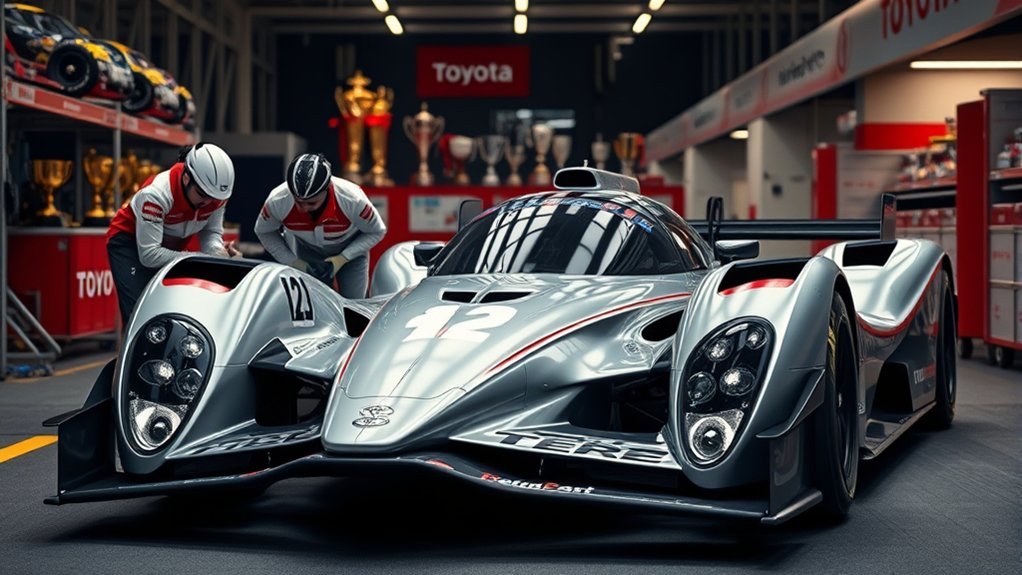
The Toyota F1 Team, which entered Formula 1 in 2002, aimed for success but struggled, ultimately withdrawing in 2009 after disappointing performance. After a decade away, Toyota returned to F1 through a partnership with Haas F1 Team, focusing on driver development and technical innovation. This strategic move allows Toyota to cultivate talent and enhance performance while building a sustainable motorsport culture. Stick around to discover more about their ambitious plans and the future of motorsport collaboration.
The Rise and Fall of the Toyota F1 Team (2002-2009)
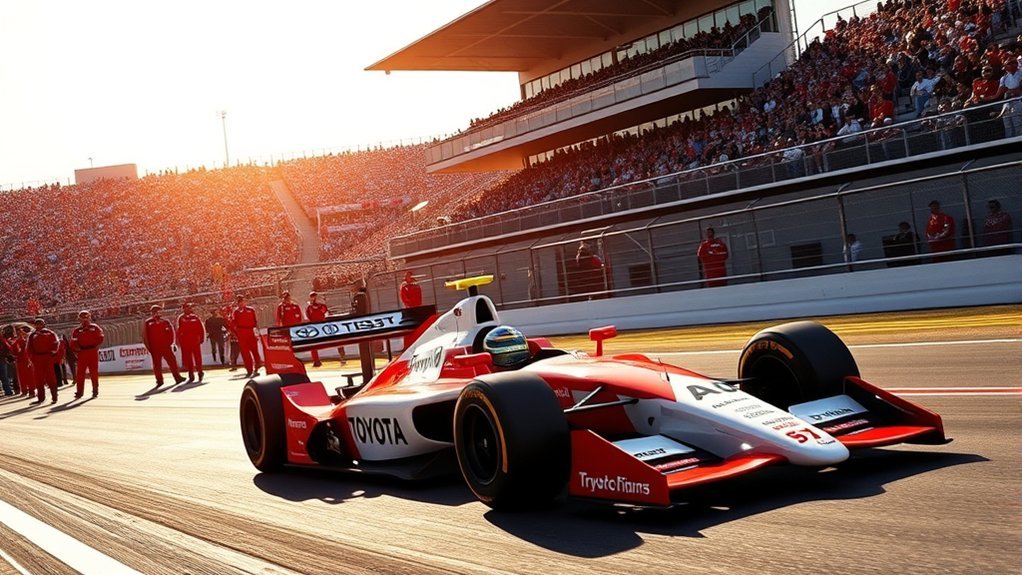
When Toyota Racing entered Formula 1 in 2002, it aimed to leverage its automotive expertise to compete at the highest level of motorsport. With a massive investment exceeding $1 billion in research and development, the Toyota F1 Team pushed boundaries to achieve success.
Despite this commitment, the team struggled to secure consistent podium finishes, achieving only a third place as its best result. In 2005, Toyota reached its peak, finishing fourth in the Constructors’ Championship, but that wasn’t enough to sustain momentum.
As the financial crisis hit in 2009, Toyota announced its withdrawal from F1, signaling a strategic pivot toward other motorsport disciplines like rallying and endurance racing. This decision highlighted the challenges of balancing ambition with economic realities, marking the rise and fall of a team that sought liberation through innovation but ultimately faced the harsh truths of competitive racing.
Lessons Learned From Toyota’s Challenges in F1: a Path to Success
You can see that Toyota’s journey in F1 was marked by significant setbacks that ultimately shaped their approach to motorsport.
By recognizing the need for long-term development over immediate results, they learned valuable lessons about sustaining competitive performance.
These insights have now influenced their renewed strategy, focusing on collaboration and nurturing talent for future success.
Overcoming Initial Setbacks
Although Toyota’s entry into Formula 1 in 2002 was marked by ambition, it quickly encountered significant challenges that tested the team’s resolve. The lack of competitive performance, illustrated by a disappointing 9th place finish in their debut season, highlighted the steep learning curve.
Despite heavy investments, Toyota managed only a 4th place in the Constructors’ Championship by 2005. Their exit in 2009 underscored the need for a strategic shift.
Key lessons emerged: the importance of partnerships and a focus on talent development. By collaborating with Haas F1 Team for a renewed commitment in 2024, Toyota aims to cultivate driver and engineering talent, emphasizing sustainable growth over immediate results.
This approach lays a foundation for overcoming past setbacks and achieving future success.
Emphasizing Long-Term Development
Recognizing the importance of long-term development, Toyota’s renewed strategy in Formula 1 reflects a significant shift from their previous approach.
With Toyota Gazoo Racing’s collaboration with Haas, the focus on “People, Product, Pipeline” emphasizes cultivating talent through structured driver development programs. This initiative aims to use F1 as a training ground for future leaders within the organization.
By integrating a driver-in-loop simulator at Haas’ UK base, they enhance technical capabilities essential for long-term performance. The partnership has already led to significant organizational growth, as Haas expanded its workforce, showcasing the benefits of collaboration.
Under the guidance of the F1 Team Principal, this strategic direction sets a promising foundation for sustained success in the competitive landscape of motorsport.
Toyota’s Decade Away From F1
While Toyota’s departure from Formula 1 in 2009 marked the end of its direct involvement in the sport, the decade that followed was a period of reflection and strategic realignment for the company.
During this time, Toyota shifted its focus to other motorsport disciplines, achieving notable success in the World Rally Championship and the World Endurance Championship. The company maintained a presence in motorsport through various initiatives, yet it often expressed regret over leaving F1, highlighting its passion for the sport.
This decade was essential for Toyota as it reassessed its approach to racing and innovation.
Fast forward to 2024, and you see the fruits of that reflection. Toyota’s renewed commitment to Formula 1 through a technical partnership with Haas F1 Team signals a significant return.
This strategic move not only reestablishes Toyota’s identity in F1 but also showcases its evolution in the ever-changing landscape of motorsport.
How Toyota Strategically Returned to F1 With Haas
Toyota’s return to Formula 1 through its partnership with Haas represents a strategic move focused on driver development and enhanced technical capabilities.
By becoming the title sponsor and investing in programs like Testing of Previous Cars, they’re not just re-entering the sport; they’re aiming to reshape Haas’ operational framework.
This collaboration signals a commitment to fostering talent and advancing engineering expertise for competitive success.
Strategic Partnership Formation
As Toyota Gazoo Racing (TGR) sought to reestablish its presence in Formula 1, forming a strategic partnership with Haas F1 Team proved to be a crucial move.
This collaboration emphasizes technical collaboration and driver development, laying the groundwork for TGR to become the team’s title sponsor by 2026.
The partnership launched the Testing of Previous Cars program in 2025, allowing TGR drivers to gain essential hands-on experience while facilitating knowledge exchange.
A driver-in-loop simulator installation at Haas’ UK base, operational by mid-2026, will enhance training for both drivers and engineers.
This initiative aligns with TGR’s “People, Product, Pipeline” approach, promoting a sustainable motorsports culture that transcends mere commercial branding.
Focus on Driver Development
Recognizing the significance of nurturing talent, the partnership between Toyota Gazoo Racing (TGR) and Haas F1 Team is set to revolutionize driver development in Formula 1.
Starting in the 2026 season, this collaboration emphasizes merit-based selection and talent cultivation through a structured program. The Testing of Previous Cars (TPC) program, executed over 14 days in 2025, provided invaluable hands-on experience for Toyota engineers and drivers.
Additionally, the installation of a driver-in-loop simulator at Haas’ UK base enhances technical capabilities and supports future car development.
With Haas expanding its workforce from 230 to 380 employees, the partnership aims to improve organizational effectiveness, ultimately fostering future leaders in a competitive environment that champions skill and performance.
Enhanced Technical Capabilities
With a strategic focus on enhancing technical capabilities, the partnership between Toyota Gazoo Racing and Haas F1 Team marks a significant evolution in Formula 1 dynamics. This collaboration, initiated in 2022, aims to cultivate talent and elevate engineering expertise. By installing Haas’ first personal simulator, the team’s driver training and engineering development are set to thrive, especially with the upcoming 2026 season.
| Focus Area | Impact | Future Outlook |
|---|---|---|
| Enhanced Talent | Increased workforce | 150 new engineers |
| Technical Growth | Advanced simulator | Better performance |
| Development Focus | TPC program testing | Improved capabilities |
| Strategic Partnership | Shared resources | Innovative solutions |
The increased workforce reflects a commitment to transformative growth in F1.
How TGR Haas F1 Team Is Developing Future Talent
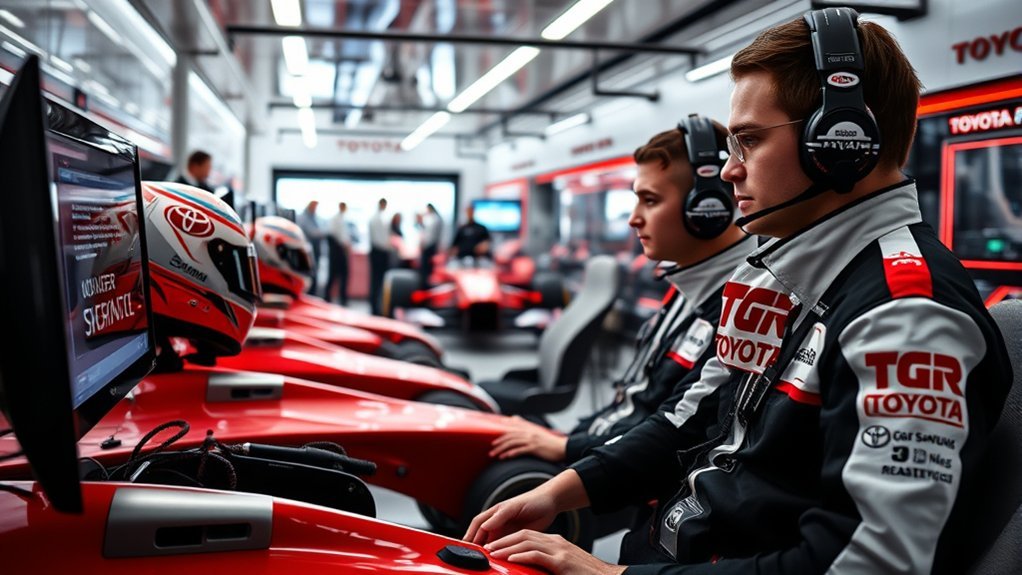
While the competitive landscape of Formula 1 demands constant innovation and talent cultivation, the TGR Haas F1 Team is taking decisive steps to guarantee its future success through a structured driver development program set to launch in 2026.
This initiative focuses on merit-based selection, ensuring that the brightest talent rises quickly in a challenging environment.
Key elements of this program include:
- TPC Program: A 14-day testing initiative in 2025 that prepares drivers for the TGR Haas Driver Development pathway.
- Partnership with Toyota Gazoo Racing: Emphasizing a “People, Product, Pipeline” approach to nurture drivers, engineers, and mechanics collaboratively.
- State-of-the-art Simulator: A driver-in-loop simulator being constructed at Haas headquarters to enhance training and technical skills for future growth.
This holistic strategy positions TGR Haas to thrive in the evolving world of Formula 1, cultivating the talent necessary for enduring success.
What’s Next for Toyota in Formula 1?
What lies ahead for Toyota in Formula 1 as it begins this new chapter with the TGR Haas F1 Team? This partnership marks a significant shift, focusing on robust driver development and collaboration.
With the introduction of the TGR Haas Driver Development Program, alongside the Testing of Previous Cars (TPC) initiative, Toyota aims to identify and nurture future motorsport leaders.
A state-of-the-art driver-in-loop simulator will soon enhance training at Haas’ Banbury base, set to be operational by the 2026 season. This will bolster technical capabilities, fostering personnel growth and elevating competitive performance.
Akio Toyoda’s vision aligns with a commitment to merit-based driver selection, ensuring the best talent rises through the ranks.
As the collaboration deepens, you can expect Toyota Gazoo Racing’s influence to transform TGR Haas into a formidable competitor, revitalizing the spirit of innovation in Formula 1.
Frequently Asked Questions
What Happened to the Toyota F1 Team?
The Toyota F1 team faced management changes, financial issues, and sponsor challenges, resulting in struggles with F1 performance. However, its legacy continues through engine development and a renewed focus on racing technology in motorsport’s future.
Who Is the Sponsor of Haas in 2026?
In 2026, Toyota becomes the title sponsor of Haas, rebranding it as TGR Haas F1 Team. This partnership aims to elevate team dynamics and driver performance, reflecting evolving sponsorship trends in the competitive automotive industry.
Is Haas Becoming Toyota?
Yes, Haas is becoming TGR Haas F1 Team, embracing Toyota’s legacy. This partnership enhances Haas performance through technical innovations, driver lineup development, and strategic collaborations while maintaining Ferrari engines, aiming for market expansion within F1 regulations.
Is Toyota Becoming Haas’s New Title Sponsor for 2026?
Yes, Toyota’s becoming Haas’s new title sponsor for 2026, marking a significant shift in Formula One. This partnership enhances racing technology, strengthens team partnerships, and reflects Toyota’s renewed commitment to motorsport investments and brand evolution.
Conclusion
In the end, Toyota’s F1 journey shows that even giants can stumble. You’d think a car manufacturer with such resources would dominate, but instead, they learned valuable lessons in humility and resilience. Their strategic return with Haas reflects a newfound wisdom, focusing on nurturing talent instead of chasing immediate glory. It’s ironic, really—sometimes you have to step back to move forward. As Toyota gears up for the future, who knows? They might just surprise us all.







Leave a Reply