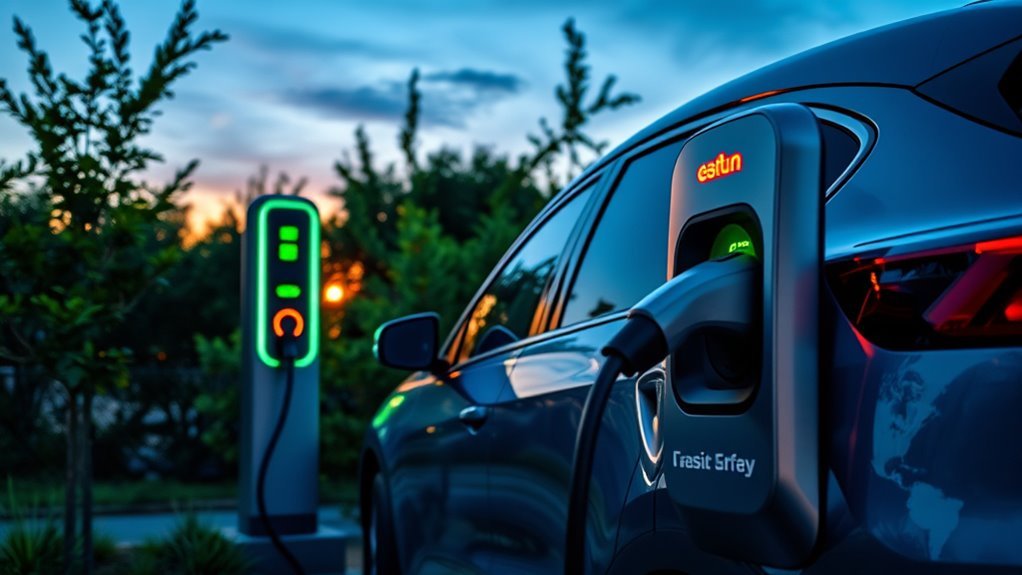
EVSE, or Electric Vehicle Supply Equipment, is essential for safely connecting your electric vehicle to charging power sources. It guarantees a safe transfer of electricity, offering various charging levels, including Level 1, Level 2, and DC Fast Charging. Each type caters to different needs, from home use to commercial applications. With smart features for energy management and safety mechanisms to prevent hazards, understanding EVSE can enhance your driving experience. Discover more about selecting the right EVSE for your needs.
The Importance of EVSE in the Electric Vehicle Ecosystem

As electric vehicles (EVs) continue to gain popularity, understanding the importance of Electric Vehicle Supply Equipment (EVSE) becomes crucial for both consumers and industry stakeholders.
EVSE is essential for managing the safe transfer of electricity from the grid to your EV, ensuring efficient and hazard-free charging. With various types, including Level 1, Level 2, and DC Fast Charging options, EVSE enhances charging accessibility, catering to diverse user needs and preferences.
The integration of smart features optimizes charging operations, enabling network connectivity and energy management, which supports the efficient use of resources. A robust EVSE infrastructure greatly reduces range anxiety, encouraging more people to adopt electric vehicles.
Enhanced safety features—like auto shut-off mechanisms—further protect users and vehicles during the charging process. Fundamentally, the benefits of EVSE are crucial in fostering a cleaner, more sustainable transportation future.
Key Components of EVSE: Understanding the Anatomy
Understanding the components of Electric Vehicle Supply Equipment (EVSE) is essential for grasping how charging systems operate effectively. The key EVSE components include connectors, cables, electronics, and firmware, all working in tandem to deliver electricity safely to your electric vehicle (EV).
The housing can vary—wall-mounted, pedestal-mounted, or box-on-cable—tailored to your installation needs.
The housing of EVSE comes in various forms, including wall-mounted, pedestal-mounted, or box-on-cable, customized for your specific installation needs.
Inside the EVSE, critical electronics like the main relay, control module, power supply, and electrical circuits manage the flow of electricity, directly affecting charging efficiency.
Firmware plays an important role by overseeing operations and ensuring safety, while also facilitating communication between the EV and the charging station.
Additionally, smart EVSE offers network connectivity features, enabling remote monitoring and control through mobile applications, enhancing user experience and operational functionality.
Understanding these components empowers you to make informed choices about your EV charging solutions.
Understanding the Charging Process: How EVSE Works
The charging process of Electric Vehicle Supply Equipment (EVSE) is a vital operation that guarantees your electric vehicle (EV) receives the necessary power to recharge its battery efficiently.
When you connect the charging cable to the EVSE, it performs essential checks, confirming proper connection, vehicle readiness, and station status before starting power delivery. Depending on the type of EVSE, it can provide either AC or DC power. DC fast chargers directly feed power to your vehicle’s battery, bypassing the onboard charger for quicker charging times.
Color-coded lights or displays on the EVSE indicate charging readiness—typically, a green light means you can safely begin charging. The session continues until your battery is full or you manually disconnect the cable.
Afterward, the EVSE guarantees safe disconnection, stopping the electricity flow. Following proper installation guidelines and charging protocols is vital to maintain safety and efficiency throughout this process.
Types of EVSE: Level 1, Level 2, and DC Fast Chargers Explained
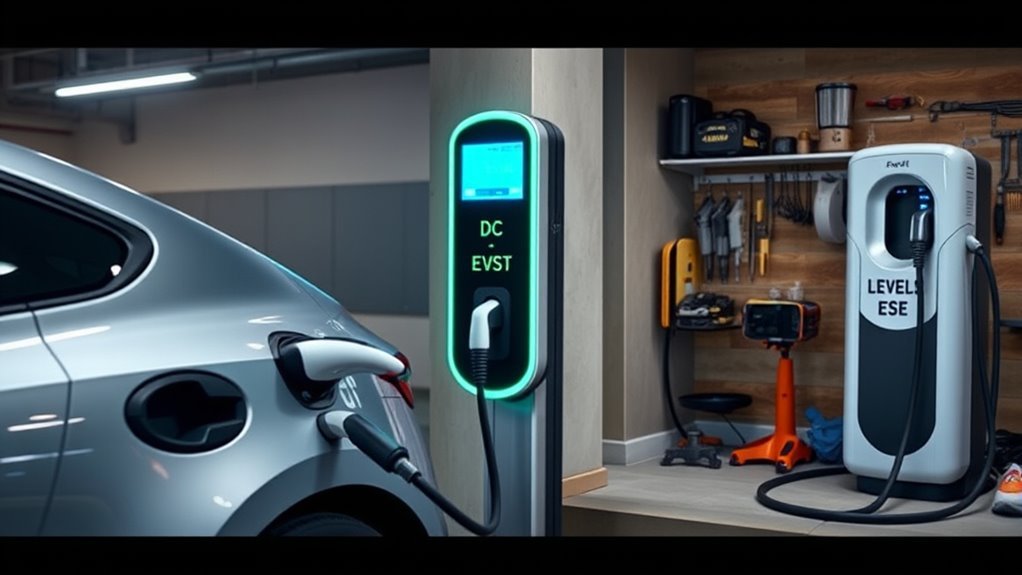
When it comes to charging your electric vehicle, understanding the different types of EVSE is essential.
Level 1 charging offers a convenient, though slower, option using a standard 120V outlet, perfect for overnight use at home.
In contrast, DC Fast Chargers provide rapid charging capabilities, allowing you to quickly boost your vehicle’s battery to 80% in under an hour, making them ideal for long trips.
Level 1 Charging Overview
Level 1 charging offers a straightforward and accessible solution for electric vehicle (EV) owners, utilizing a standard 120V household outlet. This method comes with several advantages:
- No special installation required: You can plug your EV into any regular outlet, making it perfect for home use.
- Cost-effective: Level 1 chargers are generally cheaper than their Level 2 and DC counterparts.
- Simplicity: The plug-and-play design, often using the SAE J1772 connector, is compatible with most EVs.
However, there are also limitations to take into account.
Level 1 charging is the slowest option, taking 8 to 20 hours depending on battery capacity, making it less suitable for those needing quicker charging solutions in commercial settings.
DC Fast Charging Benefits
DC Fast Charging (DCFC) revolutionizes the way you can power up your electric vehicle (EV), delivering an impressive charging speed that can take your battery from empty to 80% in under an hour.
One of the key DCFC advantages is its efficiency, utilizing off-vehicle rectifiers to bypass the onboard charger and directly feed DC power to your battery. This process greatly reduces downtime, making it ideal for busy users who need quick turnaround.
Compared to Level 1 and Level 2 chargers, which can take hours, DCFC stands out for its rapid charging capabilities.
Understanding this technology empowers you to choose the right solution for your lifestyle, ensuring you’re always ready to hit the road with confidence.
What Safety Features Should You Look for in EVSE?
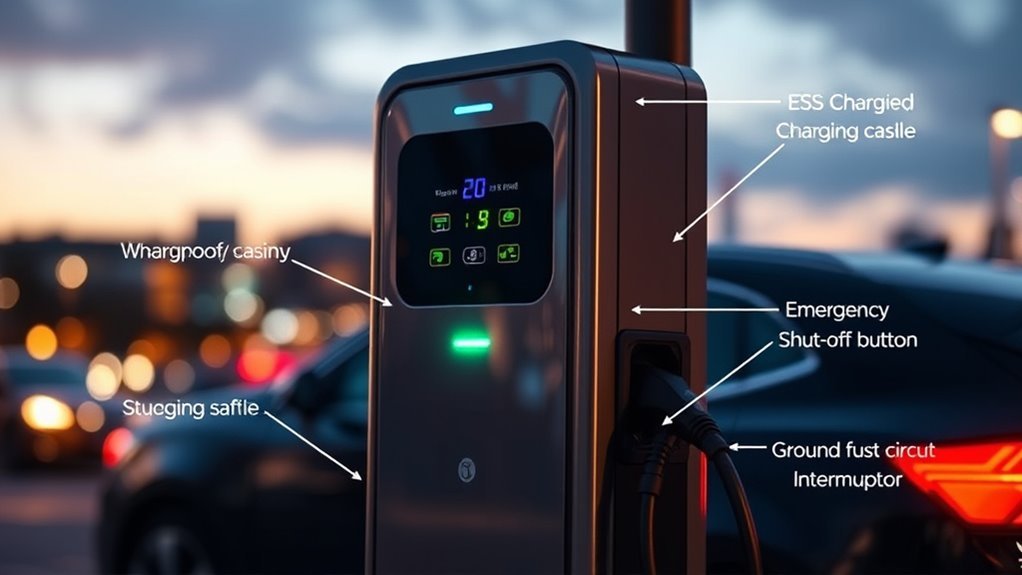
When selecting an EVSE, prioritize an auto shut-off mechanism and ground fault protection.
The auto shut-off feature guarantees safe disconnection in case of short circuits or ground faults, while ground fault protection continuously monitors irregularities in the current flow.
These safety measures are essential for protecting both your vehicle and yourself during charging sessions.
Auto Shut-Off Mechanism
An auto shut-off mechanism is an essential safety feature in Electric Vehicle Supply Equipment (EVSE) that automatically halts charging once the vehicle’s battery is fully charged or if any faults are detected.
This technology offers significant auto shut off benefits, including:
- Prevention of Overcharging: Guarantees your battery isn’t overcharged, protecting its lifespan.
- Risk Mitigation: Reduces the chances of overheating and electrical fires, enhancing your safety.
- Visual Feedback: Status indicators provide real-time updates on the charging process and safety checks.
Ground Fault Protection
Ground fault protection is a critical safety feature you should prioritize when selecting Electric Vehicle Supply Equipment (EVSE). This system detects leakage currents that may arise due to insulation failures, preventing electric shock hazards.
Many EVSE units come equipped with built-in ground fault circuit interrupters (GFCI), offering automatic power shut-off if a ground fault is detected. This GFCI functionality is essential for ensuring continuous protection throughout your charging sessions. It also provides alerts or automatic shutdowns when detecting abnormalities.
Compliance with safety standards like UL 2202 and IEC 61851 often mandates these features, enhancing safety across various installations. By choosing EVSE with integrated ground fault protection, you considerably reduce the risk of electrical hazards, ensuring a worry-free charging experience.
Why Network Connectivity Matters in Smart EVSE
As electric vehicle supply equipment (EVSE) evolves, network connectivity has become essential for enhancing the functionality and user experience of smart charging stations. Here’s why it matters:
- Remote Management: You can monitor and control your charging sessions in real-time via mobile apps, making it easy to adjust settings as needed.
- Energy Optimization: Smart EVSE optimizes charging times based on electricity rates and grid demand, helping you save on energy costs while ensuring efficient charging.
- Integration with Renewables: Many systems allow you to harness solar or wind energy for charging, promoting sustainable usage.
Moreover, network connectivity enables over-the-air software updates, ensuring your charging station stays secure and up-to-date.
It also facilitates data collection and analysis, allowing operators to enhance the efficiency and reliability of charging networks.
This connectivity empowers you as an EV owner, ultimately leading to a more liberated and efficient charging experience.
Choosing the Right EVSE: Essential Considerations
Selecting the right electric vehicle supply equipment (EVSE) is key to maximizing your charging experience and ensuring compatibility with your vehicle and lifestyle.
Start by evaluating the charging level you need. Level 1 is best for slow, overnight charging, while Level 2 offers greater charging efficiency, considerably reducing wait times.
Check that the connector types align with your vehicle, ensuring compatibility with standards like Type 1 (SAE J1772) or Tesla’s NACS. Incorporate smart connectivity features for remote monitoring and enhanced energy management.
Consider the power output, as Level 2 chargers typically deliver between 7.68 kW and 19.2 kW.
Finally, conduct a cost analysis of installation requirements—Level 2 chargers usually necessitate a dedicated 240V circuit, which can influence overall costs and complexity.
Popular EVSE Models for Home and Commercial Use
When it comes to choosing electric vehicle supply equipment (EVSE) for both home and commercial use, several popular models stand out for their efficiency and versatility.
Here are a few top choices:
- Lectron Home Level 2 NACS Tesla V-BOX Pro: Offers 240V charging at 48 Amps, ideal for Tesla owners seeking efficient home charging solutions.
- ChargePoint Home Flex: This model allows adjustable amperage settings up to 50 Amps, optimizing charging speed and accommodating various electrical setups.
- Lectron Portable Level 1 Tesla EV Charger: With smart WiFi connectivity, it provides 120V and 12 Amps of charging power, perfect for on-the-go users.
For commercial solutions, consider DC Fast Charging stations, which deliver up to 400kW, greatly reducing downtime for electric vehicles.
Selecting the right EVSE model can empower your charging experience, whether at home or in a commercial setting.
Emerging Technologies and Innovations in EVSE
With the rapid evolution of electric vehicle supply equipment (EVSE), you’ll find that emerging technologies are reshaping how you charge your electric vehicle.
Smart charging solutions leverage network connectivity, allowing you to optimize energy usage and manage charging through user-friendly mobile apps. This innovation enhances your control over the charging process, making it easier and more efficient.
Wireless technology is another exciting development, enabling charging without physical connections through inductive systems. This convenience eliminates cable hassles and streamlines your charging routine.
Advanced software management tools are also being integrated, supporting demand-response capabilities that enhance energy distribution during peak hours and help reduce your charging costs.
Additionally, new standards like the North American Charging Standard (NACS) are emerging, ensuring compatibility across various EV models.
Integrating renewable energy sources, such as solar power, into EVSE infrastructure promotes sustainable practices, further liberating your electric vehicle experience while minimizing your environmental impact.
Frequently Asked Questions
What Does the EVSE Stand For?
EVSE stands for Electric Vehicle Supply Equipment. It includes various types like home chargers and public stations, ensuring EVSE safety by managing electricity flow efficiently, which is essential for safe, reliable charging of your electric vehicle.
Can You Charge an EV Without an EVSE?
You can’t safely charge an EV without an EVSE. Skipping it poses significant safety concerns, as EV charging requires stable power and built-in protections to prevent hazards that could damage your vehicle or electrical system.
What Is the Difference Between EVSE and Charger?
The key difference between EVSE and a charger lies in their functions: EVSE types manage power delivery and safety, while the charger converts that power for your vehicle. Understanding charging standards helps you optimize your electric vehicle experience.
What Is the Function of EVSE?
EVSE components manage electricity flow, ensuring safe charging. It regulates voltage and current, verifies vehicle readiness, and incorporates EVSE safety features like automatic shut-off and ground fault monitoring, protecting both users and vehicles during charging sessions.
Conclusion
In the electrifying world of EVs, EVSE is the heartbeat that powers your journey. This essential technology not only guarantees safety but also enhances convenience and efficiency. With various types tailored to your needs and innovative features on the horizon, choosing the right EVSE can be like finding the perfect partner for your electric vehicle. Embrace the future of transportation—equip yourself with the best EVSE, and watch your driving experience transform into an effortless adventure.






Leave a Reply