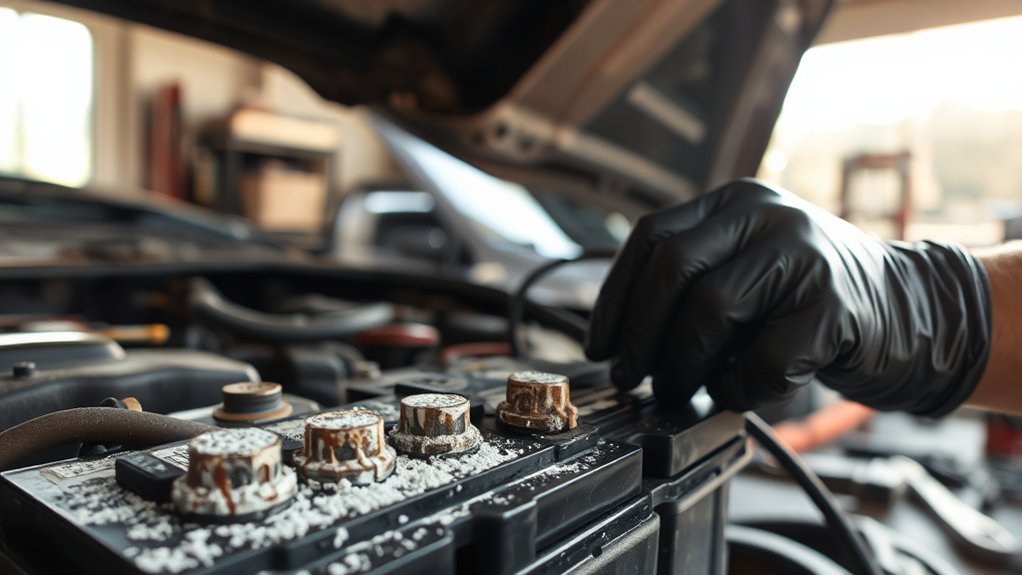
If your car battery keeps dying, there could be several causes. Common issues include leaving lights on, parasitic draws from plugged-in devices, or a faulty alternator. Extreme temperatures also impact battery health, and older batteries are more vulnerable. Signs of a failing battery include slow cranking and dim headlights. Regularly checking terminals for corrosion and ensuring all accessories are unplugged can help. Explore further to find proactive measures and solutions that can extend your battery’s lifespan.
Key Takeaways
- Lights left on, such as headlights or interior lights, can quickly drain your car battery.
- Parasitic draws from devices left plugged in can deplete battery power over time.
- A faulty alternator may not charge the battery properly, leading to frequent battery failures.
- Cold temperatures can freeze battery fluid, while high heat can evaporate it, damaging the battery.
- Regular inspection and cleaning of battery terminals can help prevent corrosion and improve battery life.
Understanding Environmental Factors Impacting Battery Life
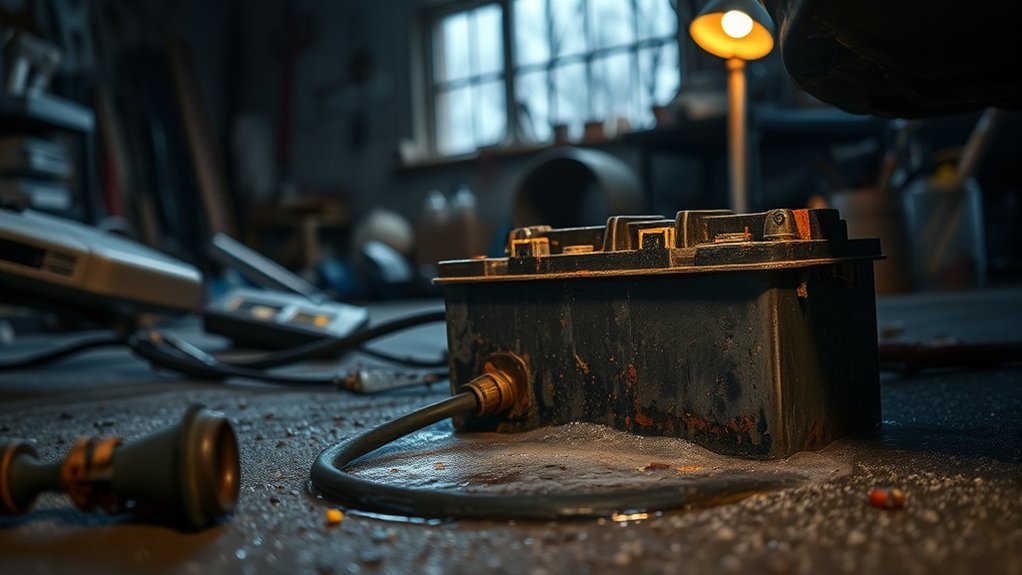
When you consider the lifespan of your car battery, environmental factors play a crucial role in its performance.
Cold temperatures can freeze battery fluid, drastically reducing the battery’s ability to generate a charge, particularly during harsh winters. Conversely, high heat can evaporate battery fluid, damaging the internal structure and accelerating deterioration.
If you leave your car parked for long periods, slow power draw from electrical components can deplete the battery over time. Additionally, fluctuating temperatures and humidity contribute to terminal corrosion, impacting your battery’s overall performance and charging capabilities.
Older batteries, typically over three to five years, are particularly vulnerable to these temperature effects, making it vital to monitor their condition regularly.
Common Reasons Your Car Battery Keeps Dying
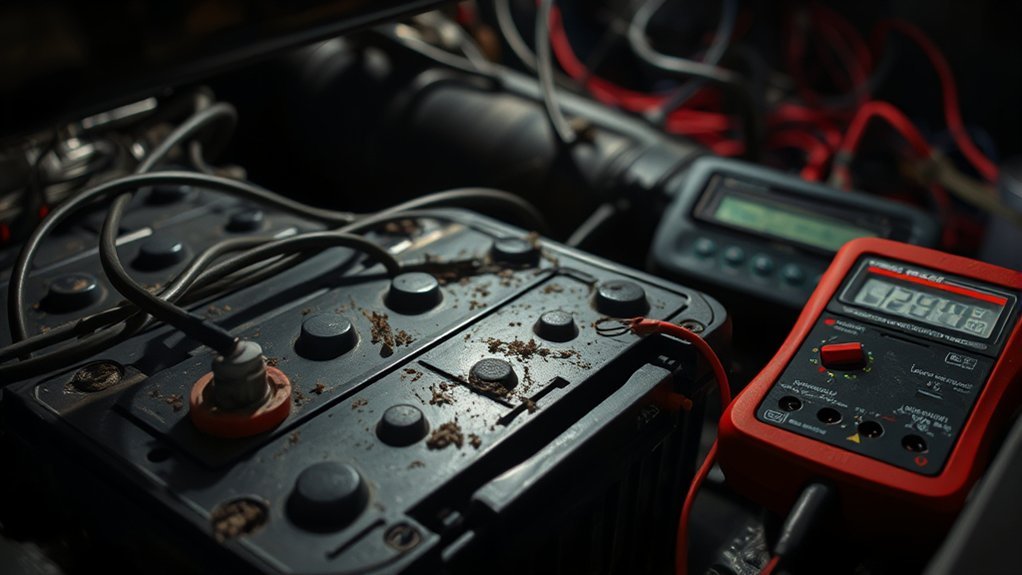
If your car battery keeps dying, it’s crucial to check for common culprits.
Leaving lights on, whether headlights or interior lights, can quickly drain your battery.
Additionally, parasitic electrical draws from devices left plugged in and issues with a faulty alternator can prevent your battery from maintaining a proper charge.
Lights Left On
Leaving your car lights on, whether they’re headlights, interior lights, or trunk lights, can quickly drain your battery, often leading to a complete discharge in just a few hours.
Dome lights and glove box lights are common culprits, particularly in older vehicles with less efficient systems. Proper headlight management is crucial; ensure your automatic lights turn off as intended, or consider installing light timers for added convenience.
Don’t overlook vanity mirror lights, as they can slowly deplete your battery when the vehicle is parked for extended periods. If you’re using your battery to power devices while the engine is off, be extra vigilant about turning off all lights to prevent premature battery failure.
Parasitic Electrical Draw
Parasitic electrical draw is a hidden menace that can silently sap your car battery’s power, leaving you stranded. This issue occurs when components like stereo systems, phone chargers, or aftermarket electronics continue to consume energy even when your vehicle is off.
Common culprits include interior lights left on and malfunctioning fuses. A faulty relay may also keep electrical systems powered, contributing to the drain.
To combat parasitic draw, regularly inspect your vehicle’s electrical components and disconnect devices when not in use. For accurate diagnosis, use a multimeter to measure the current flowing from the battery, pinpointing which components are responsible.
Staying on top of battery maintenance can help prolong your battery’s life and prevent unexpected failures.
Faulty Alternator Issues
When your car’s alternator isn’t functioning properly, it can lead to significant battery issues, including repeated discharges and eventual failure.
The alternator converts mechanical energy from the engine into electrical energy; if it malfunctions, it won’t adequately charge the battery or power the electrical systems.
Symptoms of a failing alternator often include dimming headlights, erratic electrical component behavior, and unusual engine noises.
To ensure your charging system is working correctly, perform regular alternator testing with a multimeter. You should see voltage readings between 13.7V and 14.7V while the engine is running.
If the readings fall outside this range, inspect the alternator for worn belts and connections to prevent battery drain issues and maintain optimal performance.
Key Signs Your Battery Might Be Failing
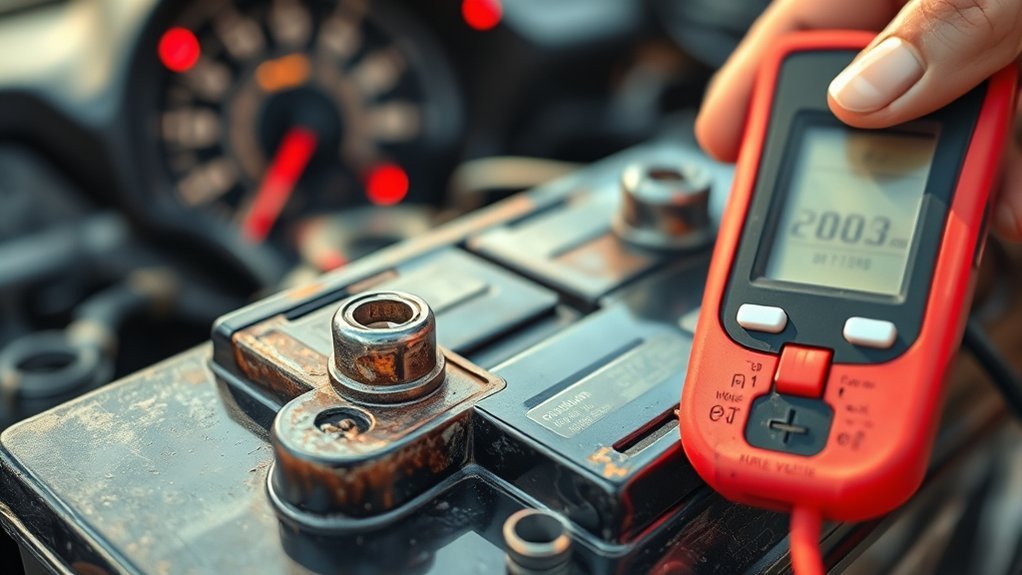
If you’re experiencing difficulty starting your engine, such as slow cranking or a clicking noise, it could be a sign your battery is failing.
Additionally, dim headlights or illuminated warning lights on your dashboard may indicate that your battery isn’t delivering sufficient power.
Paying attention to these symptoms can help you address potential issues before they lead to a complete battery failure.
Difficulty Starting Engine
As you attempt to start your engine, any signs of difficulty—like slow cranking or a clicking noise—might indicate a failing battery.
These symptoms often stem from insufficient battery voltage; a reading below 12.4 volts suggests your battery lacks the charge needed for effective engine start-up.
Additionally, if you notice dashboard warning lights flickering or remaining illuminated while trying to start, it could signal an underlying battery issue.
Frequent struggles to start your vehicle can mean your battery is nearing the end of its lifespan, typically around 3 to 5 years.
Ensure all electrical components are functioning correctly, as malfunctions can drain the battery and exacerbate starter issues, leading to ongoing starting difficulties.
Dim Headlights Observed
Noticing dim headlights can be an early warning sign that your battery is failing. When your battery voltage drops below the normal range of 12.4V to 12.6V, it struggles to power electrical components effectively. Consequently, headlights may appear dim or flicker, indicating insufficient voltage.
A weak battery may not supply enough energy to the alternator, which is crucial for maintaining bright headlights while driving. If you also experience difficulty starting your vehicle, this likely points to an underlying battery or alternator issue that needs immediate attention.
Regularly inspecting your battery and electrical system can help you identify issues before they escalate, preventing dim headlights and ensuring a reliable driving experience.
Warning Lights Illuminate Dashboard
Warning lights illuminating your dashboard can be a critical indicator that your battery might be failing. Understanding dashboard diagnostics and warning light meanings is essential for timely intervention.
Here are key signs to watch for:
- Battery warning light: Indicates charging issues with the alternator.
- Check engine light: May suggest broader electrical problems affecting the battery.
- Clicking noise: Signals insufficient battery power to start the engine.
- Dim headlights: Suggests a weak battery struggling with electrical components.
- Erratic electrical behavior: Indicates potential battery failure requiring immediate testing.
Regularly monitoring these warning lights allows you to identify battery issues early, preventing unexpected breakdowns and ensuring your vehicle runs smoothly.
Don’t ignore these signals; they could save you from bigger problems down the road.
Identifying and Fixing Common Electrical System Problems
When diagnosing battery issues, it’s vital to check the electrical system for common problems that can lead to unexpected drain.
Start with a thorough wiring inspection to identify any faults or damaged connections that might be causing a parasitic drain. Malfunctioning fuses or faulty relays can inadvertently keep components powered on, so ensure you test these parts.
If you find defective relays, relay replacement is essential to stop excessive power draw. Additionally, if you’ve installed aftermarket electronics, confirm they’re properly managed to prevent unnecessary battery consumption.
Lastly, regularly check your alternator’s performance; a malfunctioning alternator won’t recharge the battery effectively, contributing to repeated drain issues.
Addressing these areas can help maintain battery health and longevity.
Quick Fixes for Car Battery Drain Issues
To quickly address car battery drain issues, start by ensuring that all lights—both interior and exterior—are turned off before you leave the vehicle.
Here are some quick troubleshooting tips to enhance your battery maintenance:
- Regularly inspect and clean battery terminals to remove corrosion.
- Unplug any devices or accessories connected to the car.
- Take longer trips at least once a week to recharge the battery fully.
- Use a multimeter to check the battery voltage; if it’s below 12.4V, consider charging or replacing it.
- Ensure the alternator functions properly to maintain battery health.
Implementing these steps will help you effectively combat battery drain and extend the life of your vehicle’s battery.
Preventative Measures to Extend Your Battery Life
While many drivers overlook battery maintenance, implementing straightforward preventative measures can significantly extend your battery’s life. Follow these tips to enhance your battery longevity:
| Action | Frequency | Benefit |
|---|---|---|
| Unplug devices/accessories | Every time you park | Prevents parasitic draw |
| Drive your vehicle | Weekly (at least 15 min) | Fully recharges the battery |
| Check lights | Before leaving vehicle | Avoids unnecessary drain |
| Clean terminals | Monthly | Improves electrical flow |
| Use a trickle charger | During inactivity | Maintains charge in extreme temps |
When Should You Call in the Pros for Battery Problems?
How can you tell if it’s time to seek professional help for your car battery issues? Here are some signs that indicate you should contact an expert:
- Your car continues to die despite regular maintenance.
- You experience recurring difficulty starting your vehicle.
- Multiple electrical components malfunction simultaneously.
- You can’t identify persistent battery drain through visual inspection.
- Your battery is older than three to five years and fails frequently.
In these situations, professionals can perform detailed electrical diagnostics to pinpoint underlying issues.
If a battery replacement is necessary, they can provide expert advice on the best options.
Don’t hesitate to reach out when in doubt—addressing these problems early can save you time and hassle down the road.
Understanding Your Battery’s Lifespan and Maintenance Needs
Understanding your car battery’s lifespan and maintenance needs is crucial for ensuring reliable performance and avoiding unexpected failures. Typically, a car battery lasts between 3 to 5 years, but with proper battery maintenance, you can achieve lifespan extension beyond that.
Regularly inspecting and cleaning the battery terminals prevents corrosion, which maintains a solid connection and prolongs battery life. Additionally, taking longer drives allows the alternator to fully recharge the battery, minimizing the risk of drainage from short trips.
Be mindful of extreme temperatures, as they can accelerate deterioration. Finally, monitor your battery’s age and replace it proactively to prevent sudden breakdowns, ensuring your vehicle operates smoothly when you need it most.
Frequently Asked Questions
Can Extreme Temperatures Affect My Car Battery’s Performance?
Yes, temperature extremes significantly affect your car battery’s performance. Hot weather can accelerate chemical reactions, reducing battery lifespan, while cold temperatures slow them down, leading to decreased power. Regular maintenance can help mitigate these effects.
How Often Should I Replace My Car Battery?
Think of your car battery like a smartphone battery; it’s best to replace it every 3-5 years. Watch for replacement indicators, like slow starts or dim lights, signaling it’s time for a new battery.
What Are the Signs of a Failing Alternator?
You’ll notice alternator symptoms like dimming lights, strange noises, or a warning light on your dashboard. If you’re experiencing charging issues, it’s crucial to test the alternator as it may be failing.
Does a Weak Battery Affect My Car’s Fuel Efficiency?
A weak battery can feel like dragging an anchor while you’re trying to speed across a lake. It hampers battery performance, which can lead to inefficient fuel consumption, making your car guzzle gas instead of sipping it.
Can I Jump-Start a Battery That Keeps Dying?
Yes, you can jump-start a battery that keeps dying, but prioritize jump start safety. Regular battery maintenance, like checking connections and electrolyte levels, can prevent issues, ensuring your battery performs reliably after the jump-start.
Conclusion
In summary, solving your car battery’s persistent problems requires a proactive approach. By pinpointing potential pitfalls, prioritizing preventative practices, and performing periodic checks, you can significantly stretch your battery’s lifespan. Stay savvy about signs of stress and seek professional assistance when necessary. Remember, a well-maintained battery not only saves you time and trouble but also ensures smooth, secure driving. So, stay alert, act accordingly, and keep your car battery thriving!







Leave a Reply