
Tesla’s stock is dropping due to a mix of stagnant vehicle sales, heightened competition from companies like BYD, and ongoing regulatory hurdles. You’ve seen a 6% drop following disappointing earnings and a 9% decrease in vehicle deliveries, totaling 1.64 million in 2025. Investors are wary, especially with the $7,500 tax credit expiration impacting growth. As you explore further, you’ll discover more insights about Tesla’s challenges and the market’s evolving dynamics.
Key Takeaways
- Tesla’s stock dropped due to a 6% decline following disappointing earnings and a nearly 40% drop in earnings per share.
- A 9% decrease in vehicle deliveries and competition from BYD and Volkswagen has intensified pressure on Tesla’s market share.
- The expiration of the $7,500 tax credit has raised concerns about future sales growth and consumer demand for Tesla vehicles.
- Ongoing regulatory challenges, including lawsuits and potential sales suspensions, have negatively impacted investor confidence in Tesla’s operational stability.
- Investors remain cautious, prioritizing stability amid market volatility and declining sales figures, contributing to Tesla’s stock price decline.
Key Trends in Tesla’s Stock Drop
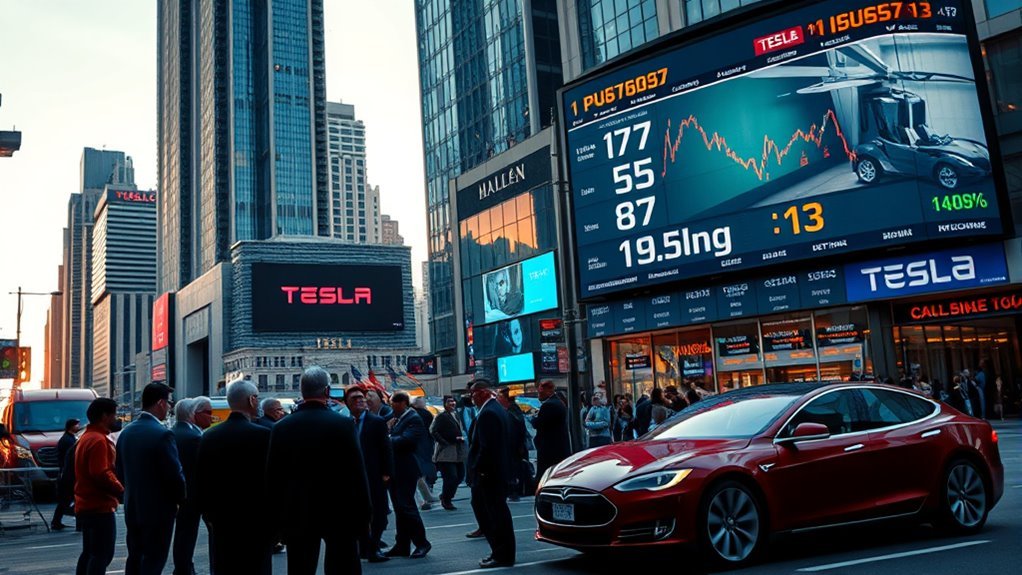
As Tesla navigates a challenging market environment, several key trends are driving its stock decline. Year-to-date, the company’s stock has fallen about 3%, with a notable 6% drop following its latest earnings report. This volatility reflects broader market dynamics and shifting investor sentiment.
A significant contributor to this decline is Tesla’s 9% decrease in vehicle deliveries, totaling 1.64 million in 2025, raising concerns about its growth trajectory. The expiration of the $7,500 tax credit and increased competition from brands like BYD, which has surpassed Tesla in sales, further exacerbate these issues.
Additionally, analysts predict a nearly 40% drop in earnings per share for the fourth quarter, which weighs heavily on investor confidence. Coupled with concerns over Elon Musk’s dual role and his political engagement, the cumulative effect of these factors continues to negatively impact Tesla’s stock performance, creating an uncertain outlook for investors.
How Elon Musk’s AI Focus Influences Investor Confidence
Elon Musk’s focus on AI chips and their role in future product innovations shapes how you view Tesla’s potential.
While this strategic direction may enhance technology, it also raises concerns about the heavy investments and risks involved.
As investor sentiment shifts, understanding these dynamics becomes key to steering the stock’s volatility.
AI Chips Development Strategy
While the development of AI chips represents a significant leap for Tesla, it is vital to understand how this focus shapes investor confidence. Elon Musk’s emphasis on AI chip advancements aligns with a vision of enhanced technological integration, which could reshape Tesla’s future. However, heavy investments required for these advancements have fostered caution among investors.
| Factor | Impact on Investor Confidence | Future Implications |
|---|---|---|
| AI Chip Advancements | High potential for growth | Competitive edge in tech |
| Investment Concerns | Increased volatility | Risk of stagnation |
| Technological Integration | Enhanced product offerings | Broader market acceptance |
| Market Trends | Reflective of overall sentiment | Influence on stock value |
As analysts note, successful AI integration is fundamental for Tesla’s competitive positioning.
Future Product Innovations
With a strong focus on artificial intelligence, Tesla is poised to revolutionize its product innovations, directly influencing investor confidence. The development of AI-driven enhancements, particularly in autonomous driving, positions Tesla to diversify its product offerings and strengthen its market competitiveness.
Investors are closely monitoring these advancements, as they could greatly impact the company’s long-term growth trajectory. However, concerns over heavy investments in AI and escalating competition may temper optimism.
While Musk’s ambitious AI initiatives present potential for substantial sales growth and elevated company valuation, the market remains cautious. Ultimately, successful integration of AI technologies could either bolster investor confidence or lead to increased scrutiny, reflecting the delicate balance between risk and reward in Tesla’s future product landscape.
Investor Sentiment Shifts
Musk’s recent focus on artificial intelligence has sparked notable shifts in investor sentiment, as many are weighing the implications of this strategic pivot.
Concerns about heavy investments in AI technology have led to caution among investors, who are now closely monitoring how these advancements will influence Tesla’s future. Following Musk’s announcements, the stock price dropped nearly 3%, illustrating the direct correlation between investor psychology and market volatility.
Analysts highlight that while AI could revolutionize Tesla’s technology, uncertainties around integration and competition dampen investor confidence.
As you assess Tesla’s trajectory, recognize that the market’s reaction reflects broader anxieties regarding the long-term viability of Musk’s AI initiatives and their potential impact on the company’s growth and profitability.
Understanding the Causes of Tesla’s Declining Sales
Tesla’s declining sales can be traced back to the expiration of the $7,500 federal EV subsidy, which greatly impacted consumer purchasing decisions.
Additionally, the rise of competitors like BYD, now the largest electric vehicle manufacturer, has intensified market pressure on Tesla.
As you analyze these factors, it’s clear that both reduced incentives and increased competition are essential to understanding the current sales downturn.
Federal EV Subsidy Expiration
As federal EV subsidies expired, many consumers faced the harsh reality of higher prices, leading to a notable impact on Tesla’s sales figures.
The removal of the $7,500 tax credit resulted in a 9% decrease in vehicle deliveries in 2025 compared to 2024. Analysts estimate that sales could’ve surged by 67% to 83% if these federal subsidies remained in place.
This shift not only marked the second consecutive year of declining sales for Tesla but also highlighted the vital role subsidies play in sustaining momentum in the EV market.
With consumers reassessing their purchasing power, Tesla’s competitive edge diminished, allowing more affordable alternatives to gain traction, ultimately reshaping the landscape of electric vehicle sales.
Increased Competition From BYD
While Tesla has long dominated the electric vehicle market, the rise of BYD has markedly reshaped the competitive landscape, contributing to Tesla’s recent sales decline. BYD’s strategy focuses on affordability and accessibility, allowing it to sell 2.26 million vehicles, surpassing Tesla’s 2025 deliveries of 418,227.
Key factors influencing Tesla’s challenges include:
- The expiration of the $7,500 federal tax credit
- The introduction of cheaper Tesla models like the stripped-down Model Y and Model 3
- Increased consumer preference for cost-effective options
- BYD’s aggressive pricing and marketing tactics
- Analysts’ concerns about whether Tesla innovations can reignite consumer interest
To recover, Tesla must adapt to these competitive pressures and enhance its offerings to win back market share.
What Competition Does Tesla Face in the EV Market?
The electric vehicle (EV) market is becoming increasingly competitive, with several key players challenging Tesla’s dominance. Emerging competitors like BYD have considerably altered market dynamics, overtaking Tesla as the largest EV maker. As you consider your investment, it is crucial to analyze the landscape:
| Competitor | 2025 Vehicle Deliveries |
|---|---|
| BYD | 2.26 million |
| Tesla | 1.64 million |
| Volkswagen | 1.00 million |
| Rivian | 0.15 million |
| NIO | 0.10 million |
Tesla’s recent vehicle delivery decline highlights the impact of affordable models from brands like BYD. With the introduction of budget-friendly options, analysts suggest that Tesla’s recovery depends on launching new models to attract consumers. This shift underscores the urgency for Tesla to innovate amidst rising competition.
What Regulatory Challenges Is Tesla Facing?

Tesla faces a complex web of regulatory challenges that could considerably impact its operations and market standing. The company must navigate these issues to guarantee regulatory compliance and uphold safety standards.
Key challenges include:
- Investigation by the National Highway Traffic Safety Administration concerning self-driving features.
- Ongoing lawsuits related to autonomous driving technology.
- Potential sales suspension in California, which threatens its market presence.
- Increased regulatory scrutiny affecting its operational strategies.
- Complications in launching the upcoming Cybercab, vital for future growth.
Addressing these regulatory hurdles is essential for Tesla. Analysts stress that failure to comply with regulations could diminish consumer safety and erode investor confidence.
Addressing regulatory hurdles is crucial for Tesla, as non-compliance risks consumer safety and investor trust.
As Tesla maneuvers through these challenges, its ability to adapt will be pivotal in maintaining its leadership in the electric vehicle market and guaranteeing sustainable growth moving forward.
Tesla Investor Reactions Amid Market Uncertainty
As concerns about market stability grow, investors are adopting a cautious stance regarding Tesla’s stock, which has fallen over 3% year-to-date.
The recent fourth-quarter earnings report revealed a nearly 40% decline in earnings per share, triggering negative sentiment despite a 12% year-over-year revenue growth.
Investor concerns are further fueled by Elon Musk’s dual focus on artificial intelligence and the anticipated SpaceX IPO, which adds layers of uncertainty to Tesla’s prospects.
Analysts highlight a combination of disappointing sales figures and ongoing regulatory challenges, prompting a wait-and-see approach among investors.
They’re evaluating Tesla’s long-term growth strategies amidst increasing competition and market volatility.
This hesitance reflects a broader trend, where investors prioritize stability and clarity over potential short-term gains, indicating a significant shift in the investment climate surrounding Tesla.
Future Outlook: Can Tesla Recover From Current Struggles?
How can Tesla navigate its current challenges and pave the way for recovery? The path to future growth hinges on strategic initiatives and product innovations.
To regain its footing in the market, Tesla must focus on several key areas:
- Successful AI Integration: Leverage advancements in AI chip technology.
- Launch of Cybercab: Revitalize the autonomous vehicle segment to boost sales.
- Affordable Models: Introduce stripped-down versions of Model Y and Model 3 to attract budget-conscious consumers.
- Diversified Revenue Streams: Expand into energy storage and robotics.
- Address Regulatory Challenges: Tackle self-driving feature regulations to restore consumer confidence.
With these strategies, Tesla can potentially achieve market recovery and re-establish itself as a leader in the EV sector.
Your awareness and support of these developments will be essential as the company attempts to transform its current trajectory.
Frequently Asked Questions
Why Are Tesla Shares Dropping?
Tesla shares are dropping due to unfavorable market trends and shifting investor sentiment. Concerns over competition, regulatory issues, and operational challenges are fueling uncertainty, leading to decreased confidence and impacting stock performance considerably.
Will Tesla Bounce Back?
Yes, Tesla can bounce back if it capitalizes on new model launches and strengthens investor sentiment. Market recovery hinges on innovation in AI and competitive pricing, potentially revitalizing sales and restoring confidence in the brand’s future.
Is Tesla Stock a Good Buy Right Now?
Tesla stock’s investment potential hinges on current market trends. While recent performance shows volatility and concerns, discerning investors might find opportunities. Assess your risk tolerance and market dynamics before making any decisions on buying.
Conclusion
In maneuvering Tesla’s current struggles, it’s clear that the road ahead resembles a steep uphill climb, much like Sisyphus and his eternal boulder. You’ve seen how competition, regulatory hurdles, and shifting investor sentiment contribute to the stock’s decline. Yet, understanding these dynamics could empower you to make informed decisions. As the electric vehicle landscape evolves, Tesla’s resilience will be tested, but with strategic adjustments, it may yet electrify the market once more.






Leave a Reply