
The Workplace Charging Scheme (WCS) helps UK organizations install electric vehicle chargepoints by providing up to 75% funding for installation costs, capped at £350 per socket. To qualify, you need dedicated off-road parking and should demonstrate an intent to adopt electric vehicles. The application involves a site survey by an OZEV-authorized installer. Staying informed about eligibility criteria and installation requirements is essential for a successful application process, which you’ll learn more about next.
What Is the Workplace Charging Scheme?
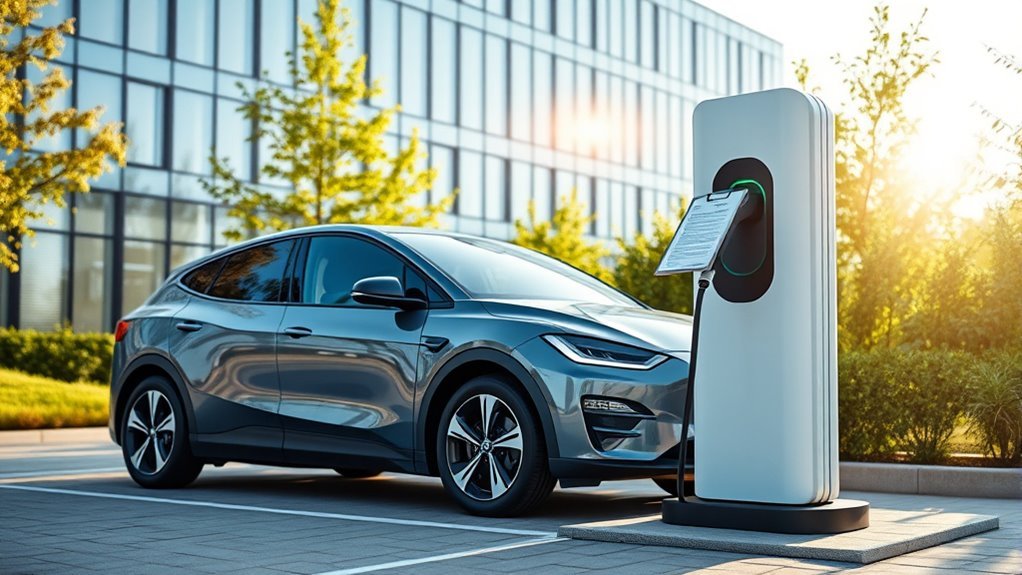
The Workplace Charging Scheme (WCS) is an essential UK government initiative designed to facilitate the installation of electric vehicle chargepoints at various workplaces.
By providing financial assistance, the WCS encourages businesses, charities, and public sector organizations to invest in electric vehicle charging infrastructure. You can receive up to 75% of installation costs, capped at £350 per chargepoint socket, making it easier to overcome charging infrastructure challenges.
The scheme allows up to 40 sockets per applicant across multiple sites, promoting the adoption of electric vehicle fleets. This initiative not only supports the shift to sustainable transportation but also enables organizations to enjoy electric vehicle benefits, such as reduced running costs and lower emissions.
Your participation can play a pivotal role in creating an accessible charging network, fostering a greener future while addressing the current limitations in charging infrastructure. Applications remain open until 31 March 2026, providing ample opportunity to engage.
Key Eligibility Criteria for the Workplace Charging Scheme
To be eligible for the Workplace Charging Scheme, your organization must meet specific criteria, including proof of parking facilities and a commitment to integrating electric vehicles.
It’s essential to work with an OZEV-authorized installer, as this guarantees that the installation adheres to required standards.
Additionally, you’ll need to provide documentation that outlines your plans for electric vehicle adoption, even if you don’t currently have any in your fleet.
Eligibility Requirements Overview
Eligibility for the Workplace Charging Scheme (WCS) hinges on several key criteria that organizations must meet.
To qualify, your organization—be it a business, charity, or public sector entity—needs dedicated off-road parking for staff or fleet vehicles.
While you don’t need to currently operate electric vehicles, you must show intent to adopt them.
If you’re a small accommodation provider, the parking usage restrictions are relaxed, allowing easier access to the scheme.
You’ll also need to provide eligibility documentation, such as proof of property ownership or landlord consent, particularly for mixed-use properties, which require registration with Companies House.
Installer Authorization Importance
Selecting an OZEV-authorized installer is a vital aspect of the Workplace Charging Scheme (WCS) that directly impacts your ability to secure grant funding for chargepoint installations.
Only installers with the necessary qualifications can guarantee compliance with the Public Chargepoint Regulations 2023, essential for both workplace and home installations. If you choose an unauthorized contractor, your grant claims could be rendered invalid, undermining your investment in electric vehicle infrastructure.
Furthermore, an authorized installer must conduct a mandatory site survey to assess your location’s suitability for installation. This process not only confirms that your chargepoints meet legal standards but also enhances the overall quality and safety of the installation, assuring a reliable charging solution for everyone involved.
Financial Assistance Available Under the Workplace Charging Scheme
If you’re looking to install electric vehicle chargepoints, the Workplace Charging Scheme (WCS) offers substantial financial assistance, covering up to 75% of installation costs, with a maximum grant of £350 per socket.
This funding breakdown presents significant financial benefits for eligible applicants, including:
- Coverage for Multiple Sites: You can apply for funding for up to 40 chargepoint sockets across various locations.
- Broad Eligibility: Businesses, charities, and public sector organizations can access this support if they meet specific criteria related to off-road parking and chargepoint usage.
- Total Cap on Funding: The total financial assistance available is capped at £315,000 over three financial years, encompassing all state grants and incentives.
How to Apply for the WCS: A Step-by-Step Guide
Applying for the Workplace Charging Scheme (WCS) involves several key steps that guarantee your organization qualifies for financial assistance.
First, conduct a site survey with an OZEV-authorized installer to confirm your eligibility, including off-road parking. Next, complete the WCS application form and submit it through the WCS portal.
After your application is processed, you’ll receive a voucher code via email within five working days. This code is essential for voucher redemption, as it allows you to deduct the grant amount from your installation invoice.
Remember, the voucher is valid for 180 days, so plan your installation accordingly. If you can’t complete it within this application timeline, you’ll need to withdraw and reapply, as vouchers are non-transferable and changes require a new submission.
Following these steps guarantees a smooth application process and maximizes your benefits under the WCS.
Next Steps After Your Application Is Approved
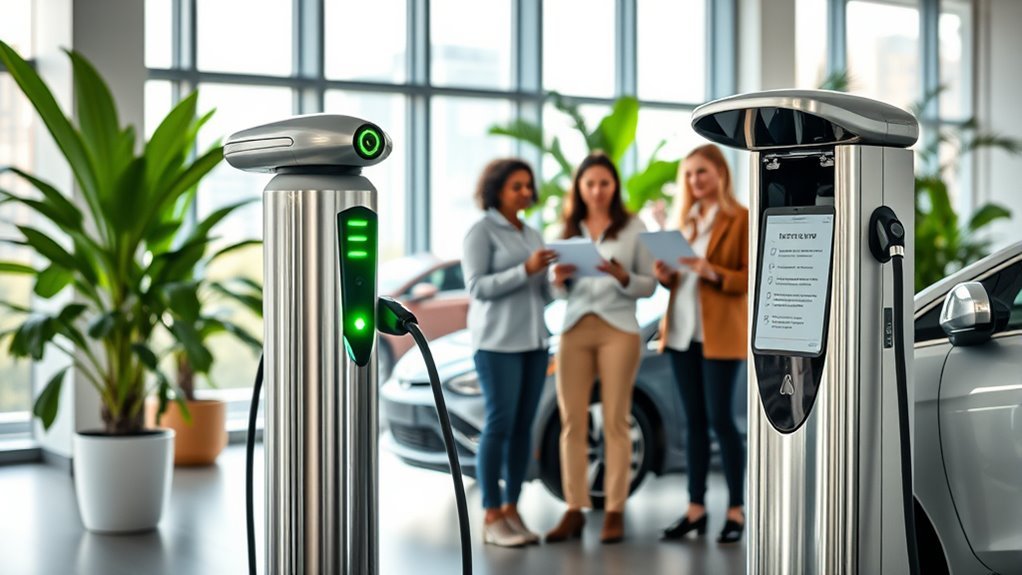
Once your application is approved, you’ll receive a voucher code via email within five working days. This code details the installation sites and the number of sockets approved.
To move forward, follow these steps:
- Select an OZEV-authorized installer: Choose one who can redeem the voucher for your installation.
- Complete installation within 180 days: Confirm the work is done within the installation timeline specified in the voucher to secure your grant.
- Submit claims via the WCS portal: After installation, upload necessary documentation, including photos of the installed chargepoints, for verification.
What to Do If Your Application Is Unsuccessful?
If your application for the Workplace Charging Scheme is unsuccessful, it’s essential to thoroughly review the application requirements and the reasons for rejection provided in the email.
You can then rectify any mistakes or gather additional information to resubmit your application.
If you still have concerns, consider contacting the support team for assistance or consulting with an OZEV-authorized installer for expert advice.
Review Application Requirements
Understanding the next steps after an unsuccessful application for the Workplace Charging Scheme (WCS) is essential for improving your chances of success upon reapplication.
Here’s what you should do:
- Review the rejection email: It outlines the reasons for denial, helping you address specific issues.
- Ensure compliance: Consult your OZEV-authorized installer to meet installation standards and eligibility assessment requirements.
- Double-check your application documentation: Confirm that you have a dedicated off-road parking space and that your organization’s intentions for using electric vehicles are clearly reflected.
Contact Support Services
What should you do after receiving an unsuccessful application for the Workplace Charging Scheme (WCS)?
First, carefully review the notification detailing the reasons for rejection. This will help you identify any missing information or documentation that may have led to the outcome.
If you have questions or need clarification, reach out to customer support at WorkplaceChargingScheme@dvla.gov.uk or call 0300 123 1343 for assistance with your application inquiries.
Once you’ve addressed the cited issues, you can reapply, ensuring all eligibility requirements are met.
Additionally, consider reviewing the guidance documents and FAQs on the WCS website to better understand the application process.
Taking these steps will enhance your chances of a successful application in the future.
What You Need to Know About Installation Costs and Requirements
Before diving into the installation process for electric vehicle chargepoints under the Workplace Charging Scheme (WCS), it’s essential to grasp the associated costs and requirements.
Here’s a concise cost breakdown to evaluate:
- Installation Coverage: WCS covers up to 75% of installation costs, capped at £350 per socket, with a maximum of 40 sockets per applicant.
- Eligible Costs: You can claim for unit costs, electrical components, installation labor, civil engineering works, and site survey costs.
- Installation Requirements: Installations must be conducted by OZEV-authorized installers, and a site survey is mandatory before applying for the grant.
Managing Changes in Your Circumstances During the Process
Changes in your circumstances can greatly impact your eligibility for the Workplace Charging Scheme (WCS), so it’s vital to stay proactive. If you experience any changes, promptly notify your authorized installer. This is important, as failure to do so may jeopardize your funding.
Changes in your circumstances can affect your WCS eligibility, so notify your installer promptly to protect your funding.
Remember, if your installation isn’t completed within the 180-day voucher validity, you’ll need to withdraw via email and reapply.
Vouchers are non-transferable, meaning if site conditions change, you must submit a new application instead of modifying the existing one. Throughout this process, maintaining compliance with eligibility criteria is essential, including securing ownership or landlord consent for the chargepoint installation.
Be prepared to provide any necessary documentation reflecting changes in circumstances to guarantee your continued eligibility for grant funding. By adhering to these requirements and promptly handling changes notification, you can navigate the WCS process more effectively.
Frequently Asked Questions
What Is the Workplace Charging Scheme?
The workplace charging scheme offers financial support for installing electric vehicle chargepoints, enhancing workplace benefits. It encourages electric vehicle adoption, helping you reduce your carbon footprint while providing convenient charging options for employees and fleets.
How to Pay for EV Charging in the UK?
“Where there’s a will, there’s a way.” To pay for EV charging in the UK, you’ll explore various charging methods like contactless payments and mobile apps, offering flexible payment options for your convenience.
How Much Does It Cost to Charge a Car at a Charging Station in the UK?
Charging costs at a station in the UK typically range from £0.20 to £0.80 per kWh, depending on the charging network and location. Station pricing varies, with rapid chargers usually costing more than slower options.
How to Work Out Charging Costs?
To work out charging costs, visualize your vehicle sipping electricity. Calculate charging efficiency by multiplying the kWh consumed by your provider’s rate. Conduct a cost analysis to uncover potential savings and optimize your driving expenses.
Conclusion
To summarize, the Workplace Charging Scheme offers an accessible way for businesses to support electric vehicle use, making it easier for employees and reducing carbon footprints. You might worry about the application process being tedious, but with clear steps outlined, it’s straightforward. Plus, the financial assistance can greatly offset installation costs. By participating, you’re not just investing in your business’s future; you’re also contributing to a greener planet, which can enhance your company’s reputation and employee satisfaction.







Leave a Reply