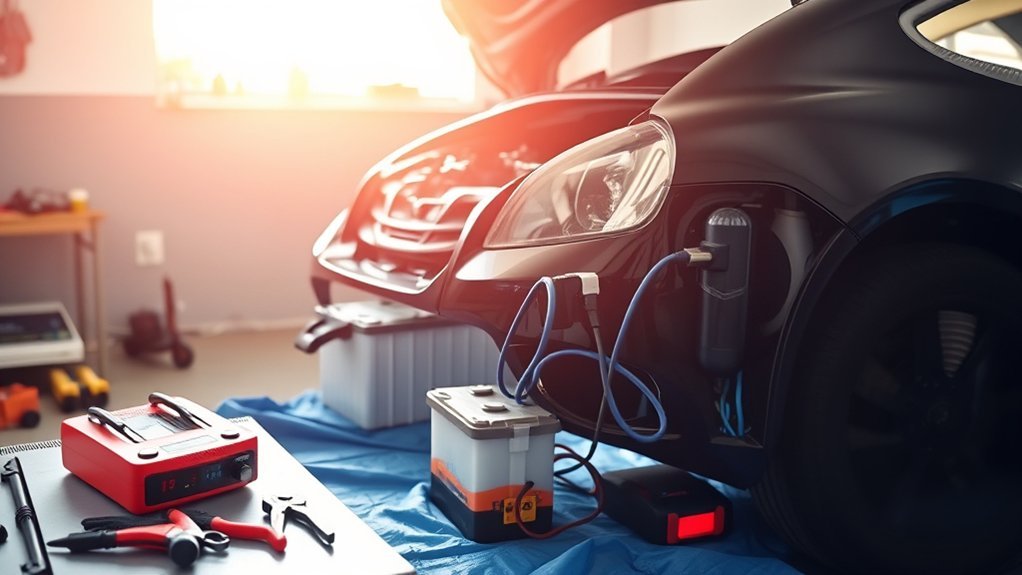
To charge your car battery at home, you’ll need a quality battery charger, protective gloves, goggles, and a clean rag. First, turn off your vehicle and engage the parking brake. Connect the red clamp to the positive terminal and the black clamp to the negative terminal. Plug in the charger, turn it on, and select the appropriate amperage. Monitor the progress and ensure a secure connection. For more tips on maintenance and battery longevity, keep exploring.
Key Takeaways
- Gather essential tools: a quality battery charger, gloves, goggles, and a clean rag for safety and effective charging.
- Ensure the vehicle is off, the parking brake is engaged, and accessories are turned off before starting the charging process.
- Connect the charger: attach the red clamp to the positive terminal and the black clamp to the negative terminal securely.
- Plug in the charger, turn it on, and select an appropriate amperage setting for the battery type and condition.
- Monitor the charging progress, which typically takes 1-6 hours, and check connections to ensure they remain secure throughout.
What Tools Do You Need to Charge Your Car Battery?

To successfully charge your car battery at home, you’ll need a few essential tools. First, invest in a quality battery charger, preferably a smart charger with adjustable amperage settings tailored to various battery types. This ensures optimal charging and prevents damage.
Protective gloves and goggles are crucial for safety while handling the battery and charger. A clean rag or paper towels will help you clean the battery terminals, ensuring a solid connection.
Additionally, work in a safe, dry, and well-ventilated area to avoid hazards from hydrogen gas emissions. Lastly, having a pocket screwdriver on hand may be useful for removing the battery cover, allowing easy access to the terminals for connection.
How to Safely Prepare for Charging Your Car Battery?
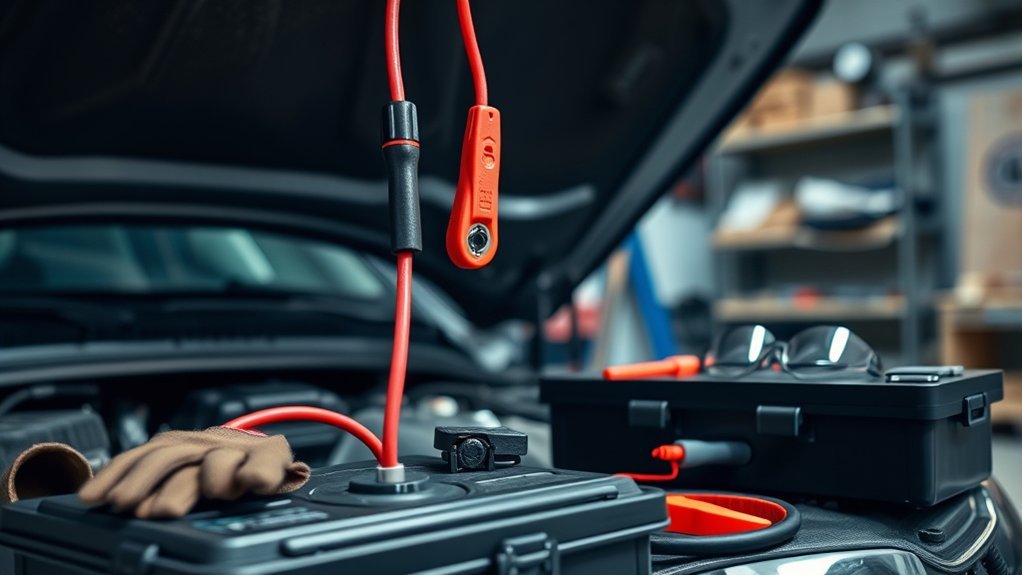
Before you start charging your car battery, it’s important to ensure everything is set up for safety and efficiency. Follow these safety precautions to prepare effectively:
| Step | Action | Purpose |
|---|---|---|
| 1. Turn off the vehicle | Ignition off, key removed | Prevent accidental starts |
| 2. Engage parking brake | Ensure vehicle is secure | Keeps the car stable |
| 3. Check lights/accessories | Turn them off | Prevents further battery drain |
| 4. Wear safety gear | Gloves and goggles | Protects against battery hazards |
| 5. Choose a safe location | Dry, well-ventilated, away from flames | Reduces risk from flammable hydrogen gas |
Step-by-Step Guide to Charging Your Car Battery
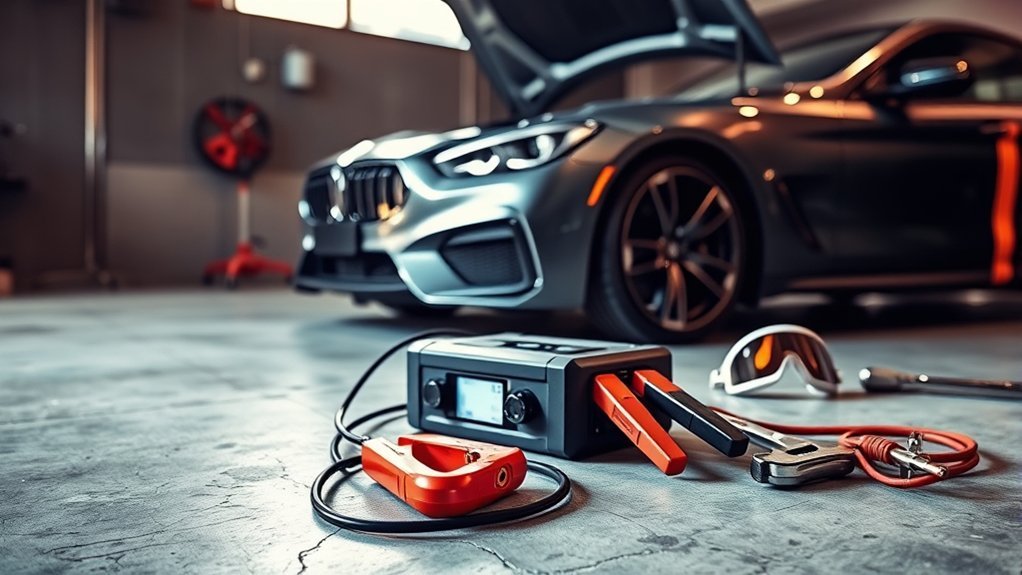
Charging your car battery at home is a straightforward process that requires attention to detail and safety.
Begin by locating your vehicle’s battery and identifying the positive (+) and negative (-) terminals. Ensure the battery charger is unplugged and off. Attach the red clamp to the positive terminal and the black clamp to the negative terminal.
Next, plug in the charger and turn it on, selecting a suitable charging amperage; higher amps will charge the battery faster. Monitor the charging progress as indicated by the charger, which may take 1-6 hours.
Once charging is complete, disconnect the charger in reverse order, starting with the black clamp. Finally, run the vehicle for 15-20 minutes to help recharge the battery, following essential charging safety precautions.
Verifying Proper Battery Connections
After connecting your battery charger, verifying proper battery connections is key to ensuring a safe and effective charging process.
Start with a battery terminal inspection; check that the red cable is securely attached to the positive (+) terminal and the black cable to the negative (-) terminal or a chassis ground. Look for any corrosion on the terminals, as this can hinder charging efficiency. Make sure the clamps are tightly secured to prevent disconnection during charging.
Be careful not to let the red and black clamps touch each other or any metal parts of the vehicle, avoiding potential short-circuiting.
Finally, visually inspect the setup to ensure all connections are correct and secure cable connections are in place for safe charging.
Essential Maintenance Tips to Extend Your Car Battery Life
To extend your car battery’s life, it’s crucial to implement consistent maintenance practices that ensure optimal performance and longevity.
Regularly check the battery terminals for corrosion; clean them with a baking soda solution to maintain good electrical contact. If your battery has fluid, keep its level topped off with distilled water to prevent damage and preserve battery health.
Avoid short trips, as they prevent full recharging; longer drives help maintain battery health. Ensure your car’s electrical system is functioning properly to avoid issues like parasitic drain that can lead to premature battery failure.
Lastly, keep the battery charged, especially in cold weather, since low temperatures can significantly reduce performance and capacity. Use effective charging techniques to optimize your battery’s life.
FAQs About Charging Your Car Battery at Home?
What questions do you have about charging your car battery at home? Here are some common FAQs to clear up any confusion:
- What battery types can I charge at home? Most lead-acid batteries and some lithium-ion batteries can be charged with appropriate chargers.
- How long does charging take? Partial charges may take 1-3 hours, while a fully dead battery can take up to 24 hours, depending on the charger’s amperage.
- What are some charging myths? One common myth is that you can overcharge a battery easily; modern chargers prevent this.
- What safety measures should I take? Always wear protective gloves and goggles, and ensure the vehicle is off before charging.
Frequently Asked Questions
Can I Charge a Frozen Car Battery?
You shouldn’t charge a frozen battery directly. Instead, use thawing techniques like warming it gently in a heated space. Once it’s thawed, you can safely charge it to restore functionality.
How Long Does It Take to Charge a Car Battery?
Charging time usually ranges from 4 to 24 hours, depending on the battery capacity and charger type. A higher capacity battery may take longer, so always check the manufacturer’s specifications for accurate charging expectations.
Is It Safe to Charge a Battery Indoors?
It isn’t entirely safe to charge a battery indoors without proper ventilation. Indoor charging can lead to gas buildup, which may be hazardous. Ensure adequate battery ventilation to minimize risks while charging in enclosed spaces.
What Should I Do if the Charger Sparks?
If your charger sparks, it’s a red flag—like a firework gone wrong. Disconnect everything immediately, check for charger malfunctions, and inspect your battery for damage. Prioritize battery safety and consult a professional if needed.
Can I Use a Solar Charger for My Car Battery?
Yes, you can use a solar charger for your car battery. Solar charger benefits include eco-friendliness and portability. Consider types like trickle chargers or portable solar panels for efficient charging in various conditions.
Conclusion
Just as a gardener nurtures a delicate seedling, charging your car battery at home requires care and attention. By using the right tools and following the proper steps, you can cultivate a thriving battery life. Remember to check connections, monitor the charging process, and implement maintenance tips like regular inspections. By doing so, you’ll ensure that your vehicle runs smoothly, just as a well-tended plant flourishes under the right conditions. Keep your battery healthy, and it’ll serve you well.







Leave a Reply