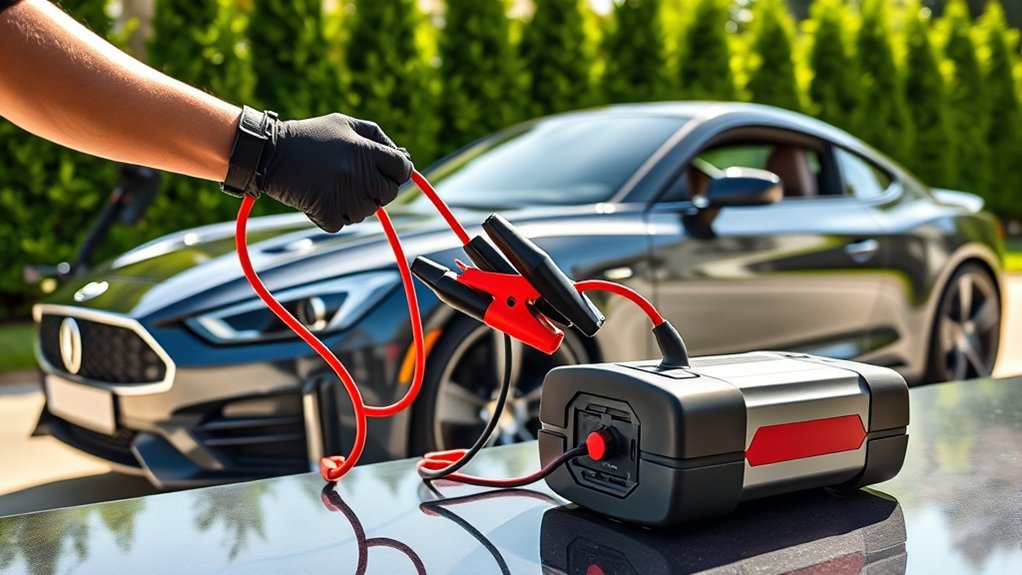
To fix a dead car battery, start by checking and securing the battery connections; tighten both positive and negative terminals. Look for corrosion, indicated by white or greenish deposits, and clean them with a baking soda solution if needed. If the battery still doesn’t work, consider jump-starting your vehicle. Pay attention to signs like slow cranking or dashboard lights. If problems persist, there might be deeper issues with the battery. There’s more you should know to troubleshoot effectively.
Key Takeaways
- Check for slow cranking or flashing dashboard lights to identify battery issues early.
- Inspect battery terminals for corrosion and ensure they are tightly secured.
- Clean corroded terminals using a baking soda mixture and apply petroleum jelly afterward.
- Verify battery cables for damage or fraying that could disrupt connectivity.
- If symptoms persist, consider replacing the battery to prevent further breakdowns.
How to Check Battery Connections for Security
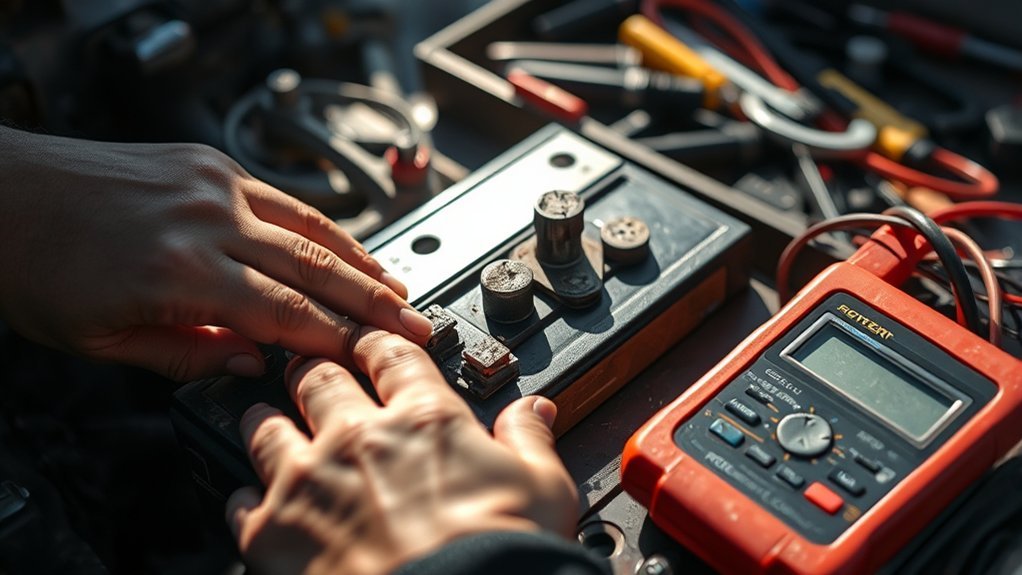
To ensure your car battery functions properly, start by checking the battery connections for security.
Visually inspect the terminals to confirm they’re free of corrosion and tightly connected to the battery posts. Use a wrench to tighten the positive (+) and negative (-) terminals, making sure they’re snug to prevent poor electrical contact.
Don’t forget to check any additional connections or modifications that could impact performance, such as aftermarket accessories affecting the electrical load.
Ensure the battery is securely mounted to prevent movement that could stress the cable connections while driving.
Regularly inspecting these connections is crucial for effective battery maintenance, allowing you to identify wear or potential issues before they lead to starting failures.
Understanding the Signs of a Dead Car Battery
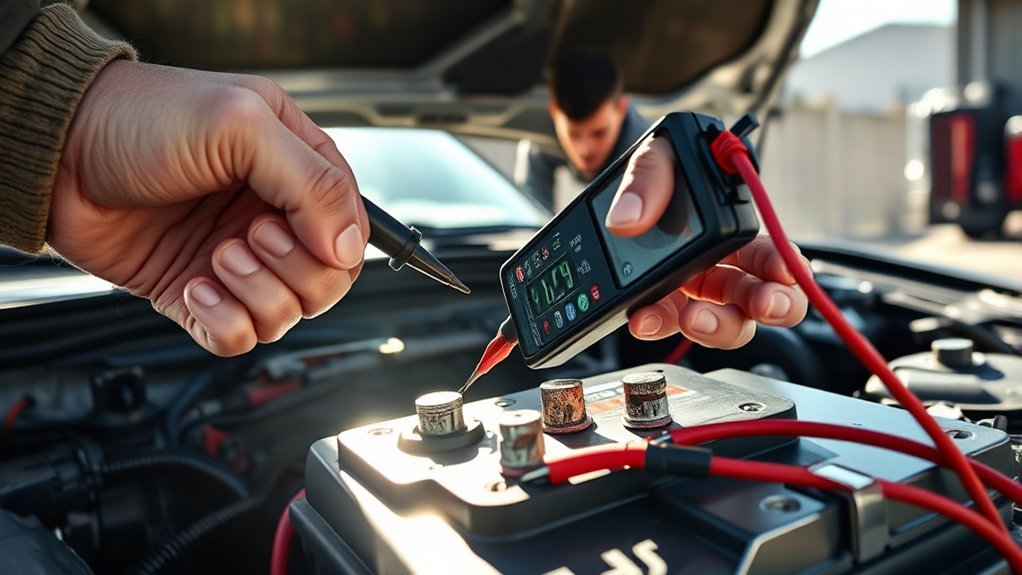
You’ll notice several key symptoms when your car battery is failing.
A slow crank during start-up or flashing dashboard lights can indicate insufficient power.
Recognizing these signs early allows you to take immediate action before a complete battery failure occurs.
Common Symptoms Explained
When experiencing a dead car battery, recognizing the signs can save you time and frustration. One common symptom is a very slow crank or noticeable delay when starting the engine, indicating low battery capacity.
Additionally, if your dashboard lights flash or fail to illuminate upon turning the ignition key, it’s a clear sign of insufficient power. You might also hear grinding noises during ignition attempts, suggesting the starter motor isn’t receiving enough voltage due to a failing battery.
Regularly inspect battery terminals for corrosion or wear, as these can impair electrical connections and affect charging systems.
Lastly, ensure the battery is securely mounted to prevent shifting, which can lead to loose connections and further starting issues.
Immediate Actions Required
Recognizing the signs of a dead car battery is just the beginning; knowing the immediate actions to take can prevent further complications.
When you suspect battery issues, follow these steps:
- Check battery terminals: Ensure connections are tight and free from corrosion, which can affect performance across various battery types.
- Assess dashboard indicators: If lights flash or dim, it confirms insufficient power; consider appropriate charging methods to restore functionality.
- Listen for unusual sounds: Grinding noises during ignition attempts may indicate voltage issues affecting the starter.
Identifying Corrosion and Wear on Battery Terminals
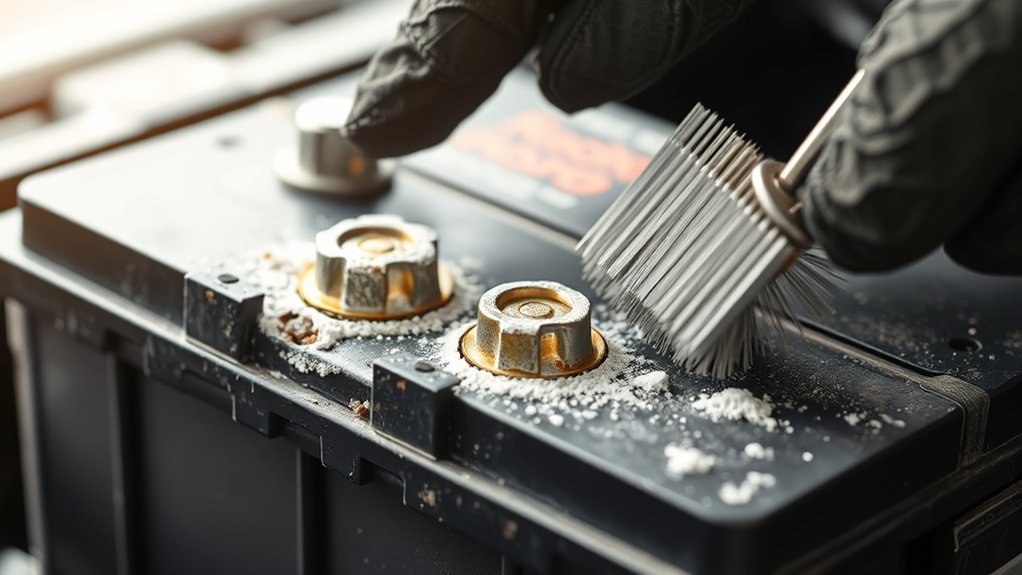
When you inspect your battery terminals, look for any white, ashy substance or a greenish-blue tint, which signals corrosion that can disrupt electrical flow.
Regular cleaning and replacing damaged connections can enhance your battery’s performance and longevity.
Addressing corrosion promptly ensures reliable starts and prevents potential battery failures.
Visual Inspection Techniques
To effectively maintain your car battery, start with a thorough visual inspection of the battery terminals, as this can reveal critical signs of corrosion and wear.
Follow these steps for a precise evaluation:
- Look for corrosion, which often appears as white, ashy substances or greenish deposits around the connections.
- Check the cables for wear, ensuring no frayed ends or exposed wires that could disrupt connectivity.
- Ensure battery terminals are tightly secured to prevent loose connections that might lead to starting issues.
Additionally, inspect for any swelling or leakage from the battery casing, which can indicate a failing battery.
Regular inspections not only aid in battery testing but also enhance corrosion prevention, ensuring optimal performance.
Cleaning Corroded Terminals
Cleaning corroded battery terminals is essential for maintaining optimal vehicle performance and preventing starting issues. Corrosion appears as a white, ashy substance or bluish-green residue, signaling a reaction between metal and battery acid. For effective terminal maintenance, disconnect the negative terminal first, followed by the positive. Use a mixture of baking soda and water to neutralize the corrosion, applying it with a brush before rinsing and drying thoroughly. Always inspect terminals for wear or damage after cleaning, as these can hinder electrical connections. Regular battery cleaning should occur at least once a year to ensure reliable performance.
| Step | Action | Purpose |
|---|---|---|
| 1. Disconnect | Remove negative terminal first | Prevents electrical shorts |
| 2. Clean | Apply baking soda mixture | Neutralizes corrosion |
| 3. Inspect | Check for wear/damage | Ensures reliable connection |
Replacing Damaged Connections
Identifying corrosion and wear on battery terminals is crucial for ensuring reliable vehicle operation, as these issues can significantly impede electrical flow.
To maintain optimal performance, follow these steps:
- Inspect battery terminals for white, powdery corrosion, which can prevent starting.
- Use a wire brush or terminal cleaner to remove corrosion buildup, ensuring a solid electrical connection.
- Check battery cables for fraying or cracking; damaged cables may require cable replacement to avoid intermittent connections.
Always ensure connections are tight and secure to prevent voltage drops.
Regular inspections for wear and corrosion are key for terminal repair, helping you avoid unexpected breakdowns and ensuring your vehicle starts when you need it.
Jump-Start Your Vehicle Safely
When your vehicle’s battery dies, jump-starting it safely is crucial to avoid damage and ensure your safety.
First, make sure both vehicles are turned off. Use proper jump starting techniques by connecting the positive cable to the positive terminal of the dead battery, then to the working battery’s positive terminal.
Next, attach the negative cable to the working battery’s negative terminal and connect the other end to a metal ground point on the dead vehicle; this minimizes the risk of sparks.
Allow the working vehicle to run for a few minutes, then attempt to start the dead vehicle.
Remove the cables in reverse order, starting with the grounded negative cable.
Finally, drive the revived vehicle for at least 30 minutes to recharge the battery fully.
Signs It’s Time to Replace Your Car Battery
After successfully jump-starting your vehicle, it’s important to pay attention to signs indicating your battery might need replacement soon.
Here are three key indicators to watch for:
- Slow Engine Crank: If your engine cranks slowly or with noticeable delay, it’s a sign your battery lifespan may be dwindling.
- Failure to Start: A car that won’t start, accompanied by flashing dashboard lights, often signals a dead or dying battery.
- Grinding Noises: Hearing unusual grinding noises during ignition attempts suggests insufficient power from the battery for effective starter motor engagement.
Regularly checking your battery connections and inspecting for corrosion can help you monitor your battery’s health, ensuring proper battery charging for optimal performance.
Tips for Maintaining Your Car Battery
To keep your car battery in top condition, regularly inspect the terminals for any signs of corrosion or wear.
Make sure to clean the terminals frequently to prevent buildup that can hinder performance.
Additionally, secure the battery connections tightly to avoid any potential electrical issues.
Regular Visual Inspections
Regular visual inspections of your car battery are crucial for maintaining its performance and longevity.
To ensure your battery operates efficiently, follow this inspection frequency:
- Check for corrosion: Inspect both positive and negative terminals for signs of corrosion, which can hinder electrical flow.
- Verify secure fastening: Ensure the battery is tightly secured to prevent movement, which could stress cables and lead to disconnections.
- Examine cables and connections: Look for any signs of damage or fraying on battery cables and inspect any additional connections for security.
Clean Terminals Frequently
Cleaning your car battery terminals frequently is essential for ensuring optimal performance and preventing starting issues.
Regularly inspect your battery terminals for corrosion, as build-up can hinder electrical flow. To clean, use a mixture of baking soda and water to neutralize corrosion, ensuring all residue is removed.
Utilize a wire brush or terminal cleaner to scrub both the terminals and cable connectors, restoring optimal contact surfaces for better conductivity.
After cleaning, apply a thin layer of petroleum jelly or dielectric grease on the terminals to prevent future corrosion and maintain a secure connection.
Don’t forget to check and tighten all connections, as loose terminals can lead to intermittent starting problems and battery drain, making terminal care crucial in battery maintenance.
Secure Battery Connections
Securing battery connections is crucial for maintaining your car’s electrical system and preventing starting issues.
To ensure connection integrity, follow these tips:
- Tighten Terminals: Always check that both the positive and negative terminals are snug. Loose connections can lead to starting trouble.
- Inspect for Corrosion: Regularly examine battery terminals for corrosion or wear. Even minor buildup can impair electrical flow and lead to a dead battery.
- Secure with a Battery Strap: Properly secure the battery in its compartment using a battery strap. This prevents movement that could stress cables and cause disconnections.
Why Does Your Battery Need to Be Secure and Installed Right?
When a battery isn’t securely installed, it can lead to various issues that compromise your vehicle’s performance and safety.
A properly secured battery prevents movement that can stress cables, ensuring consistent power delivery to your vehicle’s electrical system. Loose batteries can cause poor electrical connections, resulting in starting failures and intermittent issues that complicate diagnostics.
Moreover, proper battery installation minimizes the risk of thermal events; unsecured batteries may shift during operation, increasing the chances of short circuits or overheating.
Regularly checking battery security is vital for maintaining vehicle reliability, as vibrations and driving conditions can loosen connections over time.
Ultimately, ensuring your battery is installed correctly is crucial for preventing electrical hazards and enhancing overall vehicle safety.
Troubleshooting Electrical Issues
A properly installed battery is only the first step in ensuring your vehicle’s electrical system functions smoothly.
To troubleshoot electrical issues effectively, follow these steps:
- Inspect battery connections for tightness and corrosion; loose or corroded terminals can lead to starting failures.
- If you’re experiencing slow cranking or failure to start, ensure the new battery was installed correctly and is securely fastened to prevent cable stress.
- Examine all additional connections or modifications related to the battery, as overlooked alterations may contribute to electrical problems.
Performing regular electrical diagnostics and visual inspections for wear on the battery terminals and cables can significantly enhance your battery lifespan and prevent unexpected breakdowns.
What to Do If Your Car Still Won’t Start?
Even after replacing the battery, you might find your car still won’t start, indicating a potential issue beyond just the battery itself.
First, check the tightness and condition of the battery terminals; loose or corroded connections can impede electrical flow. Inspect the battery for signs of wear that could affect its performance and battery life.
Ensure that all additional connections are secure, as any loose cables can lead to starting failures.
Listen for unusual noises, like grinding sounds, when attempting to start the engine, which may suggest starter issues rather than battery problems.
If your dashboard lights flash during ignition attempts, this could indicate a deeper electrical issue or a malfunctioning starter that requires further diagnosis.
Preventing Future Car Battery Problems
Addressing starting issues is important, but taking proactive steps can help prevent future car battery problems. By following a regular maintenance schedule, you can significantly extend your battery lifespan.
Consider these three key practices:
- Inspect Battery Terminals: Regularly check for corrosion and ensure tight connections to maintain electrical conductivity.
- Keep It Clean: Remove debris to prevent buildup that can impair performance and cause starting issues.
- Secure the Battery: Ensure it’s fastened correctly to avoid movement, which can stress cables and lead to damage.
Additionally, if you don’t use your vehicle often, investing in a battery maintainer or trickle charger can keep your battery charged and prolong its lifespan.
Stay ahead of potential problems with these simple steps!
Frequently Asked Questions
Can Extreme Temperatures Affect My Car Battery’s Performance?
Yes, extreme temperatures can significantly impact your car battery’s performance. High heat can shorten battery lifespan, while cold can reduce its capacity. Maintaining optimal temperatures helps ensure your battery operates efficiently and lasts longer.
How Long Should a Car Battery Typically Last?
A car battery typically lasts three to five years, like a sunset fading. To extend its lifespan, follow maintenance tips: check connections, avoid extreme temperatures, and regularly test voltage. Your diligence ensures reliability on the road.
What Tools Do I Need to Maintain My Car Battery?
For effective battery maintenance, you’ll need essential tools like a multimeter to check voltage, a wrench for terminal connections, a battery cleaner for corrosion, and safety gloves and goggles to protect yourself during the process.
Is It Safe to Jump-Start a Hybrid Vehicle?
Jump-starting a hybrid vehicle can be like walking a tightrope; it’s possible, but you’ve gotta take precautions. Always follow hybrid battery safety guidelines, ensuring proper connections and avoiding damage to sensitive electronics during the process.
Can I Use a Battery Charger Instead of Jump-Starting?
Yes, you can use a battery charger instead of jump-starting. Battery chargers provide a steady charge, while jump starting techniques deliver immediate power. Ensure compatibility with your vehicle for optimal performance and safety.
Conclusion
In summary, addressing a dead car battery can feel like a daunting task, but with the right approach, you can breathe new life into your vehicle. By ensuring connections are secure, recognizing signs of wear, and following safe jump-start procedures, you can tackle most battery issues effectively. If problems persist, knowing when to call it quits on your battery will save you time and hassle. Stay proactive, and you’ll keep your car running smoothly for years to come.







Leave a Reply