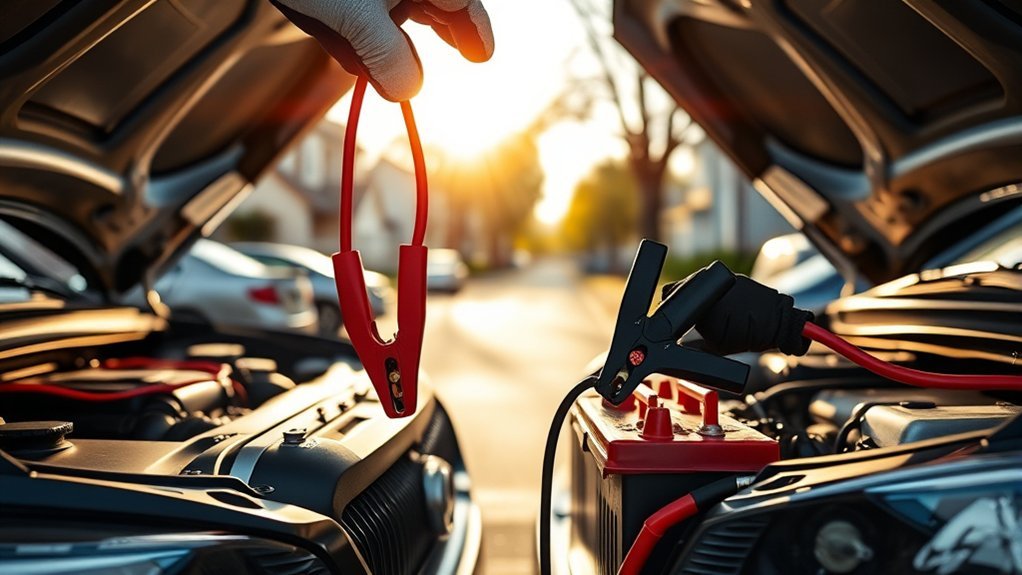
To safely jump start a car battery, first inspect both batteries for damage. Connect the red clamp to the dead battery‘s positive terminal, then the other red clamp to the working battery’s positive terminal. Attach one black clamp to the working battery’s negative terminal and the other to an unpainted metal part of the dead vehicle. Once connected securely, start the working vehicle and then the dead one. There’s more to learn about troubleshooting and battery maintenance.
Key Takeaways
- Inspect both batteries for damage, leaks, or corrosion before starting the jump-start procedure.
- Use jumper cables in good condition and ensure both batteries are 12 volts.
- Connect the red clamp to the dead battery’s positive terminal first, then to the working battery.
- Attach one black clamp to the working battery’s negative terminal and the other to an unpainted metal part of the dead vehicle.
- Start the working vehicle, then attempt to start the dead vehicle, ensuring all connections are secure.
Understanding Jump Starting: When and Why You Need It
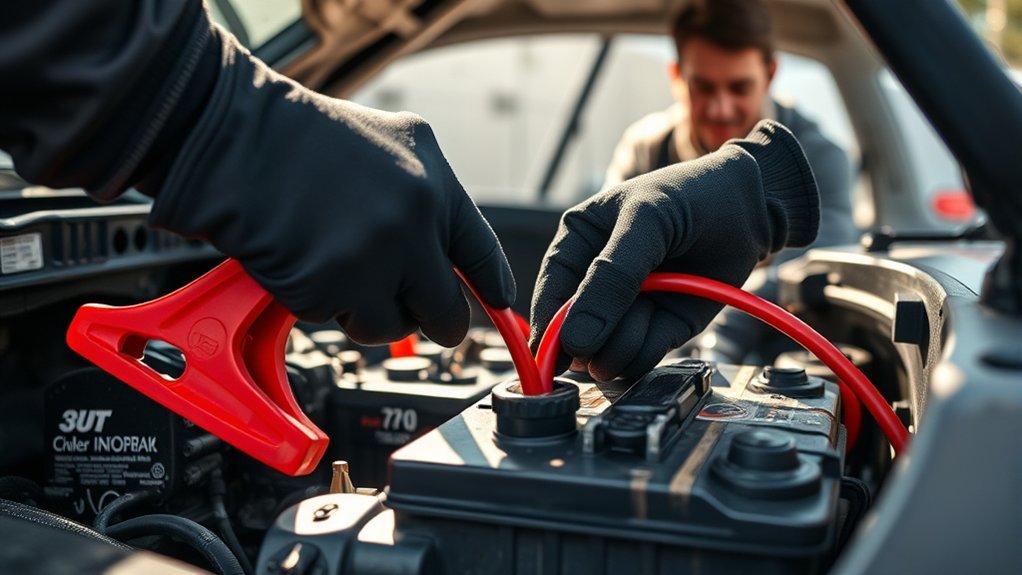
When you find yourself with a dead battery, understanding the jump-starting process becomes essential for getting back on the road.
Jump start reasons often include prolonged inactivity, extreme temperatures, or electrical system malfunctions, which can lead to insufficient battery charge. A typical car battery operates at 12 volts, so ensure that the assisting vehicle’s battery matches this voltage for a successful jump start.
Using jumper cables in good condition is vital; rust-free cables provide effective connections. Always follow the proper sequence for connecting and disconnecting to minimize risks like electrical shorts and potential damage.
Essential Safety Checks Before Jump Starting Your Car
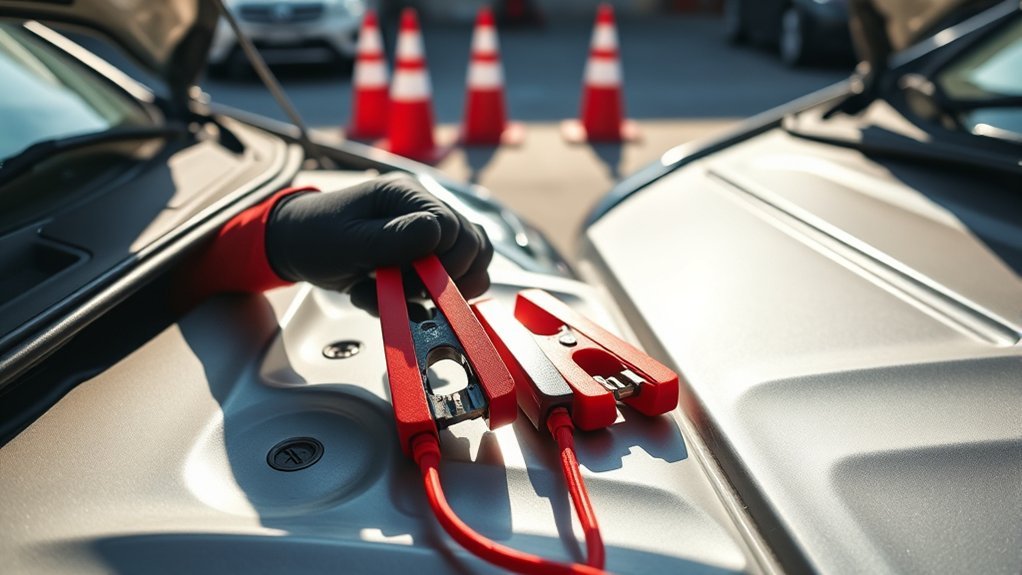
Jump-starting a car battery requires careful preparation to ensure safety and effectiveness.
Start with a thorough battery inspection. Look for leaks, damage, corrosion, or signs of freezing. If you notice any issues, don’t attempt to jump-start the battery.
Next, remove any metal objects and open flames from the area, as battery gases can ignite. Ensure both batteries match in voltage, typically 12 volts, to prevent damage during the process.
Always consult your owner’s manual for vehicle-specific jump-starting instructions.
Finally, prioritize your safety by wearing protective gloves and goggles to shield against battery acid and gas exposure.
Following these safety precautions will help you jump-start your car confidently and securely.
Step-by-Step: Connecting Jumper Cables
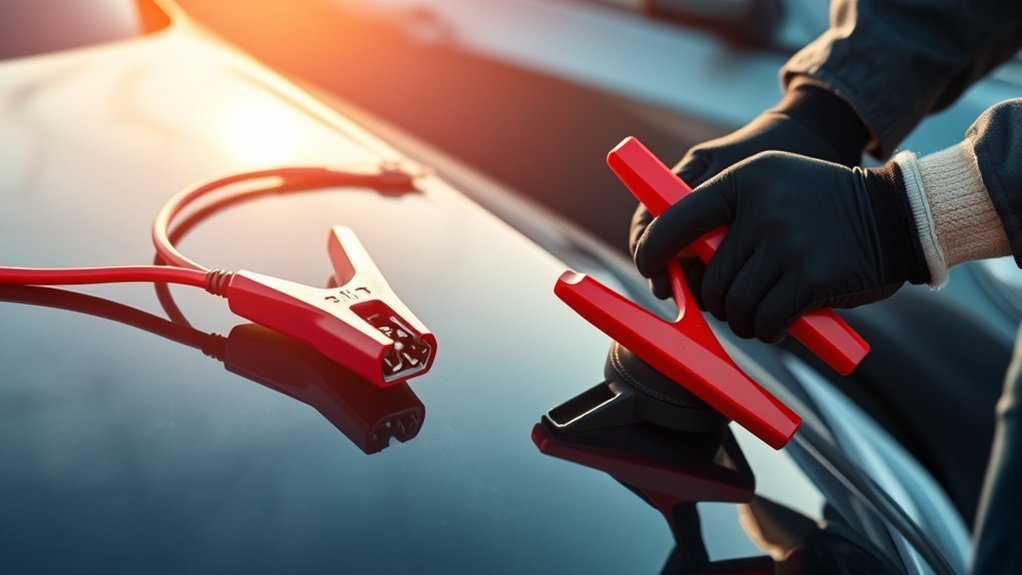
To successfully connect jumper cables, start by attaching the red clamp to the positive terminal of the dead battery, ensuring it grips firmly. Next, connect the other red clamp to the positive terminal of the working vehicle’s battery. Then, attach one black clamp to the negative terminal of the working vehicle’s battery. Finally, secure the other black clamp to an unpainted metal part of the dead vehicle, avoiding the battery to minimize the risk of sparks. Ensure that all connections are tight before attempting to start the vehicle.
| Step | Action | Note |
|---|---|---|
| 1 | Attach red clamp to dead battery’s positive | Secure connection is crucial |
| 2 | Connect red clamp to working battery’s positive | Use appropriate jumper cable types |
| 3 | Attach black clamp to working battery’s negative | Prevents battery maintenance issues |
| 4 | Connect black clamp to metal part on dead vehicle | Avoids spark risks |
Troubleshooting If Your Car Won’t Start?
Why won’t your car start after a jump? If you’re facing this issue, consider these common symptoms:
- Clicking sound: This may indicate a poor connection or a failing starter motor.
- Corroded terminals: Ensure all battery terminals are clean and securely tightened to allow proper power transfer.
- Lights operation: Check if your headlights and interior lights illuminate when the key’s in the ‘ON’ position, signaling whether the battery’s charging.
- Engine stalls: If the car starts but dies shortly after, the alternator might be malfunctioning, failing to maintain the battery charge.
If troubleshooting doesn’t resolve the issue, consult a mechanic for a thorough diagnosis of the battery, starter, or alternator systems, emphasizing proper battery maintenance.
How to Extend the Life of Your Vehicle Battery
Although many drivers may overlook battery maintenance, extending the life of your vehicle’s battery is crucial for reliable performance. To ensure optimum longevity, follow these guidelines:
| Maintenance Task | Frequency | Method |
|---|---|---|
| Clean battery terminals | Monthly | Use a mixture of baking soda and water |
| Check terminal connections | Monthly | Tighten connections as needed |
| Test battery voltage | Every 3 months | Use a multimeter |
| Limit short trips | As much as possible | Plan longer drives |
| Use a trickle charger | If unused > 2 weeks | Connect during storage |
Implementing these battery maintenance and charging techniques will help prevent premature failure, ensuring your battery remains reliable throughout its lifespan.
Frequently Asked Questions
Can I Jump Start My Car With a Portable Battery Charger?
Yes, you can jump start your car with a portable battery charger. Portable chargers offer benefits like convenience and safety. They’re effective jump start alternatives, allowing you to revive your battery without needing another vehicle.
How Long Should I Run the Good Vehicle After Jump Starting?
After jump starting, you should run the good vehicle for at least 20-30 minutes. This ensures proper battery maintenance and helps recharge the dead battery. Remember these charging tips for optimal performance and longevity.
Is It Safe to Jump Start a Hybrid or Electric Car?
Yes, it’s generally safe to jump start a hybrid or electric car, but you must understand hybrid safety protocols and electric risks. Always consult the owner’s manual to ensure proper procedures before attempting a jump start.
What Should I Do if Sparks Occur During the Process?
If sparks occur, immediately disconnect the cables, ensuring you’re clear of any potential ignition source. Prioritize spark prevention by following safety measures, like wearing gloves and goggles, and maintaining a clean, dry work area.
Can Weather Conditions Affect Jump Starting a Battery?
Yes, weather conditions can affect jump starting a battery. Extreme temperatures can reduce battery efficiency, while moisture can lead to corrosion or short circuits. Always check the environment to ensure a safer jump start process.
Conclusion
Jump starting a car battery can be straightforward if you follow the proper procedure. Remember, approximately 70 million vehicles in the U.S. have batteries that are three years or older, making them more susceptible to failure. By regularly checking your battery’s health and following safe jump starting techniques, you can avoid unexpected breakdowns. Always prioritize safety, and you’ll not only get your car running but also extend your battery’s lifespan with responsible care.







Leave a Reply