To maintain your electric car battery for optimal longevity, keep it charged between 20% and 80% and avoid deep discharges. Use standard charging rather than frequent DC fast charging to reduce strain. Keep your car in a cool place to mitigate heat damage, and drive smoothly to enhance battery life. Regularly check for software updates and stay informed on battery care practices. Implementing these strategies will help you maximize your battery’s lifespan and performance. You’ll discover more essential tips ahead.
Key Takeaways
- Keep the battery charge between 20% and 80% for optimal longevity and avoid deep discharges.
- Avoid frequent DC fast charging; standard charging is gentler on battery health.
- Maintain a stable temperature; park in shade and use temperature control systems when necessary.
- Adopt smooth driving habits and limit aggressive acceleration to reduce battery strain.
- Regularly update vehicle software and perform routine maintenance checks to enhance battery performance.
Understanding Electric Car Battery Lifespan
When you consider the lifespan of modern electric vehicle (EV) batteries, it’s important to recognize that they typically last between 12 to 15 years in moderate climates, equating to an average range of 100,000 to 200,000 miles.
Battery chemistry plays a crucial role in determining longevity, with lithium-ion variants being the most common in EVs. Lifespan factors such as temperature, charge cycles, and depth of discharge significantly influence performance.
For instance, maintaining moderate temperatures and limiting rapid charging can reduce degradation, which averages around 1.8% annually. Some batteries may even exceed 280,000 miles with optimal care and usage.
Understanding these dynamics helps you maximize your EV battery’s lifespan and efficiency, ensuring a reliable driving experience over the years.
How to Charge Your EV for Maximum Battery Life
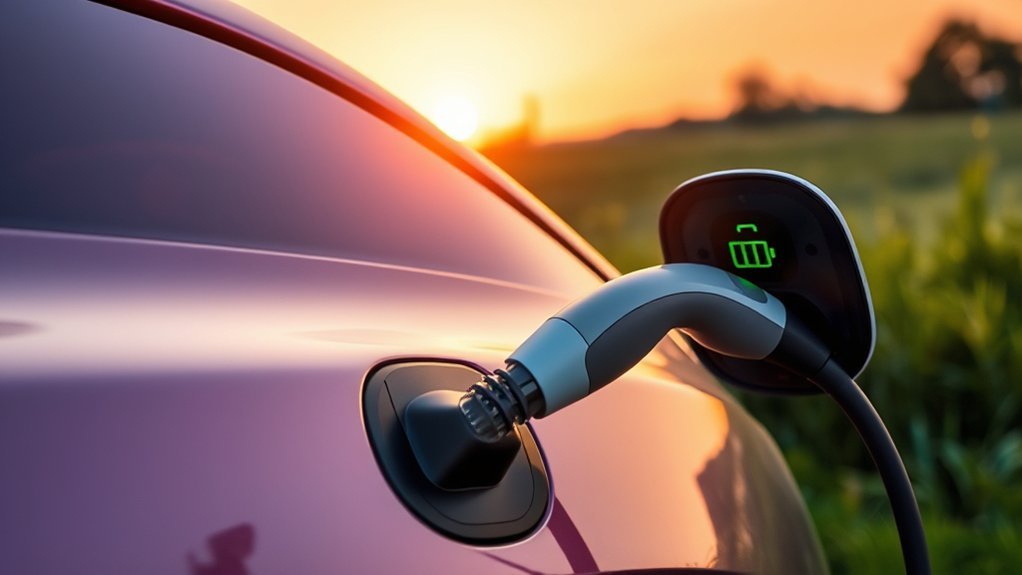
To maximize your EV’s battery life, maintain the charge level between 20% and 80%.
Frequent use of DC fast charging can strain the battery, so rely on standard charging methods whenever possible.
Optimal Charge Levels
Maintaining optimal charge levels is crucial for extending the lifespan of your electric vehicle’s battery. To achieve this, keep your battery charge between 20% and 80%. Consistently charging to 100% accelerates degradation.
Focus on a charging frequency that limits your regular sessions to about 80-90%, reserving a full charge for long trips. This approach supports effective battery management and maximizes your driving range while protecting battery health.
When storing your EV, aim for around 80% to prevent undercharging or overcharging. Additionally, avoid deep discharges, as they negatively impact battery longevity.
Avoid Fast Charging
Although fast charging can be convenient in a pinch, relying on it for everyday charging can significantly strain your electric vehicle’s battery. The rapid influx of current from fast charging accelerates degradation, negatively impacting battery health over time.
For routine needs, opt for standard charging; it can provide up to 10% more battery life compared to eight years of frequent fast charging. Reserve fast charging for essential situations to prevent unnecessary wear and tear.
Establishing a consistent charging routine with moderate speeds is crucial for preserving battery health and extending its longevity beyond typical predictions. While battery management systems can help mitigate fast charging effects, minimizing its use remains vital for optimal battery care.
What Maintenance Does Your EV Battery Need?
When it comes to keeping your electric vehicle (EV) battery in top condition, several essential maintenance practices are crucial for extending its lifespan.
First, maintain your battery charge between 20% and 80% to avoid deep discharges that accelerate degradation. Regularly update your vehicle’s software to optimize battery management.
Monitor battery temperature by parking in shaded areas or utilizing temperature control systems to prevent extreme heat exposure, which harms longevity. Conduct routine maintenance checks and battery tests as outlined in your owner’s manual.
Additionally, practice battery cleaning to remove debris that can affect performance. When it comes to battery storage, avoid frequent use of DC fast charging; opting for standard charging methods promotes healthier long-term battery performance.
How Does Temperature Affect Battery Health?
Temperature plays a critical role in battery health, with high heat accelerating degradation and reducing performance.
Parking in direct sunlight can expose your battery to damaging temperatures, while cold weather may limit range but doesn’t harm the battery itself.
To optimize battery longevity, it’s essential to manage these temperature extremes effectively.
High Heat Impact
High heat can significantly compromise the health and longevity of your electric vehicle’s battery, particularly when it’s consistently exposed to elevated temperatures.
Parking in direct sunlight or on hot pavement accelerates degradation, making heat mitigation essential. To enhance thermal management, always seek shaded areas or utilize temperature control systems.
Keeping your battery near a 50% state of charge further stabilizes it, as high heat exacerbates degradation, especially when fully charged.
Research indicates that regular exposure to high temperatures can dramatically reduce capacity over time.
Therefore, when parked in high temperatures, keeping your vehicle plugged in helps maintain optimal battery temperatures, preventing unnecessary degradation and extending battery life.
Prioritize these strategies to ensure your electric vehicle remains efficient and durable.
Cold Weather Considerations
Extremely cold conditions can pose unique challenges for electric vehicle (EV) batteries, primarily affecting range rather than causing direct damage.
In cold weather, lithium-ion batteries experience increased resistance, leading to lower battery efficiency and reduced performance until they warm up.
To mitigate these effects, park your EV in a garage or shaded area, which helps maintain optimal battery temperatures. Keeping your vehicle plugged in during chilly periods allows the battery management system to regulate temperature effectively, promoting battery health.
Additionally, avoid letting the battery drop to critically low levels, as this can lead to charging issues.
Gentle Driving Tips for Better EV Battery Life
When you drive your electric vehicle (EV) with gentle acceleration, you not only enhance your driving experience but also significantly extend the life of your battery.
By prioritizing smooth driving, you reduce power consumption and minimize wear on battery components, thereby enhancing overall efficiency.
Avoid repeated acceleration, as it can rapidly drain battery power and accelerate degradation, limiting your driving range.
Use the boost button sparingly; excessive use leads to premature battery wear and is often unnecessary for daily needs.
Adjust your acceleration techniques based on driving conditions to optimize battery management.
Monitoring Your Battery Health Effectively
Gentle driving habits contribute significantly to your EV’s battery longevity, but monitoring your battery health is equally important for optimal performance.
Regular battery monitoring is essential; many vehicles offer systems that automatically assess remaining battery life and alert you to significant capacity drops. Keep track of battery degradation over time, as most warranties cover replacements if capacity falls below approximately 70%.
Utilize diagnostic tools or available apps that track battery performance and analyze your charging habits. Be vigilant for warning signs indicating a battery check is necessary, such as diminished driving range or slower charging times.
Additionally, familiarize yourself with state regulations regarding battery health to ensure compliance and gain a clearer understanding of your battery’s status.
Avoiding Common Mistakes in EV Battery Care
To maximize the lifespan of your electric vehicle’s battery, you must avoid several common pitfalls.
One common misconception is that regularly charging to 100% is beneficial; instead, maintain a charge between 20% and 80% for optimal battery maintenance.
Minimize your use of DC fast charging, as it strains the battery; standard charging is better for long-term health.
Be mindful of extreme temperatures, as high heat accelerates degradation—park in shaded areas or use automated temperature controls.
Avoid letting your battery drop below 20% too often; shallow discharges are preferable.
Lastly, monitor your driving habits; aggressive acceleration can drain the battery quickly and contribute to premature wear.
Staying aware of these factors is crucial for your battery’s longevity.
Preventing Battery Degradation: Key Strategies
While many factors influence the longevity of your electric vehicle’s battery, implementing key strategies can significantly prevent degradation.
Start by maintaining your battery’s charge between 20% and 80%, as this minimizes exposure to harmful high charge levels and deep discharges.
Limit the use of DC fast charging; opt for standard charging to reduce strain on the battery.
Keep your battery cool by parking in shaded areas and utilizing temperature control systems, since extreme heat is a major degradation factor.
Regularly update your vehicle’s software to enhance battery management and performance.
Finally, adjust your driving habits by favoring gentle acceleration over rapid bursts, which preserves battery health and optimizes efficiency.
Prioritizing these aspects of battery care will ensure longevity.
Frequently Asked Questions
Can I Leave My Electric Car Plugged in Overnight?
Yes, you can leave your electric car plugged in overnight. Good charging etiquette and modern battery management systems prevent overcharging, ensuring your battery remains healthy while maximizing its longevity and performance during regular use.
How Does Battery Age Affect Performance?
Imagine a once-bright star slowly dimming over time. Battery age leads to degradation, causing performance decline. As it ages, your electric car’s range decreases, charging efficiency falters, and you may notice slower acceleration.
What Happens if I Overcharge My EV Battery?
If you overcharge your EV battery, it can lead to overheating, reduced lifespan, and diminished performance. Effective battery management systems mitigate these overcharging effects, but consistent overcharging may still compromise your battery’s overall health and efficiency.
Can I Use Public Chargers Regularly Without Issues?
Yes, you can use public chargers regularly without issues, as long as you follow charging etiquette. Are you familiar with the charging network available? Consistent use helps maximize your battery’s efficiency and longevity.
Are There Any Signs My Battery Needs Replacement?
Yes, signs your battery needs replacement include diminished battery health, reduced range, and increased charging cycles. If you notice significant voltage drops or the battery struggles to hold a charge, it’s time to consider replacement.
Conclusion
Just like a well-tended garden, your electric car battery thrives with care and attention. By nurturing it through proper charging, mindful driving, and regular health checks, you can cultivate a robust battery that blossoms over time. Avoiding common pitfalls and shielding it from extreme temperatures will help you reap the fruits of longevity. Remember, a little diligence today ensures your battery’s vibrant performance tomorrow, allowing your electric vehicle to journey far and wide without hesitation.





Leave a Reply