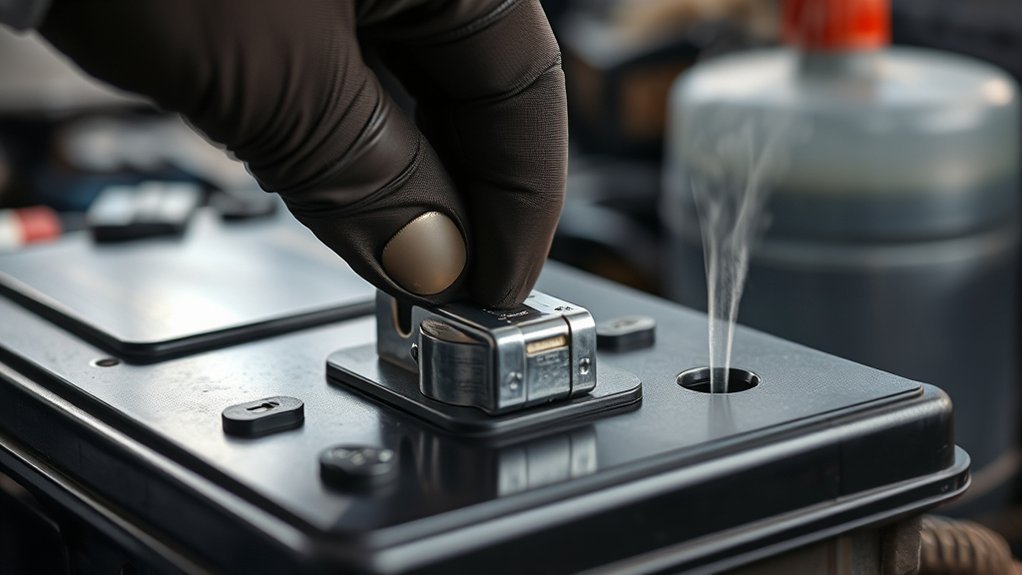
To safely disconnect your car battery, always start by turning off the engine and removing the keys. Gather essential tools, like a 10mm wrench, and wear gloves and safety glasses for protection. Disconnect the negative terminal first to prevent sparks and short circuits. Tuck the negative wire away securely after removal. Avoid common mistakes like neglecting to engage the parking brake. For more detailed instructions and tips, continue to explore further.
Key Takeaways
- Always turn off the engine and remove the keys before starting the disconnection process to prevent accidental starts.
- Engage the parking brake to ensure the vehicle remains stationary while you work on the battery.
- Use a 10mm wrench to disconnect the negative terminal first, reducing the risk of short circuits and sparks.
- Wear gloves and safety glasses to protect against battery acid, shocks, and debris during the disconnection process.
- Keep metal tools and loose items away from battery terminals to avoid accidental short circuits and potential hazards.
Why Disconnecting Your Car Battery Is Essential
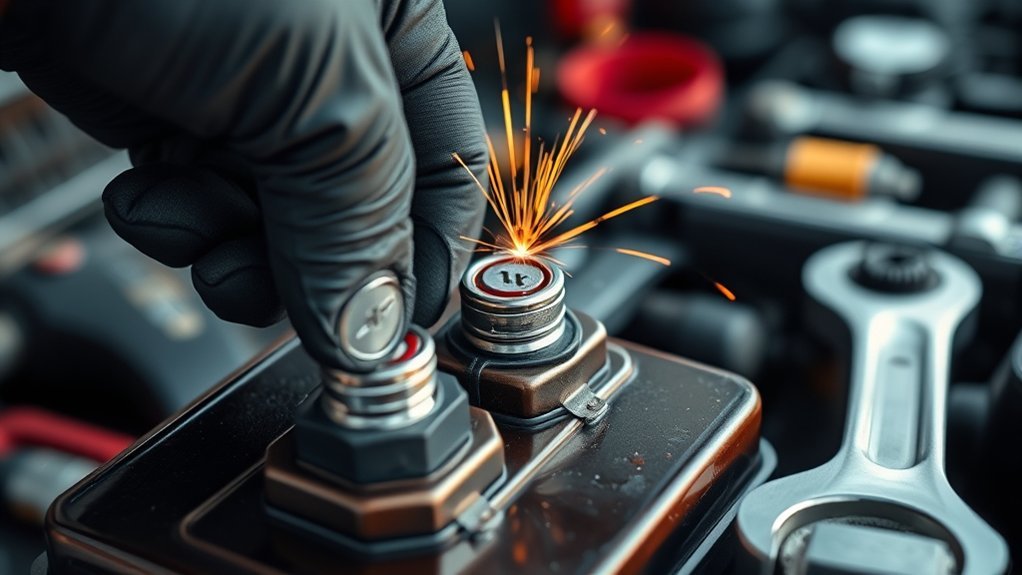
When you disconnect your car battery, you’re not just preventing electrical issues; you’re also ensuring safety during repairs and maintenance. This practice is vital for battery maintenance, especially during long-term vehicle storage, as it helps maintain charge and prevents power loss.
By disconnecting the battery, you eliminate the risk of dangerous short circuits and unexpected sparks that can result in burns or damage to sensitive components. Additionally, it enhances electrical safety when working on crucial systems like airbags, reducing the chance of accidental deployment.
Following the proper disconnection procedure effectively powers down all electrical systems, protecting both you and your vehicle. Prioritizing these steps is essential for safe and efficient automotive work.
Essential Tools for Disconnecting Your Car Battery Safely

Disconnecting your car battery safely requires a few essential tools to ensure the process goes smoothly and without incident. You’ll need a 10mm wrench or socket set to loosen the battery terminal clamps, as this is standard for most vehicles.
Safety gear recommendations include wearing gloves to protect your hands from battery acid and potential shocks, along with safety glasses to shield your eyes from debris and battery gases.
While not mandatory, using non-conductive battery terminal tools can further reduce the risk of electrical shocks.
Additionally, maintaining a clean workspace and keeping metal objects away from the battery area is crucial to prevent accidental short circuits and enhance your safety during the disconnection process.
Safety Tips to Follow Before You Start
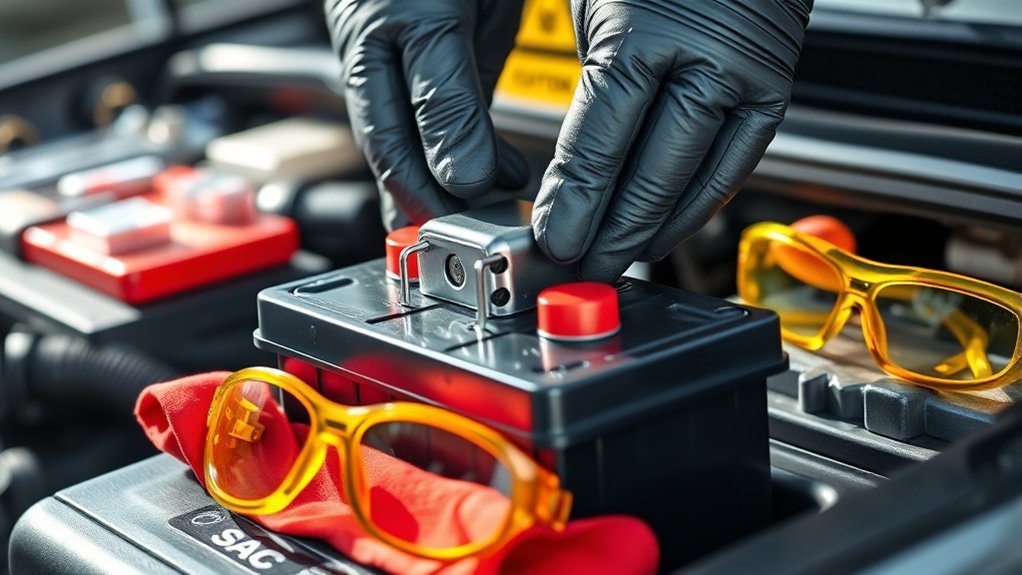
Before you start disconnecting your car battery, turn off the engine and remove the keys from the ignition to disable the electrical systems.
Engage the parking brake to prevent any unintended movement of the vehicle while you work.
Additionally, make sure to wear gloves and safety glasses for protection against potential hazards.
Turn Off Engine
To ensure safety during the battery disconnection process, always turn off the engine and remove the keys from the ignition. This engine shutdown is crucial, as it powers down all electrical systems, reducing the risk of sparks or shorts.
Here’s a quick reference table to keep in mind:
| Step | Action | Purpose |
|---|---|---|
| 1. Engine Shutdown | Turn off the engine | Prevent electrical hazards |
| 2. Remove Ignition Keys | Take keys out of the ignition | Ensure no accidental start |
| 3. Clear Metal Objects | Keep away from battery terminals | Avoid short circuits |
| 4. Wear Safety Gear | Use gloves and safety glasses | Protect against debris and battery acid |
Following these steps ensures a safer disconnection process.
Engage Parking Brake
Engaging the parking brake is a vital step in ensuring your vehicle remains stationary while you work on the battery. This action is crucial for vehicle stabilization, particularly on sloped surfaces where the risk of rolling increases.
Always verify that the parking brake is fully engaged before starting any maintenance; doing so significantly enhances your safety. The parking brake’s importance can’t be overstated; neglecting it raises the likelihood of accidents, which can lead to injury or further vehicle damage.
Utilizing the parking brake is a standard safety protocol in vehicle maintenance processes, and it’s one of those simple yet effective measures that makes a big difference in preventing mishaps.
Prioritize this step to ensure a secure working environment.
Wear Safety Gear
With the parking brake securely engaged, it’s time to prioritize your safety by wearing appropriate safety gear.
Start by donning gloves, specifically rubber or chemical-resistant glove types, to protect your hands from acid leaks and sharp edges around the battery.
Next, equip yourself with safety glasses for eye protection against debris, sparks, or any battery acid that may escape during disconnection.
Ensure your clothing is snug and free of loose items that could accidentally touch the battery terminals, preventing short circuits.
Additionally, work in a well-ventilated area to minimize inhalation risks from gases released by the battery.
Lastly, avoid wearing metal jewelry, as it can create pathways for electrical currents and heighten the risk of sparks.
Stay safe!
Step-by-Step Guide to Disconnecting Your Car Battery
Before you start, gather the necessary tools, including a 10mm wrench, to ensure a smooth process.
Follow safety precautions, such as turning off the engine and engaging the parking brake, to prevent any accidents.
Then, proceed to disconnect the terminals properly, starting with the negative terminal to maintain safety throughout the procedure.
Gather Necessary Tools
Gathering the right tools is essential for safely disconnecting your car battery. Proper battery maintenance starts with having the necessary equipment at hand to avoid terminal corrosion and ensure a smooth process. Here’s what you need:
- 10mm Wrench or Socket Set: This will help you easily remove the battery terminals without stripping them.
- Gloves: Wear gloves to protect your hands from acid and debris while handling the battery.
- Safety Glasses: Protect your eyes from any splashes or debris that may occur during disconnection.
Additionally, consider using a non-conductive tool to prevent electrical shocks. Always work in a well-ventilated area and keep metal objects away from the battery terminals to avoid accidental short circuits.
Follow Safety Precautions
To ensure a safe disconnection of your car battery, start by turning off the engine and removing the keys from the ignition. Engage the parking brake to prevent any unexpected vehicle movement. Always wear gloves and safety glasses for protection against debris and electrical hazards. Working in a well-ventilated area is crucial to avoid harmful gas accumulation from the battery.
| Step | Action | Purpose |
|---|---|---|
| Turn off the engine | Disable all electrical systems | Ensure electrical safety |
| Engage parking brake | Prevent vehicle movement | Enhance safety during maintenance |
| Wear protective gear | Shield against debris and hazards | Ensure personal safety |
Following these precautions is essential for effective battery maintenance and minimizing risks.
Disconnect Terminals Properly
Once you’ve taken the necessary safety precautions, you can begin disconnecting the battery terminals.
It’s crucial to follow the importance of proper technique to avoid accidents. Here’s how to do it:
- Locate the Negative Terminal: Identify the negative terminal, marked with a minus sign (-) or black cover.
- Use Tools for Disconnection: Grab a 10mm wrench to loosen the negative terminal clamp, ensuring you don’t remove the bolt completely.
- Disconnect in Order: Remove the negative terminal first to prevent short circuits. Then, disconnect the positive terminal, marked with a plus sign (+) or red cover.
Gently pull off the terminals and tuck the negative wire away.
Secure any loose wires using non-conductive materials for enhanced safety during the process.
Common Mistakes to Avoid When Disconnecting Your Car Battery
When disconnecting your car battery, it’s crucial to avoid common mistakes that can lead to hazards or complications.
Always disconnect the positive terminal first to prevent short circuits; metal tools can inadvertently contact the vehicle body. Failing to wear safety gear, like gloves and safety glasses, increases the risk of injury from sparks or battery acid.
Use the correct tools to avoid damaging battery terminal bolts, which can complicate future battery maintenance. Ensure disconnected terminals don’t touch each other, as this can create sparks and ignite gases.
Lastly, secure any loose cables after disconnection to prevent accidental reconnection or contact with terminals, ensuring electrical safety throughout the process.
Consequences of Not Disconnecting the Battery
Failing to disconnect the battery before performing maintenance can lead to a range of serious consequences that compromise both safety and vehicle integrity.
Here are three critical issues you might face:
- Electrical Problems: Not disconnecting the battery can result in blown fuses and damaged components, leading to costly repairs.
- Short Circuits: Working on the vehicle while the battery is connected may create dangerous short circuits, risking sparks that could ignite flammable materials.
- Power Drain: Leaving the battery connected can drain its power, especially in vehicles with complex electrical systems that continue to draw current.
To ensure proper battery maintenance and uphold electrical safety, always disconnect the battery before starting any work on your vehicle.
Tips for Safely Reconnecting Your Car Battery
To ensure a safe reconnection of your car battery, it’s essential to follow a systematic approach that minimizes risks. Start by connecting the positive battery terminal first, which reduces the chance of sparks or short circuits. After that, attach the negative terminal last to prevent electrical discharge upon contact with the vehicle frame.
Here’s a quick reference table for clarity:
| Step | Action |
|---|---|
| 1. Positive Connection | Connect the positive terminal first |
| 2. Negative Connection | Connect the negative terminal last |
| 3. Tighten and Check | Ensure connections are snug and check electrical systems |
Finally, double-check that all tools and loose items are away from the battery terminals to avoid accidental shorts.
How to Maintain Your Car Battery for Longevity
Maintaining your car battery for longevity involves a series of proactive measures that keep it in optimal condition.
Implement these battery maintenance tips to enhance performance:
- Regularly Inspect Terminals: Check for corrosion and clean terminals using a baking soda and water mixture. This ensures good electrical contact and prevents buildup that could shorten battery life.
- Maintain Charge Levels: Keep your battery charged above 50%. Deep discharges significantly reduce its lifespan, so use effective charging techniques to maintain optimal levels.
- Drive Regularly: Ensure your car is driven frequently to prevent battery drain. Prolonged inactivity can lead to sulfation, diminishing effectiveness.
Frequently Asked Questions About Car Battery Disconnection?
When should you disconnect your car battery, and what precautions should you take? You should disconnect it when performing battery maintenance or working on electrical components.
Always ensure the vehicle’s ignition is off and keys are removed. Start by disconnecting the negative terminal first to prevent short circuits and sparks.
Wear safety glasses and gloves to protect against battery acid and debris. Avoid using metal tools near the terminals to minimize the risk of sparks or shocks.
Regularly check for terminal corrosion, as this can affect battery performance. Additionally, consult your vehicle’s service manual for specific disconnection and reconnection instructions to ensure safe and effective procedures.
Frequently Asked Questions
Can I Disconnect My Battery While the Engine Is Running?
No, you shouldn’t disconnect your battery while the engine’s running. Doing so can cause battery damage and pose engine safety risks, potentially leading to electrical system failures or component damage. Always turn off the engine first.
How Long Should I Wait After Disconnecting the Battery to Reconnect?
You should wait at least 15 minutes after disconnecting the battery to reconnect. This timing helps ensure electrical system stability, reducing the risk of surges that could damage your vehicle’s components.
Will Disconnecting the Battery Reset My Car’s Computer Settings?
Yes, disconnecting the battery can reset your car’s computer memory, affecting settings like the clock and radio preferences. Regular battery maintenance helps preserve these settings, so consider minimizing disconnections whenever possible to maintain functionality.
Is It Safe to Use Metal Tools When Disconnecting the Battery?
Using metal tools isn’t inherently unsafe, but you must exercise caution. Battery corrosion can create risks, so ensure the tools are insulated and you wear gloves to prevent accidents while disconnecting the battery safely.
Can Extreme Temperatures Affect the Disconnection Process?
Yes, extreme temperatures can significantly affect battery performance and the disconnection process. Cold weather may cause connections to freeze, while excessive heat can increase corrosion, making it harder to safely disconnect the battery without issues.
Conclusion
In conclusion, safely disconnecting your car battery is crucial to prevent damage and avoid dangerous sparks. By following the outlined steps and tips, you can ensure a seamless process that feels as easy as pie. Remember, neglecting proper disconnection can lead to costly repairs or even total battery failure. Keep your battery in top condition by adhering to these guidelines, and you’ll extend its life significantly, ensuring your vehicle runs smoothly for years to come.







Leave a Reply