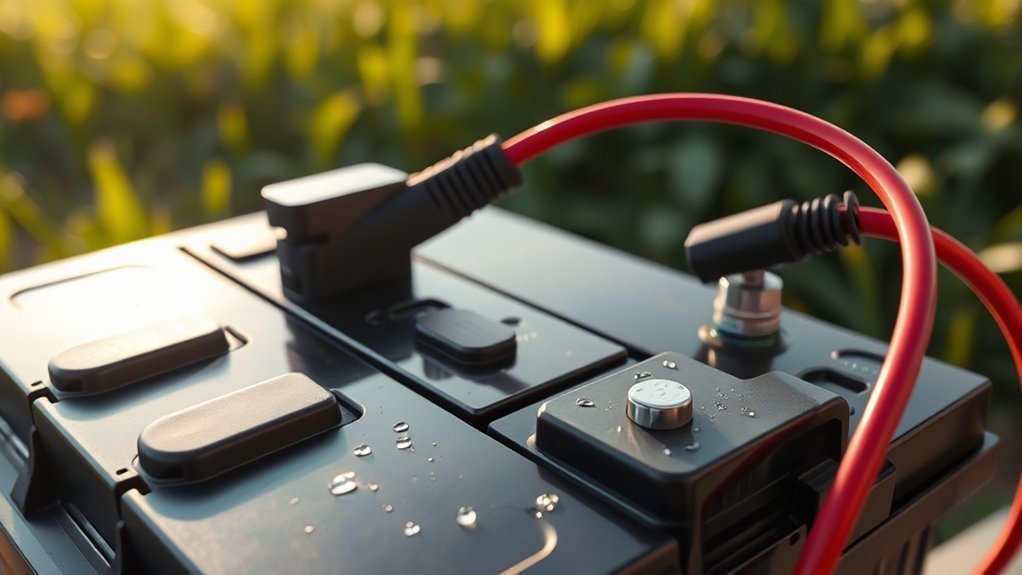
To trickle charge your car battery, first verify your charger’s voltage and amperage match the battery’s specifications. Ground the charger and connect the clips to the corresponding terminals. Ensure the charger is off before plugging it into a power outlet. Trickle charging maintains optimal voltage, extends battery life, and is perfect for vehicles that sit idle. Avoid common mistakes like neglecting grounding or plugging in while the charger is on. Discover more about the benefits and best practices.
Key Takeaways
- Verify charger specifications to ensure compatibility with your battery before starting the trickle charging process.
- Properly ground the charger by attaching the grounding clip to the vehicle’s frame to prevent electrical issues.
- Connect red and black clips securely to the positive and negative terminals, respectively, ensuring firm contact.
- Keep the charger in ‘off’ mode before plugging it in to prevent overcurrent situations during setup.
- Regularly monitor the charger and battery health, conducting monthly checks to ensure optimal performance and longevity.
How to Trickle Charge Your Battery: A Step-by-Step Guide
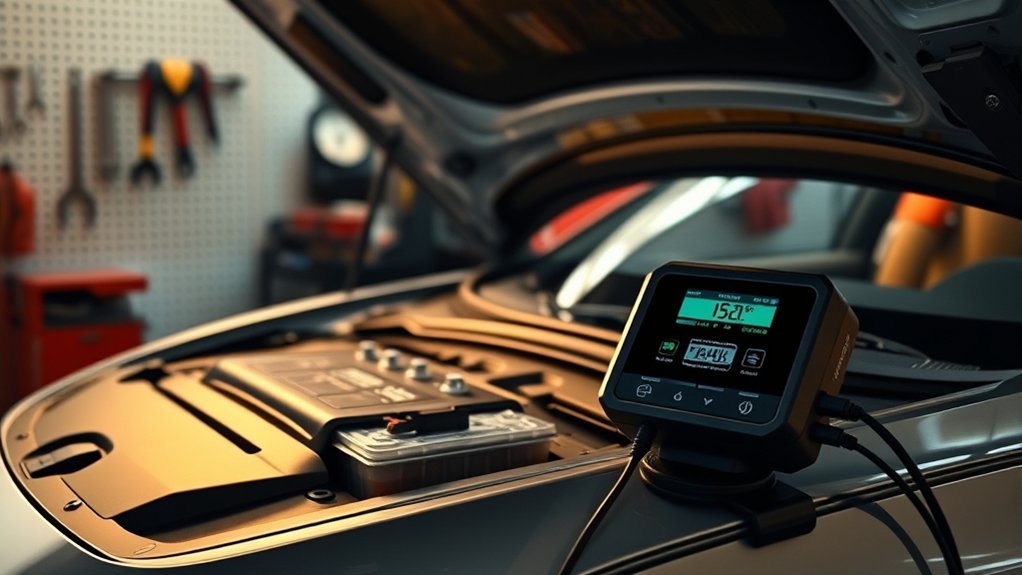
To successfully trickle charge your car battery, you’ll first need to verify the voltage and amperage specifications of your charger to ensure it’s compatible with your battery.
Next, ground the charger by securely attaching the grounding clip to the vehicle’s frame to enhance charging safety. Connect the red clip to the positive terminal and the black clip to the negative terminal, ensuring tight connections to prevent electrical issues.
After confirming the charger is in off mode, plug it into a power outlet and switch it on, checking that the set voltage and amperage display correctly.
Regularly monitor the charger and battery for signs of power flow, and conduct monthly checks to ensure your battery remains healthy during periods of inactivity.
Benefits of Trickle Charging for Your Car Battery
Trickle charging offers significant advantages for maintaining your car battery’s health and longevity. By keeping optimal voltage levels, it prevents premature degradation and offsets self-discharge rates, ensuring your battery lasts longer.
This method is especially helpful for vehicles that sit idle, keeping them ready for use without the risk of a dead battery.
Trickle chargers operate at low currents (1 to 3 amperes), minimizing stress and avoiding overheating, making them safe for long-term maintenance.
Many modern chargers feature smart technology that adjusts output and prevents overcharging, enhancing safety.
Regular use of a trickle charger can reduce instances of battery failure, ultimately saving you on maintenance costs and extending your battery’s lifespan.
Top 5 Mistakes to Avoid When Trickle Charging Your Car Battery
While trickle charging is a reliable method for maintaining battery health, it’s important to navigate the process carefully to avoid common pitfalls.
Here are the top mistakes to watch out for to ensure charging safety:
- Failing to verify the charger’s voltage and amperage settings against your battery specifications, risking overcharging.
- Neglecting proper grounding of the charger, which increases the risk of electrical issues.
- Not securing alligator clips firmly to battery terminals, leading to poor performance or sparks.
- Plugging in the charger while it’s still in ‘on’ mode, risking immediate overcurrent situations.
Frequently Asked Questions About Trickle Charging?
What do you need to know about trickle charging your car battery?
First, trickle chargers come in various types, including manual and automatic models. Automatic chargers are particularly beneficial since they feature a shut-off mechanism that prevents overcharging.
For effective battery maintenance, always ensure your charger is grounded before use, and connect the clips correctly—red to positive and black to negative. This method is most effective for lead-acid and sealed lead-acid batteries, as it counters self-discharge and preserves battery health.
Regularly using a trickle charger can help you avoid dead batteries, ensuring your vehicle is ready when you need it. By following these battery maintenance tips, you’ll prolong your battery’s lifespan efficiently.
Basics of Trickle Charging
Understanding the basics of trickle charging is essential for maintaining your car battery’s health, especially during periods of inactivity.
Trickle charging involves supplying a low, continuous current—typically between 1 to 3 amperes—matching your battery’s self-discharge rate. Here are some key points to consider:
- Trickle charger types include standard, smart, and solar variants.
- It’s ideal for lead-acid and sealed lead-acid batteries that can endure long-term low-current charging.
- The charger automatically shifts to float mode upon reaching full charge, preventing overheating.
- Regular trickle charging can significantly enhance your battery’s lifespan.
Frequently Asked Questions
Can I Use a Trickle Charger for All Battery Types?
You can’t use a trickle charger for all battery types. Battery compatibility varies; check your charger types. Lead-acid batteries work well, but lithium and AGM batteries may require specific chargers for optimal performance and safety.
How Do I Know if My Battery Is Fully Charged?
You’ll know your battery’s fully charged when the voltage reaches about 12.6 volts. Check the charging indicators; if they show green or a solid light, your battery’s as charged as a supernova!
Is It Safe to Leave a Trickle Charger Connected Indefinitely?
It isn’t safe to leave a trickle charger connected indefinitely. While it aids battery maintenance, prolonged connection can overcharge, leading to damage. For optimal trickle charger safety, disconnect after the battery reaches full charge.
Will Trickle Charging Fix a Dead Battery?
Trickle charging can aid in battery recovery, but it won’t fully restore a completely dead battery. If the battery’s capacity is severely diminished, replacement may be necessary for reliable performance and longevity.
What Is the Ideal Charging Time for a Trickle Charger?
Think of charging duration like a gentle rain nourishing a plant; ideally, set your trickle charger for 8 to 12 hours. This optimal setting ensures your battery receives a thorough, gradual charge without overloading.
Conclusion
So, there you have it—trickle charging isn’t just for those who enjoy watching paint dry. It’s a savvy way to keep your battery happy without playing the “guess when it’s dead” game. Just remember, avoid the classic blunders, and you’ll be golden. Your car will thank you, and you won’t have to worry about your battery pulling a disappearing act. Go ahead, embrace the slow charge—it’s the tortoise in this race, and we all know how that ends!







Leave a Reply