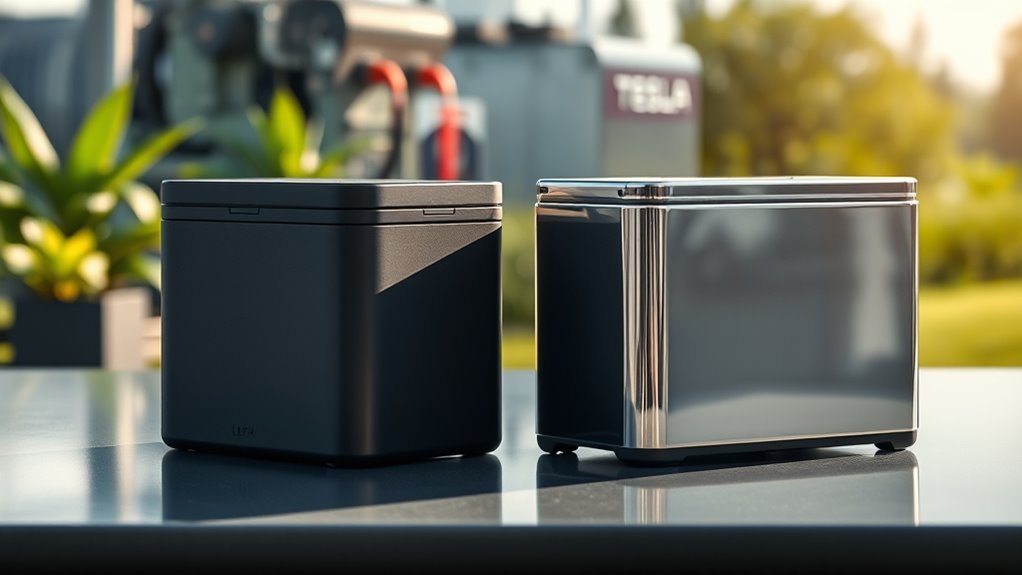
When comparing Tesla’s LFP and NCA batteries, it depends on your priorities. LFP offers cost-effective longevity with up to 5,000 charge cycles and lower fire risks, making it ideal for durability-focused users. In contrast, NCA excels in performance, providing quicker acceleration and better cold-weather efficiency but at a higher cost and shorter lifespan. Your choice will hinge on whether you value long-term use or immediate driving dynamics. Explore the nuances of each option further for a clearer decision.
Key Takeaways
- LFP batteries offer up to 5,000 charge cycles, significantly outlasting NCA batteries, which only last 1,000 to 1,500 cycles.
- NCA batteries provide superior acceleration and responsiveness, while LFP batteries excel in longevity and cost-effectiveness.
- LFP batteries are safer with a lower risk of thermal runaway, making them ideal for high-use scenarios compared to NCA batteries.
- Performance of LFP batteries declines in colder temperatures, leading to potential range loss, unlike NCA batteries which maintain efficiency in cold conditions.
- While LFP batteries are more affordable and environmentally friendly, NCA batteries are preferred for applications requiring faster charging and better cold weather performance.
Advantages of Tesla’s LFP Batteries

While evaluating battery options for electric vehicles, Tesla’s LFP (lithium iron phosphate) batteries stand out due to their cost-effectiveness and impressive longevity. With production costs around $98.50 per kWh, LFP batteries provide an affordable solution for consumers seeking energy-efficient alternatives. Their longer cycle life of up to 5,000 charge cycles means you can utilize them extensively without significant degradation, enhancing overall vehicle performance.
Moreover, LFP batteries exhibit superior thermal stability, minimizing risks associated with thermal runaway, and allowing for safe operation even in colder climates. This reliability contributes positively to their environmental impact, as longer-lasting batteries reduce waste and resource consumption over time.
Tesla’s recommendation to charge LFP batteries to 100% further emphasizes their durability, contrasting with the more cautious approach needed for NCA batteries. In sum, LFP batteries offer compelling advantages for those prioritizing efficiency and sustainability in their electric vehicle choices.
Key Differences Between Tesla’s LFP and NCA Batteries
When comparing Tesla’s LFP and NCA batteries, several key differences emerge that can greatly impact your choice of electric vehicle.
LFP batteries boast significant advantages, including a lifespan of up to 5000 charge cycles, while NCA batteries typically last only 1000 to 1500 cycles.
However, LFP’s lower energy density results in about 30% less energy storage, potentially reducing driving range.
On the performance front, NCA batteries excel with faster acceleration and better cold weather capabilities, making them appealing for performance-driven users.
Safety is another area where LFP shines, as it poses a lower risk of thermal runaway and can be charged to 100% without notable degradation, unlike NCA, which requires a more restrictive charging range.
Economically, LFP batteries are cheaper to produce and buy, offering a cost-effective solution despite NCA’s performance drawbacks.
Understanding these differences helps you make a more informed choice.
Performance Comparison: LFP vs NCA in Real-World Conditions
When comparing the performance of LFP and NCA batteries in real-world conditions, you’ll notice distinct differences in acceleration and responsiveness.
Cold weather can further impact these performance metrics, affecting range maintenance during usage.
Understanding these factors will help you make an informed decision based on your driving needs.
Acceleration And Responsiveness Differences
Although LFP batteries are praised for their longevity and safety, they fall short with respect to acceleration and responsiveness compared to NCA batteries.
When you prioritize acceleration performance, NCA batteries deliver a clear advantage, offering quicker response times and a more exhilarating driving experience.
In real-world conditions, users often notice that NCA-equipped vehicles accelerate faster and handle better, thanks to their lighter weight. This enhances performance dynamics, whereas LFP batteries, with their heavier design, can hinder responsiveness.
Additionally, the slower charge and discharge rates of LFP batteries further diminish their overall performance.
In a responsiveness comparison, NCA batteries consistently outperform LFP options, making them the preferred choice for those seeking speed and agility in their electric vehicles.
Cold Weather Performance Impact
Cold weather considerably impacts the performance of LFP batteries, resulting in a noticeable decline in range and charging efficiency compared to NCA batteries.
In sub-freezing temperatures, LFP batteries experience significant range loss and require preconditioning to charge effectively, while NCA batteries maintain superior performance.
Real-world data reveals that LFP-equipped vehicles lose a larger percentage of range in cold conditions, highlighting the importance of selecting the right battery type for colder climates.
Users should implement cold weather strategies to mitigate performance drops, but even with these efforts, NCA batteries outperform LFP with regard to charging speed and power delivery.
For those prioritizing battery performance in winter months, NCA batteries emerge as the more reliable choice.
Range Maintenance During Usage
While LFP and NCA batteries serve as reliable power sources, their performance in maintaining range during usage reveals distinct differences that can profoundly impact user experience.
In real-world conditions, LFP batteries typically exhibit a 12% capacity loss over three years, compared to an 8% loss for NCA models. This discrepancy contributes to noticeable range variability, particularly in cold weather, where LFP batteries struggle more markedly.
Users often report that LFP displayed range may fluctuate if calibration isn’t completed, requiring time to recalibrate. In contrast, NCA batteries maintain more stable performance throughout their lifespan.
Both chemistries can experience similar displayed range loss during driving, but the underlying capacity retention differences ultimately shape user experiences, emphasizing the importance of battery choice for long-term satisfaction.
Best Charging Practices for Maximizing Tesla Battery Life
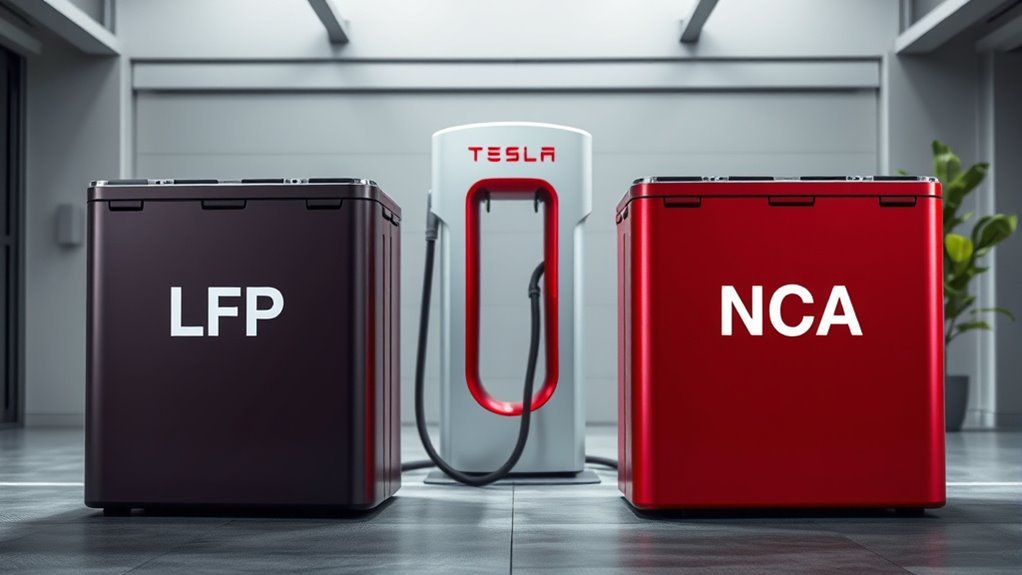
To maximize the lifespan and efficiency of your Tesla battery, it’s vital to adopt the best charging practices tailored to the type of battery installed in your vehicle.
For those with LFP batteries, regularly charging to 100% is essential to guarantee accurate battery management system (BMS) calibration and minimize degradation. You can take advantage of LFP’s resilience by utilizing its capability for extensive charge cycles, allowing for a charging frequency that meets high daily usage demands.
Conversely, if your Tesla features an NCA battery, aim to maintain a charge between 50% and 90% to extend its lifespan. While frequent full charges are acceptable for high-mileage use, excessive charging beyond 80% can lead to gradual degradation.
Maintain your NCA battery charge between 50% and 90% for optimal lifespan and minimize degradation.
Additionally, in cold weather, don’t forget to precondition your LFP battery for peak charging speeds.
Practicing these tailored battery maintenance strategies will guarantee your Tesla battery remains efficient and durable.
Safety Risks: Comparing LFP and NCA Batteries
When comparing safety risks between LFP and NCA batteries, it’s essential to take into account their fire risk and thermal stability.
LFP batteries exhibit a markedly higher thermal runaway temperature, which translates to a lower likelihood of catching fire or exploding under adverse conditions.
Understanding these differences can inform your choice regarding battery technology in electric vehicles.
Fire Risk Comparison
As the demand for electric vehicles (EVs) grows, understanding the fire risk associated with different battery chemistries becomes essential.
LFP batteries offer significant advantages due to their higher thermal runaway temperature of 270°C, greatly reducing fire risks compared to NCA batteries, which can combust at just 150°C. Their stable chemistry makes LFP batteries less prone to overheating, especially in high-use scenarios like rideshare operations.
In contrast, NCA batteries present drawbacks, requiring meticulous management of charge levels and temperatures to prevent fires, particularly when charged over 90%. Consequently, the risk of fire in LFP batteries is rare, and their structural integrity under high charge contributes to a safer driving experience, making them increasingly popular for standard range EVs.
Thermal Stability Assessment
The thermal stability of battery chemistries is essential for evaluating safety risks in electric vehicles.
When conducting a stability analysis, you’ll find that LFP batteries boast a thermal runaway temperature of 270°C, markedly higher than the 150°C threshold for NCA batteries. This increased thermal performance translates to a considerably lower risk of fire for LFPs, thanks to their stable chemical structure and resistance to heat degradation.
Additionally, LFPs endure high states of charge without considerable degradation, allowing you to charge them to 100% safely. With a lifespan of up to 5000 cycles, LFP batteries also demonstrate superior longevity compared to NCA’s 1000 to 1500 cycles.
However, be aware that LFPs may underperform in cold weather, affecting overall efficiency.
Longevity and Degradation Rates: What to Expect
While both LFP and NCA batteries serve as essential components in electric vehicles, their longevity and degradation rates differ markedly, impacting overall performance.
LFP batteries boast a remarkable cycle life of up to 5000 charge cycles, far exceeding the 1000 to 1500 cycles typical of NCA batteries. This extended cycle life makes LFP batteries appealing for applications with frequent full charge cycles, like rideshare operations.
However, you should note that high-mileage LFP vehicles may incur around 12% capacity loss over three years, compared to about 8% for NCA vehicles in the same period. Additionally, charging LFP batteries to 100% can worsen capacity loss due to calendar aging, while NCA batteries manage this without significant issues.
Cost Comparison: Pricing for LFP vs NCA Tesla Batteries
When evaluating the cost of Tesla’s LFP and NCA batteries, it becomes clear that LFP batteries offer a significant advantage in affordability. LFP batteries cost around $98.50 per kWh, making them more accessible for consumers compared to NCA batteries, which come with higher production costs due to their nickel and cobalt content.
Tesla’s use of LFP in standard range models, like the Model 3, reflects this pricing strategy, allowing for lower vehicle prices.
Moreover, the absence of nickel and cobalt in LFP batteries not only lowers costs but also alleviates ethical and environmental concerns tied to mining these materials.
While NCA batteries may provide enhanced performance and efficiency, their price differential often reveals NCA drawbacks that make LFP benefits more appealing, especially for cost-sensitive consumers looking for long-term battery longevity and safety.
The market trend toward LFP technology underscores its growing importance in affordable EV offerings.
Real-World Applications: Choosing Your Tesla Battery?

How do you determine which Tesla battery best suits your needs? Your choice hinges on user preferences and specific user scenarios.
If you prioritize cost and longevity, LFP batteries might be your best bet, as they offer a remarkable lifespan of up to 5000 charge cycles. However, if higher performance and longer range are essential, NCA batteries are more suitable, especially since they provide approximately 10 additional miles of EPA-estimated range.
For rideshare operators, NCA’s faster charging capabilities and better performance in cold conditions can be critical.
In contrast, if you’re frequently using your Tesla, LFP batteries excel in high-use situations due to their robust cyclic aging and ability to charge to 100% without significant capacity loss.
Keep in mind that LFP batteries are bulkier, potentially affecting acceleration and responsiveness compared to the lighter NCA options. Your choice ultimately shapes your driving experience and efficiency.
Future Developments in Tesla Battery Technology
The landscape of Tesla battery technology is evolving rapidly, with significant advancements on the horizon. One of the most prominent future battery innovations is the 4680 cell, designed to enhance production efficiency and reduce costs while extending vehicle range.
Meanwhile, the development of solid-state batteries promises greater energy density and improved safety, potentially reshaping industry standards.
Tesla’s strategy to expand LFP battery usage in lower-range models reflects a keen market competition analysis, leveraging cost-effectiveness and longevity. The expiration of LFP production patents outside China in 2022 could stimulate competition, driving costs down further.
Additionally, ongoing research aims to enhance battery performance in cold conditions and boost overall energy density. These advancements not only influence Tesla’s future EV designs but also empower consumers with more choices in a dynamic market, ultimately fostering greater liberation in sustainable transportation options.
Frequently Asked Questions
Is Nca or LFP Better?
NCA’s advantages include higher energy density and better performance in cold weather, while LFP’s disadvantages are reduced efficiency in sub-zero temperatures and more significant capacity loss over time. Choose based on your specific usage needs.
Which Is Better NMC or LFP Battery?
NMC batteries offer advantages like higher energy density and better cold-weather performance, while LFP batteries have disadvantages such as lower energy density and increased weight due to more cells needed for the same voltage.
Why Did Tesla Stop Using LFP?
Tesla hasn’t stopped using LFP batteries; it’s expanded their use due to LFP advantages like cost-effectiveness and longevity. However, challenges remain in performance, leading Tesla to favor NCA in higher-performance models.
What Is the Lifespan of a Tesla NCA Battery?
A Tesla NCA battery typically lasts between 1000 to 1500 charge cycles, exhibiting minimal battery degradation. This longevity translates to about 300,000 miles, depending on your charging habits and environmental conditions.
Conclusion
To sum up, while both Tesla’s LFP and NCA batteries have their merits, the choice largely depends on your specific needs. The theory that LFP batteries outperform NCA in longevity and safety holds true in many instances, making them ideal for daily driving and less demanding scenarios. However, NCA batteries excel in energy density and performance, suitable for high-performance applications. Ultimately, understanding these differences will guide you in selecting the best battery for your Tesla.






Leave a Reply