The recommended tire pressure for your 2022 Toyota Corolla is 38 PSI in the front and 36 PSI in the rear. You can find this information on the driver’s door jamb sticker or in your owner’s manual. Maintaining the correct tire pressure is key for ideal handling, fuel efficiency, and safety. Regular checks can prevent issues related to underinflation or overinflation. For additional insights on tire maintenance and selection, continue exploring the recommendations.
What Tire Pressure Means for Your Corolla
Understanding tire pressure in your Toyota Corolla is essential for ensuring ideal performance and safety.
Tire pressure refers to the air volume within your tires, measured in pounds per square inch (PSI). Maintaining the recommended tire pressure—typically 38 PSI for the front tires and 36 PSI for the rear tires in the 2022 model—optimizes handling, stability, and fuel efficiency.
When you’re checking your tire pressure, keep in mind that fluctuations can occur due to temperature changes, impacting your vehicle’s safety and performance. Underinflated or overinflated tires increase wear and the risk of blowouts, jeopardizing your driving experience.
You can find your tire pressure specifications on a sticker in the driver’s door jamb, in the owner’s manual, or through the Toyota app.
Regularly checking your tire pressure is key to liberating your Corolla’s full potential.
Toyota Corolla Tire Pressure Recommendations by Model
When it comes to tire pressure, your Toyota Corolla’s specifications can vary by model year.
For instance, the 2022 Corolla recommends 38 psi in the front tires and 36 psi in the rear.
Always check the driver’s door jamb for your specific model’s tire pressure recommendations to guarantee maximum performance and safety.
Tire Pressure Specifications
Maintaining the correct tire pressure is essential for the performance and safety of your Toyota Corolla. Following manufacturer specifications guarantees peak handling, fuel efficiency, and tire longevity.
Here are the key tire pressure recommendations:
- 2022 Toyota Corolla: 38 PSI (front) and 36 PSI (rear).
- Typical tire sizes: 195/65R15, 205/55R16, 215/45R17, and 225/40R18.
- Check your tire pressure: At least once a month or before long trips.
- Refer to the owner’s manual: For specific tire pressure guidelines and any adjustments.
Underinflated tires can cause uneven wear and decreased handling, while overinflated tires can compromise traction.
Always prioritize proper tire pressure for your safety and vehicle performance.
Model Year Differences
As you explore the tire pressure recommendations across various model years of the Toyota Corolla, you’ll notice notable differences that can impact your vehicle’s performance and safety.
For instance, the 2022 model suggests 38 psi for the front tires and 36 psi for the rear, ensuring ideal handling. Earlier models, like the 2021 Corolla, maintain similar recommendations, but sizes may vary, so always check the owner’s manual.
The 2019 and 2020 models recommend about 35 psi for both front and rear tires, while the 2018 model advises 33 psi.
These model year differences highlight the importance of consulting the driver’s door jamb sticker or manual for accurate tire pressure specific to your Corolla trim and tire size.
How to Find Your Corolla’s Specific Tire Pressure
To find your Corolla’s specific tire pressure, start by checking the sticker located on the driver’s door jamb; this provides the exact psi recommended for your vehicle.
Typically, the recommended tire pressure ranges from 36 psi to 38 psi, depending on your model year and trim. You can also refer to your owner’s manual for detailed information regarding tire pressure and maintenance guidelines.
The recommended tire pressure for your Corolla typically ranges from 36 psi to 38 psi, varying by model year and trim.
Additionally, consider these methods:
- Use the Toyota mobile app to access the ‘Maintenance’ section after registering.
- Check the tire size printed on the sidewall of each tire for compatibility.
- Make it a habit to regularly inspect your tire pressure for ideal performance.
- Note any discrepancies and adjust accordingly to maintain safety and efficiency.
Why Keeping Your Tire Pressure Right Matters
Keeping your tire pressure at the recommended levels is essential for both fuel efficiency and vehicle safety.
Properly inflated tires reduce rolling resistance, which can enhance mileage and lower fuel costs.
Additionally, maintaining correct tire pressure improves handling and stability, greatly reducing the risk of blowouts while you’re on the road.
Improved Fuel Efficiency
Maintaining the correct tire pressure is essential for maximizing fuel efficiency in your Toyota Corolla. Properly inflated tires reduce rolling resistance, leading to significant savings at the pump.
Here’s why you should prioritize tire pressure:
- Enhanced Fuel Economy: Up to a 3% increase in fuel consumption occurs for every 1 psi drop in pressure.
- Optimal Road Contact: Proper tire pressure guarantees effective handling and stability, contributing to efficient driving.
- Extended Tire Life: Routine tire checks and maintenance can prolong tire longevity, minimizing replacement costs.
- Improved Performance: Well-inflated tires create smoother rides and reduce energy wasted on friction and drag.
Enhanced Vehicle Safety
Proper tire pressure not only boosts fuel efficiency but also greatly enhances vehicle safety. Maintaining the recommended levels—38 psi for front tires and 36 psi for rear tires—ensures stability and handling, notably reducing accident risks. Properly inflated tires improve braking performance, allowing for shorter stopping distances in emergencies. This is vital for your safety. Additionally, keeping tire pressure within specifications minimizes tire wear, extending their lifespan and ensuring consistent performance. An accurate tire pressure monitoring system alerts you to low pressure, promoting proactive maintenance.
| Tire Location | Recommended PSI | Benefits |
|---|---|---|
| Front Tires | 38 psi | Enhanced stability |
| Rear Tires | 36 psi | Improved braking |
| All Tires | Varies | Reduced tire wear |
Identifying Symptoms of Incorrect Tire Pressure in Your Corolla
How can you tell if your Toyota Corolla’s tire pressure is off? Recognizing the symptoms of incorrect tire pressure is essential for maintaining performance and safety. Here are four key indicators to watch for:
- Decreased Fuel Efficiency: Underinflated tires increase rolling resistance, causing your Corolla to consume more fuel.
- Harsh Ride: Overinflated tires create a stiffer feel, leading to a less comfortable driving experience.
- Uneven Tire Wear: Look for excessive wear on the edges or center of the tire. This can signal incorrect tire pressure, compromising stability.
- TPMS Alerts: Your tire pressure monitoring system will notify you when tire pressure drops considerably below recommended levels, indicating potential underinflation.
Regularly checking your tire pressure guarantees peak performance, safety, and longevity for your Corolla.
Keep your front tires at 38 psi and rear tires at 36 psi for best results.
How to Adjust and Monitor Tire Pressure Effectively
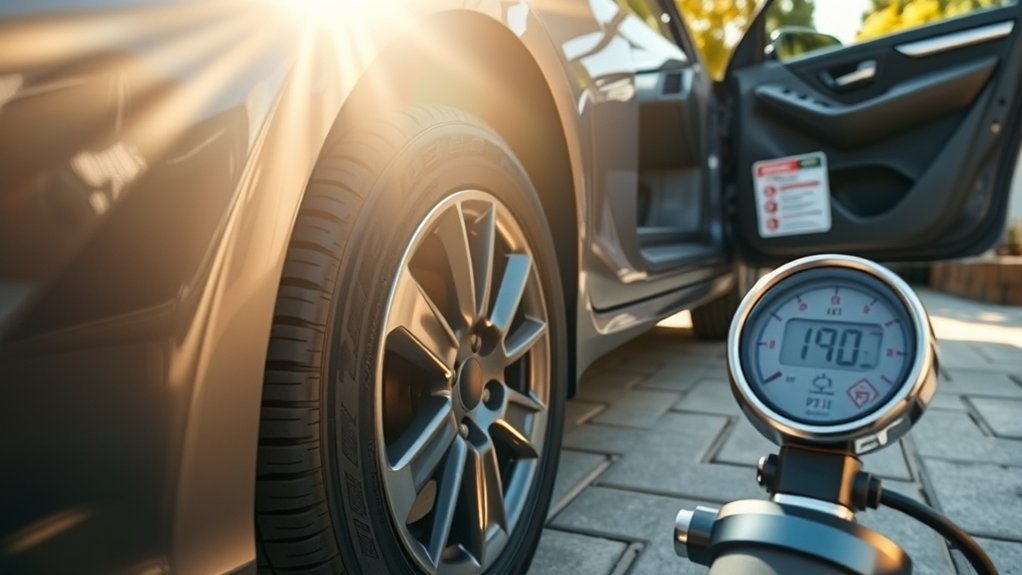
To guarantee your Toyota Corolla’s tires are always at the right pressure, you’ll want to check and adjust them regularly.
Start by using a reliable tire pressure gauge to measure the current PSI for accuracy, ideally before driving or at least three hours after driving. The recommended tire pressure is 38 PSI for the front tires and 36 PSI for the rear tires, which you can find in the owner’s manual or on the driver’s door jamb sticker.
When you need to inflate tires, set an air pump to the desired pressure and fill until you reach the target PSI.
Don’t forget to monitor tire pressure at least once a month and before long trips to enhance performance and fuel efficiency.
If you find a tire overinflated, simply release air by gently opening the valve stem until you achieve the correct pressure.
Proper tire inflation is essential for safety and longevity.
Tips for Choosing the Right Tires for Your Toyota Corolla
Maintaining the right tire pressure is just one aspect of ensuring your Toyota Corolla performs at its best; choosing the right tires also plays a significant role. Here are some tips to help you make an informed decision:
- Opt for All-Season Tires: They provide versatility in Clermont’s climate, ensuring peak performance in both heat and rain.
- Check Recommended Brands: Look for tires like General Reliatrek, Michelin Defender, and Dunlop Enasave, which balance quality and affordability.
- Confirm Tire Size: Common sizes include 195/65R15, 205/55R16, and 225/40R18; consult an auto care specialist for the correct fit for your model year.
- Evaluate Performance Ratings: Focus on performance ratings and customer reviews rather than just price to avoid overly expensive options that may not meet your needs.
Frequently Asked Questions
How to Find Tire Pressure on Toyota Corolla?
To find tire pressure on your Toyota Corolla, use a tire pressure gauge. Regularly check your tires, especially during seasonal changes, for ideal inflation—proper pressure enhances safety and fuel efficiency while ensuring effective tire maintenance.
Where Can I Find My Tire PSI Recommendation?
You’ll discover your tire psi recommendation on a sticker inside your driver’s door jamb. Regularly checking this guarantees ideal tire pressure, enhancing safety benefits and driving performance while following essential maintenance tips for longevity.
What PSI Should My Tires Be on a Toyota Corolla?
Your Toyota Corolla’s tires should be at 38 psi in front and 36 psi in back. Use tire pressure monitoring systems for ideal driving performance, and follow tire inflation tips for seasonal adjustments to maintain safety.
Where Is the Recommended Tire Pressure Located?
You’ll find the recommended tire pressure on a sticker in your driver’s door jamb—because who doesn’t love a scavenger hunt? Prioritize tire health and safety tips for ideal vehicle maintenance and performance.
Conclusion
Maintaining the correct tire pressure in your Toyota Corolla is like keeping the engine running smoothly; it guarantees safety and efficiency on the road. By regularly checking your tires and adjusting pressure as needed, you’ll enhance performance and extend tire life. Remember, staying proactive about tire care can save you from future headaches. So, keep an eye on those numbers and enjoy a safer, more comfortable ride wherever the road takes you!







Leave a Reply