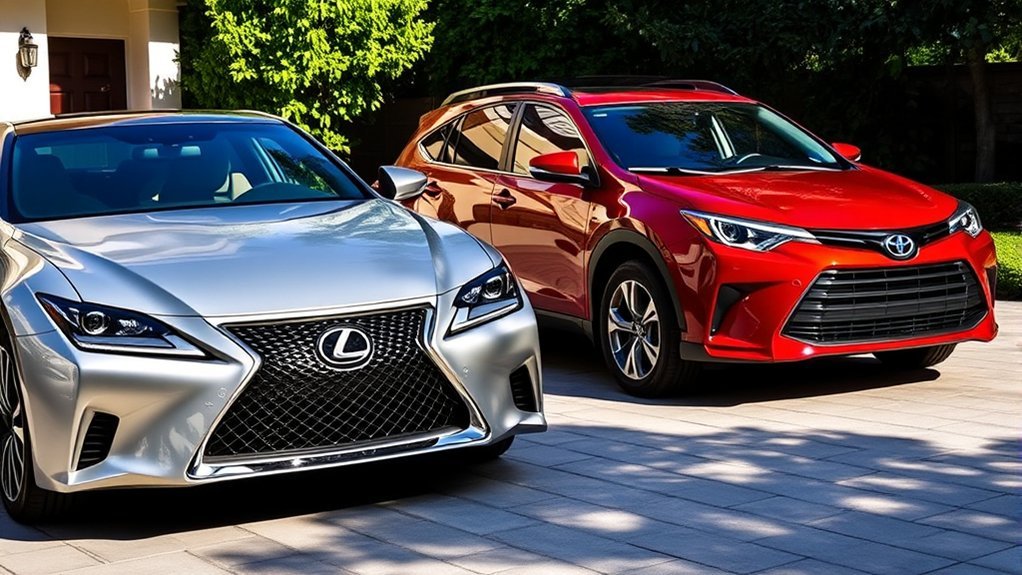
When comparing Toyota and Lexus, you’ll see distinct differences in identity and offerings. Toyota emphasizes reliability, affordability, and practicality, making it ideal for budget-conscious buyers. In contrast, Lexus targets luxury consumers, showcasing upscale materials and advanced technologies for a more refined driving experience. While both brands share engineering, their performance metrics, comfort features, and dealership experiences set them apart. Explore how these factors shape your choice and what each brand offers to find your perfect match.
What Defines Toyota and Lexus?
When you think about the differences between Toyota and Lexus, it’s essential to recognize their distinct identities. Toyota vehicles are celebrated for their reliability and practicality, catering to budget-conscious consumers seeking dependable transport.
In contrast, the Lexus brand positions itself as a luxury vehicle manufacturer, offering upscale models rich in premium features and craftsmanship.
You’ll notice that Lexus vehicles boast superior materials, advanced technology, and a refined driving experience, setting them apart from their Toyota counterparts.
While both brands share engineering and manufacturing processes, Lexus focuses on delivering enhanced comfort, superior handling, and quieter cabins.
Lexus emphasizes a refined driving experience with enhanced comfort, superior handling, and quieter cabins compared to Toyota.
This dedication to luxury comes with a price; Lexus vehicles typically cost more due to their upscale positioning.
Ultimately, whether you choose a practical Toyota or a luxurious Lexus, you’re assured high reliability standards, but the choice reflects your lifestyle and what you value in your driving experience.
How Do Toyota and Lexus Perform Side by Side?
When comparing performance metrics, you’ll notice that Toyota often shines with sporty models like the GR86 and Supra, while Lexus leans towards luxury with its offerings like the LC.
Although Lexus vehicles pack powerful engines and advanced suspension systems, Toyota’s commitment to reliability and efficiency gives it an edge in practicality.
This contrast highlights how both brands cater to different driving needs and preferences.
Performance Metrics Comparison
Although both Toyota and Lexus are part of the same automotive family, their performance metrics reveal distinct philosophies that cater to different driving preferences.
Toyota’s performance-focused models, like the GR86 and Supra, emphasize driving dynamics, scoring 9.3 and 9.0 respectively. In contrast, Lexus vehicles, such as the LC and RC F, score lower at 8.9 and 7.6, despite offering more powerful engines and premium suspension systems for a refined experience.
Meanwhile, Toyota’s Tacoma and Tundra dominate the truck segment, highlighting its strength where Lexus has no offerings. In hybrids, Toyota maintains an edge with a broader range, while Lexus’s hybrid models score slightly lower.
Both brands share safety technologies, but Lexus emphasizes advanced features in their Safety System+ 2.5.
Engine Power and Efficiency
Engine power and efficiency stand as key differentiators between Toyota and Lexus, each brand catering to distinct consumer needs. While Toyota focuses on fuel economy with models like the Camry Hybrid scoring 9.5, Lexus often offers more powerful engines, providing a luxurious driving experience.
Here’s how they compare:
- Toyota’s hybrids, such as the RAV4 Hybrid, boast higher fuel economy scores (8.6) than Lexus models like the ES Hybrid (8.9).
- Performance-oriented models like the Toyota GR86 and Supra excel in engine power, scoring 9.3 and 9.0, respectively.
- Lexus emphasizes a refined ride, with smoother handling and quieter cabins, though it may sacrifice some efficiency in the process.
Ultimately, your choice depends on whether you prioritize power or efficiency.
Toyota vs. Lexus: Comfort and Luxury Features
While both Toyota and Lexus offer impressive vehicles, the differences in comfort and luxury features are distinctly pronounced.
Lexus models are designed with a luxury brand focus, showcasing premium materials like leather and wood trim that elevate their aesthetic appeal. In contrast, Toyota vehicles often reserve advanced comfort features for higher trim levels, making them less accessible.
Lexus embodies luxury with premium materials, while Toyota reserves advanced comfort features for higher trims, limiting accessibility.
When you step inside a Lexus, you’ll notice a cabin crafted for maximum comfort, with intuitive controls and superior ride quality.
Lexus emphasizes a quieter driving experience, integrating noise reduction technologies that enhance your journey. You’ll also find enhanced comfort features like heated and ventilated seats and advanced climate control systems, which are typically less common in Toyota offerings.
If you seek a refined driving environment, Lexus clearly stands out, embodying the essence of luxury while Toyota focuses on practicality and reliability.
Luxury Pricing: Is It Worth It?
When considering whether the luxury pricing of Lexus vehicles is worth it, you’ll find that the added cost often reflects a range of premium features and superior craftsmanship.
Lexus models, like the IS 300, include a wealth of standard features that elevate your driving experience, setting them apart from Toyota’s more budget-friendly offerings.
- Superior materials: Lexus uses high-quality finishes that enhance comfort and style.
- Advanced technology: Cutting-edge tech features come standard in Lexus models, improving convenience and safety.
- Resale value: Lexus vehicles tend to maintain better resale value, making them a more strategic long-term investment.
While Toyota caters to budget-conscious consumers, Lexus appeals to those craving luxury and exclusivity.
The decision ultimately hinges on whether you value the enhanced experience and potential resale benefits that come with luxury pricing.
Key Safety Features: Similarities and Differences
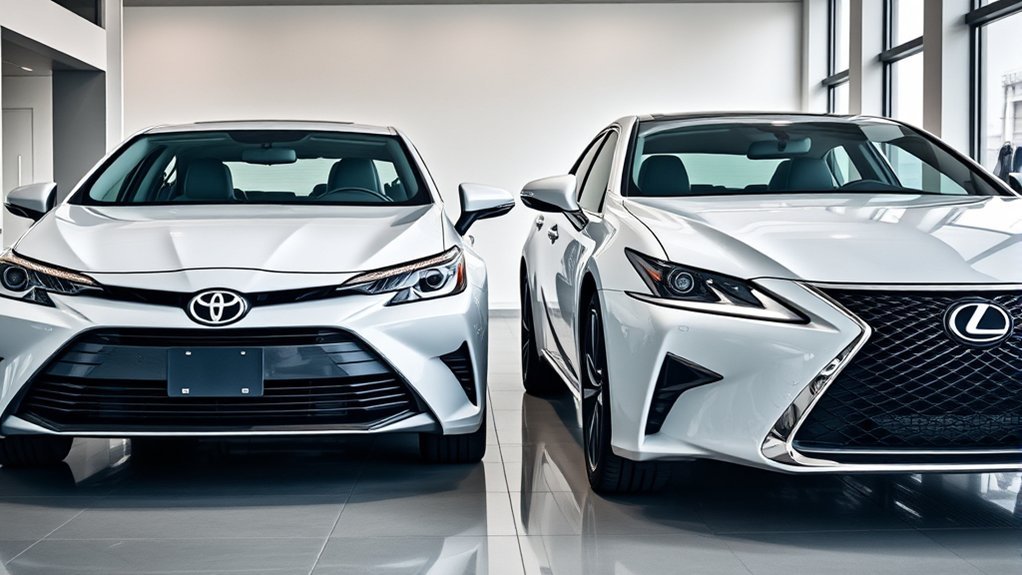
When it comes to safety, both Toyota and Lexus offer impressive standard safety technologies that prioritize your well-being on the road.
Lexus takes it a step further with its Safety System+ 2.5, featuring advanced driver assistance systems that enhance your driving experience.
Meanwhile, Toyota’s strong crash test ratings showcase its commitment to reliability and safety, making both brands top choices in this category.
Standard Safety Technologies Offered
As you explore the standard safety technologies offered by Toyota and Lexus, you’ll find that both brands prioritize driver and passenger safety through a suite of advanced features.
Toyota integrates essential driver assistance systems, ensuring a safe driving experience. Meanwhile, Lexus heightens this commitment with its Safety System+ 2.5, which includes the innovative Pre-Collision System with Pedestrian Detection.
Key features include:
- All-Speed Dynamic Radar Cruise Control
- Lane Tracing Assist
- Extensive driver assistance systems
While both brands share a strong focus on safety, Lexus often adds premium enhancements, aligning with its luxurious appeal.
Ultimately, whether you choose Toyota or Lexus, you can trust that safety remains a top priority in both lineups.
Advanced Driver Assistance Systems
While both Toyota and Lexus offer advanced driver assistance systems that prioritize safety and enhance the driving experience, there are notable differences in how these features are integrated into their vehicles.
Lexus offers the Safety System+ 2.5 standard across all models, including a Pre-Collision System with Pedestrian Detection and Lane Tracing Assist, creating a seamless blend of luxury and safety.
On the other hand, Toyota models also boast impressive safety features, such as All-Speed Dynamic Radar Cruise Control, which maintains speed and distance in traffic.
While both brands emphasize reducing fatigue and improving overall driving, Lexus tends to elevate the experience with a focus on comfort and refinement, making their advanced driver assistance systems feel more luxurious.
Crash Test Ratings Comparison
Crash test ratings reveal important distinctions and similarities between Toyota and Lexus vehicles, showcasing their commitment to safety.
Both brands leverage advanced safety features that substantially enhance driver protection, but there are nuances worth noting.
- The Lexus lineup typically includes more luxury safety features as standard.
- Both brands utilize the Safety System+ 2.5, which offers a Pre-Collision System with Pedestrian Detection.
- High crash test ratings for both reflect a shared dedication to safety, though specific scores may differ by model.
Ultimately, whether you choose a Toyota or a Lexus, you’re getting vehicles engineered with safety in mind, although Lexus vehicles often elevate that experience with added luxury and features.
Your safety journey begins with informed choices.
Comparing Key Models: Toyota vs. Lexus
When it comes to comparing key models from Toyota and Lexus, the distinctions become clear across various vehicle categories. The Toyota Corolla stands tall in the compact segment with a score of 8.4, while the Lexus IS follows closely at 8.3.
Toyota and Lexus showcase distinct strengths in the compact segment, with the Corolla leading at 8.4, just ahead of the IS at 8.3.
In the midsize category, Lexus excels with the ES, scoring 8.8, emphasizing luxury features, whereas the Toyota Camry shines as a hybrid car but is classified differently.
For sports enthusiasts, the Toyota GR86 outperforms Lexus cars, scoring an impressive 9.3 against the LC and RC F.
In the SUV arena, the Toyota RAV4 scores 8.7, while Lexus’s GX and RX 350 score 8.8 and 8.6, respectively.
Finally, in the pickup truck segment, the Toyota Tacoma and Tundra dominate with scores of 8.9 and 8.8, leaving Lexus without any truck offerings.
Each brand has its strengths, catering to different needs and preferences.
Reliability and Resale Value: Which Brand Holds Up Better?
How do Toyota and Lexus stack up regarding reliability and resale value? Both brands boast robust manufacturing processes, ensuring high durability, but their market perceptions differ considerably.
You’ll find that Toyota vehicles typically excel in resale value because of their affordability and practicality, making them appealing to budget-conscious consumers. Meanwhile, Lexus offers a longer warranty, which adds to perceived reliability.
- Toyota vehicles usually have a higher resale value due to broader market appeal.
- Lexus’s luxury-oriented designs may lead to higher maintenance costs.
- Both brands share a reputation for reliability, but Toyota edges out in resale.
Ultimately, if you prioritize long-term value and reliability, the Toyota brand might be your best bet.
Lexus appeals to those seeking luxury and comfort, but with regards to resale value, Toyota often holds the upper hand.
What to Expect From the Dealership Experience: Toyota vs. Lexus?
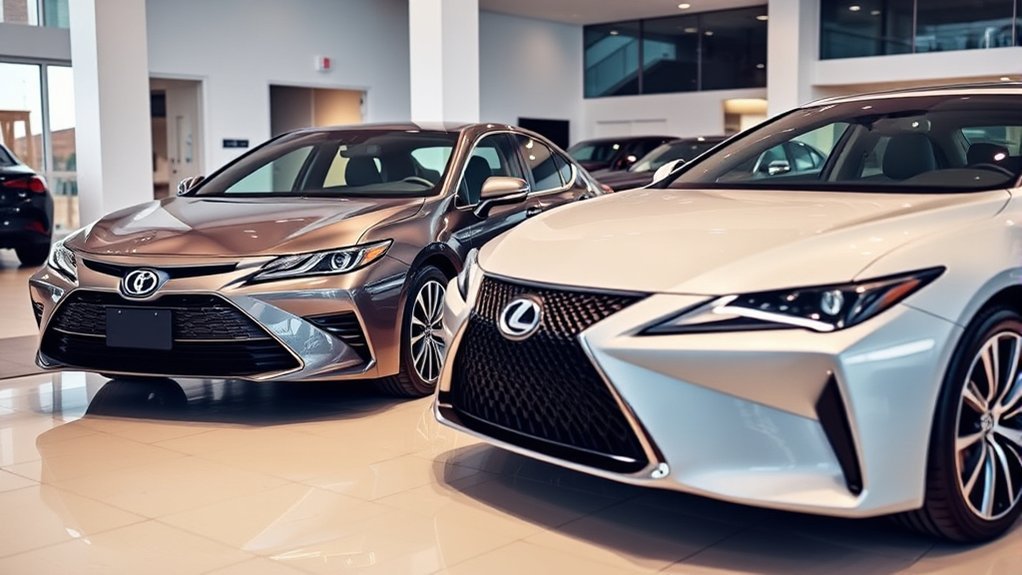
Visiting a dealership can be a revealing experience, especially when comparing Toyota and Lexus.
At a Lexus dealership, like Ray Catena Lexus of Freehold, you’ll find a luxury customer experience that prioritizes comfort and sophistication. Expect invigorating beverages and cozy waiting areas that elevate your visit. The personalized attention you receive is unmatched, often featuring complimentary loaner vehicles and concierge services that enhance your ownership journey.
In contrast, Toyota dealerships focus on practicality and accessibility, catering to budget-conscious consumers with promotions and wide-ranging options. The dealer experience here is straightforward and efficient, designed to meet a broader audience’s needs.
While Lexus offers a curated sales process with knowledgeable staff showcasing premium features, Toyota emphasizes reliability and value. Ultimately, your choice reflects what you prioritize: a luxury experience or a practical, cost-effective approach. Each dealership offers a unique ambiance tailored to its brand’s core values.
Frequently Asked Questions
What Is the Real Difference Between Toyota and Lexus?
The real difference between Toyota and Lexus lies in brand perception, where Lexus emphasizes luxury features and superior performance. You’ll find Toyota prioritizes practicality and affordability, creating distinct driving experiences tailored to diverse needs.
Which Car Lasts Longer, Toyota or Lexus?
Toyota cars generally last longer due to their durability and lower maintenance costs. While Lexus offers luxury, their performance features can increase wear. In resale value, both brands maintain strong standings, but Toyotas edge ahead overall.
Is Lexus Just an Overpriced Toyota?
Lexus isn’t just an overpriced Toyota; it offers luxury features that elevate brand perception and enhance resale value. Investing in Lexus means enjoying a refined experience, superior craftsmanship, and a stronger status in the automotive market.
What Is Toyota’s Weakness?
Toyota’s weakness lies in brand perception issues, with only 20% of consumers viewing it as luxurious. You’ll also notice engine performance limitations and design innovation challenges that hinder its appeal in the luxury market.
Conclusion
In the end, choosing between Toyota and Lexus comes down to your preferences. If you prioritize practicality and reliability, Toyota’s got you covered. However, if you crave luxury and advanced features, Lexus elevates the experience. Both brands offer exceptional safety and resale value, but their dealership experiences differ, reflecting their target audiences. Ultimately, it’s about balancing comfort with budget, ensuring you drive away satisfied, regardless of which badge you choose to wear.







Leave a Reply