For your Toyota Yaris, maintaining the right tyre pressure is essential. For the 2022 model, it’s 32 psi for both front and rear tyres when cold. The 2021 model typically ranges from 32 to 35 psi, while the 2020 model also falls between 32 and 35 psi. Always check the door jamb sticker or owner’s manual for specifics. Keep your tyres properly inflated to enhance safety and performance. There’s a lot more to keep your Yaris in top shape!
Why Correct Tyre Pressure Matters for Your Toyota Yaris
When you keep your Toyota Yaris’s tyre pressure at the correct levels, you not only enhance safety but also boost your vehicle’s performance. Properly inflated tyres guarantee peak handling and braking capabilities, making your drives more secure.
Plus, maintaining the recommended tyre pressure, which typically ranges from 30 psi to 35 psi, can greatly improve fuel efficiency by reducing rolling resistance. This translates to lower fuel consumption and cost savings over time.
Regularly checking your tyre pressure—ideally every month—helps you catch under-inflation or over-inflation early, preventing uneven tyre wear and extending their lifespan.
Adhering to the manufacturer-recommended tyre pressures not only complies with safety standards but also enhances your Yaris’s ride comfort and overall performance.
How to Find the Recommended Tyre Pressure for Your Yaris Models
Knowing the correct tyre pressure for your Toyota Yaris is key to maintaining its performance and safety.
To find the recommended tyre pressure for your model, follow these simple steps:
Discovering the right tyre pressure for your Yaris is easy with these straightforward steps.
- Check the Door Jamb: Look for the sticker on the driver’s side door jamb; it displays the manufacturer-recommended values.
- Consult the Owner’s Manual: Your Yaris owner’s manual contains essential information about tyre pressure for different driving conditions and loads.
- Consider Model Year: The recommended tyre pressure typically ranges from 32 psi to 35 psi, depending on the model year and variant.
- Regularly Monitor Pressure: Make it a habit to check your tyre pressure regularly to guarantee peak performance, safety, and fuel efficiency.
Recommended Tyre Pressure for the 2022 Toyota Yaris
For the 2022 Toyota Yaris, maintaining the correct tyre pressure is crucial for peak performance and safety. The recommended tyre pressure is typically 32 psi for both front and rear tyres when cold. Checking the tyre pressure when they’re cold helps avoid inaccuracies from heat expansion. You can find specific information regarding your tyres in the vehicle’s owner’s manual or on the door jamb sticker.
Here’s a quick reference table:
| Tyre Position | Tyre Size | Recommended Pressure (psi) |
|---|---|---|
| Front | 195/50R16 | 32 |
| Rear | 195/50R16 | 32 |
| Cold Check | ||
| Fuel Efficiency | Improved | |
| Handling | Enhanced |
Always verify you’re running at the correct pressure to improve fuel efficiency, handling, and overall safety while driving your Yaris. Don’t forget to consult the owner’s manual for more details!
Recommended Tyre Pressure for the 2021 Toyota Yaris
Ensuring your 2021 Toyota Yaris has the right tyre pressure is essential for safe and efficient driving. The recommended tyre pressure typically ranges from 32 to 35 PSI for both front and rear tyres when cold.
To keep your ride smooth and reliable, follow these tips:
- Check the tyre pressure at least once a month.
- Always measure when the tyres are cold for accurate readings.
- Refer to the door jamb sticker or your owner’s manual for exact specifications.
- Maintaining correct pressure enhances handling, fuel efficiency, and tyre longevity.
Recommended Tyre Pressure for the 2020 Toyota Yaris
Maintaining the right tyre pressure is essential for your 2020 Toyota Yaris, with ideal levels typically between 32 and 35 PSI for both front and rear tyres when cold.
Checking the pressure when the tyres are cold helps avoid discrepancies caused by heat expansion, ensuring you get accurate readings. Always refer to the tyre placard located on the driver’s door jamb for the most precise information specific to your Yaris variant.
Keeping the recommended tyre pressure not only enhances your vehicle’s handling but also boosts fuel efficiency and overall safety performance.
A well-maintained tyre pressure means a smoother ride and better control on the road, allowing you to experience the freedom and liberation of driving your Yaris confidently.
Make it a habit to check your tyre pressure regularly, and you’ll enjoy the benefits of a well-performing vehicle every time you hit the road.
Compatible Tyre Sizes for the Toyota Yaris
When choosing tyres for your Toyota Yaris, it’s vital to know the compatible sizes to guarantee peak performance and safety. The right tyres not only enhance your driving experience but also align with the recommended tyre pressure for your model.
Choosing the right tyres for your Toyota Yaris is crucial for optimal performance and safety on the road.
Here are some common sizes you might consider:
- 195/50R16
- 205/45R17
- 175/65R14
- Specific sizes based on trim levels
Each of these sizes comes with its own tyre pressure recommendations, generally ranging from 32 psi to 35 psi.
To guarantee ideal handling and fuel efficiency, always check your owner’s manual or the door jamb sticker for the exact specifications. Maintaining the correct tyre size and pressure is essential for your Toyota Yaris, helping you enjoy a liberated driving experience while prioritizing safety and performance.
How to Check Your Tyre Pressure Accurately?
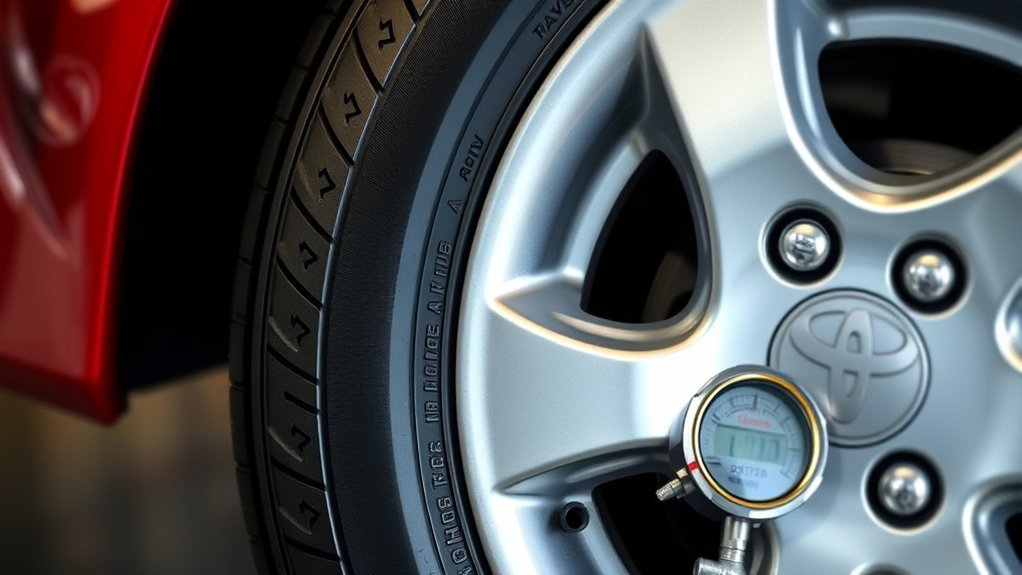
Knowing the right tyre sizes for your Toyota Yaris sets the stage for excellent performance, but it’s equally important to check your tyre pressure accurately.
Start by grabbing a reliable tyre pressure gauge; make certain it’s calibrated for precision. Always check your tyre pressure when the tyres are cold, as heat from driving can affect readings.
Remove the valve cap from each tyre and press the gauge firmly onto the valve stem. Read the pressure displayed and compare it with the recommended tire pressure found on the driver’s door jamb sticker or in your vehicle’s handbook.
If the pressure doesn’t match, adjust it by inflating or deflating the tyre as necessary. Recheck the pressure until it meets the manufacturer’s specifications.
Keeping your tyres at the right pressure guarantees safety, fuel efficiency, and peak handling, making your driving experience more enjoyable.
Identifying Underinflated and Overinflated Tyres
You can easily spot underinflated tyres by their squishy feel and visible sagging, which can harm your fuel efficiency and handling.
On the other hand, overinflated tyres often show a bulging appearance and stiff ride, leading to uneven tread wear and reduced traction.
Regular checks will help you maintain the right pressure for peak performance and safety.
Signs of Underinflated Tyres
Spotting underinflated tyres is essential for maintaining vehicle safety and performance. You can identify underinflated tyres by looking for these signs:
- Soft Feel: Press on the tyre; if it feels softer than usual, that’s a warning.
- Handling Issues: Notice decreased responsiveness when turning or braking; this could signal underinflation.
- Uneven Wear: Check for uneven tread wear, especially on the edges, which indicates low pressure.
- Low PSI: Regularly measure your tyre pressure; anything below the recommended PSI is concerning.
Ignoring these signs can lead to increased rolling resistance, reduced fuel efficiency, and even blowouts.
Regularly checking your tyre pressure will keep you safe and enhance your vehicle’s performance.
Indicators of Overinflated Tyres
Overinflated tyres can greatly impact your vehicle’s performance and safety, so recognizing the indicators is crucial.
One important part of guaranteeing your Toyota Yaris runs smoothly is to check for a visibly bulging center tread or uneven wear patterns, which indicate overinflated tyres. You might notice increased wear in the centre of the tyre, compromising grip and handling capabilities.
Additionally, a harsh ride or heightened road noise can signal that your tyres are overinflated, as they struggle to absorb bumps effectively.
To maintain peak performance, regularly check your tyre pressure against the recommended psi. By staying vigilant, you can prevent potential blowouts and guarantee a safer driving experience on all surfaces.
Effects of Tyre Pressure on Fuel Efficiency
While it might seem minor, maintaining proper tyre pressure plays an essential role in fuel efficiency. Here’s how it impacts your driving experience:
- Reduced Rolling Resistance: Properly inflated tyres help minimize rolling resistance, allowing your vehicle to move more freely.
- Optimal Road Contact: Keeping within the recommended tyre pressure (typically 32-35 psi) guarantees the best contact with the road, enhancing handling and efficiency.
- Energy Efficiency: Well-inflated tyres require less energy to operate, which directly affects your fuel consumption and costs.
- Cost Savings: Regularly checking tyre pressure can save you around 10 cents per gallon, according to the U.S. Department of Energy.
Neglecting tyre pressure—either underinflated or overinflated—can lead to unnecessary fuel consumption.
Tips for Maintaining Optimal Tyre Pressure Year-Round
To keep your Toyota Yaris performing at its peak, it’s crucial to maintain ideal tyre pressure year-round. Regularly check your tyre pressure at least once a month and before long trips to guarantee maximum safety and performance. Always measure when the tyres are cold to avoid inaccurate readings. Use the manufacturer’s recommended tyre pressure, typically between 32 psi and 35 psi for most models.
Here’s a quick reference table for easy maintenance:
| Temperature (°F) | Recommended Tyre Pressure (PSI) | Action Needed |
|---|---|---|
| Below 30 | 35 | Inflate if low |
| 30 – 50 | 33 | Check regularly |
| 50 – 70 | 32 | Maintain |
| 70 – 90 | 34 | Monitor for wear |
| Above 90 | 32 | Deflate slightly |
Keep a tyre pressure gauge handy in your vehicle to check your Toyota easily!
Frequently Asked Questions
What Psi Should My Tires Be on a Toyota Yaris?
Your Yaris tires should typically be inflated to 32-35 psi. For ideal tire pressure, check your manual. Proper tire maintenance enhances Yaris performance, ensuring better handling, fuel efficiency, and safety on the road.
Should I Run 35 or 40 Psi for Tires?
You should run 35 psi for ideal tire performance, enhancing fuel efficiency and ensuring even wear patterns. Higher pressures can compromise grip and comfort, negatively impacting your driving experience. Always prioritize safety and vehicle maintenance.
Is 40 Psi Good Tire Pressure for a Toyota?
While 40 PSI might seem strong, it can compromise your driving performance and raise safety concerns. Stick to the recommended tire pressure for ideal grip and fuel efficiency, ensuring a smooth, liberating ride every time you drive.
Is 32 Psi Normal Tyre Pressure?
Yes, 32 PSI is normal tyre pressure for many vehicles. Regularly checking your tyres guarantees ideal inflation levels, enhancing driving safety. Follow tyre maintenance tips to keep your vehicle performing well and guarantee a smooth ride!
Conclusion
Maintaining the correct tyre pressure for your Toyota Yaris isn’t just a suggestion; it’s essential for your safety and performance. Picture cruising down the highway, your car gliding smoothly, fuel efficiency at its peak, and tyres perfectly balanced. Neglecting this simple task can lead to uneven wear and safety issues. So, check your tyre pressure regularly and enjoy the ride. You’ll not only save on gas but also extend the life of your tyres.







Leave a Reply