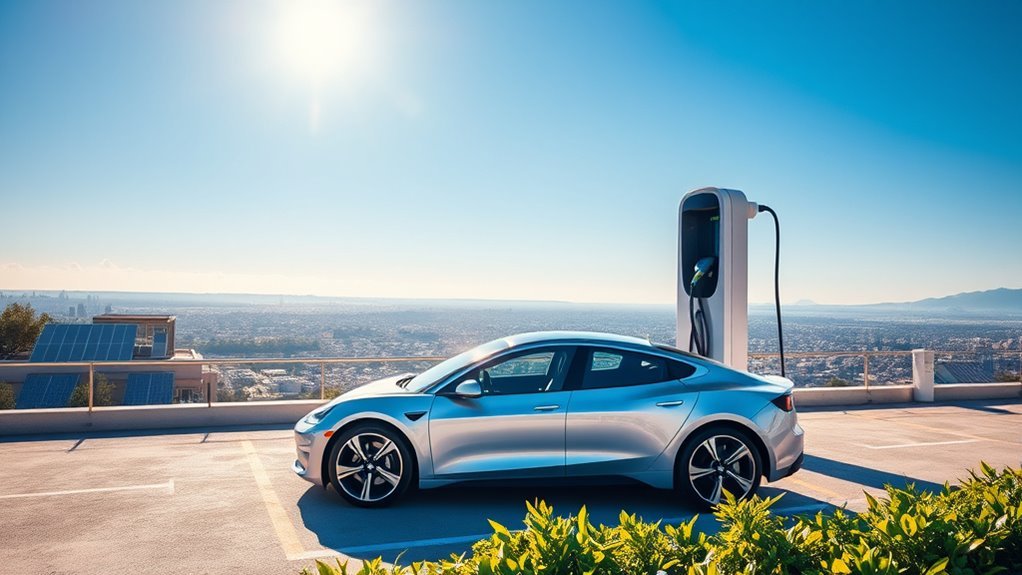
Electric cars can’t charge themselves because current battery technologies and energy capture systems fail to generate adequate energy while in motion. Regenerative braking only recovers 10-30% of energy during deceleration and can’t meet energy demands at highway speeds. Additionally, systems for in-motion charging aren’t widely available, and safety concerns complicate their implementation. Without charging stations, conventional recharging is necessary. Discover more about the challenges and future innovations in electric car charging technologies.
Understanding Electric Car Charging Basics
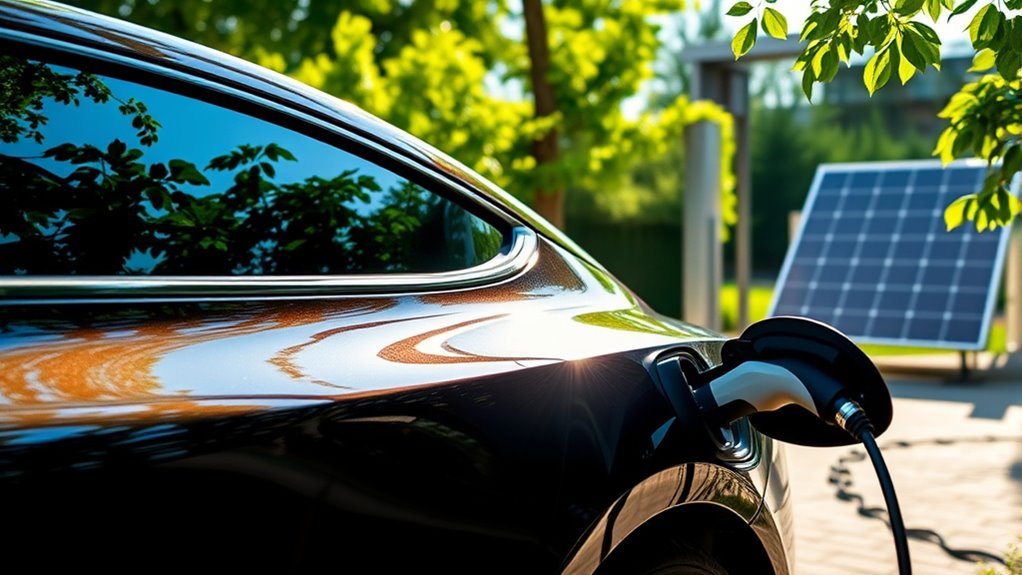
When you drive an electric vehicle (EV), understanding how to charge it efficiently is vital for maximizing its performance.
EVs rely on advanced battery technology to store energy and require external charging sources to recharge. Familiarize yourself with various charging methods: Level 1 uses standard 120-volt outlets, Level 2 offers faster recharging via 240-volt outlets, and DC Fast Charging provides significant range in just around 30 minutes.
Your EV’s efficiency and range depend heavily on battery size, measured in kilowatt-hours, and the driving conditions you encounter. Larger batteries yield a longer range, enhancing your freedom on the road.
Additionally, knowing the compatibility of charging ports, like J1772 and the North American Charging Standard (NACS), is vital for utilizing the charging infrastructure effectively.
Why Can’t Electric Cars Charge While Driving?
Why can’t electric cars charge while driving? The primary reasons lie in current battery technology and energy limitations.
When you’re cruising at highway speeds, the energy demands far exceed what regenerative braking can recover; it only captures a fraction of kinetic energy during deceleration.
To enable charging while driving, we’d need high-powered charging infrastructure, which doesn’t exist today and would require significant investment and redesign of road systems.
Safety concerns also play a role, particularly regarding electromagnetic radiation and the high current necessary for effective wireless charging.
In addition, existing electric vehicle designs lack components like alternators that gasoline vehicles have, which could facilitate in-motion battery charging.
Without advancements in charging technology and a rethinking of our infrastructure, electric cars will remain tethered to charging stations, limiting your freedom on the road.
The Role of Regenerative Braking in Energy Recovery
Regenerative braking systems convert kinetic energy into electrical energy during deceleration, enhancing energy conversion efficiency.
You’ll find that the mechanics of this process depend on factors such as vehicle speed and braking force.
While it recovers some energy, it’s important to recognize that regenerative braking can’t fully charge the battery and is only a partial solution for energy needs.
Energy Conversion Efficiency
Electric vehicles (EVs) employ regenerative braking to enhance energy conversion efficiency by converting kinetic energy back into electrical energy during deceleration. This process allows you to recover energy that would otherwise dissipate as heat, improving overall energy storage.
However, the recovered energy typically represents only 10-30% of the energy consumed during acceleration, meaning significant energy losses still occur. Factors like vehicle weight, speed, and braking force impact the effectiveness of this technology, leading to variability across different driving conditions.
While regenerative braking boosts the EV’s range, it doesn’t eliminate the necessity for conventional charging methods. Ultimately, understanding these dynamics helps you appreciate the balance between energy recovery and the reliance on external sources to maintain full battery capacity.
Regenerative Braking Mechanics
The mechanics of regenerative braking play a crucial role in enhancing energy recovery within electric and hybrid vehicles. Regenerative braking systems convert kinetic energy generated during deceleration into electrical energy, recharging the vehicle’s battery.
This process captures energy that would otherwise dissipate as heat in traditional braking, greatly improving overall energy efficiency. The effectiveness of these systems hinges on factors like vehicle speed, braking force, and weight, all influencing the amount of energy recovered.
While regenerative braking can supplement battery charging, it typically only provides a fraction of the energy needed for continued operation. Consequently, you’ll still need conventional charging methods to maintain ideal battery levels, even as regenerative braking enhances your driving range.
Limitations of Solar Panels on EVs
While integrating solar panels into electric vehicles (EVs) presents an innovative approach to renewable energy use, significant limitations hinder their effectiveness. You’ll find that the energy produced is often insufficient for substantial battery charging due to several factors:
- Restricted surface area limits solar panel efficiency.
- Solar panels perform poorly when the vehicle’s in motion.
- Additional weight from solar panels can negatively impact vehicle range.
- High installation costs may deter consumers from adopting this feature.
- Most implementations serve only as auxiliary power for accessories.
These constraints highlight that while solar integration is appealing, practical applications remain limited.
The trade-offs between solar panel efficiency and vehicle weight impact must be carefully considered to guarantee that any potential energy gains don’t come at the cost of overall performance and feasibility in the domain of electric vehicles.
Why Do We Need Charging Stations for Electric Cars?
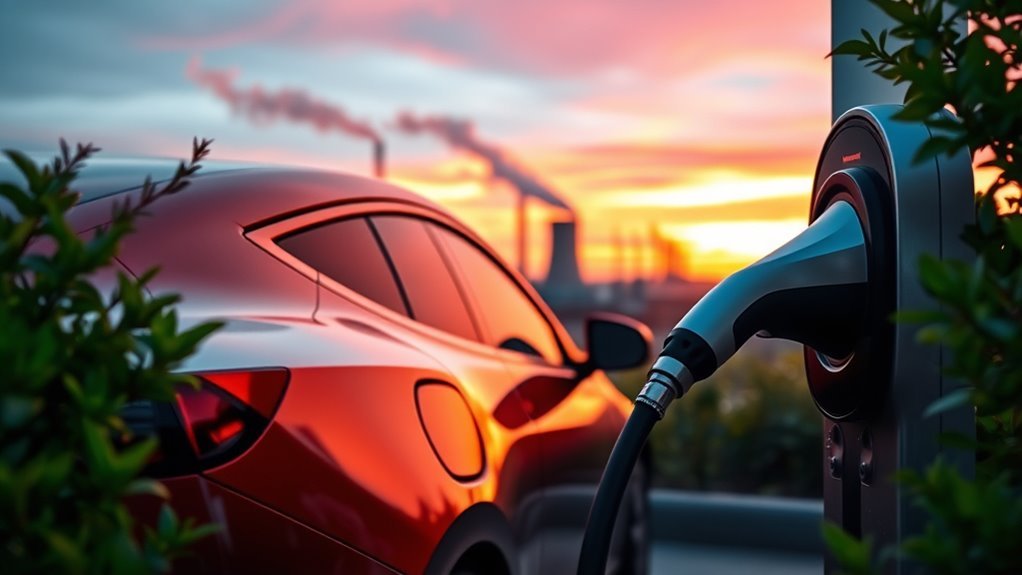
You need charging stations for electric cars because current energy recovery methods only partially recharge batteries, leaving you reliant on external power sources.
Without adequate infrastructure investment, the usability of EVs diminishes, particularly for long trips.
Additionally, energy conversion efficiency challenges highlight the necessity of efficient charging options to maintain peak performance and user convenience.
Limited Energy Recovery Methods
Electric vehicles depend heavily on rechargeable batteries, but their energy recovery methods, such as regenerative braking, only provide a fraction of the power needed for sustained driving. This results in significant charging limitations.
Here are key points to reflect on:
- Regenerative braking captures kinetic energy, yet it’s minimal compared to highway energy demands.
- Solar panels, while innovative, lack efficiency and can’t generate enough power while in motion.
- Without internal combustion engines, EVs can’t produce power while driving.
- Current energy recovery technologies are insufficient for complete battery recharging.
- Dedicated charging infrastructure is essential to meet the energy needs of electric vehicles.
Understanding these factors clarifies why dedicated charging stations are crucial for electric vehicle functionality.
Infrastructure Investment Requirements
As the popularity of electric vehicles (EVs) continues to rise, the need for an extensive charging infrastructure becomes increasingly critical.
You rely on charging stations to recharge your vehicle’s battery, as current technology doesn’t allow for in-motion charging. A robust network of charging facilities is essential to accommodate the growing number of EVs, ensuring accessibility in both urban and rural areas.
However, investment challenges persist; many regions lack sufficient charging solutions, hindering wider adoption. Establishing fast-charging stations along highways can alleviate range anxiety and make long-distance travel feasible.
Upgrading existing power grids and installing new charging stations demand significant financial resources and careful planning to meet the anticipated energy demands that come with increased EV usage.
Energy Conversion Efficiency Challenges
While advancements in electric vehicle technology have improved efficiency, the reliance on external charging stations remains necessary due to inherent energy conversion limitations.
Here’s why you need these charging stations:
- Electric cars can’t generate enough energy while driving, leading to energy loss.
- Regenerative braking recovers some energy but is insufficient for long trips.
- Energy conversion efficiency during regenerative braking is limited.
- Current technology lacks systems to charge the battery while in motion.
- Significant infrastructure investments are essential for effective charging solutions.
These challenges highlight the need for reliable charging stations, ensuring you can maintain your electric vehicle’s performance without the constraints of energy loss and limited charging efficiency.
Safety Concerns With In-Motion Charging Technologies
In-motion charging technologies, though promising for enhancing the convenience of electric vehicles, introduce several significant safety concerns that must be addressed.
High current requirements for charging during operation can lead to overheating or damage, as current battery technology often can’t handle simultaneous charging and driving. Fast charging rates of 7kW to 22kW heighten this risk, as many battery systems aren’t designed for such demands on-the-move.
High current charging during operation risks overheating, as many battery systems aren’t equipped for simultaneous use and fast charging demands.
To mitigate these hazards, robust safety regulations need to be developed and enforced.
Additionally, integrating wireless charging technology raises concerns about electromagnetic radiation exposure, affecting both vehicles and the surrounding environment.
Significant design changes and safety measures would be essential to implement in-motion charging safely, complicating manufacturing processes and potentially compromising vehicle integrity.
Addressing these safety issues is vital for the successful adoption of in-motion charging technologies.
Future Innovations in Electric Cars: Can They Charge Themselves?
The pursuit of innovative solutions in electric vehicle technology is driving discussions around self-charging capabilities. While true self-charging remains elusive, several advancements could revolutionize how you think about electric cars:
- Dynamic Charging: Wireless, in-motion charging via electromagnetic induction could keep your vehicle energized on the go.
- Mobile Robots: Companies like Volkswagen are experimenting with mobile charging robots for convenient, on-the-spot charging.
- Regenerative Braking: Enhanced systems aim to maximize energy recovery during deceleration, improving efficiency.
- Solar Panel Integration: Advances in solar technology could enable better energy capture, although limitations still exist.
- Flywheel Technology: This alternative energy storage method might enhance kinetic energy capture, potentially aiding future charging.
While these innovations promise greater autonomy, significant infrastructure investment and research are critical for widespread adoption.
The future of electric vehicles could be more liberating, but it’s essential to stay informed and engaged.
Frequently Asked Questions
Why Can Electric Cars Not Charge Themselves?
Electric cars can’t charge themselves due to energy conservation laws; they can’t achieve perpetual motion. Regenerative braking recovers limited energy, insufficient for driving demands, and current technology lacks infrastructure for dynamic charging solutions while in motion.
Why Can’t a Battery Charge Itself?
A battery can’t charge itself due to energy conservation principles; it requires an external energy source. Current self-charging technology isn’t efficient enough to overcome inherent energy losses, making autonomous battery recharging impractical.
Why Can’t Electric Cars Charge Themselves With Solar Panels?
Electric cars can’t charge themselves with solar panels due to low solar panel efficiency and energy conversion rates. Their small surface area and movement hinder energy capture, making significant charging impractical while driving.
Why Won’t an Electric Car Charge?
An electric car won’t charge due to inherent charging limitations and energy conservation principles. While regenerative braking helps, it’s insufficient for full battery replenishment, necessitating reliance on external charging sources for peak performance.
Conclusion
In a world where electric cars promise a greener future, the reality is they can’t charge themselves just yet. While regenerative braking captures some energy, it pales in comparison to the efficiency of dedicated charging stations. Solar panels on vehicles may sound innovative, but their limitations hinder practicality. As technology evolves, the dream of self-charging vehicles remains tantalizingly close, yet still out of reach. Balancing innovation with safety will determine how quickly we can bridge that gap.





Leave a Reply